- Standardization in 2026: Major regions, including the EU and parts of North America, are launching interoperable digital identity wallets to simplify cross-border authentication.
- Service Access: Your digital ID will increasingly replace physical documents for pension verification, healthcare records, and secure travel checkpoints.
- Proactive Security: Digital identity is not just for convenience; it is a security upgrade. Protecting your biometric and device-level credentials is now as vital as guarding your physical passport.
As we enter 2026, the way you prove who you are in the digital and physical worlds is undergoing a significant transformation. Governments worldwide are moving toward “Digital Identity” (eID) frameworks designed to make accessing pensions, healthcare, and international travel more efficient. For adults aged 60 to 80, this transition is not just about technology; it is about maintaining autonomy and ensuring seamless access to essential services.
Understanding the 2026 Digital Identity Landscape
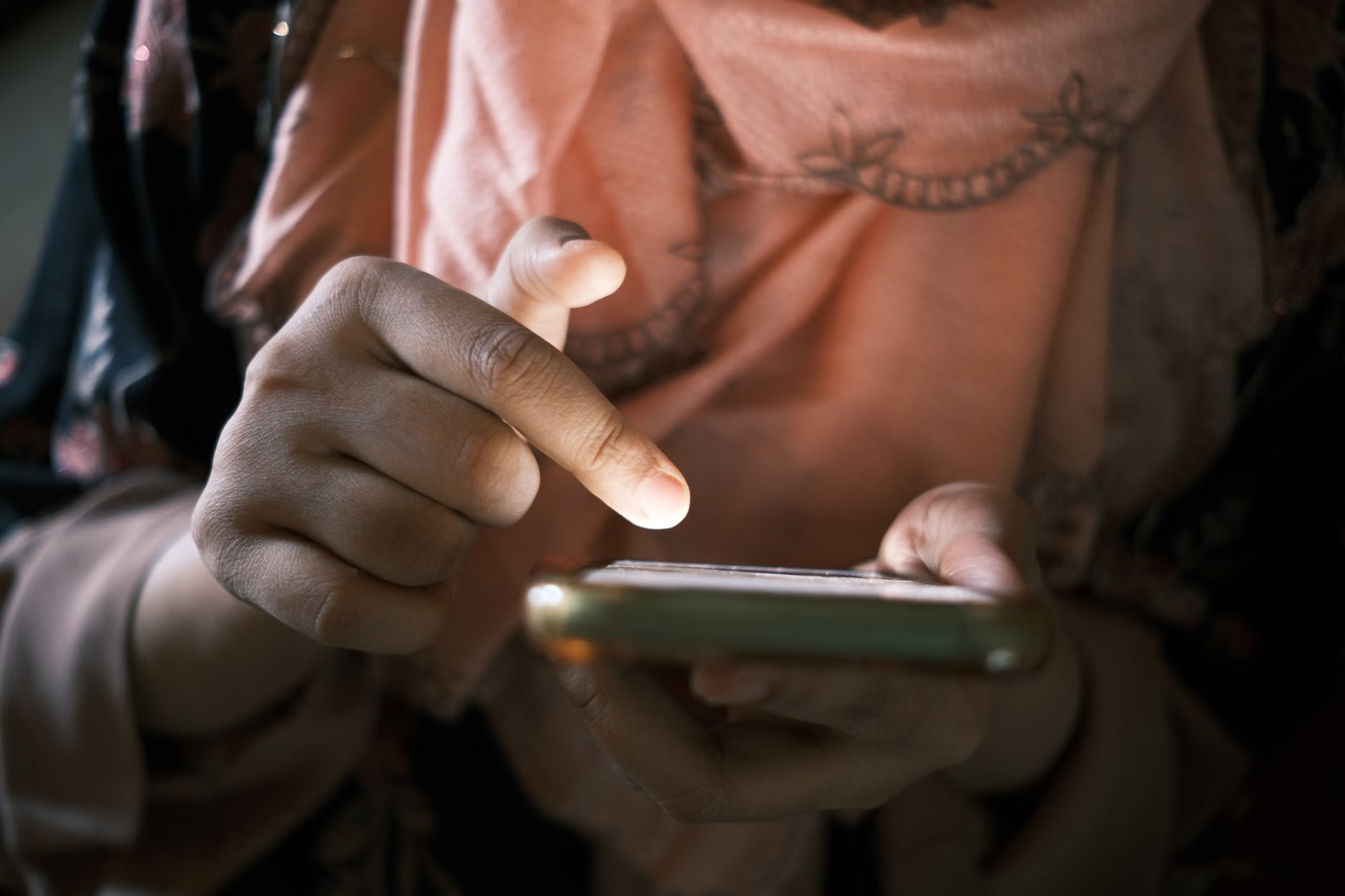
Digital identity refers to the electronic equivalent of your physical passport, driver’s license, or birth certificate. By 2026, many nations will have rolled out digital “wallets”—secure applications on your smartphone that hold verified copies of your credentials. Unlike a simple photo of a document, these wallets use encrypted technology to prove your identity without sharing unnecessary information, such as your full home address or exact date of birth, when only proof of age is required.
Why is this happening now? The primary driver is the demand for “frictionless” public services. Whether you are claiming a pension payment while traveling abroad or verifying your identity to access a secure medical portal, the goal is to remove the need for paper-based verification. However, this shift requires a shift in how you manage your digital presence.
The Move Toward Interoperability
The most important development in 2026 is the drive for interoperability. Previously, a digital identity issued in one country was often useless in another. New international frameworks, particularly within the European Union (eIDAS 2.0) and emerging standards in North America and parts of Asia, aim to allow your digital wallet to be recognized across borders. This means your verifiable identity could eventually be used to check into a hotel in a foreign country or access local government services without carrying a stack of physical documents.
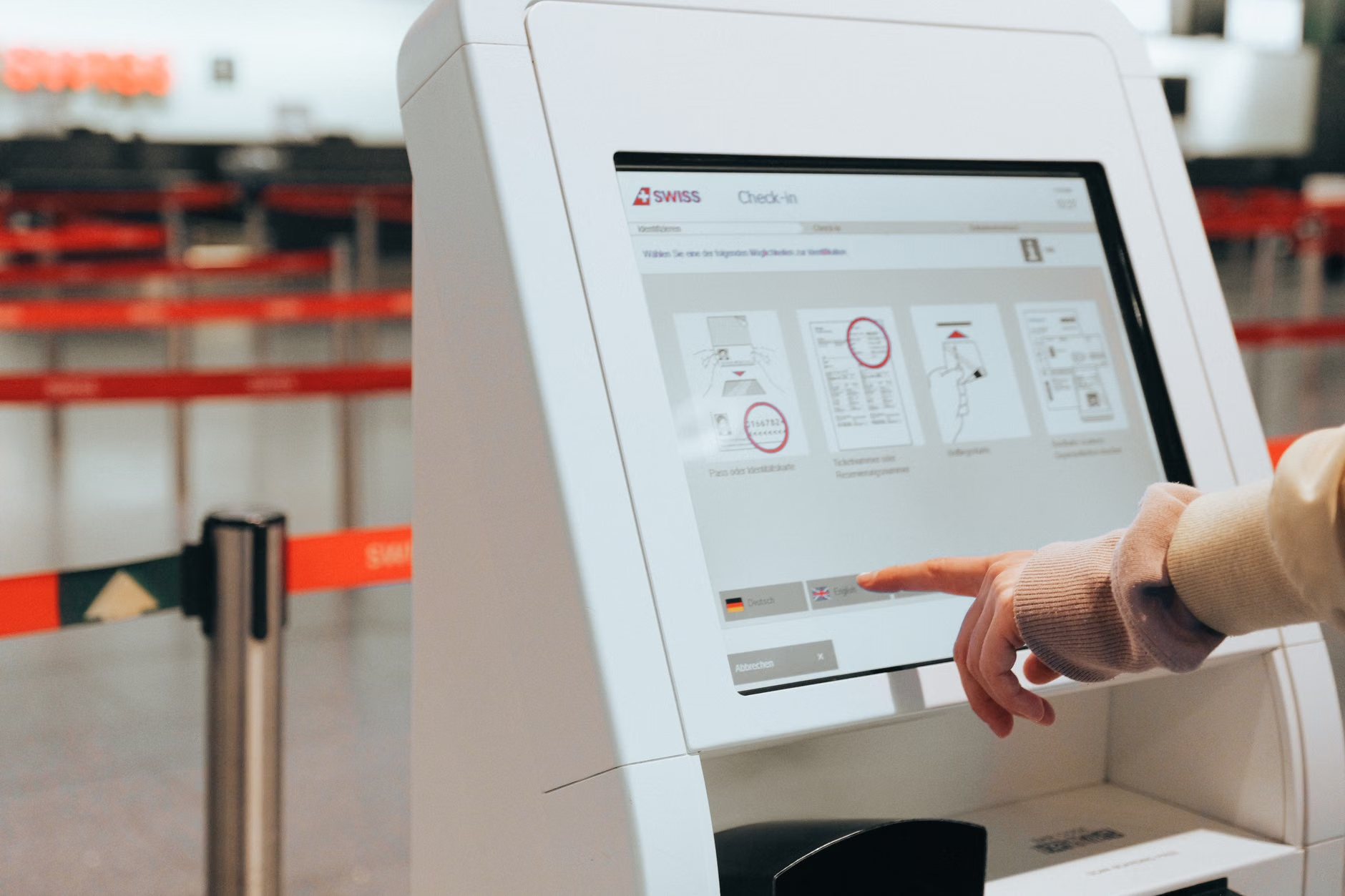
What this looks like in practice: Imagine arriving at an airport. Instead of handing over a physical passport, you might present a QR code generated by your government-issued digital wallet. The system verifies the document’s authenticity instantly, significantly reducing wait times.
How Digital Identity Affects Your Daily Life
The transition to digital identity is not limited to high-tech travel. It touches on three pillars of senior life: financial security, healthcare management, and consumer protection.
1. Pension and Benefit Verification
Governments are increasingly linking pension portals to digital identity providers. By 2026, many countries will require a two-factor authentication (2FA) process using your digital ID to log into pension accounts. This is designed to prevent fraud, which has disproportionately affected older adults in recent years. If you rely on government benefits, you must ensure your contact information—specifically your mobile phone number—is current with the relevant agency, as this is often the “key” to your digital account.
2. Healthcare Records and Access
Digital identity will become the standard for accessing Electronic Health Records (EHR). As you navigate care, having a secure digital identity allows you to authorize doctors in different regions to view your medical history instantly. This is particularly useful for those who spend part of the year in different climates or travel frequently. It eliminates the need to carry physical folders of medical records, which can be easily lost or misplaced.
3. Travel and Mobility
For the active senior traveler, 2026 marks the beginning of the “Digital Travel Credential” (DTC) era. While physical passports remain necessary for the time being, digital versions are being integrated into airline and border control systems. This allows for pre-clearance, where your identity is verified before you even arrive at the airport, potentially allowing for dedicated “fast-track” lanes for those with verified digital credentials.
| Service Area | Traditional Method | 2026 Digital Method |
|---|---|---|
| Pension Verification | Physical mail/In-person | Mobile App Authentication |
| Medical Records | Paper files | Encrypted Cloud Access |
| Travel Check-in | Paper Passport | Digital Identity Wallet |
Note: The adoption of these technologies varies by country. In the EU, the framework is highly standardized. In other regions, such as the United States or Australia, implementation is often state or province-specific. Always check your local government’s official portal for the specific requirements in your jurisdiction.
Practical Steps to Prepare for the Digital Shift
You do not need to be a technology expert to manage these changes. The goal is to move from “reactive” (trying to learn when something breaks) to “proactive” (setting up your systems now). Here are the steps to take:
1. Audit Your Digital Credentials
Ensure that all your official accounts (government, bank, healthcare) are linked to a single, secure email address and a mobile number that you access regularly. Many people use old email addresses they rarely check; this is a security risk. If a government agency sends a verification code to an old address, you may be locked out of your own account.
2. Master Two-Factor Authentication (2FA)
2FA is the gold standard for security. It involves two steps: entering your password and then entering a code sent to your phone or generated by an app. Never share your 2FA codes with anyone, not even if they claim to be from the bank or a government agency. Official institutions will never ask you to read back a verification code over the phone.
3. Keep Your Hardware Updated
Digital identity apps require modern operating systems to function securely. If you are using a smartphone that is more than 5-6 years old, it may no longer receive the security updates necessary to run these new identity wallets. Check if your phone supports the latest version of iOS or Android. If it doesn’t, it is time to consider an upgrade to ensure your device remains compatible with future public service requirements.
4. The “Backup Protocol”
What happens if your phone runs out of battery or is lost while traveling? Always keep a secondary form of identification, such as a physical passport or a printed copy of your essential documents, in a separate location. Technology is a tool, not a replacement for common-sense preparation.
Common Misconceptions and Hidden Realities
There is a prevailing myth that digital identity is “the end of privacy.” In reality, modern digital identity standards (specifically those using decentralized identity protocols) are designed to provide more privacy than physical documents. When you show your physical ID at a store, the clerk sees your home address, your exact birth date, and your full name. With a digital wallet, you can choose to share only the “verified” status—for example, “Yes, this person is over 65″—without revealing your street address or full name.
Another overlooked variable is device dependency. As we rely more on digital IDs, the physical security of your smartphone becomes paramount. Using a strong screen lock (biometric or PIN) is no longer optional—it is your first line of defense. If you lose your phone, treat it with the same urgency as losing your wallet. Contact your bank and government agencies immediately to revoke access to your digital identity credentials.

Change, while beneficial, often brings temporary confusion. You may encounter “technical friction” where a system fails to recognize your digital ID. This is common during the early rollout phase of any new technology.
- System Downtime: Just like physical offices have hours, digital systems undergo maintenance. If you are planning a time-sensitive task, such as renewing a permit or accessing a pension document, do not wait until the last minute.
- Regional Discrepancies: If you are traveling between countries, do not assume that a digital ID accepted in one country will be accepted in another. Always carry your physical documentation until you have verified that the digital format is officially recognized at your specific destination.
- Support Channels: Familiarize yourself with the “Help” or “Support” sections of your government portal. Most agencies have dedicated phone lines for digital service support. Keep these numbers saved in your physical address book.
If you find yourself struggling with a digital interface, do not hesitate to contact the agency directly. Many government departments are aware that the transition to digital identity is challenging for some, and they often provide guided assistance or alternative verification methods for those who need them.
Conclusion: Empowerment Through Preparedness
The 2026 updates to international digital identity recognition represent a shift toward greater efficiency and security for older adults. While the transition may seem daunting, it is essentially a move toward making your most important credentials more accessible and harder to forge. By auditing your digital security, ensuring your hardware is up to date, and maintaining a backup plan, you can embrace these changes with confidence.
Remember, the goal of these systems is to support your independence, not to complicate your life. Approach these changes as you would any new tool—with patience, preparation, and a focus on how they can make your daily routines simpler and more secure.
Frequently Asked Questions
1. Do I have to use a digital ID, or can I still use my physical documents?
In most jurisdictions, digital identity is currently an option, not a requirement. You can continue to use your physical passport, driver’s license, and birth certificate. However, over time, some services may prioritize digital users for faster processing. It is recommended to keep both options available.
2. Is my personal information safer with a digital ID?
Yes, when implemented correctly. Digital identity wallets use advanced encryption that is significantly harder to replicate than a physical ID card. Furthermore, they allow you to share only the minimum amount of information required for a transaction, which reduces the risk of identity theft.
3. What should I do if I am not comfortable using a smartphone for these services?
Most governments are required to maintain “analog” pathways for citizens who are unable or unwilling to use digital services. If you prefer not to use a smartphone, you can usually continue to visit physical government offices or use mail-in services. Check your local government website to identify the non-digital alternatives available in your area.
Sources and Further Reading:
– European Commission: Interoperability Frameworks
– National Institute of Standards and Technology (NIST): Digital Identity Guidelines
– OECD: Digital Government Policy and Practice