- Digital Transition: By 2026, most major global cities have phased out paper senior discount vouchers in favor of app-based or NFC-enabled smart cards.
- Eligibility Verification: Many jurisdictions now require digital residency or age verification linked to national identity databases; carrying physical ID is no longer always sufficient.
- Cost Strategy: Off-peak travel remains the most effective way to secure the deepest discounts, with many regions further restricting free travel for seniors during morning rush hours to manage capacity.
Introduction: The Changing Landscape of Senior Mobility
As we move through 2026, public transit systems across the globe are undergoing a significant transformation. The shift is driven by a move toward “smart mobility,” where discounts are no longer automatically applied by a ticket agent but are instead calculated by digital systems based on your age, residency, and time of travel. For travelers aged 60 to 80, this represents both an opportunity for seamless, cost-effective movement and a challenge in terms of technical adaptation.
This article explores how these 2026 updates affect your daily commute and international travel plans. We will look beyond the headlines to explain exactly what these policy shifts mean for your wallet, your physical accessibility, and your travel planning.

The Global Shift to Digital-Only Discounts
The most prominent trend in 2026 is the discontinuation of physical senior discount cards in favor of integrated digital platforms. In cities like London, Singapore, and New York, the “Senior Concession” is now almost exclusively tied to a registered digital account.
Why this matters: Previously, showing a passport or a driver’s license at a ticket counter was sufficient to prove eligibility. Today, the system verifies your age and residence through a backend database before you even touch your card to the reader. If your profile is not correctly registered, you may be charged the full adult fare, or worse, face fines for improper use of a concessionary pass.
What to do if you are traveling internationally
If you are planning a trip to a foreign country, do not assume your home country’s senior status grants you automatic discounts abroad. International reciprocity for public transit is rare. Most systems require you to:
- Register online at least 14 days before arrival: Upload digital copies of your passport or age-verifying documents to the transit authority’s portal.
- Link a payment method: Ensure your credit card supports NFC (contactless) payments, as many systems no longer accept cash at the point of entry.
- Download the local transit app: Even if you prefer physical cards, the app often serves as the only way to manage your balance or view real-time accessibility data, such as elevator outages.
Understanding Eligibility by Jurisdiction
Public transit rules are not universal. They are bound by local legislation, funding models, and social priorities. Below is a breakdown of how different regions are approaching senior benefits as of 2026.
| Region/Country | Primary Benefit Structure | Key 2026 Requirement |
|---|---|---|
| European Union (General) | Tiered discounts based on age (65+) | Digital “EU Senior Pass” via local transit app |
| North America (Major Cities) | 50% off standard fare (65+) | Verified smart card registration |
| East Asia (Japan/Korea) | Free or deeply subsidized (65+) | Identity-linked transit IC card |
Insight: In regions with “Free” transit, the system is often funded by local taxes. Consequently, residents receive these benefits, but tourists—even those over the age of 65—are frequently excluded or charged a “visitor rate.” Always check the local transit website’s “Terms of Use” to confirm if your nationality or residency status qualifies for the discount.
Prioritizing Physical Accessibility and Safety
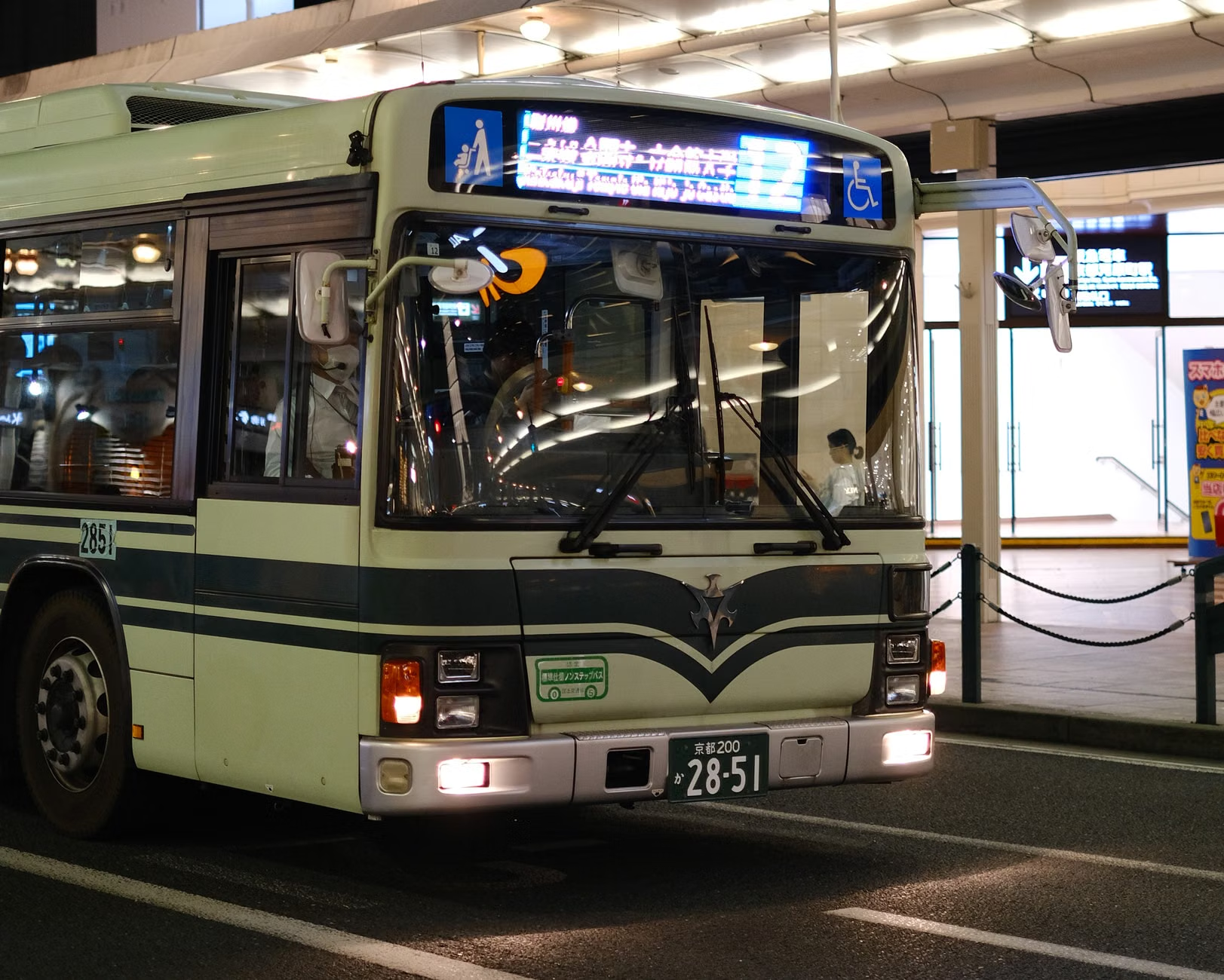
While costs are important, for many seniors, the true value of a transit system is its accessibility. In 2026, many cities have upgraded their fleets to include low-floor buses and step-free train stations. However, “accessible” can mean different things in different cities.
What “Accessibility” Actually Looks Like in 2026
When reviewing a city’s transit map, look for the “Universal Access” symbol. However, do not stop there. Practical planning requires investigating the following:
- Last-Mile Connectivity: Does the station have a working lift, or is it a long, steep ramp? In older European cities, heritage architecture often prevents the installation of elevators, meaning “accessible” stations may still require navigating significant inclines.
- Platform Gaps: Some older subway systems have wide gaps between the platform and the train. Check if the transit authority provides “bridge plates” or if you require assistance from staff to board.
- Seating Availability: As systems become more crowded, standing during transit is a reality. If you have limited stamina, prioritize routes that originate at a terminal station, where you are more likely to secure a seat.
Actionable Tip: Before you finalize your route, use a mapping tool that allows for “wheelchair” or “reduced mobility” settings. Even if you do not use a mobility device, these settings are designed to prioritize routes with elevators and escalators, which is safer and less strenuous for all senior travelers.
Managing Your Transit Budget: Beyond the Discount
While senior discounts are a great way to save, they are rarely the only way to optimize your travel budget. In 2026, transit authorities are moving toward “capped” pricing models.
What is a capped pricing model? It means that once you have spent a certain amount in a day or week, all subsequent travel is free. This is often more beneficial than a simple senior discount because it protects you from overpaying if your plans change and you end up taking more trips than expected.
Comparison: Discounted Single Fares vs. Daily Caps
Imagine you are visiting a city where the standard fare is $5.00, the senior fare is $2.50, and the daily cap is $10.00.
- Scenario A (Single Tickets): You take 4 trips. Total cost: $10.00.
- Scenario B (Capped): You take 6 trips. Total cost: $10.00 (because you hit the cap).
Decision Criterion: If you plan to travel extensively throughout the day, the “cap” is your best friend. If you only plan to go from your hotel to one destination and back, the senior discount fare is the more economical choice. Always check the transit authority’s website for “Daily Maximum” or “Fare Capping” policies before buying a multi-day pass.

The Technical Side: Staying Safe and Secure
Using digital transit services involves handling personal data. In 2026, cybersecurity is as important as physical safety. When registering for transit accounts:
- Use Official Portals Only: Never download a transit app from an unofficial third-party store. Only use links provided on the official government transit website (usually ending in .gov, .org, or the country-specific equivalent).
- Secure Your Payment: Use a digital wallet (like Apple Pay or Google Wallet) to link your card to the transit system. This prevents the transit authority from storing your actual credit card number, providing an extra layer of protection against data breaches.
- Keep a Backup: Technology fails. Always carry a secondary form of payment (such as a physical credit card or a small amount of local currency) in case your phone battery dies or the system experiences a network outage.
Practical Decision Rule: If you feel uncomfortable using a smartphone for transit, look for “Smart Cards” that can be purchased at kiosks. These cards can often be registered to your name and age at the kiosk, allowing you to enjoy senior discounts without needing a constant internet connection or a complex app interface.
Frequently Asked Questions (FAQ)
1. Do I need to carry my physical passport to prove my age for transit discounts?
In most modern systems, once you have registered your age online and linked it to your account, you do not need to carry your passport. However, it is standard practice to carry a digital copy or a government-issued photo ID on your phone or in your wallet, as transit inspectors may occasionally perform manual spot checks.
No. Transit cards are strictly personal. They are linked to your specific identity and age verification. Sharing a card is considered fare evasion and can result in significant fines or the permanent deactivation of the card.
3. What should I do if the accessibility elevator at my station is broken?
Most transit apps now feature a “Service Alerts” or “Elevator Status” tab. Always check this before you leave your accommodation. If you arrive and find an elevator out of service, look for the station staff or use the emergency intercom located near the turnstiles to ask for assistance. In many cities, they can arrange for a shuttle or provide an alternative route recommendation.
Conclusion: Planning for a Smoother Journey
Navigating public transit in 2026 requires a bit more upfront preparation than in years past, but the rewards—greater independence, lower costs, and more efficient travel—are well worth the effort. By embracing the digital tools available and understanding the specific requirements of the region you are visiting, you can ensure that your mobility remains a source of freedom rather than a source of stress.
Remember, the goal of these systems is to facilitate movement for everyone. If you find yourself struggling with a kiosk or a digital app, do not hesitate to ask a station agent for help. Most transit systems have designated staff specifically trained to assist seniors with the transition to these new digital formats.
For more information on specific transit regulations, visit your local government’s official transport authority website or the International Association of Public Transport (UITP) for global transit trends and accessibility standards.
Understanding the “Hidden” Variables of Senior Travel
Beyond the official policies, there are “soft” factors that influence the ease of your transit experience. One such variable is the “Off-Peak Buffer.” In many major cities, senior discounts are suspended during morning and evening rush hours to encourage capacity management. If you travel during these times, you will often pay the full adult fare, regardless of your senior status. Planning your excursions between 10:00 AM and 3:00 PM is not just about avoiding crowds—it is a financial strategy that maximizes your discount eligibility.
Furthermore, consider the “Top-Up Threshold.” If you use a prepaid smart card, avoid letting your balance drop to zero. Many systems “lock” cards with a zero balance, requiring a visit to a physical kiosk to reactivate them. Aim to keep a minimum balance equivalent to at least two full-fare trips at all times. This prevents the inconvenience of being stranded at a turnstile during a busy commute.
Finally, always evaluate the “Walking-to-Transit Ratio.” Some transit stops are located in ways that require walking long distances through large terminal hubs. Use satellite view maps to see exactly where the entrance is relative to your destination. Sometimes, paying for a slightly more expensive but more direct bus route is better for your physical stamina than a cheaper subway route that requires a 15-minute walk through a complex underground labyrinth.