- Digital Transition: Most major transit authorities are phasing out paper senior discount cards in favor of mobile apps or linked smart cards by 2026; ensure your device is compatible before departure.
- Eligibility Verification: Many jurisdictions now require pre-registration of your passport or residency status in their digital system to trigger automatic age-based discounts.
- Cross-Border Complexity: International senior discounts are rarely reciprocal; always verify if your home-country senior status is recognized by the transit operator in your destination country.
As we approach 2026, international public transit systems are undergoing a significant transformation. For travelers aged 60 to 80, this shift toward “smart mobility” offers both unprecedented convenience and a few technical hurdles. The promise of 2026 is a more integrated, digital-first approach to transit, where age-based discounts are increasingly automated rather than manually verified by ticket agents.
This guide provides a comprehensive overview of how to navigate these changes, ensuring you can travel with confidence, maintain your budget, and prioritize your comfort and mobility while exploring the world.
The Shift Toward Automated Eligibility in 2026
The most important development for the 2026 transit landscape is the move away from physical “senior citizen cards” issued by local transit authorities. In the past, you might have carried a paper pass or a laminated ID card to show a bus driver or station attendant. By 2026, many global cities—particularly in the European Union, Japan, and parts of North America—are transitioning to digital verification.
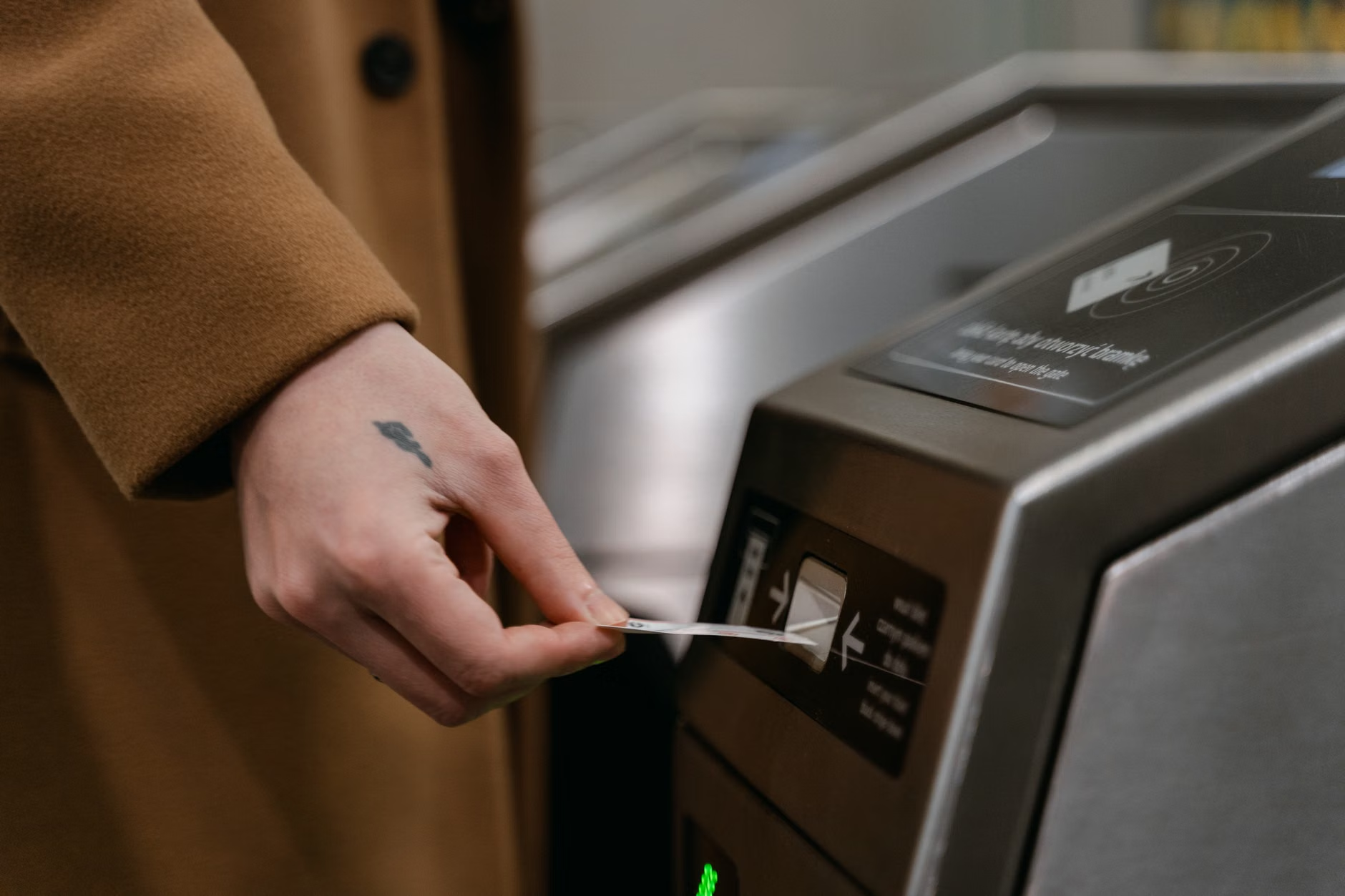
What this means for you: You can no longer rely on showing a physical ID at the point of entry. Instead, you must link your identity to a transit account in advance. This is usually done via a mobile application or a dedicated website. Once your age is verified against your passport or government-issued ID, the system automatically applies the “senior tariff” to your account, so every time you tap your card or phone, you are charged the discounted rate.
Step-by-Step: Setting Up Your Digital Transit Profile
- Check the Official Authority Website: Before traveling, visit the official website of the transit authority in your destination city. Look for “Fares” or “Concessions.”
- Verify Eligibility Requirements: Some cities offer discounts to anyone over 60, while others reserve them for residents or those over 65. Do not assume your age automatically qualifies you for a specific discount.
- Upload Documentation: Most systems will require a scan of your passport. Ensure the name on your transit account matches your travel documents exactly.
- Link a Payment Method: Most digital passes require a credit or debit card on file. Ensure your card supports international transactions to avoid service interruptions.
Understanding Reciprocity and Regional Variations
A common misconception among international travelers is that a senior discount obtained in one country is valid in another. In the vast majority of cases, this is not true.
Public transit subsidies are funded by local taxpayers. Consequently, most authorities only provide discounts to their own residents. When traveling internationally, you are generally considered a “standard fare” passenger unless the specific city has a policy for tourists. However, there are notable exceptions. For example, some cities offer “Tourist Senior Passes” that provide temporary discounts for visitors over a certain age. These often require a specific application process that must be completed at least 14 days before your arrival.
Comparison of Transit Discount Structures
| Discount Type | Applicability | Requirement |
|---|---|---|
| Resident Senior Fare | Local residents only | Proof of address/residency |
| Visitor Senior Fare | Tourists | Age verification (Passport) |
| Universal Senior Fare | All travelers over X age | Often limited to off-peak hours |
Insight: If you are planning a trip to a city with complex transit rules, look for “Multi-Day Tourist Passes.” Often, these passes are priced lower than the combined cost of individual senior-discounted tickets, and they eliminate the need to navigate the digital verification process for every single journey.
Prioritizing Mobility and Safety in 2026 Transit
While cost is important, safety and physical comfort are paramount. As transit systems upgrade their infrastructure for 2026, they are increasingly focusing on “universal design.” This means stations are being retrofitted with more elevators, wider gates for mobility aids, and clearer audio-visual signage.
However, “new” does not always mean “accessible.” In many historic European cities, the transit infrastructure remains challenging. If you have mobility concerns, look for the following indicators before booking your transit route:
- Step-Free Access: Check the station map for a wheelchair icon. This indicates that an elevator or ramp is available from the street to the platform.
- Platform-Train Gap: In some cities, even if a station is “accessible,” the gap between the platform and the train can be significant. Look for transit apps that specify “Level Boarding.”
- Peak Hour Avoidance: If you have limited stamina, avoid traveling between 7:30–9:30 AM and 4:30–6:30 PM. Crowded trains increase the risk of falls and make finding a seat nearly impossible.

Practical Tips for Managing Stamina
Travel is tiring, and transit-heavy itineraries can exacerbate fatigue. To maintain your energy levels:
- The “One-Transfer” Rule: When planning your route, prioritize direct connections. Transfers often involve long walks through tunnels, staircases, or rapid movement between platforms, which can be exhausting.
- Use Official Apps for Live Updates: Use apps like Google Maps, Citymapper, or the local transit authority’s official app. These provide real-time information on elevator outages. If an elevator is out of service at your destination, you may need to plan for an alternative stop.
- Carry a Small “Transit Kit”: Keep a small bag with your transit card, a printed copy of your itinerary, a portable phone charger, and a bottle of water. Having your payment method immediately accessible prevents stress at the ticket gate.
The push for digital-only transit systems can be daunting. If you are not comfortable using a smartphone for every transaction, you are not alone. Many transit authorities are legally required to provide “analog” options for those who cannot use digital tools.
What to do if you aren’t tech-savvy:
- Visit the Customer Service Center: Upon arrival, go to the main transit hub’s customer service office. They can often issue a physical smart card that is pre-loaded with your senior concession, bypassing the need for a mobile app.
- Carry Your Documentation: Always carry your passport. Even if you have a digital pass, an inspector may ask for physical proof of age to verify that the concession is being used by the correct person.
- Ask for Assistance: Station staff are trained to assist travelers. If you are unsure how to use a machine, do not hesitate to ask. It is better to ask for help than to inadvertently use the wrong fare type, which can lead to fines.

Preparing for Your Trip: A Pre-Departure Checklist
Preparation is the foundation of a stress-free travel experience. Use this checklist to organize your transit plans at least one month before your departure:
| Timeline | Action Item |
|---|---|
| 4 Weeks Before | Research the city’s transit website for senior concession policies. |
| 3 Weeks Before | Download necessary apps and test the registration process. |
| 2 Weeks Before | Check if your credit card has “tap-to-pay” and confirm international fees. |
| 1 Week Before | Print a backup copy of your route and emergency contact information. |
| Arrival Day | Visit a station kiosk to validate your status or pick up a physical pass. |
The Importance of Professional Care and Health Considerations
Traveling requires a level of physical health that you should assess honestly. While public transit is a wonderful way to see a city, it requires significant walking and standing. If you have chronic health conditions, consider how your medication schedule fits into your travel day.
Managing Health on the Move:
- Medication Portability: Ensure you have enough medication for the duration of your trip plus an extra week in case of travel delays. Keep all medications in their original packaging with your name clearly visible.
- Symptom Awareness: If you experience dizziness, shortness of breath, or chest pain while traveling, stop immediately. Find a place to sit, drink water, and seek assistance from transit staff. Do not attempt to “push through” physical distress.
- Professional Consultation: If you are concerned about your ability to navigate transit, speak with your primary care physician before you travel. They can provide advice specific to your physical condition, such as whether you should consider using a walking aid or if you should limit your daily walking distance to a specific number of kilometers.
It is important to remember that public transit systems are not medical environments. While they are generally safe, they are not equipped to handle medical emergencies. Carrying a small document that lists your medical conditions, current medications, and emergency contacts in the local language of your destination is a simple but highly effective safety measure.
Common Mistakes and How to Avoid Them
Even seasoned travelers can make mistakes when navigating new transit systems. Avoiding these common errors will save you time, money, and frustration:
1. Assuming “Senior” Means “Free”: In many cities, senior discounts are significant (e.g., 50% off), but they are rarely free. Always check the fare table to avoid being caught without enough credit on your account.
2. Forgetting to “Tap Out”: In many systems (like London’s Underground or various regional trains), you must “tap out” at the end of your journey. If you forget to tap out, the system may charge you the maximum possible fare for that line. Always look for the reader at your exit gate.
3. Ignoring Peak Hour Restrictions: Some senior discounts are only valid during off-peak hours. If you travel during the morning rush, you may be charged the full adult fare, or worse, face a penalty for using a discounted ticket during restricted times.
4. Relying Solely on Battery-Powered Devices: If your phone dies, your digital ticket dies with it. Always carry a secondary source of funds—either a physical card or a small amount of local currency—as a backup.
Conclusion: Your 2026 Transit Strategy
Traveling in 2026 requires a blend of digital preparedness and traditional planning. By embracing the shift toward automated systems, you can secure lower fares and streamline your journeys. However, remember that technology is a tool, not a replacement for common sense and physical awareness.
Prioritize your comfort by planning direct routes, avoiding peak hours, and always having a physical backup of your travel documents and payment methods. The goal is not to maximize the number of sights you see in a day, but to enjoy the journey at a pace that is sustainable for your health and well-being. With these precautions, you are well-equipped to navigate the world’s transit systems with the ease and independence that you deserve.
Frequently Asked Questions
- Will my home-country senior discount card work abroad in 2026?
Generally, no. Most transit discounts are localized. You should verify the specific policy of the transit authority in the city you are visiting, as they may require you to register for their own visitor concession program.
- What should I do if the digital transit app is not working at the gate?
If you encounter a technical failure, remain calm. Locate a station attendant or a customer service kiosk. They are experienced in handling these issues and can often manually verify your status or provide a temporary paper ticket without penalty.
- Are there specific apps I should download for international transit?
Google Maps and Citymapper are excellent for general navigation and live updates. However, always download the official app of the local transit authority in your destination city, as it will have the most accurate information regarding fares, service alerts, and senior-specific concessions.
For further information on global travel safety and accessibility, consult the official resources provided by your national tourism bureau or the transit authority websites of your specific destination. Always ensure your travel insurance covers medical emergencies and transit-related mishaps.