By 2026, the way you verify your identity for international travel, pension claims, and government services is undergoing a significant transformation toward standardized digital identity recognition. This shift is designed to simplify your interactions with public services and enhance security, but it requires a basic understanding of how these new systems work and how to prepare your digital tools accordingly.
- Digital Identity (eID) is becoming the standard: By 2026, many nations will move toward “Digital Wallet” systems, allowing you to store encrypted versions of your ID, pension card, and health insurance on your smartphone.
- Travel and Border Security: Expect an increase in “Biometric Exit/Entry” systems, where your face or fingerprint replaces physical document stamping, significantly speeding up transit times.
- Proactive Preparation: You do not need to be a technology expert, but you must ensure your smartphone is updated and your official government documents are linked to your secure digital account before your next trip or benefit renewal.
Understanding the 2026 Global Digital Identity Standard
Digital identity refers to the electronic representation of your physical identity. In previous years, this was often fragmented—you had one login for your bank, another for your health portal, and a physical passport for travel. The 2026 initiative, led by various international bodies and national governments, aims to create “interoperable” systems.
What does “interoperable” mean for you? It means that a secure digital credential issued by your home country’s health authority may eventually be recognized by international transit systems or foreign administrative offices. This reduces the risk of identity theft and eliminates the need to carry multiple paper documents.
Why This Matters for the 60+ Demographic
For those aged 60 to 80, this transition is not just about technology; it is about autonomy. As public services shift to “digital-first” models, having a verified digital identity ensures you maintain seamless access to your pension, medical records, and travel privileges without relying on slow, paper-based verification processes that are increasingly being phased out.
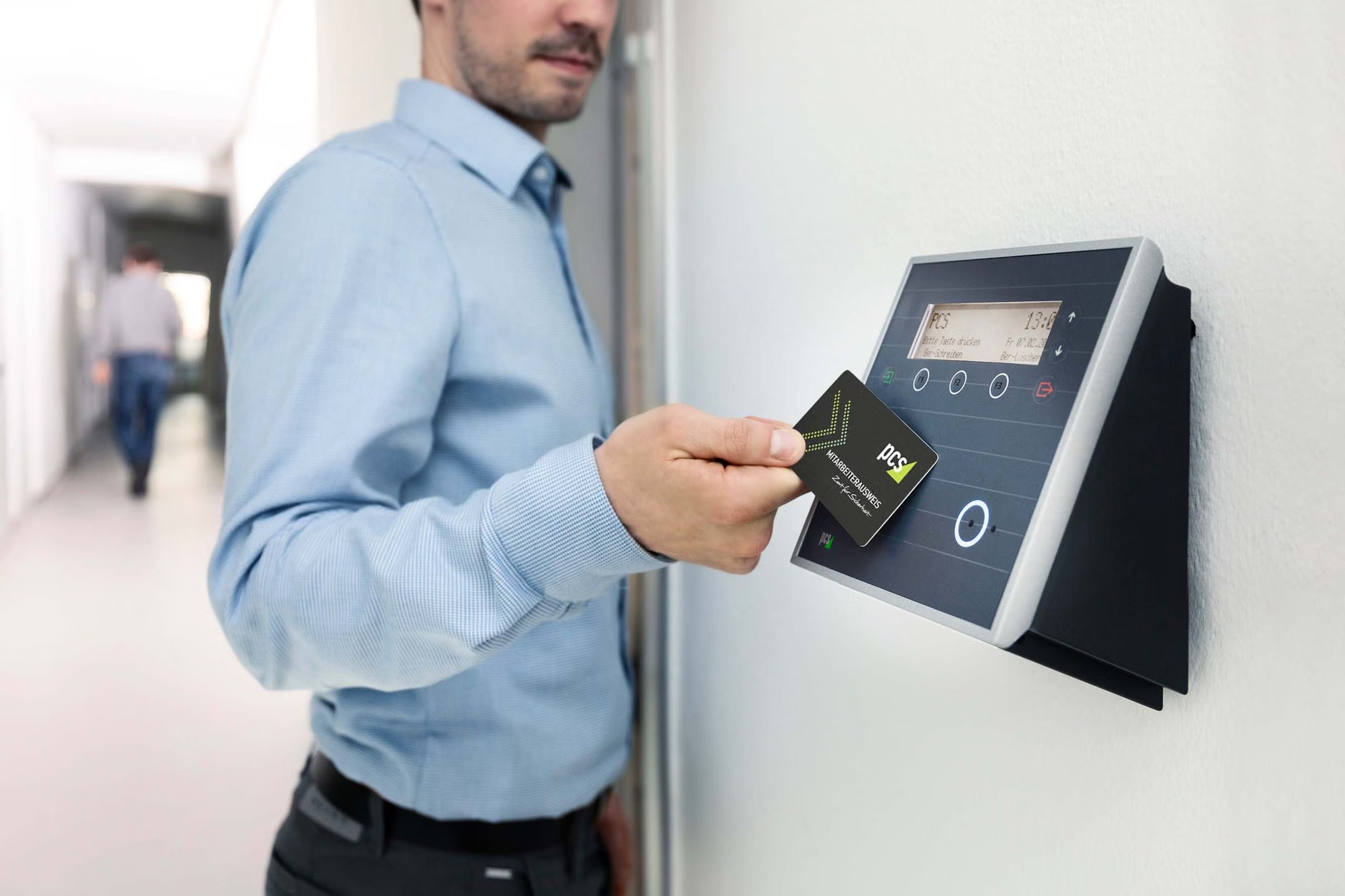
How Digital Identity Affects International Travel in 2026
Travelers are seeing the most immediate impact of digital identity recognition. Many countries are moving away from traditional visa stickers in passports, transitioning instead to Electronic Travel Authorizations (ETAs) or fully digital entry systems.
The Rise of Biometric Passages
By 2026, “Contactless Travel” is the goal for major international hubs. When you arrive at an airport, you may find that you no longer need to present your passport to a human officer. Instead, a camera scans your face, matches it against the encrypted digital signature in your passport, and automatically clears you for entry.
| Feature | Traditional Method | 2026 Digital Method |
|---|---|---|
| Verification | Physical Passport Stamp | Biometric Facial Scan |
| Processing Time | Variable (minutes to hours) | Seconds |
| Documentation | Paper/Plastic Card | Mobile Digital Wallet |
Practical Tip: If you are planning a trip, always check the official government travel portal for your destination (e.g., the U.S. State Department or UK Foreign Office) at least 30 days before departure. Even with digital systems, you must still carry your physical passport as a backup for the foreseeable future.
Securing Your Pension and Healthcare Benefits
Governments are increasingly using digital identity to prevent fraud, which directly affects how you access your pension. In many jurisdictions, such as the EU and Australia, the transition to digital identity cards means that your proof of age and entitlement is now verifiable online.
What to do if you encounter a “Digital Barrier”
If you find that a service requires an app you are unfamiliar with, do not feel discouraged. Most government services are legally required to maintain an “assisted digital” route. This means if you cannot access the service via a smartphone, there is a dedicated phone line or a physical office where you can complete the same verification with the help of a staff member.

Steps to Protect Your Digital Identity
- Use Multi-Factor Authentication (MFA): Always enable “two-step verification.” This means that when you log into your pension account, you receive a code on your phone. It is the single most effective way to prevent unauthorized access.
- Keep Your Device Updated: Software updates for your smartphone are not just for new features; they contain critical security patches that protect your identity.
- Verify the Source: Government agencies will never ask for your password via email or text. If you receive a message asking for credentials, navigate to the official website manually rather than clicking a link.
Comparison of Regional Approaches
It is important to recognize that not all countries are moving at the same speed. Understanding these differences helps when traveling or managing assets in different jurisdictions.
- European Union: Implementing the “EU Digital Identity Wallet,” which allows citizens to store ID, medical prescriptions, and professional certifications in one secure, cross-border compatible app.
- North America: A more decentralized approach, where states and provinces are developing their own mobile driver’s licenses (mDLs) that can be used for TSA airport security and age verification.
- Asia-Pacific: Highly advanced in national ID integration, with many countries like Singapore and Japan moving toward full-scale digital citizenship where even tax and voting are handled through secure digital portals.
Insight: The “hidden” trade-off in this digital shift is the loss of physical documentation, which many seniors rely on for comfort. If you are a person who prefers paper, start by keeping a “Digital-to-Paper” logbook. Write down your account numbers and security questions in a physical notebook kept in a secure, fireproof location at home. This provides the peace of mind of a physical record while you adapt to the digital system.
Preparing for the Future: A Checklist for Seniors
You do not need to become a computer scientist to navigate 2026. Instead, focus on these manageable, practical steps to ensure you are ready for the digital transition.
- Update your primary ID: Ensure your passport or national ID card is not set to expire within the next 12 months. New digital systems often require the latest biometric chips found in newer documents.
- Review your digital footprint: Once a year, log into your primary government service portals to ensure your contact information (email and mobile number) is current. This is where security alerts and verification codes are sent.
- Set up a “Digital Proxy”: If you have a trusted family member or caregiver, discuss how they can assist you with your digital accounts. In many jurisdictions, you can officially authorize a “Power of Attorney” specifically for digital assets, which allows them to help you manage your accounts if you are temporarily unable to do so.
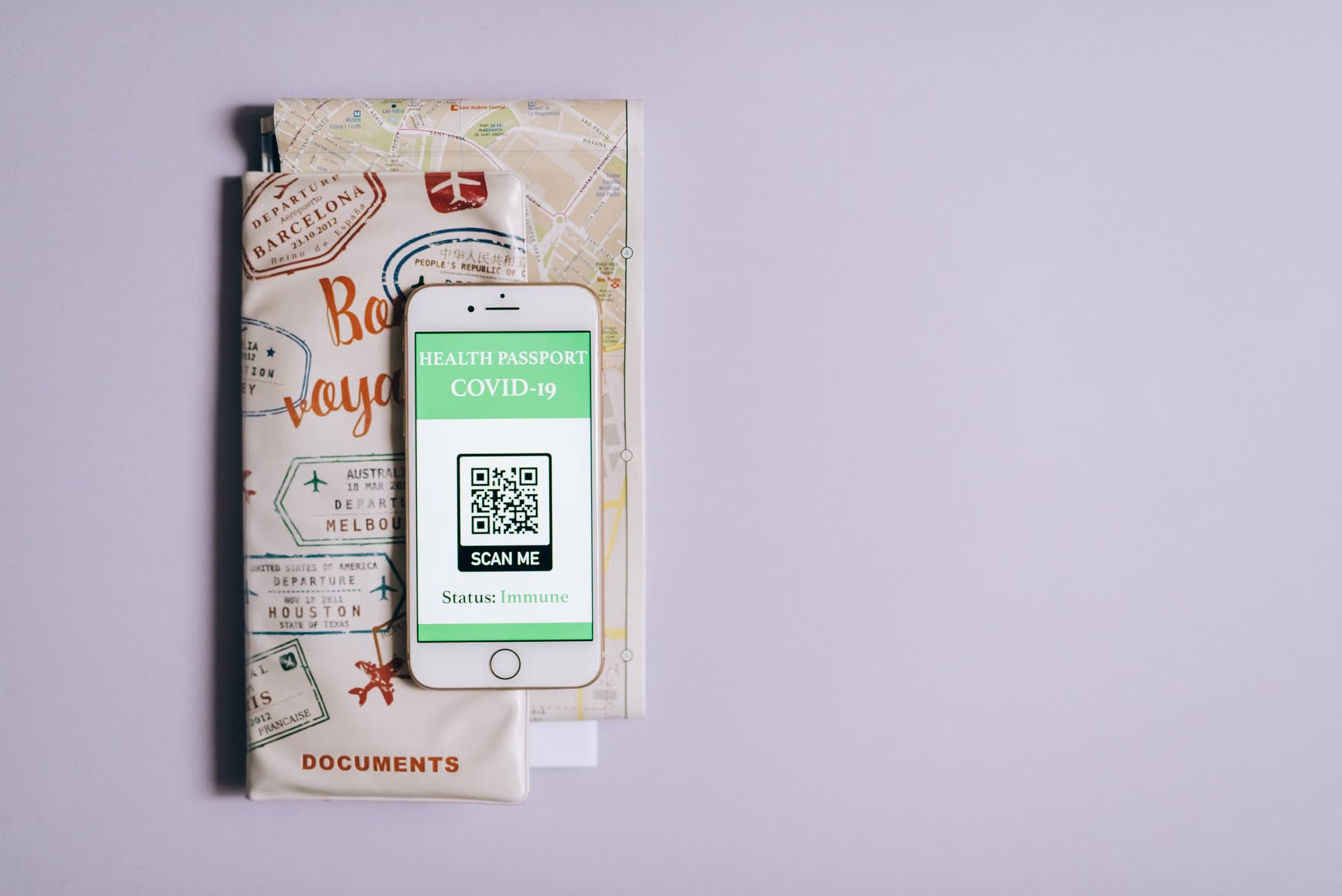
Addressing Common Misconceptions
There is a common fear that digital identity means your information is “out there” for everyone to see. In reality, the 2026 standards are built on “Privacy by Design.” This means that when you use your digital ID to prove your age at a store or an airport, the system only transmits the information required (e.g., “Yes, this person is over 60”) rather than your full birth date, address, or medical history.
Furthermore, these systems are “decentralized.” This means the government does not track every place you use your ID. The verification happens between your device and the service provider, leaving no central log of your daily activities.
Conclusion: Taking Control of Your Digital Journey
The move toward international digital identity recognition in 2026 is intended to make your life more secure, not more complicated. By embracing these tools, you are securing your access to essential services and simplifying your international travels. Focus on the basics: keep your devices updated, use strong passwords, and do not hesitate to ask for assisted support when you need it. You are not just keeping up with technology; you are ensuring your independence in an increasingly connected world.
Frequently Asked Questions
- Q: Will I be forced to stop using paper documents in 2026?
A: No. While digital options are becoming the primary standard, most countries are committed to maintaining “analog” alternatives for those who cannot or choose not to use digital identity systems. You will not be denied your pension or right to travel for being offline. - Q: What if I lose my smartphone while traveling?
A: Treat your smartphone like your wallet. If it is lost, contact your bank and government agencies immediately to “de-register” your device. You can then re-authenticate your identity on a new device using your physical passport or other secondary forms of identification. - Q: Are these new digital systems safe from hackers?
A: These systems use advanced encryption that is significantly more secure than physical paper documents, which are easily forged or stolen. While no system is 100% immune to risk, digital identity frameworks are subject to constant security auditing by national intelligence agencies.
Official resources for further information: