- Consistency over Intensity: Performing seated scapular retractions multiple times throughout the day is more effective for posture than a single, strenuous workout.
- The “Neutral Spine” Rule: Proper posture begins with the pelvis; ensuring your feet are flat and your lower back is supported prevents compensatory strain in the neck.
- Warning Signs: If you experience sharp, shooting pain or numbness during movement, stop immediately and consult a physical therapist or physician to rule out underlying nerve impingement.
Maintaining an upright, comfortable posture is one of the most effective ways to preserve mobility and breathing capacity as we age. When we spend significant time seated—whether reading, using a computer, or watching television—our shoulders naturally tend to round forward. This “slumped” posture puts unnecessary strain on the upper back, neck, and chest muscles. The seated scapular retraction is a simple, low-impact exercise designed to counteract this tendency by strengthening the muscles between your shoulder blades and encouraging a more neutral spine.
Understanding Scapular Retraction: Why It Matters
The scapulae, commonly known as the shoulder blades, serve as the anchor for the muscles that support your neck and upper torso. When these muscles become weak or chronically lengthened from poor posture, the shoulder blades drift outward and upward. This shift forces the head forward to maintain a line of sight, leading to the “forward-head” posture often seen in aging. By learning to retract—or “pull back”—the shoulder blades, you are effectively training your body to return to its natural, balanced position.
This movement is not just about aesthetics; it is about functional health. When your shoulder blades are properly aligned, your rib cage is less compressed. This allows for deeper, more efficient breathing and reduces the tension that often results in tension headaches or stiffness at the base of the skull.
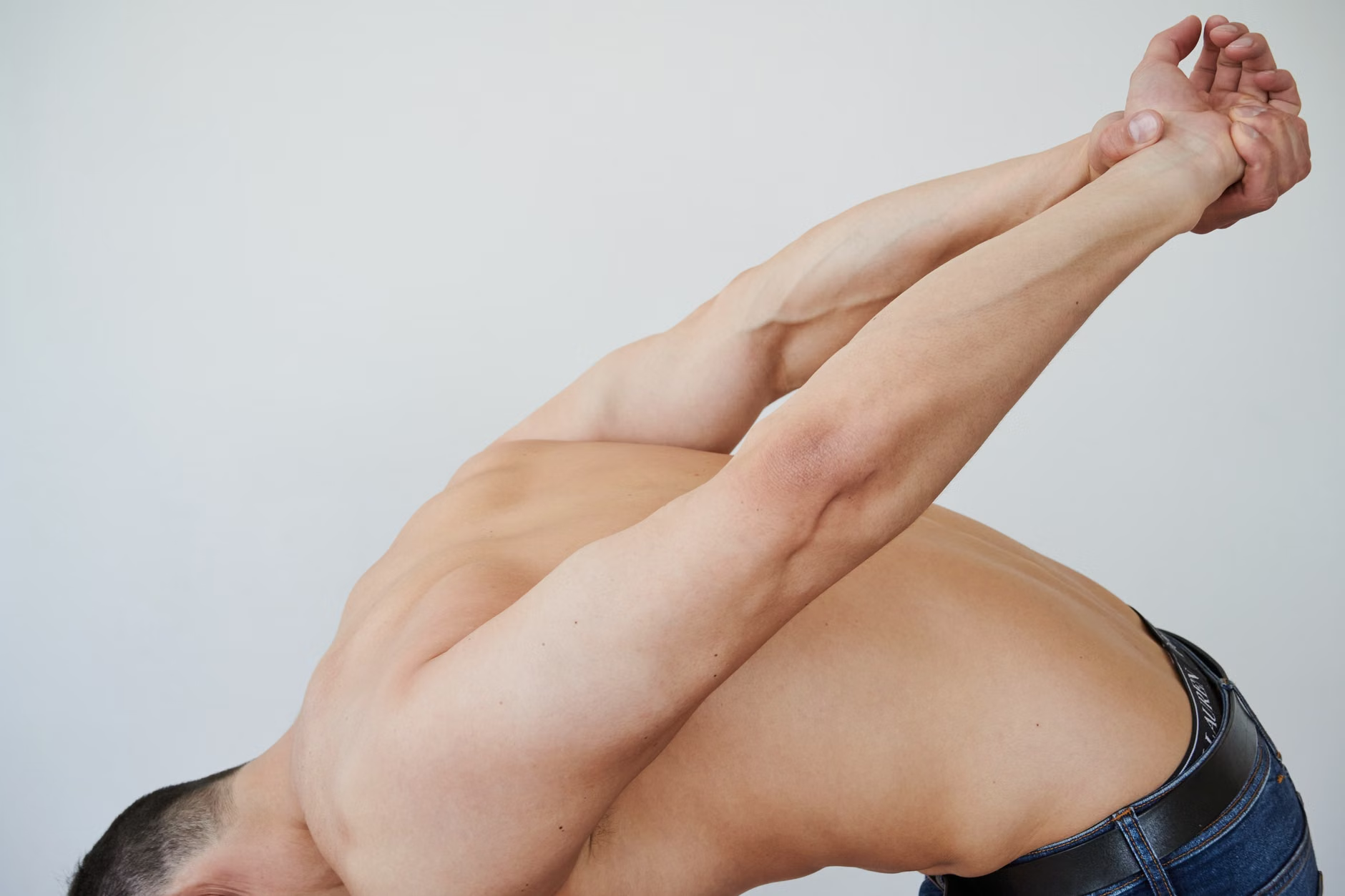
The Mechanics of a Proper Seated Retraction
To perform a seated scapular retraction effectively, you must focus on the quality of the movement rather than the speed or force. Follow these step-by-step instructions to ensure you are targeting the right muscle groups without straining your neck.
| Step | Action | Key Focus |
|---|---|---|
| 1. Positioning | Sit on the edge of a sturdy chair with feet flat on the floor. | Ensure your hips are slightly higher than or equal to your knees. |
| 2. Alignment | Lengthen your spine as if a string is pulling the crown of your head upward. | Keep your chin tucked slightly, avoiding a forward jut. |
| 3. Engagement | Gently squeeze your shoulder blades together toward your spine. | Do not shrug your shoulders toward your ears. |
| 4. Hold | Maintain the squeeze for 3 to 5 seconds. | Breathe normally; do not hold your breath. |
| 5. Release | Slowly return to the starting position. | Control the movement; don’t let your shoulders “snap” forward. |
Common Mistake: Many individuals mistakenly shrug their shoulders toward their ears when trying to squeeze their shoulder blades. This activates the upper trapezius muscles, which are often already overworked. If you feel tension in your neck, you are likely shrugging. Focus on pulling your shoulder blades down toward your back pockets as you squeeze them inward.
Integrating Movement into Your Daily Routine
For those aged 60 to 80, the goal is to weave these movements into daily life rather than treating them as a chore. If you find it difficult to remember, link the exercise to common sedentary activities.
- The “Commercial Break” Habit: If you watch television, perform one set of 10 retractions during every commercial break or every 30 minutes of viewing.
- The “Reading Reset”: If you enjoy reading, place a sticky note on your book or e-reader as a reminder to perform five retractions every time you finish a chapter.
- The “Digital Check-in”: If you use a computer or tablet, perform a set of retractions every time you close an application or finish an email.

When to Seek Professional Guidance
While scapular retractions are generally safe and beneficial, they are not a substitute for medical treatment if you have pre-existing spinal conditions. If you have been diagnosed with conditions such as osteoporosis, severe arthritis, or a history of disc herniation, you should consult with a physical therapist before beginning any new exercise routine. A professional can assess your specific range of motion and suggest modifications that protect your joints while providing the necessary stimulation for your muscles.
Warning Signs to Stop: You should discontinue the exercise and seek professional advice if you notice:
- Sharp, stabbing pain in the shoulder blades or neck.
- Numbness or tingling sensations radiating down your arms.
- Persistent dizziness or lightheadedness when changing positions.
- A feeling of “locking” in the shoulder joint.
Advanced Variations: Adding Resistance
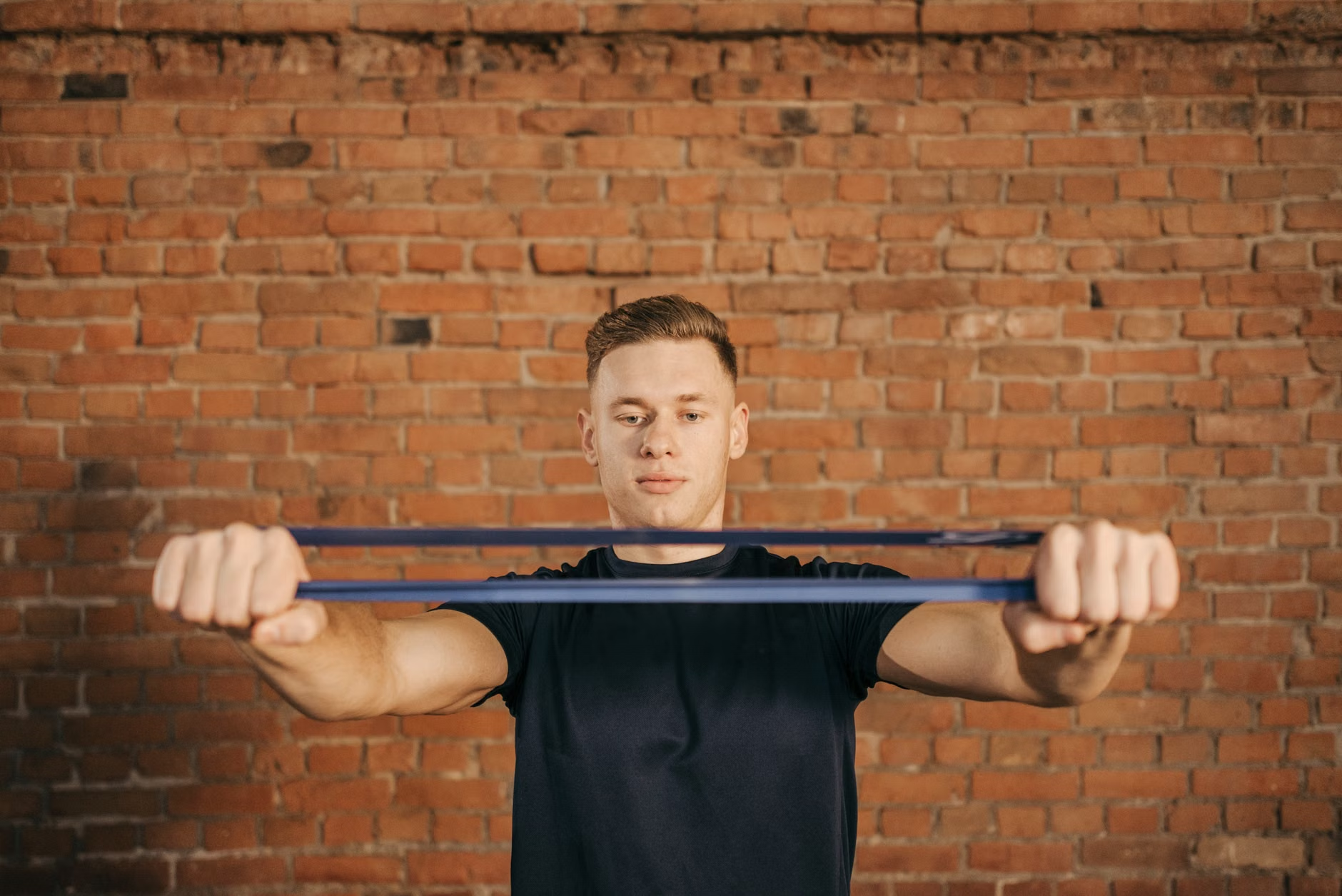
Once you have mastered the basic movement and can perform it without shrugging, you may decide to add light resistance to increase the challenge. Using a resistance band (a soft, elastic strip) is an excellent way to safely build strength in the muscles between the shoulder blades.
To use a band, hold it in front of you with both hands, arms extended at shoulder height. As you pull your shoulder blades together, pull your hands apart, stretching the band across your chest. This adds a component of active resistance that helps to further engage the rhomboid muscles. Always ensure the band is a “light” or “extra-light” tension grade to avoid over-exertion. If you feel your form breaking down—such as your shoulders creeping upward—revert to the non-resisted version until your strength improves.
The Role of Environment in Postural Health
Even with the best exercise routine, your environment plays a critical role in your posture. If your daily chair does not provide adequate lumbar (lower back) support, your pelvis will naturally tilt backward, forcing your spine to round and your shoulders to collapse. This is known as “posterior pelvic tilt.”
To test if your chair is supportive, place a small, rolled-up towel horizontally across the small of your back. If this makes it significantly easier to sit upright without effort, your chair likely lacks the necessary lumbar support. Consider adding a firm cushion or a dedicated lumbar pillow to your seating area. Addressing the environment is often just as important as performing the exercises, as it prevents the “slumping” habit from re-forming the moment you finish your routine.
Long-Term Consistency and Mobility Outcomes
The benefits of consistent scapular retraction are cumulative. Over several months, you may notice that it feels easier to stand tall while walking, that your neck feels less “tight” at the end of the day, and that your breathing feels less restricted. However, it is vital to remember that these changes occur gradually. Avoid the temptation to perform dozens of repetitions at once, which can lead to muscle fatigue and poor form. Instead, prioritize frequency throughout the day.
In addition to these exercises, consider your broader movement habits. Are you changing positions every 30 to 45 minutes? Are you incorporating gentle walking or stretching for the lower body? Posture is a full-body system; while the scapular retraction focuses on the upper back, the health of your spine relies on the interplay between your hips, core, and shoulders.
Official Resources and Further Learning
For those interested in understanding the anatomy of posture or finding additional safe exercises, the following resources provide evidence-based guidance for older adults:
- National Institute on Aging: Exercise and Physical Activity Guides – A comprehensive resource for safe, senior-focused movement.
- ChoosePT (American Physical Therapy Association) – Provides expert-led information on maintaining mobility and preventing common musculoskeletal issues.
By focusing on these small, deliberate movements, you are investing in your long-term independence and physical comfort. Posture is not a static state, but a dynamic habit that you can influence every day.
Frequently Asked Questions
- How many repetitions should I perform each day?
Start with 5 to 10 repetitions, two to three times a day. Quality is more important than quantity; if you feel your form slipping, stop and rest. - Can I do these standing up?
Yes, performing these standing against a wall can actually be easier for beginners. The wall provides tactile feedback, helping you ensure your back stays straight and your head remains neutral. - Will this fix a hunched back?
If a “hunched back” (kyphosis) is due to muscle weakness or postural habits, these exercises can help significantly. However, if the curvature is structural due to bone changes or vertebral fractures, you must consult a physician to discuss appropriate, personalized management.
Disclaimer: This article is for informational purposes only and does not constitute medical advice, diagnosis, or treatment. Always seek the advice of your physician or other qualified health provider with any questions you may have regarding a medical condition.