Seated Torso-Twists: A Practical Guide to Maintaining Spinal Mobility
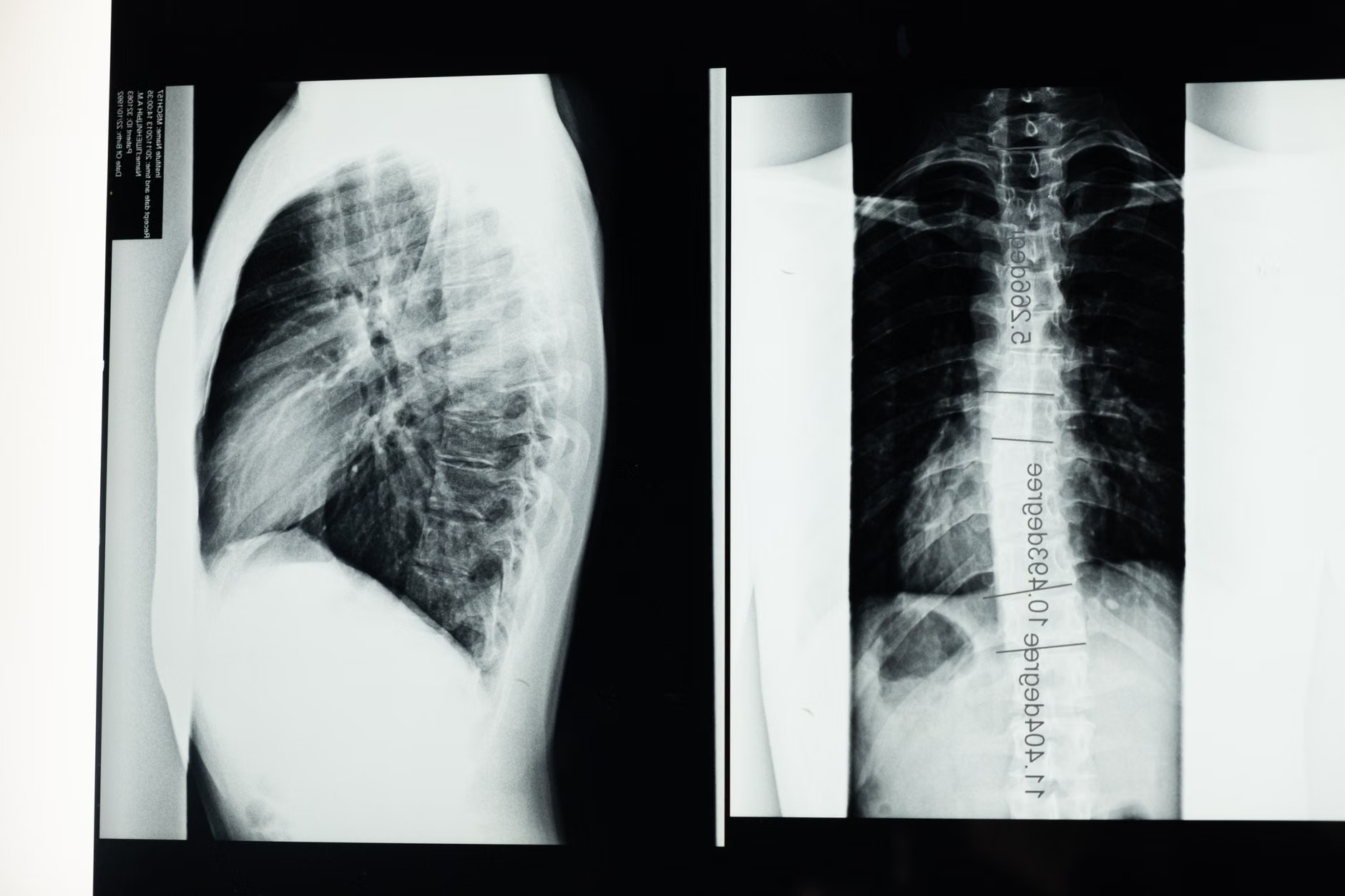
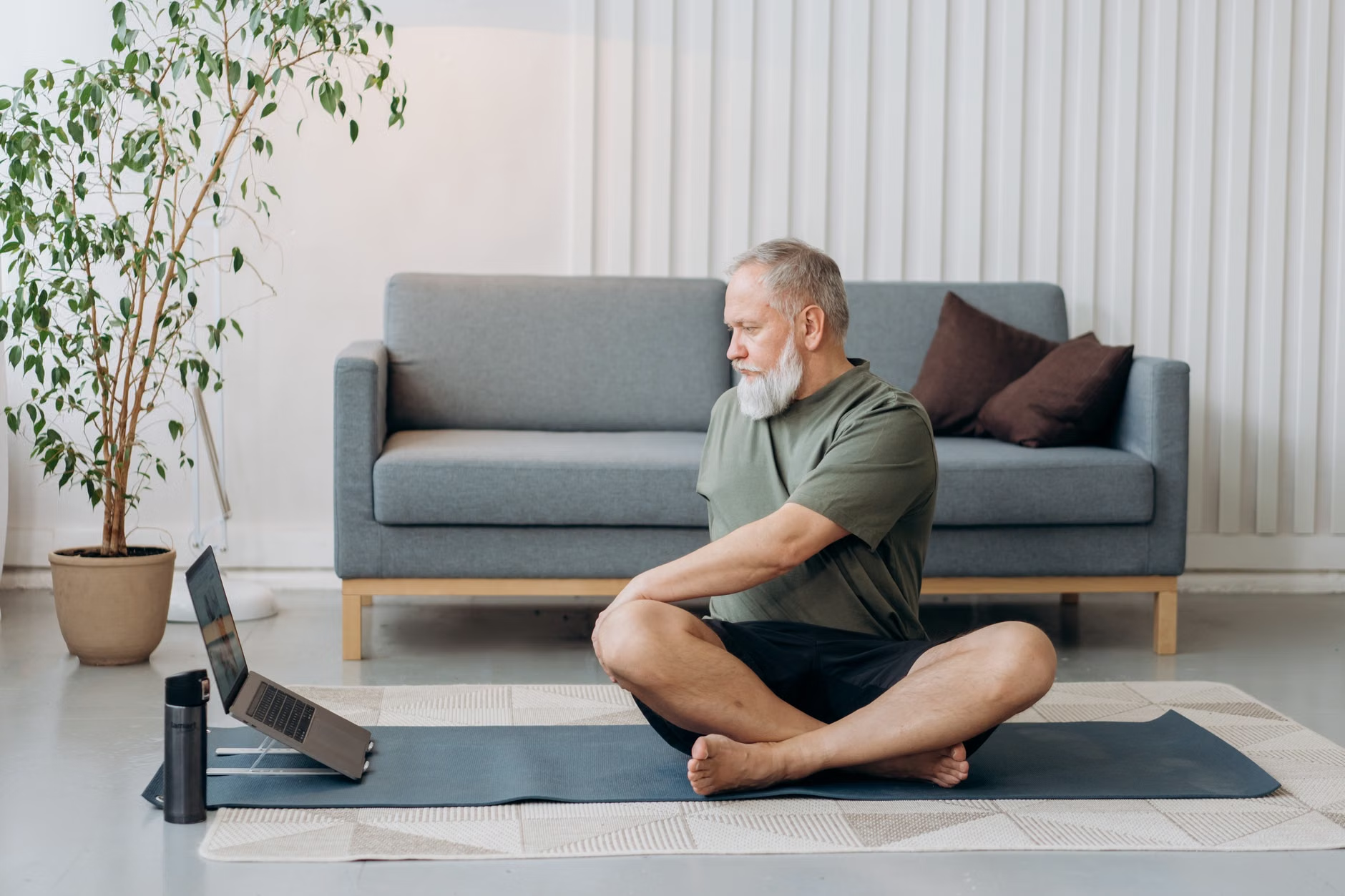
Maintaining spinal mobility is essential for performing daily activities—such as looking over your shoulder while driving, reaching for items on a shelf, or simply getting out of a chair with ease. As we age, the intervertebral discs and surrounding muscles can lose some of their natural suppleness. Incorporating controlled, seated torso-twists into your daily routine is a safe, low-impact way to maintain range of motion in the thoracic spine (the upper and middle back) without placing excessive stress on your lower back or knees.
- Seated torso-twists focus on rotating the thoracic spine, which helps reduce stiffness and improves functional movement in daily life.
- The quality of the movement—prioritizing length in the spine over the depth of the twist—is the most critical factor for safety and efficacy.
- Consistency and mindful breathing are more important than force; never push into sharp pain or discomfort.
Why Spinal Mobility Matters for Daily Function
The spine is the central pillar of the human body. It provides structural support while allowing for complex movements. For adults aged 60 to 80, the primary goal of spinal mobility is to maintain “functional independence.” This means having the range of motion required to perform everyday tasks without relying on others.
When the thoracic spine becomes stiff, the body compensates. Often, the lumbar spine (lower back) or the neck takes on the extra work. This compensation is a leading cause of back strain. By specifically targeting the thoracic spine through seated twists, you distribute movement more evenly across the entire vertebral column, reducing the likelihood of localized strain.
The Mechanics of the Seated Twist
A seated twist is essentially a rotational movement of the ribcage. When you are seated, your pelvis is stabilized by the chair. This fixation is an advantage; it prevents you from using your hips to compensate for a lack of spinal rotation. By keeping the lower body stationary, you ensure that the effort is isolated to the muscles and joints of the torso.

Step-by-Step: How to Perform a Seated Torso-Twist Safely
Before beginning any new physical movement, ensure you are using a stable, armless chair. Avoid swivel chairs or chairs with wheels, as these can shift during the movement and lead to a loss of balance.
| Step | Action | Key Focus |
|---|---|---|
| 1. Setup | Sit toward the front edge of a firm chair. | Keep feet flat on the floor, hip-width apart. |
| 2. Alignment | Lengthen your spine as if a string is pulling your head toward the ceiling. | Engage your core gently; do not slouch. |
| 3. Engagement | Place your right hand on the outside of your left knee. | Keep your shoulders relaxed and down. |
| 4. Rotation | Gently rotate your torso to the left, using the chair back for support. | Move only as far as is comfortable; do not force the turn. |
| 5. Breathing | Hold for 3-5 deep breaths, lengthening on every inhale. | Do not hold your breath, as this increases tension. |
After performing the twist on one side, slowly return to the center. Take a moment to reset your posture before moving to the opposite side. It is common to find that one side feels “stiffer” than the other. This is rarely a cause for concern; it usually reflects patterns of daily posture (such as always carrying a bag on one shoulder or sitting in a specific way while watching television). Always work within the range of motion of your “stiffer” side to ensure symmetry.
Common Mistakes and How to Avoid Them
Even simple movements can be performed incorrectly. Being aware of these common pitfalls will help you get the most out of your practice while minimizing risk.
1. Yanking or Pulling with the Arms
A common error is using your arms to force your body into a deeper twist. This can put undue torque on the shoulder joints and the spine. Instead, use your abdominal muscles to initiate the rotation. Think of the movement coming from your ribcage and core, while your hands act only as gentle guides.
2. “Collapsing” the Spine
If you lose the vertical length of your spine, the discs in your back are compressed during the twist. Always maintain that sense of “tallness.” If you feel yourself slumping or rounding your shoulders, stop, reset your posture, and perform a smaller range of motion.
3. Turning the Neck Too Far
Many people try to look as far behind them as possible, leading with the chin. Your neck is part of your spine, but it should not be the driver of this movement. Keep your chin in line with your sternum (breastbone). If your chest turns 30 degrees, your head should turn 30 degrees. Avoid “cranking” your neck to see behind you.
Integrating Mobility into Your Daily Life
Consistency is more important than duration. You do not need to set aside 30 minutes for a workout to benefit from spinal mobility. In fact, performing these twists during natural breaks in your day is often more effective.
- During TV commercials: Use the natural break in your programming to perform three twists on each side.
- After reading or computer work: If you have been sitting for more than 45 minutes, your spine will benefit from the movement.
- As part of your morning routine: While waiting for the kettle to boil, use a kitchen chair to perform a few gentle rotations.
It is important to remember that physical mobility is not just about the joints; it is about the nervous system’s comfort with movement. By practicing these twists daily, you are teaching your body that these ranges of motion are safe, which helps reduce the “protective stiffness” that often develops as we age.
When to Seek Professional Guidance
While seated torso-twists are generally safe for most healthy adults, there are conditions where you should proceed with caution or consult a healthcare professional, such as a physical therapist or your primary care physician.
Warning Signs: If you experience sharp, shooting pain, numbness, or tingling in your arms or legs while performing these movements, stop immediately. These can be signs of nerve irritation, and performing further movements could exacerbate the issue. Additionally, if you have a known history of spinal conditions, such as osteoporosis, severe osteoarthritis, or recent spinal surgery, it is essential to get specific clearance from your medical team before beginning a new mobility routine.
When speaking to a professional, be prepared. Bring a list of any current medications, a brief record of when you experience stiffness (e.g., “in the mornings” or “after sitting for an hour”), and be prepared to demonstrate the movement you are planning to perform. This helps the provider give you tailored advice based on your specific anatomy and health history.
The Role of Breathing in Spinal Health
Breath is often the most overlooked component of movement. When we hold our breath, our muscles tense up, effectively locking the very joints we are trying to mobilize. In a seated twist, focus on the “inhale-lengthen, exhale-rotate” rhythm.
As you inhale, visualize the space between your vertebrae increasing. As you exhale, gently use that new space to rotate. This synergy between the diaphragm and the deep core muscles (specifically the internal and external obliques) creates a stable, supported rotation. If you find your breath becoming shallow or ragged, you have likely moved too far into the rotation. Back off slightly until your breathing returns to a calm, rhythmic state.
Hidden Variables: Why “Stiffness” Can Be Complex
It is easy to assume that stiffness is purely a result of aging, but it is often influenced by factors we overlook. Hydration is a major player; the intervertebral discs are largely composed of water. Proper hydration throughout the day supports the elasticity of these tissues. Furthermore, systemic inflammation, which can be affected by diet and sleep quality, often manifests as generalized stiffness in the joints and muscles.
If you notice that your mobility is significantly worse on some days compared to others, consider looking at these variables rather than blaming your age. Are you drinking enough water? Have you had a restful night? Are you moving your body throughout the day, or are you staying in one position for long periods? Addressing these lifestyle factors often provides as much relief as the exercise itself.
Building a Sustainable Habit
The goal of these exercises is not to become a gymnast; it is to remain functional and pain-free. If you find that the seated twist is helpful, you may want to look into other chair-based mobility exercises, such as seated cat-cow or shoulder rolls. The key is to keep the routine simple enough that you can do it without needing special equipment or a change of clothes.
Remember that progress in mobility is slow. You are not looking for a sudden “breakthrough” but rather a gradual, sustained improvement in how your body feels during the day. By dedicating just a few minutes, you are investing in your long-term independence.
Frequently Asked Questions
1. How many times a day should I perform these twists?
There is no strict limit, but 2 to 3 times a day is generally sufficient to maintain mobility. The key is consistency. Performing a few repetitions several times throughout the day is often more effective than doing one long, intense session.
2. Can I do these twists if I have a history of back pain?
If you have chronic back pain, it is essential to consult with your doctor or a physical therapist first. They can determine if your specific condition (such as a disc herniation or spinal stenosis) makes rotational movements contraindicated. Never exercise through pain.
3. What should I do if I feel dizzy when I sit up or twist?
Dizziness can occur for several reasons, including blood pressure changes or inner ear issues. If you feel dizzy, stop the movement immediately and remain seated until the sensation passes. If this happens consistently, please discuss it with your healthcare provider, as it may be related to orthostatic hypotension or other underlying conditions that require medical attention.
For more information on senior health and staying active, you can visit the National Institute on Aging, which provides evidence-based resources for healthy aging.
Disclaimer: This article is for informational purposes only and does not constitute medical advice. Always consult with a qualified healthcare provider regarding any health concerns or before starting a new exercise program.