- Seated neck rotations help maintain cervical range of motion, which is essential for daily activities like checking blind spots while driving or looking behind you.
- Safety relies on maintaining an upright, neutral spine and moving only within a pain-free range; never force the neck into discomfort.
- If you experience numbness, radiating pain, or sudden dizziness during movement, stop immediately and consult a healthcare professional to rule out underlying structural issues.
Maintaining the flexibility and range of motion of your cervical spine—the neck area—is a cornerstone of preventive health for adults aged 60 to 80. As we age, the connective tissues in our neck can naturally lose some elasticity, and the joints may experience minor degenerative changes. These shifts can lead to stiffness, which often manifests as difficulty looking over your shoulder or turning your head to follow movement.
Seated neck rotations are an accessible, low-impact way to keep these muscles and joints supple. By performing these movements while seated, you provide your body with a stable base, which reduces the risk of losing balance and allows you to focus entirely on the controlled movement of the cervical spine.
The Mechanics of Neck Mobility and Why It Matters
The neck is a complex structure consisting of seven cervical vertebrae, supported by a network of ligaments, tendons, and muscles. Its primary role is to support the weight of the head while allowing for a wide range of motion. For an older adult, this mobility is not just about comfort; it is a functional necessity.
Consider the daily scenario of driving. When you need to change lanes, you must turn your head sufficiently to check your blind spot. If your neck is stiff, you might be tempted to turn your entire torso, which can be inefficient and potentially dangerous. Similarly, when walking, the ability to turn the head quickly to assess your surroundings—such as noticing an uneven curb or an approaching person—is vital for fall prevention.
When we talk about “range of motion,” we are referring to the distance and direction a joint can travel. Over time, physical inactivity or prolonged periods of looking down at devices can lead to “forward head posture.” This posture places immense strain on the posterior neck muscles. Seated rotations act as a counter-movement, helping to maintain the integrity of the joints and ensuring that the soft tissues remain pliable rather than becoming “locked” in a static position.
Establishing a Stable Foundation: The Seated Posture
Before you begin any neck movement, your starting position is critical. The goal is to create a “neutral spine” that allows the neck muscles to work without unnecessary tension from the upper back or shoulders.
| Requirement | Correct Positioning |
|---|---|
| Feet | Flat on the floor, hip-width apart. |
| Hips | Back against the chair, knees at a 90-degree angle. |
| Shoulders | Relaxed and pulled slightly back, away from the ears. |
| Head | Aligned over the shoulders, not protruding forward. |
If you find that your chair is too low or too high, use a cushion to adjust your height. The goal is to ensure your thighs are parallel to the floor. Why does this matter? If your feet are dangling or your hips are tilted, your core muscles may engage to keep you upright, which creates tension in the trapezius muscles—the exact muscles you are trying to relax during neck rotations.

Step-by-Step Technique for Safe Neck Rotations
Once you are seated correctly, you can begin the rotation. The key is “slow and controlled.” Rapid movements can cause dizziness or strain the delicate muscles of the neck.
- The Starting Position: Sit tall, imagine a string pulling the crown of your head toward the ceiling. Keep your chin level with the floor.
- The Rotation: Slowly turn your head to the right as if you are trying to look over your shoulder. Move only until you feel a gentle stretch. Do not push into pain.
- The Hold: Hold this position for three to five seconds. Breathe deeply; do not hold your breath, as this increases blood pressure and muscle tension.
- The Return: Slowly return your head to the center.
- The Opposite Side: Repeat the movement to the left.
A common mistake is “over-rotating.” Many people try to look as far back as possible. However, the cervical spine has a natural limit. If you feel a sharp pinch, you have gone too far. Furthermore, avoid tilting your head upward or downward during the rotation. Keep the chin at a consistent height throughout the entire arc of movement.
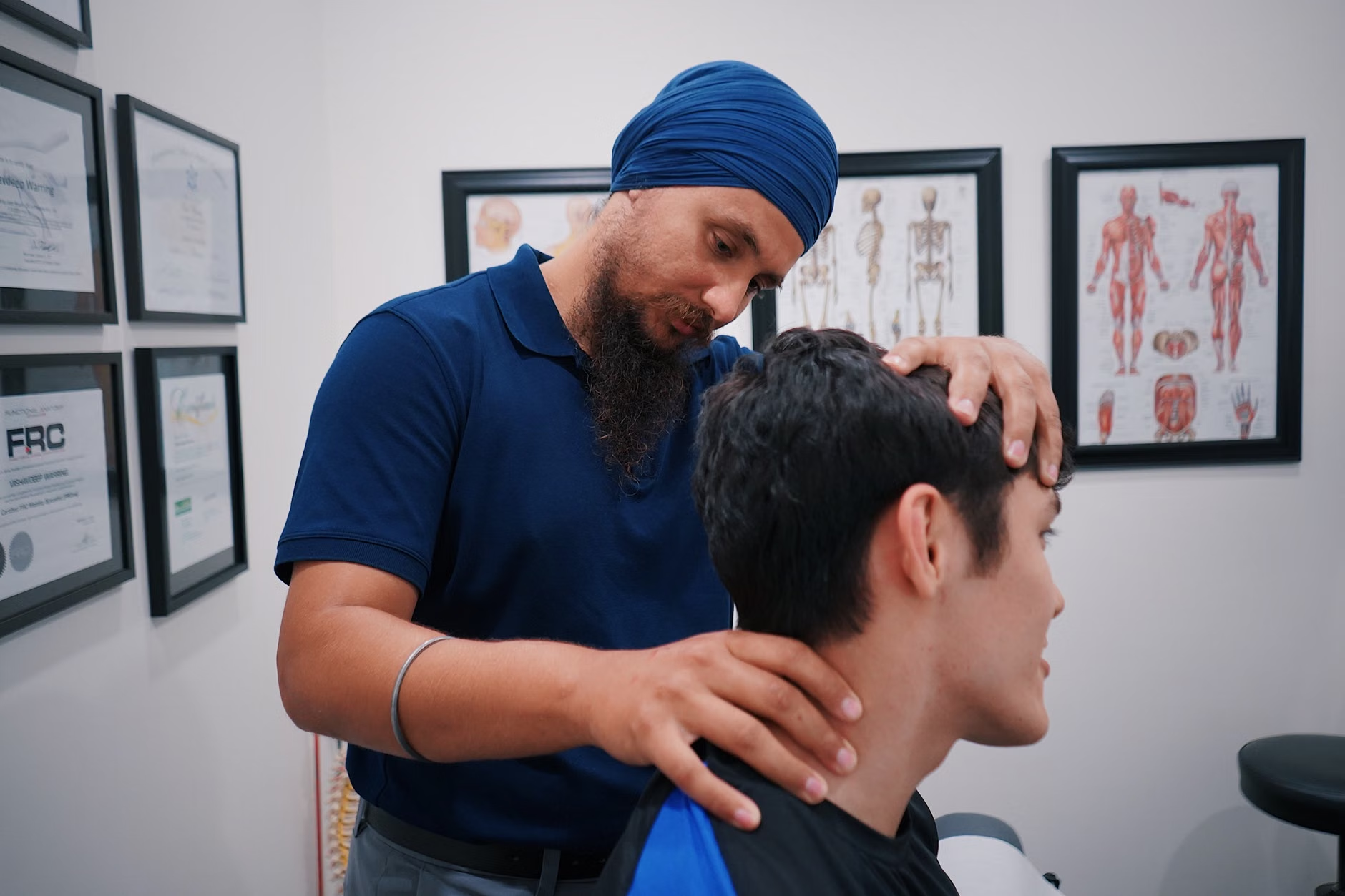
When to Modify or Stop: Understanding Your Body’s Signals
Preventive health is about listening to your body’s feedback loops. If you have been diagnosed with conditions such as cervical spondylosis, herniated discs, or severe arthritis, you should consult with your physical therapist or physician before starting these movements. They may recommend specific modifications based on your spinal imaging or clinical history.
Warning Signs: You must stop the exercise immediately if you experience any of the following:
- Dizziness or Lightheadedness: This can indicate issues with blood flow or inner ear balance.
- Radiating Pain: If you feel “electric” sensations, numbness, or tingling traveling down your arms, this may indicate nerve compression.
- Sharp, Stabbing Pain: Dull, muscular soreness is generally expected with exercise, but sharp pain indicates potential damage to ligaments or joints.
- Blurred Vision or Nausea: These are systemic red flags that require immediate medical attention.
If you have a history of vertigo or low blood pressure, perform these exercises while seated on a chair with armrests, and ensure you have a stable surface nearby. If you feel slightly off-balance, keep your eyes focused on a stationary object at eye level throughout the rotation to help maintain your equilibrium.
Integrating Neck Care into Your Daily Routine
Consistency is more important than intensity. Doing five minutes of neck rotations once a week is far less effective than doing one minute, three times a day. You can easily integrate this into your existing habits.
For example, if you spend time reading or using a computer, set a timer for every 45 minutes. When the timer goes off, pause your task, sit back in your chair, and perform three gentle rotations on each side. This serves as both a physical break for your muscles and a mental reset for your focus.
Another overlooked variable is the role of hydration. The intervertebral discs in your spine are largely composed of water. Maintaining adequate hydration throughout the day helps these discs function optimally, which in turn supports the health of the joints being moved during your rotations. While water cannot “cure” stiff joints, dehydration can certainly make the connective tissues less resilient.
The Impact of External Factors on Neck Health
It is worth noting that your neck health is often a reflection of your overall posture throughout the day. If you are regularly looking down at a smartphone or tablet, you are essentially hanging a heavy weight (your head) off the end of your neck muscles. This is often called “tech neck.”
To mitigate this, consider the ergonomics of your living environment. Can you raise your tablet to eye level using a stand? Is your television mounted at a height that prevents you from looking down for extended periods? These small adjustments reduce the baseline tension in your neck, making your daily rotations much more effective because the muscles are not constantly fighting against the strain of poor posture.
Professional Guidance and When to Seek Help
While self-care is vital, there are times when professional intervention is necessary. If you have noticed a significant, progressive loss of neck mobility over several months, or if the stiffness is accompanied by persistent headaches, it is time to see a professional. A physical therapist, for instance, can provide a personalized assessment to determine if your stiffness is caused by muscular tightness, joint restriction, or other factors.
When visiting a professional, come prepared. Maintain a simple log for one week before your appointment. Note the time of day your neck feels stiffest, what activities you were doing when the stiffness began, and whether the stiffness improves with heat or movement. This information helps a clinician differentiate between mechanical stiffness (which often improves with movement) and inflammatory issues (which may feel worse after activity).
For further reading on maintaining spinal health, you can consult authoritative resources such as the National Institute of Arthritis and Musculoskeletal and Skin Diseases, which offers comprehensive information on maintaining joint health as you age.
Common Misconceptions About Neck Exercises
One common myth is that “cracking” or “popping” the neck is a sign of a good release. In reality, these sounds are often caused by gas bubbles in the joint fluid (cavitation) or tendons snapping over bone. They do not necessarily indicate that your range of motion has improved, and self-manipulation can sometimes lead to micro-trauma or ligament strain. Stick to smooth, silent, and controlled movements.
Another misconception is that more is better. You do not need to do 50 rotations a day. The goal is to keep the joints mobile, not to exhaust the muscles. Three to five repetitions, performed with intention and good form, are sufficient for most individuals to maintain their current range of motion.
Conclusion: A Sustainable Approach to Mobility
Your neck is the bridge between your brain and your body. By dedicating just a few moments each day to seated neck rotations, you are investing in your independence and safety. This practice is not about achieving extreme flexibility; it is about ensuring that you can comfortably turn your head to interact with the world around you, whether you are driving, gardening, or simply enjoying a conversation.
Remember, the best movement is one that is performed mindfully. By maintaining a stable seated base, keeping your movements within a pain-free range, and staying consistent, you can protect your neck health for years to come. Start small, stay steady, and prioritize your comfort above all else.
Frequently Asked Questions
1. How many times a day should I perform these neck rotations?
For most adults, performing these rotations 2 to 3 times a day—perhaps in the morning, at midday, and before bed—is sufficient. The key is consistency over intensity. If you are experiencing significant stiffness, you might find that doing shorter, more frequent sessions (e.g., 2 repetitions every few hours) is more comfortable than doing a long session all at once.
2. Can I do these rotations while standing up?
While you can perform neck rotations while standing, sitting provides a more stable base, which is generally safer for older adults who may have balance concerns. If you choose to stand, ensure your feet are planted firmly and your back is supported against a wall if you feel unsteady. Always prioritize your balance and safety first.
3. My neck makes a clicking sound when I turn it. Is this dangerous?
In many cases, clicking or popping sounds during neck rotation are normal and result from the movement of tendons over bone or the release of gas bubbles within the joint. However, if the clicking is accompanied by pain, swelling, or a feeling of “catching” in the neck, it is a good idea to have it evaluated by a physical therapist or your primary care physician to ensure there are no underlying structural issues.
Disclaimer: This article is for informational purposes only and does not constitute medical advice. Always consult with a qualified healthcare provider before starting any new exercise program, especially if you have pre-existing health conditions.