- Verify Accessibility: Not all historic funiculars are fully ADA-compliant or wheelchair accessible; always check the specific station’s lift and ramp status before arriving.
- Prioritize “Off-Peak” Hours: Traveling between 10:00 AM and 3:00 PM avoids the commuter rush and overcrowding, significantly increasing comfort and safety.
- Manage Your Energy: View the funicular as a tool to bypass extreme inclines, not just a sightseeing ride, to preserve your stamina for walking at the top.
For many travelers aged 60 to 80, the charm of Europe’s and Asia’s ancient cities—steep hills, winding alleys, and dramatic viewpoints—often presents a physical challenge. Funiculars, those cable-driven railways designed to climb steep gradients, are the perfect solution. They offer a unique blend of historical engineering and practical transport. However, navigating these systems requires more than just a ticket; it requires an understanding of how to manage mobility, timing, and environmental factors to ensure a stress-free experience.
Understanding the Mechanics of Funicular Travel
A funicular operates on a simple principle: two cars are balanced on a single track with a cable that pulls one up while the other descends. For the senior traveler, this means the ride is generally very smooth, but the stations themselves are often built into steep terrain, which can involve stairs or uneven surfaces. Knowing what to expect at the station is just as important as the ride itself.
The Reality of “Historic” Infrastructure
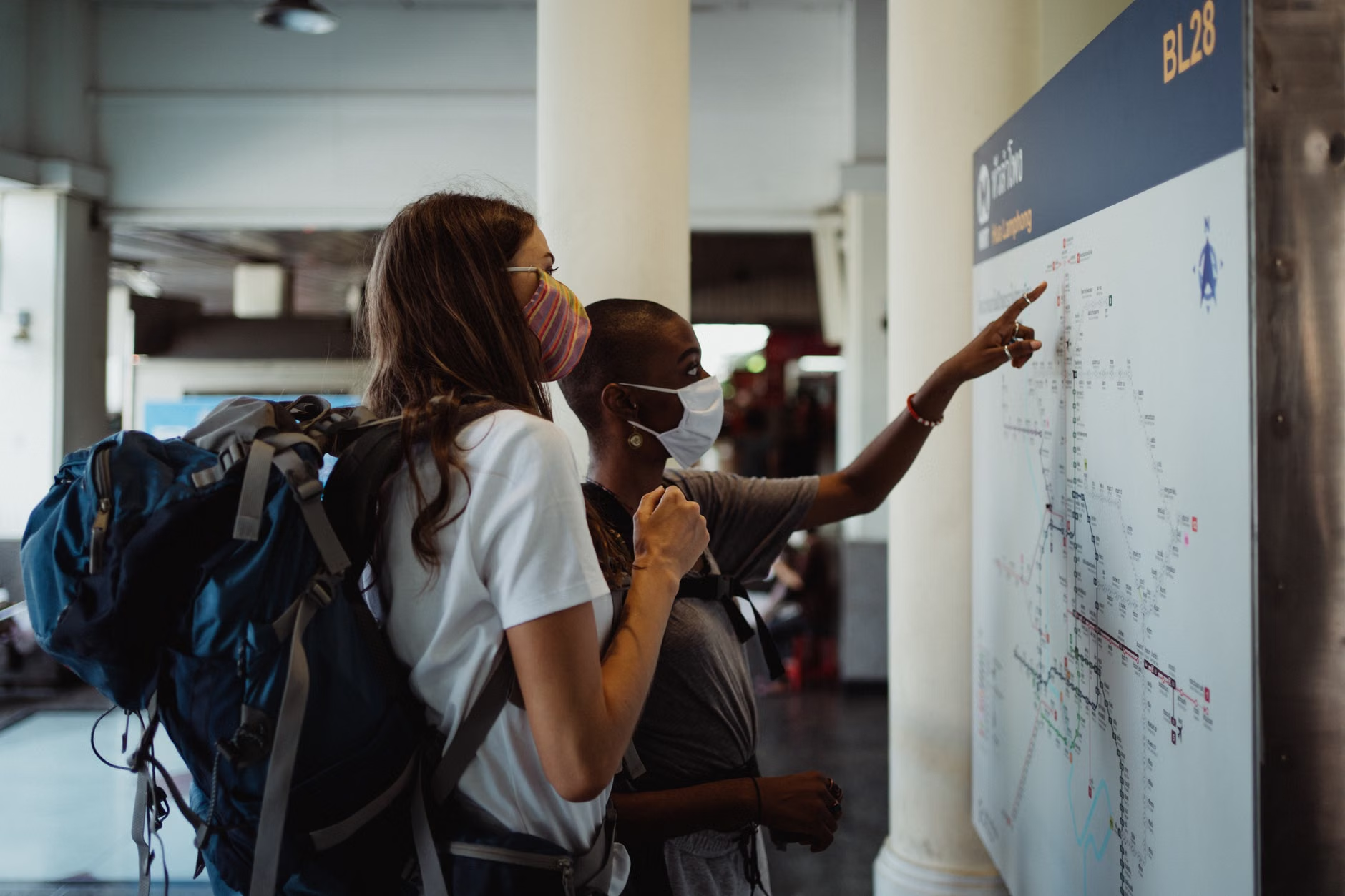
While many funiculars have been modernized to comply with current safety standards, the “ancient” nature of the city often dictates the layout. In places like Lisbon, Portugal, or Valparaíso, Chile, the stations are tucked into narrow, historic buildings. This often means that while the car itself may be accessible, the approach to the station might involve a flight of stone stairs. Researching the specific station—not just the line—is a critical step in your travel planning.
Safety and Stability in Transit
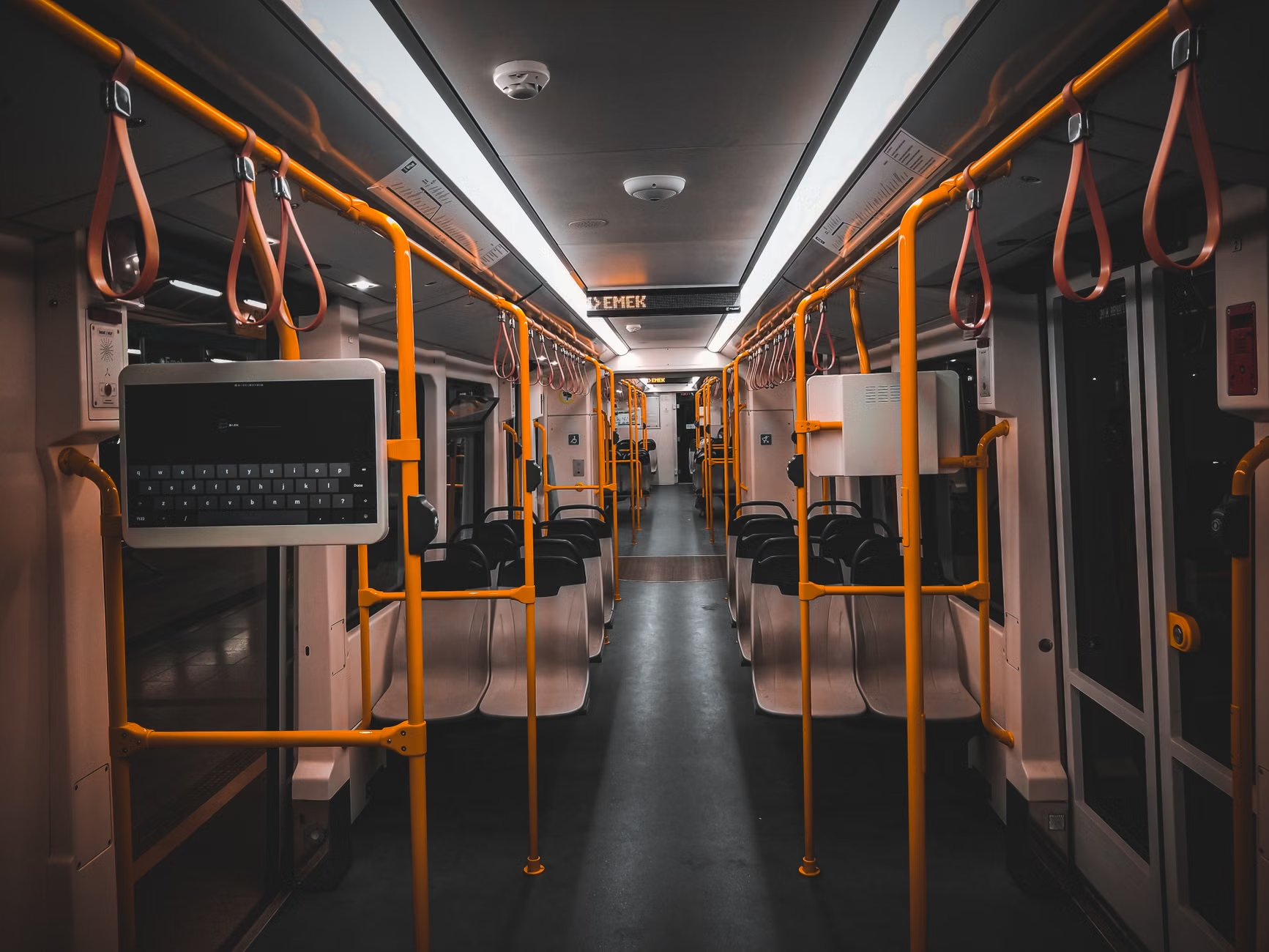
Funiculars are remarkably safe, but they are not always designed with universal design principles in mind. Older carriages may have high thresholds or narrow doors. When boarding, always look for the designated space for those with mobility aids or those who require extra time. If you use a walking stick or a folding cane, ensure it is securely held or braced against your legs when the car starts, as the initial jerk of the cable can be surprising.
Planning Your Route: A Strategic Approach
The secret to enjoying ancient city funiculars is to treat them as a strategic asset rather than a tourist attraction. By planning your day around these transit hubs, you can bypass the most grueling vertical climbs while keeping your energy levels high for the flat, walkable areas at the summit.
| Factor | What to Look For | Senior-Friendly Strategy |
|---|---|---|
| Station Access | Ramps vs. Stairs | Check Google Maps Street View for station entrances before you leave. |
| Peak Times | Commuter Density | Avoid 8:00–9:30 AM and 4:30–6:00 PM. |
| Ticketing | Digital vs. Manual | Purchase digital tickets or day passes in advance to avoid queues. |
The table above highlights the primary decision criteria for planning. If you are traveling with a companion who has limited mobility, prioritizing digital tickets is essential to avoid standing in long lines at ticket kiosks, which are often located in high-traffic, crowded areas.
Maintaining Stamina: The “Top-Down” Method
A common mistake for travelers is to walk up a city’s steep hills and then take the funicular down. This is physically counter-productive. The “Top-Down” method is recommended: take the funicular to the highest point first, then spend your energy walking downhill through the city. This allows you to explore at your own pace, with the assurance that you aren’t facing a steep climb at the end of the day when your energy is at its lowest.
Managing Fatigue and Recovery
Even with the funicular, ancient cities involve significant walking on cobblestones. Cobblestones are notorious for causing foot strain and balance issues. Ensure you wear shoes with excellent arch support and a firm grip. If you feel your stamina waning, look for the “funicular district.” Most cities with these systems have cafes located near the upper stations. Use these as your “recharge zones.”
The Importance of Rest Breaks
When planning your itinerary, do not schedule more than one major sight per half-day. If you visit the castle at the top of the hill in the morning, plan for a long lunch near the station before descending. This prevents the “rushed traveler” fatigue that often leads to accidents or falls.
Accessibility and Assistive Technology
Modern transit authorities are increasingly aware of the needs of an aging population. However, “accessible” in a city like Rome or Prague may mean something very different than in a city like Singapore or Tokyo. Always look for the official transit website of the city you are visiting and search for the specific “Accessibility” or “Accessibility Map” page.
Understanding Symbols and Signage
Most international transit systems use a standard set of symbols. A wheelchair icon usually indicates a step-free path. However, if you have limited mobility but do not use a wheelchair, do not assume a “step-free” path is a “flat” path. It may still involve a steep ramp. If in doubt, look for information regarding elevators (lifts) at the station. Elevators are generally more reliable for those with joint pain or balance issues than steep ramps.
What to Do If You Encounter a Barrier
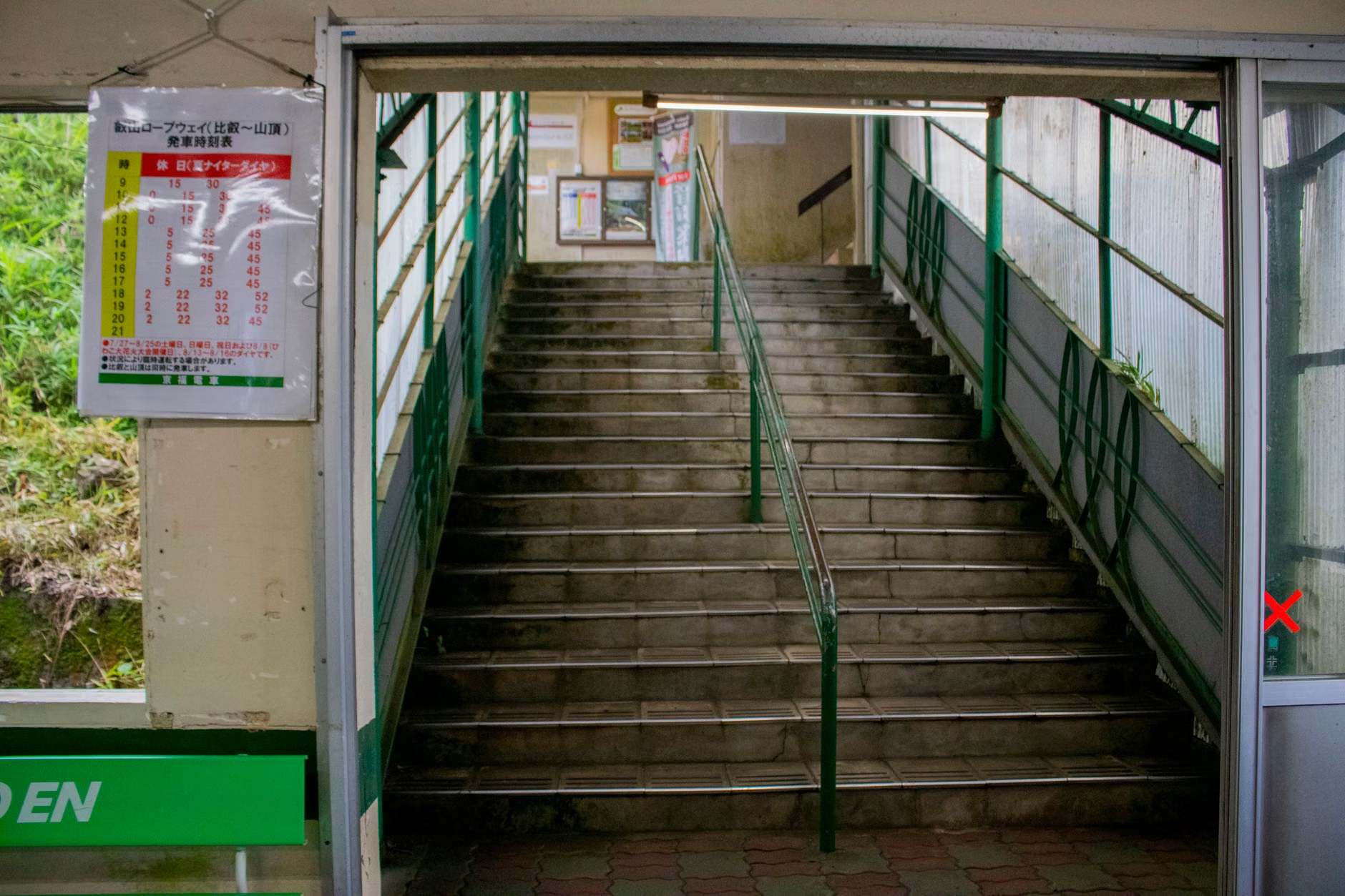
If you arrive at a station and realize the path is inaccessible, do not attempt to force the situation. Historic cities often have alternative transport. For example, many cities with funiculars also have bus lines that reach the same summits. These buses are often more accessible than the historic funicular stations. Keep a local taxi app (such as FreeNow or Uber) installed on your phone as a backup plan for the end of the day when fatigue is highest.
Health Considerations for High-Altitude or Steep Transit
While most funiculars operate within city limits and do not reach extreme altitudes, the steepness of the climb can occasionally affect those with inner-ear issues or vertigo. If you are prone to motion sickness or balance issues, try to sit in the middle of the carriage. Avoid looking out the side windows at the steep angle of the track; instead, focus on the horizon or the inside of the carriage. These simple adjustments can prevent dizziness and ensure you arrive at your destination feeling refreshed.
Managing Medication and Hydration
Travel in ancient cities often involves higher temperatures and more sun exposure than expected, especially in Mediterranean or Latin American climates. Dehydration can lead to lightheadedness, which increases the risk of falls on steep, uneven surfaces. Carry a reusable water bottle and keep it filled. If you take medication that requires specific timing, set an alarm on your phone that accounts for local time differences. Do not skip doses just because your travel schedule is unconventional.
When to Consult a Professional Before Your Trip
If you have a known condition affecting your balance, such as inner-ear disturbances or significant joint pain, it is advisable to consult your healthcare provider before booking a trip that involves significant hill-climbing. Ask them for specific exercises to improve lower-body stability or for advice on how to manage your condition in a high-walking environment. Bringing a record of your medications and any relevant medical documents is a standard practice that provides peace of mind.
Practical Decision-Making for the Senior Traveler
The difference between an exhausting trip and a memorable one often comes down to the ability to pivot. If you reach a funicular station and the line is too long, or the accessibility is not as promised, have a pre-decided alternative. This might be a taxi, a bus, or simply choosing a different area of the city to explore that day. Flexibility is the ultimate travel tool for the modern senior.
Financial and Administrative Tips
Many cities offer significant discounts for seniors (often defined as 65+) on public transport. Always carry a valid ID that shows your date of birth. In some countries, you may need a specific “senior card” issued by the local government, while in others, a passport is sufficient. Check the transit authority’s website at least two weeks before you travel to see if you qualify for these discounts. This can save you a significant amount of money over the course of a week-long trip.
The Role of Technology in Safety
While we emphasize digital tools, do not rely on them exclusively. Carry a physical map of the city and a card with the address of your hotel written in the local language. If your phone battery dies or you lose signal, these low-tech tools are your safety net. Most hotels will provide a business card at the front desk; keep one in your wallet at all times.
Conclusion
Navigating ancient city funiculars is a manageable and rewarding way to experience the world’s most beautiful destinations. By prioritizing accessibility, planning for off-peak travel, and maintaining a focus on your own physical pacing, you can enjoy the heights of these historic cities without the physical toll. Remember that the goal of travel is enrichment, not endurance. Choose the path that keeps you safe, comfortable, and able to enjoy the view when you finally reach the top.
Frequently Asked Questions
1. Are all funiculars accessible for wheelchair users?
No. While many modern funiculars have been retrofitted, some historic systems are located in buildings that cannot be structurally altered for ramps or elevators. Always check the official website of the specific transit system for accessibility status (often marked with a wheelchair icon) before planning your route.
2. Is there a specific time of day that is best for seniors to use these systems?
Yes. To avoid the stress of crowds and the physical risk of being bumped in a packed carriage, aim to travel during “off-peak” hours. This is generally between 10:00 AM and 3:00 PM, after the morning commuter rush and before the late afternoon surge.
3. Do I need to book funicular tickets in advance?
It depends on the city, but it is highly recommended. Many popular tourist cities have moved to digital-only ticketing or have long queues at physical machines. Buying your ticket online or through an app allows you to bypass the ticket office and go straight to the boarding area, which is far less tiring.
For further information on accessible travel, you may refer to the World Health Organization’s guidance on inclusive environments, which highlights the importance of accessible infrastructure in public spaces.