- Prioritize 360-degree mobility: Use four-wheeled spinner luggage to reduce physical strain on your wrists and shoulders during terminal transfers.
- Weight is the primary enemy: Aim for a maximum weight of 10-12kg (22-26 lbs) for your primary bag to ensure you can lift it onto overhead racks independently.
- Modular packing: Utilize packing cubes to compartmentalize essentials, allowing you to access medication and documents without unpacking your entire bag on the train.
For many travelers aged 60 to 80, the romance of rail travel—watching the countryside glide past from the comfort of a seat—is often dampened by the reality of navigating train stations. Transfers, steep boarding steps, and crowded platforms can turn an otherwise relaxing journey into a test of physical endurance. The secret to reclaiming the joy of rail travel lies in one fundamental shift: mastering the art of packing light.
The Physics of Packing: Why Less is More on the Rails
When you travel by train, you are responsible for your luggage from the moment you exit your transport at the station until you reach your seat. Unlike air travel, where your primary bag is checked through, rail travel requires you to be entirely self-sufficient. Every additional kilogram you carry increases the torque on your joints and the demand on your cardiovascular system.
The “One-Lift” Rule: A practical decision rule for rail travelers is that you should be able to lift your primary suitcase from the floor to an overhead rack or a luggage bay in one smooth motion without requiring assistance. If you cannot do this, your bag is too heavy for the reality of rail infrastructure. This is not about frailty; it is about maintaining autonomy. By keeping your load under 12kg, you ensure that you are never dependent on the kindness of strangers or the availability of station staff, both of which are unpredictable variables.

The Mechanical Advantage of Spinner Luggage
The transition from two-wheeled “pull” suitcases to four-wheeled “spinner” luggage is the most significant technological upgrade a senior traveler can make. A two-wheeled bag requires you to tilt the weight, placing a constant strain on your shoulder, elbow, and wrist. A spinner bag, when pushed alongside you, keeps your posture upright and centers the weight over the wheels.
When choosing a bag, look for the following specifications:
- Weight: The empty bag should weigh no more than 2.5kg.
- Wheels: Double-spinner wheels provide better stability on uneven platform surfaces (such as cobblestones or gaps between tiles).
- Handle: An adjustable-height handle that locks at multiple positions allows you to find the exact ergonomic height that prevents you from stooping or reaching too high.
Strategic Packing: The Modular Approach
Packing for a multi-day rail journey requires a different mindset than packing for a hotel stay. You need to account for “in-transit” access. If you find yourself digging through your main suitcase while on a moving train because you need your reading glasses or a specific medication, you are creating unnecessary physical stress.
The “Day-Bag” Strategy: Treat your journey as a two-part system. Your main suitcase stays in the luggage rack, while your day bag (a small backpack or cross-body bag) stays at your seat. Your day bag should contain everything you need for 4-6 hours of travel: prescription medications, water, light snacks, travel documents, and your mobile device.
Packing Cube Methodology
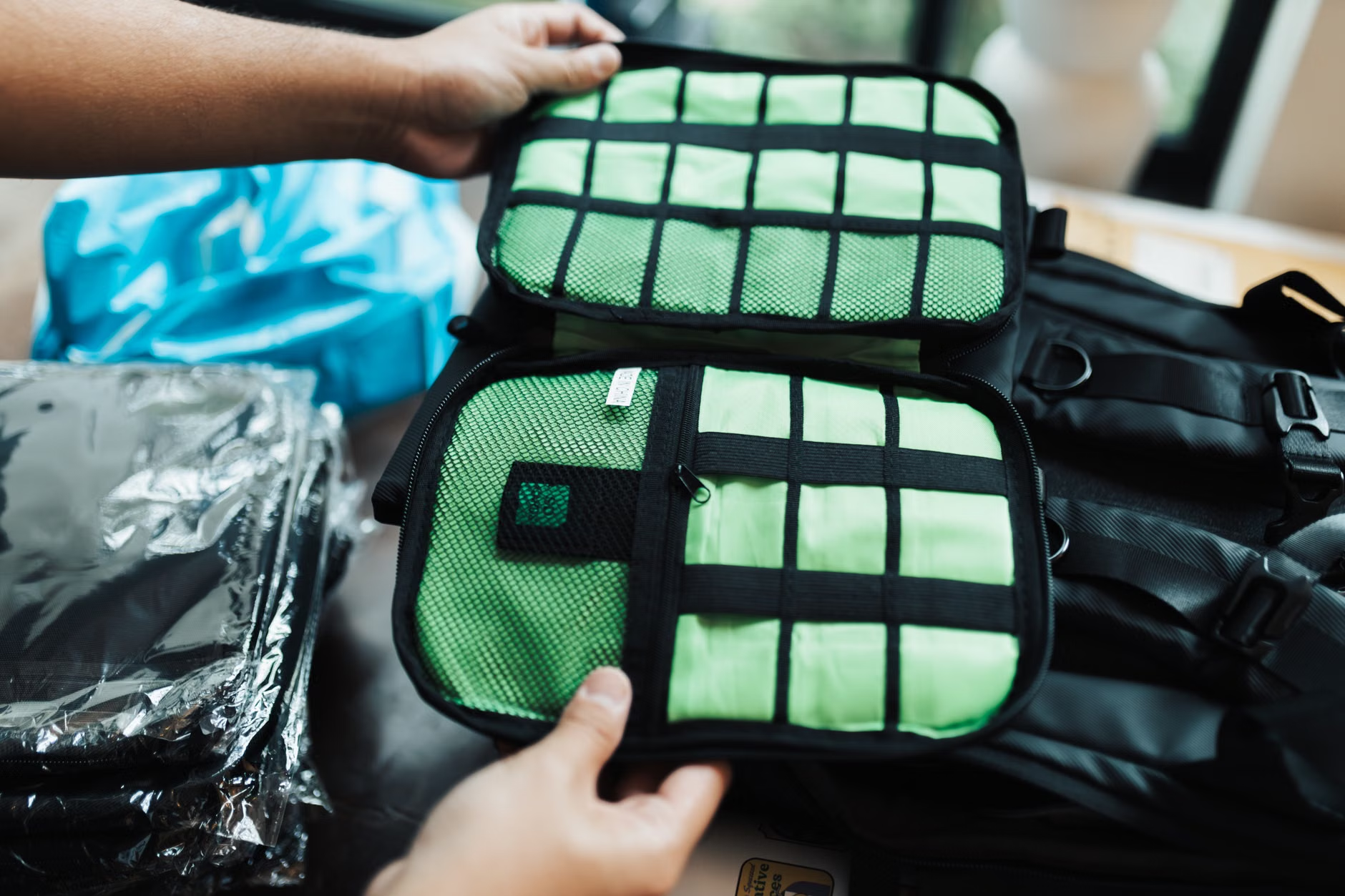
Packing cubes act as “drawers” for your suitcase. By categorizing your items, you eliminate the need to rummage. Use one cube for tops, one for bottoms, and one for undergarments. This structure ensures that even if you need to open your bag in a tight train corridor, you are only exposing the relevant section of your belongings rather than creating a chaotic pile.
| Category | Packing Tip | Why it matters for rail |
|---|---|---|
| Clothing | Roll, don’t fold | Reduces wrinkles and creates more space for essentials. |
| Toiletries | Solid-form products | Eliminates liquid leakage risk and saves weight. |
| Footwear | Wear your heaviest pair | Reduces weight in your bag by nearly 1kg. |
| Medication | Keep in original packaging | Crucial for customs and emergency identification. |
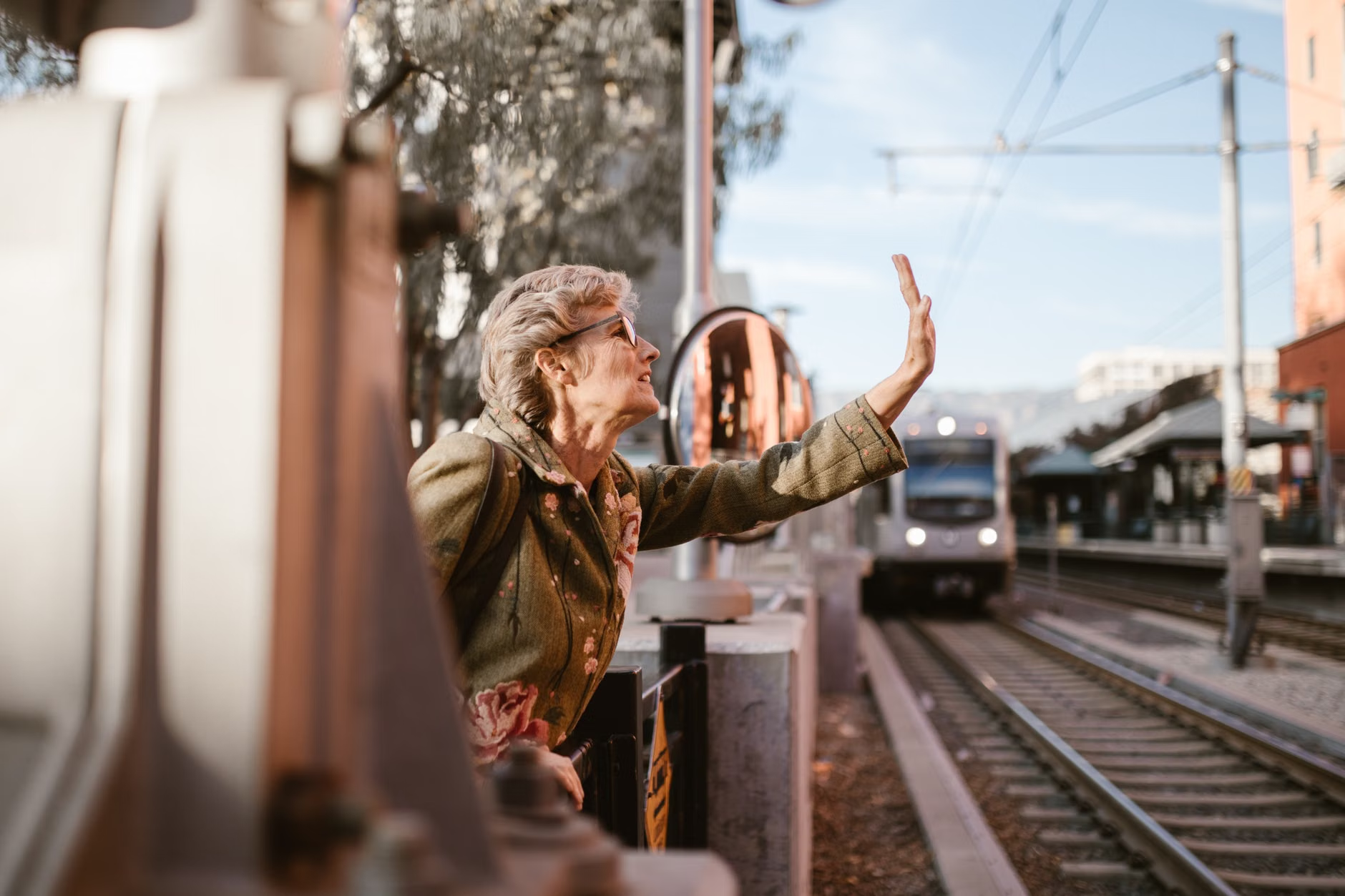
Most modern rail stations, particularly in Europe and parts of Asia, have invested heavily in accessibility. However, “accessible” does not always mean “convenient.” A lift might be located at the far end of the platform, requiring a 200-meter walk with your luggage. Researching your specific station layout is a vital step in pre-trip planning.
The “Platform Gap” Reality: Many older rail stations still feature a gap between the platform and the train carriage. This is where your light packing pays off. If you are carrying a heavy, oversized bag, navigating that gap becomes a safety risk. If your bag is light and compact, you can easily lift it over the gap, allowing you to maintain your balance and posture.
Utilizing Official Assistance Services
Most national rail operators (such as Deutsche Bahn in Germany, SNCF in France, or Amtrak in the United States) offer “Assistance Services” for passengers who need help with luggage or boarding. This is not an admission of neediness; it is a smart use of available resources.
- How to use it: You typically must book these services 24 to 48 hours in advance through the operator’s official website or mobile app.
- What to expect: A staff member will meet you at a designated point, assist with your luggage, and ensure you are safely seated on the train.
Health and Wellbeing: Stamina Management
Rail travel often involves long periods of sitting followed by short bursts of intense activity—the “sprint” to the platform or the navigation of stairs. To maintain your stamina, focus on hydration and blood flow. Sitting for extended periods can cause fluid retention in the lower limbs, which can make walking to the next platform feel significantly harder than it should.
Practical Steps for On-Board Health:
- Movement: Every 60 minutes, stand up and perform simple calf raises or walk to the end of the carriage and back. This keeps blood circulating and prevents stiff joints.
- Hydration: Avoid excessive caffeine or diuretics. Carry a reusable water bottle that you can refill at station taps (if potable) or on the train.
- Footwear Selection: Choose shoes with good arch support and non-slip soles. Train floors can be slippery, and you need stability when the train accelerates or decelerates.
The Psychological Benefit of Light Travel
There is a hidden, often overlooked benefit to packing light: the reduction of mental load. When you are not constantly worrying about the safety, weight, or location of your multiple bags, your capacity to enjoy the journey increases. You become more observant, more relaxed, and more capable of handling the unexpected, such as a platform change or a delayed connection.
Decision Criterion: Before you zip your bag shut for the final time, perform a “carry test.” Walk around your home for 10 minutes, including up and down a flight of stairs. If you feel winded, or if you find yourself compensating by leaning to one side, remove two items. The weight reduction will make a tangible difference in your comfort levels during the journey.
Conclusion: Your Next Steps
Packing light for rail transfers is a form of self-care. It transforms the station from a source of anxiety into a manageable environment. By investing in a high-quality spinner suitcase, utilizing a modular packing system, and planning your station navigation in advance, you ensure that your rail journey is defined by the destination and the experience, not by the struggle with your luggage.
Your next step is to weigh your current travel bag. If it exceeds 12kg, identify three items you can leave behind. This simple action is the first step toward a more fluid, enjoyable, and safe travel experience.
Frequently Asked Questions
1. How do I know if I need to book assistance for my train journey?
If you have any concerns about your mobility, the gap between the platform and the train, or the weight of your luggage, it is always safer to book assistance. Most railway operators provide this service free of charge. Check the “Accessibility” or “Assistance” section of the train operator’s official website at least 48 hours before your departure.
2. What should I do if my train station does not have lifts or escalators?
If you are planning to visit a station with known accessibility issues, consider using a luggage forwarding service. Many countries offer services that will transport your large luggage from your home to your hotel or from station to station, allowing you to travel with only a small, lightweight day bag. Always verify the availability of these services in your specific region.
3. Are there specific travel documents I should keep accessible at all times?
Yes. Keep your passport or national ID, your train tickets (printed or digital), and a printed list of your current medications in a secure, easy-to-reach pocket of your day bag. Never place these items in your main suitcase, as you may be separated from it during busy boarding periods or if you decide to use a luggage storage service.
Official guidance on rail accessibility can be found through national transport authorities. For example, in the UK, consult National Rail Enquiries, and for the EU, refer to the European Commission’s Rail Passenger Rights.