- Active Pump Mechanism: Seated ankle-pumps act as a “second heart” for your legs by using calf muscle contractions to push venous blood back toward the heart.
- Preventive Routine: Performing 20–30 repetitions every hour while sitting can significantly reduce fluid pooling, edema, and the risk of venous stasis.
- When to Consult a Professional: Always seek medical advice if you experience sudden, asymmetrical swelling, pain, warmth, or redness in one leg, as these may be signs of a condition requiring urgent care.
For many adults aged 60 to 80, long periods of sitting—whether during travel, while reading, or watching television—can lead to sluggish circulation in the lower extremities. The human body relies heavily on movement to keep blood flowing efficiently from the feet back up to the heart. When we remain sedentary, this “venous return” slows down, often resulting in swelling (edema), a feeling of heaviness in the legs, or increased fatigue.
The seated ankle-pump is one of the most accessible and effective preventive exercises for maintaining vascular health. It requires no equipment, can be performed discreetly, and takes only a few seconds to execute. This guide explains why this simple movement is a cornerstone of vascular maintenance and how you can integrate it into your daily routine.
Understanding the Calf Muscle Pump
To understand why ankle-pumps work, it helps to visualize the circulatory system in your legs. Unlike the heart, which is a powerful pump, the veins in your legs rely on a system of valves and the contraction of surrounding muscles to move blood against gravity. This process is known as the “calf muscle pump.”
When you stand and walk, your calf muscles naturally contract and relax with every step. These contractions squeeze the deep veins, forcing blood upward through one-way valves that prevent backflow. However, when you are seated for an extended period, these muscles remain dormant. Gravity causes blood and interstitial fluid to pool in the lower legs and ankles, leading to the discomfort and swelling many people experience by the end of the day.
By consciously performing ankle-pumps, you are artificially engaging this pump mechanism. Even without standing, the rhythmic contraction of the calf and shin muscles helps maintain the pressure gradient necessary for healthy blood flow. This is not a replacement for walking or moderate aerobic exercise, but it is a critical “maintenance” task for sedentary periods.
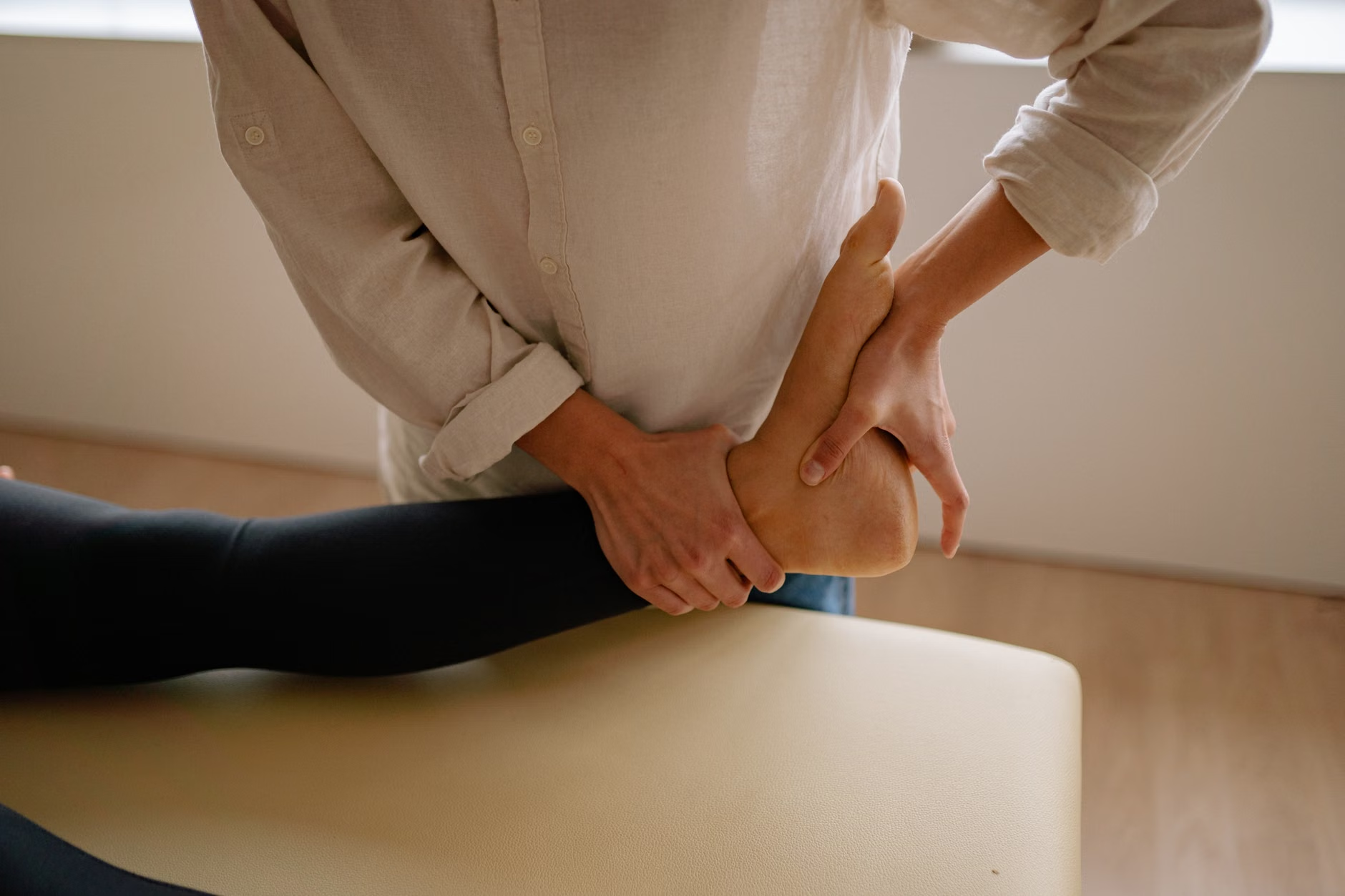
How to Perform Ankle-Pumps Correctively
The efficacy of an ankle-pump depends on the full range of motion. Many people perform “half-pumps,” which do not fully engage the calf muscles. To get the maximum benefit, follow these steps:
- Positioning: Sit comfortably in a chair with your feet flat on the floor. Ensure your back is supported.
- The Upward Motion (Dorsiflexion): Lift your toes and the ball of your foot upward toward your shin as far as you comfortably can. You should feel a stretch in your calf and an engagement of the muscles at the front of your shin.
- The Downward Motion (Plantarflexion): Push your toes downward toward the floor as if you are pressing a gas pedal. Focus on feeling the calf muscle contract.
- Repeat: Perform this motion in a smooth, rhythmic cycle.
Frequency and Intensity: Aim for 20 to 30 repetitions per set. It is recommended to perform a set every 60 minutes during long periods of sitting, such as on a flight, a train journey, or during a long movie. If you notice your legs feeling heavy or tight, you can increase the frequency without any adverse risk.
Common Mistakes to Avoid
- Rushing the movement: Fast, jerky movements do not allow the veins enough time to empty. Keep the movement slow and controlled.
- Wearing restrictive clothing: Tight socks, boots, or trousers can act as a tourniquet, counteracting the benefits of the exercise. Ensure your footwear is loose-fitting during long periods of sitting.
- Holding your breath: Always breathe naturally. Holding your breath can cause temporary spikes in blood pressure, which is unnecessary and potentially uncomfortable.
Why This Matters for Long-Term Leg Health
Maintaining circulation is not just about comfort; it is about preventing long-term vascular complications. Chronic venous insufficiency—a condition where veins have trouble sending blood from the legs back to the heart—can lead to skin changes, ulcers, and persistent discomfort if left unmanaged over many years.
For older adults, the elasticity of blood vessels naturally decreases. This makes the “pump” mechanism even more vital. By making ankle-pumps a habit, you are essentially providing your vascular system with the assistance it needs to function optimally despite the natural changes associated with aging.
Comparing Circulation Strategies
While ankle-pumps are excellent, they are part of a broader strategy for leg health. The following table compares different methods for managing lower-limb circulation:
| Method | Primary Benefit | Best Used For |
|---|---|---|
| Ankle-Pumps | Direct activation of the calf pump. | Immediate relief during prolonged sitting. |
| Walking/Movement | Full-body circulation and muscle tone. | Overall cardiovascular health. |
| Compression Stockings | Passive support to prevent fluid pooling. | Travel or standing for long periods (consult a doctor first). |
| Leg Elevation | Uses gravity to assist venous return. | End-of-day recovery for swollen ankles. |
As shown in the table, ankle-pumps are unique because they are an active intervention that can be done in almost any environment without specialized equipment. While compression stockings are highly effective for some, they must be fitted correctly by a professional to avoid restricting blood flow, whereas ankle-pumps carry virtually no risk of improper use.
When to Seek Professional Medical Advice
While ankle-pumps are a safe preventive measure, they are not a substitute for medical intervention when symptoms are persistent or concerning. It is essential to recognize the difference between “normal” sedentary swelling and symptoms that indicate an underlying issue.
Warning Signs: You should consult a healthcare provider if you notice:
- Asymmetry: Swelling that occurs in only one leg. This can be a sign of a deep vein thrombosis (DVT), a blood clot that requires immediate medical attention.
- Skin Changes: Redness, warmth, or a “tight” feeling in the skin that does not go away with elevation.
- Pain: Sharp or localized pain in the calf, which may be aggravated by walking or touching the area.
- Systemic Symptoms: If the swelling is accompanied by shortness of breath or chest pain, seek emergency medical care immediately.
When you visit a doctor, be prepared to discuss your routine. Bring a list of any medications you are taking, as some common blood pressure medications or other prescriptions can cause fluid retention as a side effect. Keeping a simple log of when you notice swelling—for example, “swelling occurs after 3 hours of driving”—can provide your doctor with valuable diagnostic clues.

Integrating Movement into Your Daily Life
Habit formation is the greatest challenge in preventive health. To make ankle-pumps a natural part of your day, anchor them to activities you already do. For example, make a rule that every time you finish a chapter of a book, you perform 30 ankle-pumps. If you are watching a television program, perform them during every commercial break.
For those who travel, set an alarm on your phone or watch for every hour of the flight or train ride. If you are in a vehicle, ensure you take regular rest stops every two hours to walk around, but use the seated ankle-pump in the interim to keep blood moving.
Remember that hydration also plays a role. Dehydration can increase blood viscosity (thickness), making it harder for the heart to pump and for the venous system to return blood. Staying well-hydrated makes the work of your calf muscle pump much easier.
Conclusion
The seated ankle-pump is a testament to the power of small, consistent actions in maintaining health. By understanding the mechanics of your own body, you can take proactive steps to prevent discomfort and support your vascular system. Start today by adding this simple movement to your hourly routine, and you will likely notice a difference in how your legs feel at the end of the day. Remember, the goal of preventive health is to keep your body functioning comfortably, allowing you to remain active and engaged in the activities you enjoy.
Frequently Asked Questions
1. Can I do ankle-pumps too often?
No, there is no risk to performing ankle-pumps too frequently. They are a natural movement that mimics walking. You can perform them as often as you like throughout the day whenever you are seated.
2. Do I need to be barefoot to do ankle-pumps?
You do not need to be barefoot. You can perform them while wearing shoes, provided the footwear is not so rigid that it prevents your ankle from moving through its full range of motion. If you are wearing stiff boots, you might find it easier to loosen the laces slightly.
3. Are there specific medical conditions that prevent me from doing this exercise?
While ankle-pumps are generally safe, if you have had recent surgery on your feet, ankles, or legs, or if you have a known history of blood clots or severe vascular disease, you should verify with your physician that this movement is appropriate for your specific recovery plan. Always prioritize the guidance of your medical team if you are currently under their care for a leg-related condition.
Sources and Further Reading: