- Consistency over Intensity: Gentle, daily neck rotations are more effective for long-term cervical health than infrequent, high-intensity stretching.
- The “Pain-Free” Rule: If you feel sharp, shooting, or radiating pain during movement, stop immediately; exercises should only produce a mild, comfortable stretch.
- Posture is the Foundation: Neck mobility cannot be separated from thoracic (upper back) and lumbar (lower back) support; always anchor your feet and align your spine before moving your head.
Understanding Cervical Mobility in Later Life
Cervical mobility—the ability of your neck to move through its full, natural range of motion—is a cornerstone of independence. As we move into our 60s, 70s, and beyond, the structures of the cervical spine, including the vertebrae, discs, and surrounding musculature, undergo natural physiological changes. These changes can lead to decreased flexibility, often perceived as “stiffness” or a limited ability to turn the head to check blind spots while driving or to look over the shoulder during social interactions.
The neck serves as a bridge between the brain and the body, housing vital nerves and blood vessels. When mobility is restricted, it is rarely just an issue of the neck itself. It is often a cumulative result of postural habits, prolonged periods of sitting, and a gradual reduction in the use of the full range of motion in our daily routines. Preventive health, in this context, is about maintaining the “lubrication” of these joints through controlled, intentional movement.
This guide focuses on the seated neck rotation—a simple, accessible, and highly effective movement that can be performed almost anywhere. By understanding the mechanics of this movement, you can integrate it into your daily life to preserve your range of motion, reduce the risk of acute stiffness, and maintain the functional independence required for everyday activities.
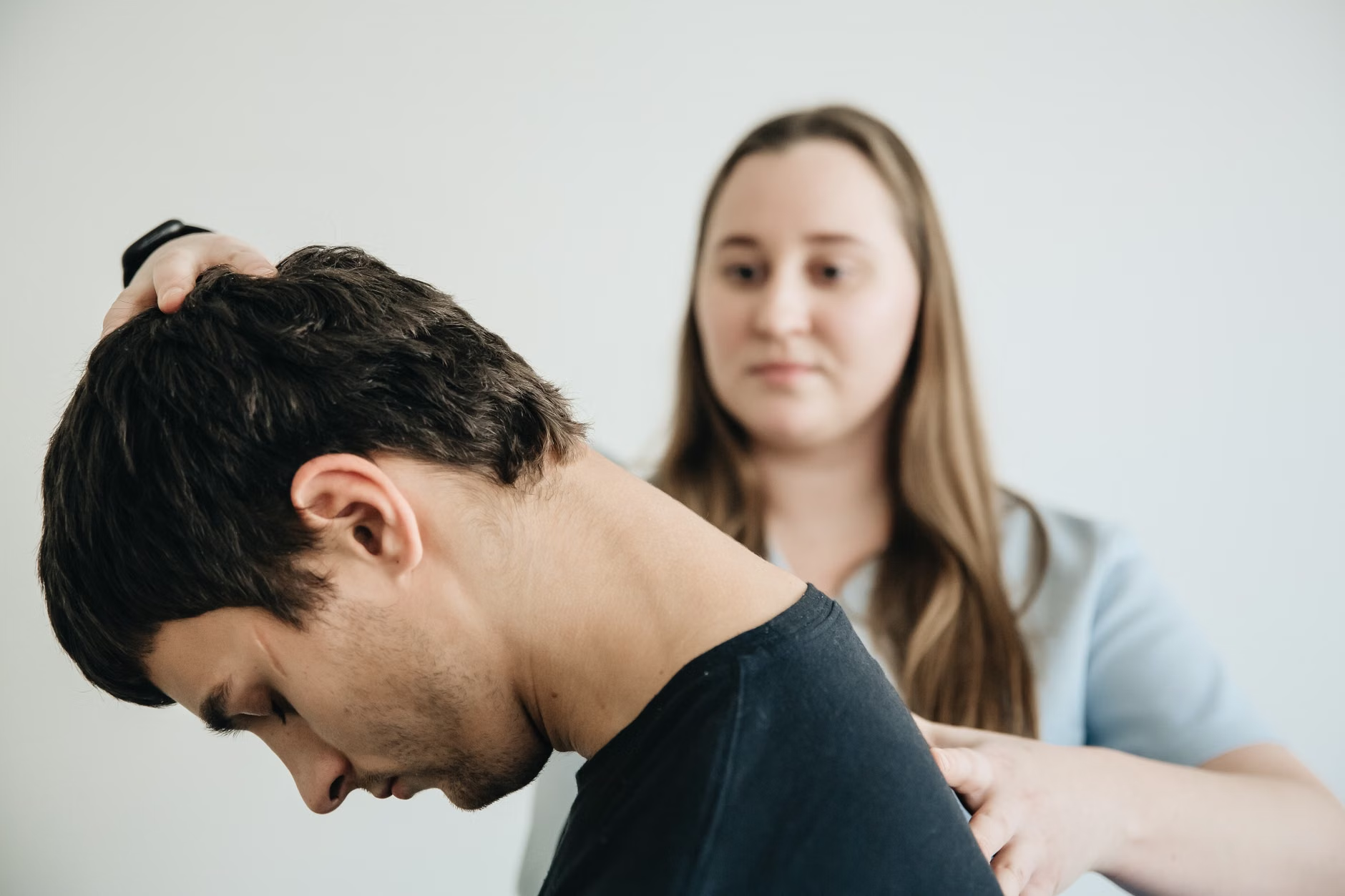
The Anatomy of a Safe Neck Rotation
A neck rotation is a rotational movement of the cervical spine. To understand why it matters, consider the alternative: when the neck loses its ability to rotate, we compensate by turning our entire torso. While this is a functional workaround, it places undue strain on the thoracic spine and can lead to secondary issues in the shoulders and upper back. Maintaining cervical rotation ensures that the load of movement is distributed correctly across the spine.
What Proper Alignment Looks Like
Before you begin any neck exercise, your starting position is critical. Imagine a string pulling the crown of your head toward the ceiling. Your ears should be aligned over your shoulders, and your shoulders should be relaxed, not hunched toward your ears. This “neutral spine” position provides the stable base necessary for the neck muscles to work without resistance from poor posture.
Common Mistake: Many people perform neck rotations while looking slightly down or while rounded forward in their chair. This compresses the vertebrae and limits the range of motion. Always ensure your chin is parallel to the floor before you begin the rotation.
The Mechanics of the Rotation
The goal is to turn the head horizontally, as if you are trying to look over your shoulder, without tilting the head to the side or dipping the chin. The movement should be slow, rhythmic, and intentional. Think of it as a gliding motion rather than a forceful pull.
| Action | Correct Technique | Why It Matters |
|---|---|---|
| Starting Position | Feet flat, spine upright, chin level. | Ensures the spine is de-compressed. |
| The Rotation | Turn slowly toward the shoulder. | Engages muscles without causing strain. |
| The Limit | Stop at the point of mild tension. | Prevents micro-trauma to ligaments. |
| The Return | Return slowly to center. | Maintains control and prevents dizziness. |
Step-by-Step Execution: A Daily Routine
To make this a habit, it is helpful to follow a structured sequence. We recommend performing these movements at a time of day when you are already seated, such as during your morning coffee or while watching the evening news.
- The Anchor: Sit in a sturdy chair with your back supported. Place your feet flat on the floor, hip-width apart. Rest your hands gently on your thighs.
- The Lengthen: Take a deep breath. As you exhale, imagine your spine lengthening. Keep your shoulders down and away from your ears.
- The Turn: Slowly rotate your head to the right. Keep your chin at the same height as your starting position. Do not force the turn; let your muscles gently stretch until you feel a light pull.
- The Hold: Hold this position for 2 to 3 seconds. Focus on keeping your shoulders completely still.
- The Return: Slowly rotate back to the center position. Pause for a second to reset.
- The Repetition: Perform the same movement to the left.
Frequency Recommendation: Start with 3 to 5 repetitions on each side. If you feel comfortable and experience no adverse effects, you can gradually increase this to 10 repetitions. Never perform these movements in a jerky or rapid motion.

Identifying When to Seek Professional Guidance
While neck rotations are a form of preventive maintenance, they are not a substitute for medical evaluation if you are experiencing persistent pain or neurological symptoms. It is vital to distinguish between “stiffness”—which is a common age-related issue—and “pathological pain,” which requires professional attention.
Warning Signs That Require Medical Consultation
If you experience any of the following, pause your routine and consult with a physiotherapist or your primary care physician:
- Radiating Pain: Pain that shoots down into the arms, hands, or shoulders during the movement.
- Numbness or Tingling: Any sensation of “pins and needles” in the fingers or hands.
- Dizziness or Vertigo: Feeling lightheaded or unbalanced specifically when moving your head.
- Sudden Intensity: A sharp, stabbing pain that occurs regardless of the speed of the movement.
When you see a professional, bring a list of your daily activities. Professionals often want to know if the stiffness is worse in the morning, if it affects your ability to drive, and if you have any history of neck or upper back injuries. Being specific helps them determine if your stiffness is muscular, related to joint wear-and-tear (such as cervical spondylosis), or something else.
Beyond the Neck: The Role of Thoracic Mobility
One of the most overlooked variables in neck health is the state of the thoracic spine (the mid-back). If your upper back is rounded—a condition often called thoracic kyphosis—your neck is forced into a forward-leaning posture. This places constant, non-negotiable stress on the cervical spine.
In practice, trying to improve neck mobility while ignoring a rounded upper back is like trying to align a door in a house with a shifting foundation. To address this, incorporate “shoulder blade squeezes.” While sitting, gently squeeze your shoulder blades together as if you are trying to hold a pencil between them. This helps open the chest and resets the alignment of the cervical spine, making your neck rotations significantly more effective.
Practical Insight: If you find that your neck feels stiffest after reading or using a tablet, the issue may not be the neck itself, but the angle at which you are looking down. Raising your reading material or device to eye level can often provide more relief than any individual exercise.

Integrating Mobility into Daily Life
The most successful health habit is one that requires the least amount of “willpower” to initiate. If you treat neck rotations as a formal “exercise session,” you are less likely to maintain them. Instead, attach them to existing environmental triggers.
For example, make it a rule that every time you sit down to eat a meal, you perform three gentle rotations to each side before you begin. Or, if you are a regular driver, perform these rotations *before* you start the car, while the vehicle is still in park, as part of your safety checklist. This not only improves your mobility but also serves as a practical reminder to check your mirrors effectively.
By treating these movements as functional tasks rather than “gym work,” you remove the mental barrier to consistent practice. Remember, the goal is not to achieve the range of motion of a professional athlete; the goal is to maintain the range of motion required to live your life with comfort and confidence.
Maintaining Long-Term Cervical Health
Cervical mobility is a dynamic state. It is influenced by your hydration, your sleep posture, your activity levels, and your stress levels. When we are stressed, we tend to subconsciously elevate our shoulders, which creates a cycle of tension that restricts neck movement. Recognizing this connection is a powerful tool for self-care.
If you find that your neck feels particularly stiff, consider the “heat and move” approach. Applying a warm, moist towel to the back of the neck for 5-10 minutes can help relax the superficial muscles. Once the muscles are warmed, performing your gentle rotations will be significantly more comfortable and effective than trying to stretch “cold” muscles.
Finally, remember that consistency is the only “secret” to success. Doing two minutes of gentle, focused movement every day is vastly superior to doing twenty minutes of intense, forced stretching once a week. Over the course of a year, those daily two-minute sessions translate to over 12 hours of focused maintenance for your cervical spine. This is the essence of preventive health: small, sustainable investments that pay dividends in long-term functional freedom.
Frequently Asked Questions
1. Can neck rotations help with my tension headaches?
While neck rotations can help alleviate muscle tightness that contributes to tension headaches, they are not a cure-all. If your headaches are frequent or severe, they may stem from other causes, including hydration, vision issues, or stress. Use these rotations as a way to manage muscle tension, but consult a doctor if headaches persist.
2. How do I know if I am pushing too hard during the rotation?
If you feel a sharp, stabbing, or electric sensation, you have gone too far. You should only feel a dull, comfortable stretch that feels like a gentle pull in the muscles. If you feel any pain that lingers after you return your head to the center, reduce the range of your rotation in your next repetition.
3. Are there specific chairs that are better for these exercises?
A chair with a straight, firm back and no armrests that interfere with your shoulder movement is ideal. Avoid soft, deep sofas or recliners for these exercises, as they encourage slouching and do not provide the necessary support to keep your spine in a neutral, upright position.
Official guidance on neck health and physical activity for older adults can be found through organizations like the World Health Organization (WHO), which emphasizes the importance of maintaining flexibility and balance as part of an active lifestyle. Always consult with a local healthcare provider to tailor these general principles to your specific health history.