- The 2026 standards shift library design from “accessible” to “inclusive,” focusing on cognitive, sensory, and physical ease-of-use.
- New mandates require high-contrast signage, acoustic control, and ergonomic furniture to support long-term comfort.
- Local libraries are increasingly becoming “digital hubs” where staff are trained to assist older adults with complex government and health portals.
As we move toward 2026, the global approach to public infrastructure is undergoing a significant transformation. Libraries, once viewed primarily as repositories for books, are being reimagined as essential community hubs. For adults aged 60 to 80, this shift is not merely about aesthetics; it is about the fundamental right to access information, technology, and social connection in spaces that respect our changing physical and sensory needs.
The upcoming 2026 Global Standards for Age-Inclusive Library Design are designed to harmonize accessibility features across international borders. These standards move beyond the basic requirement of wheelchair ramps, addressing the nuanced realities of vision, hearing, and cognitive load management. Understanding these standards can help you better utilize your local library as a resource for your daily life, from managing digital health records to participating in community programs.
The Shift from Accessibility to Inclusivity
The traditional concept of “accessibility” often focused on a binary: is the building wheelchair accessible? If the answer was yes, the building was considered “accessible.” However, the 2026 standards adopt a broader “inclusivity” framework. This recognizes that age-related changes—such as reduced contrast sensitivity, hearing loss in high frequencies, and the need for more frequent rest—are natural parts of the aging process, not “disabilities” that require special treatment.
Why this matters for your daily life: Many of us have experienced frustration in public spaces due to poor lighting, confusing signage, or background noise that makes conversation difficult. The new standards require libraries to address these “invisible” barriers. Instead of just meeting a minimum threshold, libraries are now being audited on the quality of the user experience. This means that if you visit a library in 2026, you should find that the environment itself does the work of accommodating you, rather than you having to ask for constant assistance.
What the 2026 Standards Look Like in Practice
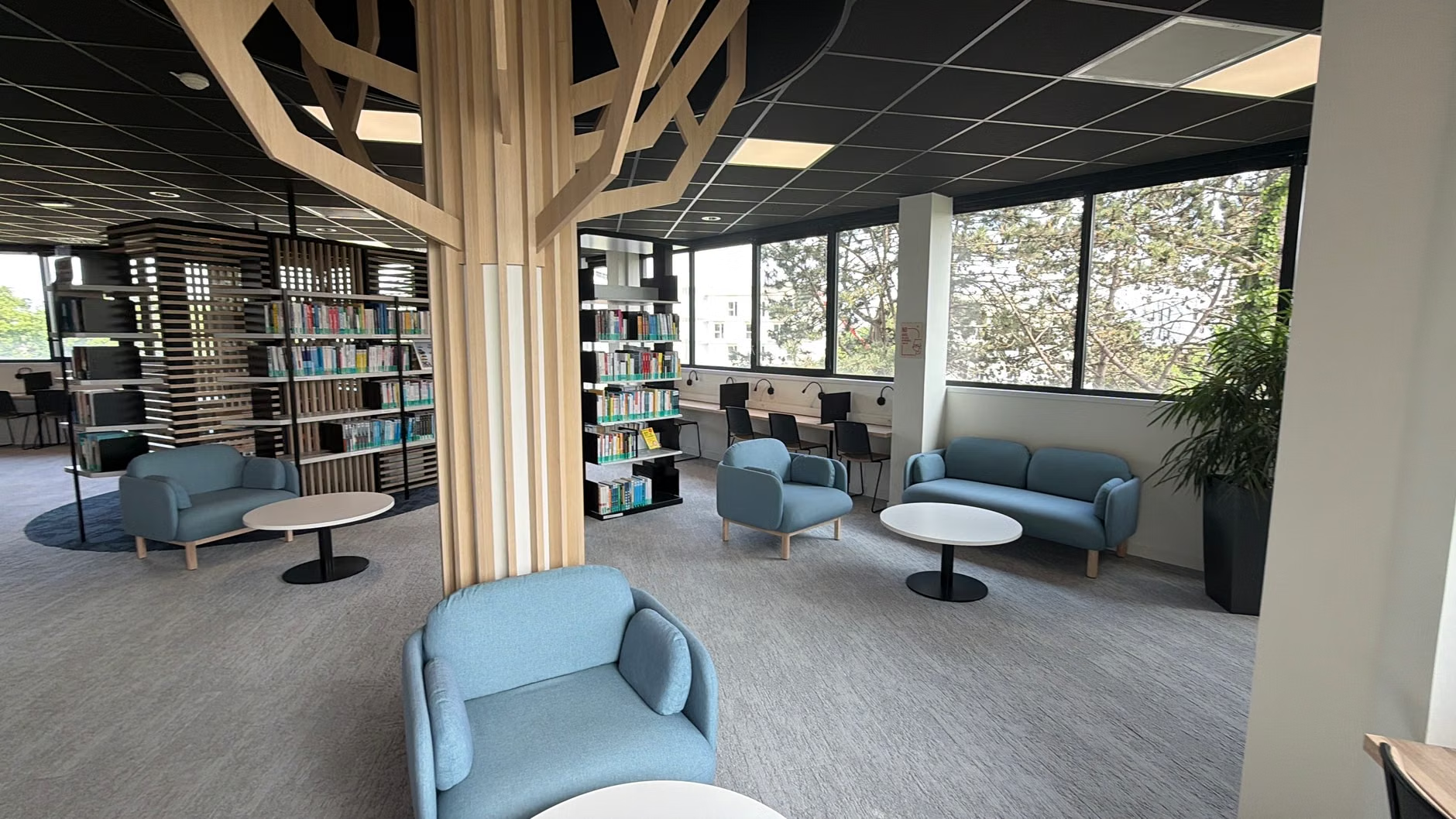
Imagine a library where the lighting is not just bright, but glare-free. The flooring is non-slip but also designed to reduce the “echo” effect that interferes with hearing aids. The furniture is not just “sturdy,” but specifically selected for ease of rising—typically featuring firmer seat cushions and armrests that provide leverage. These are the physical manifestations of the new standards.
Table 1: Comparison of Traditional vs. 2026 Inclusive Standards
| Feature | Traditional Approach | 2026 Inclusive Standard |
|---|---|---|
| Signage | Standard font, often small or low contrast. | High-contrast, non-glare, large-type, and tactile signage at eye level. |
| Acoustics | “Quiet” zones often ignored or poorly defined. | Acoustic buffering in high-traffic areas to reduce auditory fatigue. |
| Technology | Standard desks and basic monitors. | Adjustable-height desks with peripheral magnification and voice-to-text options. |
| Furniture | Generic seating; often low or overly soft. | Ergonomic seating with armrests and heights optimized for ease of standing. |
This table highlights that the 2026 standards are about ergonomics and sensory comfort. If you are choosing which branch to visit, prioritize those that have explicitly adopted these “Inclusive Design” labels. You can often check a library’s website or call their administration office to ask if they have implemented “Age-Friendly” or “Inclusive Design” audits.
Digital Public Services: The Library as a Vital Hub
One of the most critical aspects of the 2026 standards is the formalization of the library’s role in “Digital Inclusion.” Many government services, pension portals, and health booking systems are now exclusively online. For many, this has created a “digital wall.” The 2026 guidelines mandate that public libraries provide not just the hardware, but the human support necessary to navigate these services.
What this looks like in real life: You may have an appointment to manage your government pension or to update your health records. In an age-inclusive library, you will find:
- Dedicated Digital Navigators: Staff specifically trained to guide users through government websites without taking over the process, ensuring you remain in control of your data.
- Privacy-Focused Booths: Small, sound-isolated pods where you can conduct video calls for telehealth appointments or sensitive government consultations.
- Simplified Interfaces: Libraries are encouraged to provide “gateway” portals on their computers that lead directly to trusted, simplified versions of public service websites.
If you feel overwhelmed by a new digital requirement from your local government, do not hesitate to ask at your local library’s information desk. The 2026 standards essentially categorize this support as a core service, similar to checking out a book.
One of the most overlooked variables in public architecture is how lighting and color affect cognitive load and mobility. The 2026 standards emphasize “Wayfinding.” Wayfinding is the ability to navigate a space without needing to ask for help or feeling lost. This is achieved through color coding, distinct floor textures, and clear, consistent lighting patterns.
Common Mistake: Many older adults avoid libraries because they fear the “busy-ness” of the space—too much visual clutter, too many people, or confusing layouts. If you find a space overwhelming, look for the “Wayfinding Map.” Under the new standards, these maps must be simplified and placed at every major transition point (e.g., entrance, elevator, stairs).
Practical Decision Rule: If you are planning a visit, check the library’s floor plan online. Most modern libraries now provide a virtual tour or a detailed accessibility map. Look for the “quiet zones” or “reading lounges” specifically labeled for long-term use. These areas are typically the most compliant with the new standards regarding lighting and noise control.
The Role of Caregivers and Families
If you are a caregiver or a family member of an older adult, the 2026 standards offer a way to facilitate independence. Instead of doing everything for your family member, the library environment allows them to perform tasks—like selecting a book, using a computer, or reading the news—with minimal intervention.
How to use these resources:
- Identify the “Resource Hub”: Check if your local library has a “Senior Resource Corner.” This is a specific area where information on local benefits, health workshops, and social clubs is centralized.
- Utilize Home-Delivery or Accessible Formats: The 2026 standards strongly emphasize the expansion of “Books-by-Mail” programs and the digitization of large-print materials. If getting to the library is difficult, ask if they offer these services.
- Participate in Feedback: Libraries are currently in the process of upgrading. If you notice a barrier—such as a door that is too heavy or a sign that is too small—speak to the librarian. They are often required to document these issues as part of their 2026 compliance reporting.
Implementation and Timeline Considerations
It is important to note that “2026 standards” does not mean that every library will be perfectly updated on January 1, 2026. This is a multi-year transition. Most countries (such as the UK, Canada, and Australia, which have been leading this initiative) are rolling these out in phases. The first phase focuses on “Digital Access” and “Physical Safety,” while the second phase focuses on “Social Programming.”
What you can do: Contact your local library and ask, “Are you currently implementing the new age-inclusive design standards?” This question puts you in the position of an informed consumer. If they are not aware, you are helping them realize that this is a priority for their community members.
Insight: Do not be afraid to advocate for yourself. Many libraries are under-resourced and rely on community feedback to secure funding for these upgrades. When you report a need—such as better lighting or a more accessible computer desk—you are providing the data they need to justify the budget for that improvement.
Conclusion
The 2026 global standards for age-inclusive library design represent a positive shift toward recognizing the dignity and capability of older adults. By focusing on sensory comfort, digital support, and intuitive wayfinding, libraries are reclaiming their role as the “living room of the community.” Your ability to navigate these spaces with confidence is not just a personal benefit; it is a vital part of staying connected to the world around you.
Remember that you are not a passive recipient of these changes. You are a stakeholder. By using these facilities, asking for the support you need, and providing feedback on the environment, you ensure that these public spaces remain relevant, useful, and welcoming for everyone, regardless of age.

Frequently Asked Questions
1. Are these standards mandatory for all libraries worldwide?
While the standards are “global” in the sense that they are being adopted by international library associations and many national governments, implementation varies by jurisdiction. In many countries, these are treated as “best practices” or “mandatory guidelines” for public funding, meaning libraries that do not comply may eventually lose certain grants or accreditations.
2. What if my local library is old and cannot be easily renovated?
The 2026 standards include “adaptive reuse” guidelines. If a building is historic or cannot be structurally altered, the library is expected to compensate through service changes, such as improved mobile technology, better staff assistance, and the strategic placement of accessible furniture in the areas that can be modified.
3. Do I need to be a member to access the digital support services?
Generally, yes, but library membership is typically free for all local residents. The support services are a standard benefit of membership. If you have difficulty with the registration process, you can usually ask for a “guided registration” session at the front desk, which is often encouraged under the new inclusive service models.
For further information on your specific region’s adoption of these standards, please consult your national library association website or your local municipal government’s public services portal.