- Enhanced Visibility: By 2026, many global cities are transitioning to high-CRI (Color Rendering Index) LED lighting, which improves depth perception and color recognition, making it easier to spot sidewalk cracks and obstacles.
- Smart Infrastructure: New installations often feature motion-activated sensors that increase light intensity when pedestrians are detected, ensuring safety while reducing light pollution.
- Proactive Advocacy: Residents can now use standardized municipal digital platforms to report lighting outages, directly influencing the maintenance schedules in their local jurisdictions.
The year 2026 marks a significant turning point in urban infrastructure, as cities worldwide move toward standardized, age-friendly public lighting systems. For those aged 60 to 80, this shift is more than just a change in bulbs; it represents a fundamental improvement in how you navigate your community after dark. As our eyes naturally undergo changes—needing more light to distinguish contrast and taking longer to recover from glare—these upgrades are specifically designed to reduce the risk of trips, falls, and navigation anxiety during evening commutes or social outings.
The Evolution of Public Lighting: Why 2026 is a Milestone
For decades, municipal lighting was designed primarily for vehicular traffic. The objective was to illuminate the road for drivers, often leaving sidewalks and pedestrian crossings in shadows. The global initiative for 2026, spearheaded by organizations like the Global Network for Age-friendly Cities and Communities (GNAFCC), shifts this focus toward “pedestrian-centric” illumination.
The transition is driven by three core technical improvements: Color Rendering Index (CRI), uniformity, and adaptive brightness. High-CRI lighting allows the human eye to perceive colors more accurately. In practical terms, this means that a tan curb, a grey sidewalk, and a brown leaf become distinct objects rather than a blurry, monochromatic surface. When you walk, this clarity is essential for depth perception, allowing you to accurately gauge the height of a step or the depth of a puddle.
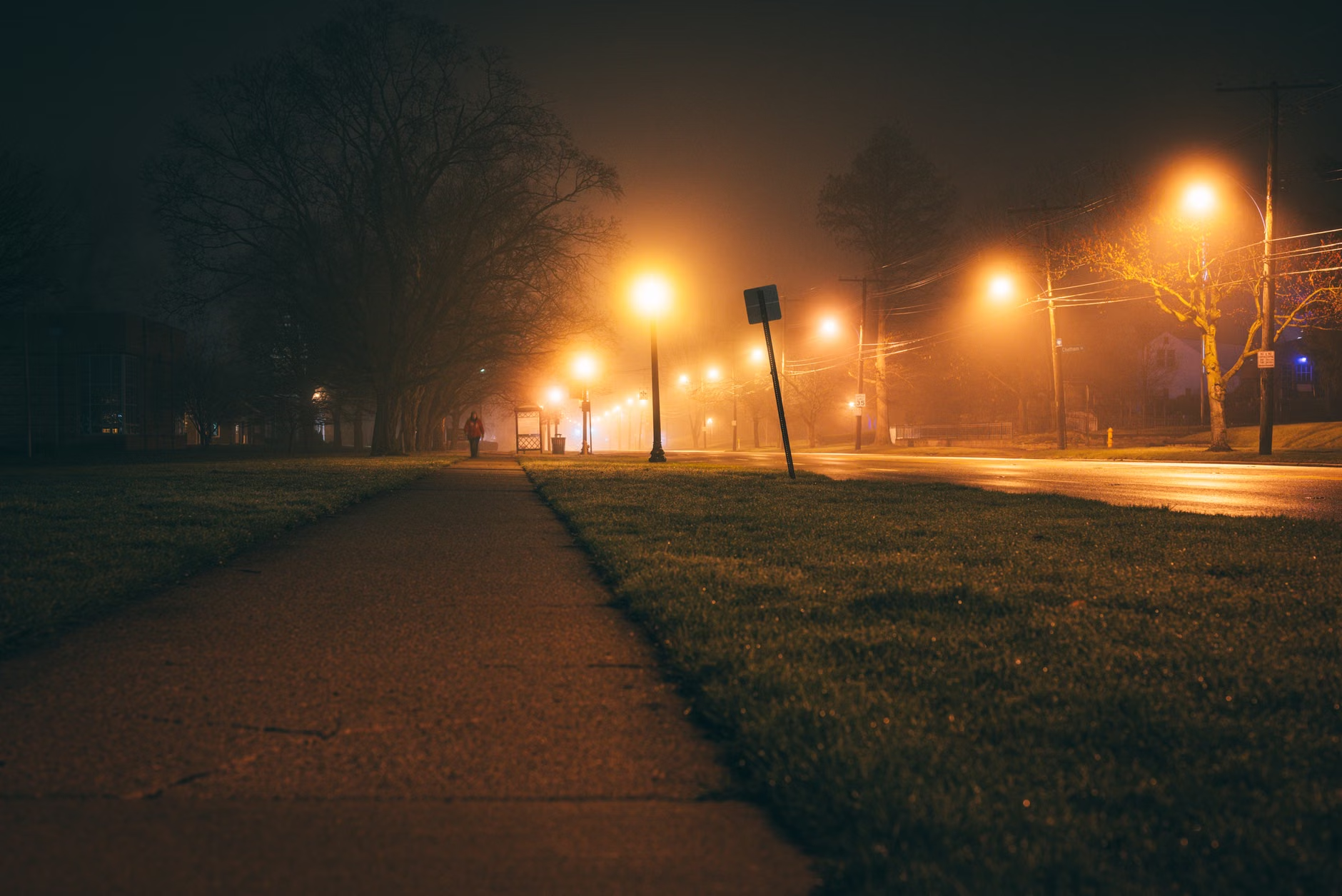
The Technical Shift: From Yellow Haze to Daylight Clarity
Older lighting systems, often utilizing High-Pressure Sodium (HPS) lamps, emit a yellowish, low-contrast light. Studies have shown that as we age, the lens of the eye yellows and becomes less transparent, which makes this specific hue particularly difficult to process. The 2026 global standard promotes LED (Light Emitting Diode) technology with a “warm-white” color temperature (typically 3000K to 4000K). This provides a crisp, daylight-like quality without the harsh, blue-tinted glare that can cause discomfort or temporary blindness in sensitive eyes.
| Lighting Feature | Old System (HPS) | 2026 Age-Friendly Standard |
|---|---|---|
| Color Quality | Yellow/Orange (Distorts colors) | High-CRI (Accurate color/depth) |
| Coverage | Patchy (High contrast/Shadows) | Uniform (Even distribution) |
| Response | Always-on (Static) | Adaptive/Smart (Motion-sensing) |
This table illustrates why the upgrade matters. The “Uniform” coverage is perhaps the most critical factor. By eliminating “hot spots” (bright circles of light) and “cold spots” (deep shadows), the new systems minimize the need for the eye to constantly adjust its iris. This reduces eye fatigue and allows for a more consistent, confident walking experience.
How to Use Smart Reporting Tools to Ensure Safety
One of the most empowering aspects of the 2026 infrastructure rollout is the integration of digital, user-friendly reporting systems. Most major metropolitan areas in the EU, North America, and parts of Asia and Oceania have launched mobile apps or web portals that allow residents to report non-functioning lights. You no longer have to wait for a municipal patrol to notice a dark street.
Steps to report an outage in your area:
- Locate the Identifier: Most new poles have a metal tag with a unique ID number (usually 4-6 digits).
- Access the Portal: Search for your city’s “[City Name] Public Works” or “311” website.
- Submit the Report: Use the “Report a Streetlight Outage” feature. Providing the exact ID number ensures the maintenance crew knows exactly which pole to service.
- Track Status: Modern systems provide a reference number, allowing you to see when a repair ticket is assigned and completed.

If you prefer not to use an app, most cities have a dedicated 24/7 phone line (often 311 or a local non-emergency municipal number). The key is to be specific. Instead of saying “the street is dark,” say “Streetlight ID #12345 on Oak Street is flickering or out.” This specificity significantly reduces the turnaround time for repairs.
Even with upgraded lighting, personal safety and mobility remain a priority. When planning evening walks or social outings, consider the following “Visibility Strategy” to keep your journey safe:
- The 3-Second Rule: If you are walking in an area where the lighting feels dim or uneven, slow your pace. Give your eyes three seconds to adjust before stepping off a curb or transitioning from a bright area to a darker one.
- Reflective Gear: While you can see better with new lighting, you must also be seen. A simple reflective strip on a walking cane, a bright-colored jacket, or a small clip-on LED light for your bag can make you visible to cyclists and motorists from three times the distance of non-reflective clothing.
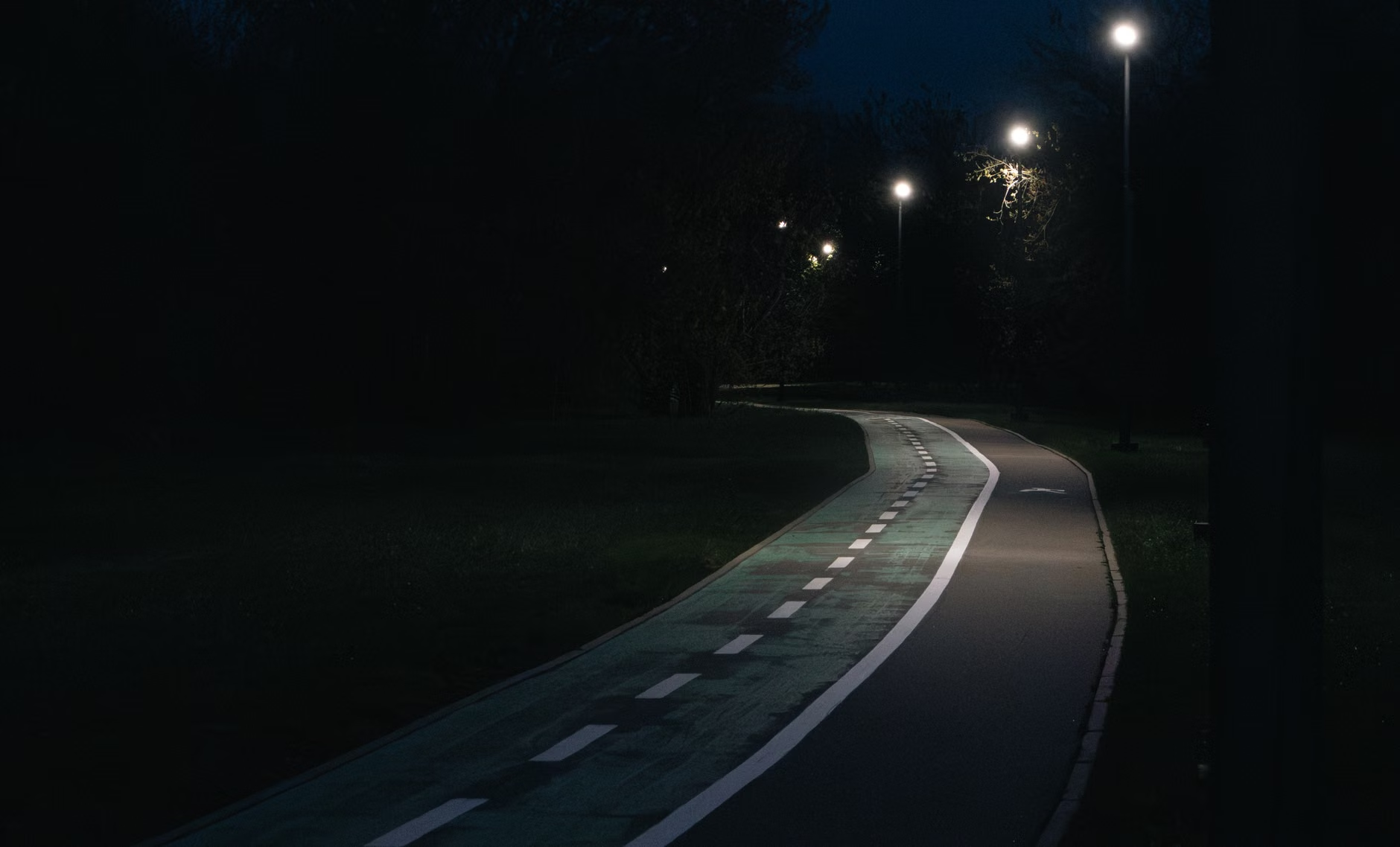
- Route Planning: Use apps like Google Maps or local city planning maps, which often show “well-lit” pedestrian paths. In many cities, these are marked with green highlights during night-mode viewing.
A common mistake is assuming that “bright” equals “safe.” Sometimes, extremely high-intensity lighting creates sharp shadows that can hide obstacles. If you find a street too bright or the contrast too high, it is perfectly reasonable to choose a parallel street with more subdued, ambient lighting that allows for better eye comfort.
Understanding Your Rights and Local Policies
It is important to understand that “Age-Friendly” is not just a marketing term; it is a policy framework adopted by thousands of cities globally. If you feel your neighborhood is being left behind, you have the right to petition your local council or neighborhood association.
In jurisdictions like the United Kingdom, Canada, and parts of the United States, municipal “Age-Friendly Action Plans” explicitly mention lighting as a key performance indicator. If a specific area in your town is a known “black hole” for lighting, you can cite these local policies in a letter or email to your local representative. Mention that the lack of adequate lighting is a barrier to your mobility and violates the city’s commitment to inclusive, age-friendly urban design.
The Trade-off: Light Pollution vs. Human Safety
One of the unexpected nuances of these 2026 upgrades is the balance between human safety and environmental conservation. Some newer systems utilize “dark-sky compliant” fixtures. These direct light downward rather than outward or upward. While this is excellent for reducing light pollution and protecting wildlife, it can sometimes make vertical objects—like the faces of people approaching you or the side of a building—appear darker. If you feel uncomfortable in these environments, prioritize paths with low-level bollard lighting, which provides consistent light at knee-height, making the ground plane exceptionally clear without the glare of overhead lamps.
Conclusion: Taking the Next Step
The 2026 expansion of global age-friendly lighting is a meaningful step toward creating cities that support us as we age. By understanding the technology behind these changes, knowing how to report maintenance issues, and adjusting your evening walking habits, you can reclaim your community spaces after sunset. Your next step should be to check your local city council website for their “2026 Infrastructure Plan” or “Public Lighting Strategy.” Knowing what to expect in your neighborhood will help you plan your future activities with confidence and clarity.
Frequently Asked Questions
Q: Will the new LED lights cause glare that makes it harder for me to see at night?
A: Modern age-friendly LED installations are specifically designed to minimize glare by using frosted lenses and “cut-off” shields. Unlike older, exposed bulbs, these fixtures direct light downward and utilize a warmer color temperature to reduce the harsh blue light that often causes discomfort.
Q: How long does it usually take for a city to fix a street light I report?
A: This varies by jurisdiction. In most urban centers, reported outages are typically addressed within 3 to 10 business days. If the issue is a safety hazard, such as a downed wire or a completely blacked-out intersection, most cities prioritize these as “emergency” repairs, often responding within 24 hours.
Q: Are there specific apps I should use to find well-lit walking routes?
A: While there is no single global app, many local transit and city apps (such as those provided by transport authorities in London, New York, or Singapore) have integrated “safe-path” features. Additionally, using “Satellite View” or “Street View” on standard mapping apps can help you preview the lighting infrastructure of a route before you head out.
For further reading on global standards, visit the World Health Organization’s Age-friendly World portal to see how your city is participating in these global initiatives.
Note: This article provides general information based on current global trends and should not be considered legal or municipal advice. Always check with your local government office for specific regulations and programs in your area.