- Weight is the primary enemy of rail mobility: Stick to a single carry-on bag weighing under 10kg to ensure you can navigate station stairs, narrow aisles, and overhead racks independently.
- Leverage the “Four-Wheel Advantage”: Use high-quality spinner luggage that requires zero downward pressure on your wrists and shoulders, significantly reducing fatigue during station transfers.
- Strategic packing is a safety measure: By keeping your valuables and medications in a dedicated, accessible personal item, you eliminate the need to reach into overhead bins while the train is in motion.
Mastering Rail Travel: A Practical Guide to Packing Light for Senior Travelers
For many travelers aged 60 to 80, the train remains the most civilized way to see the world. Unlike air travel, which involves restrictive security queues and long boarding procedures, rail travel offers the freedom to move, scenic views, and city-center access. However, the “last mile” of a train journey—navigating the platform, boarding the carriage, and finding your seat—requires physical independence. The secret to a seamless experience is not just what you pack, but how you pack it.
Packing light is not about deprivation; it is a strategic decision to preserve your stamina and mobility. When you can handle your own luggage, you regain control over your travel schedule, avoiding the anxiety of searching for porters or worrying about heavy bags on steep inclines.
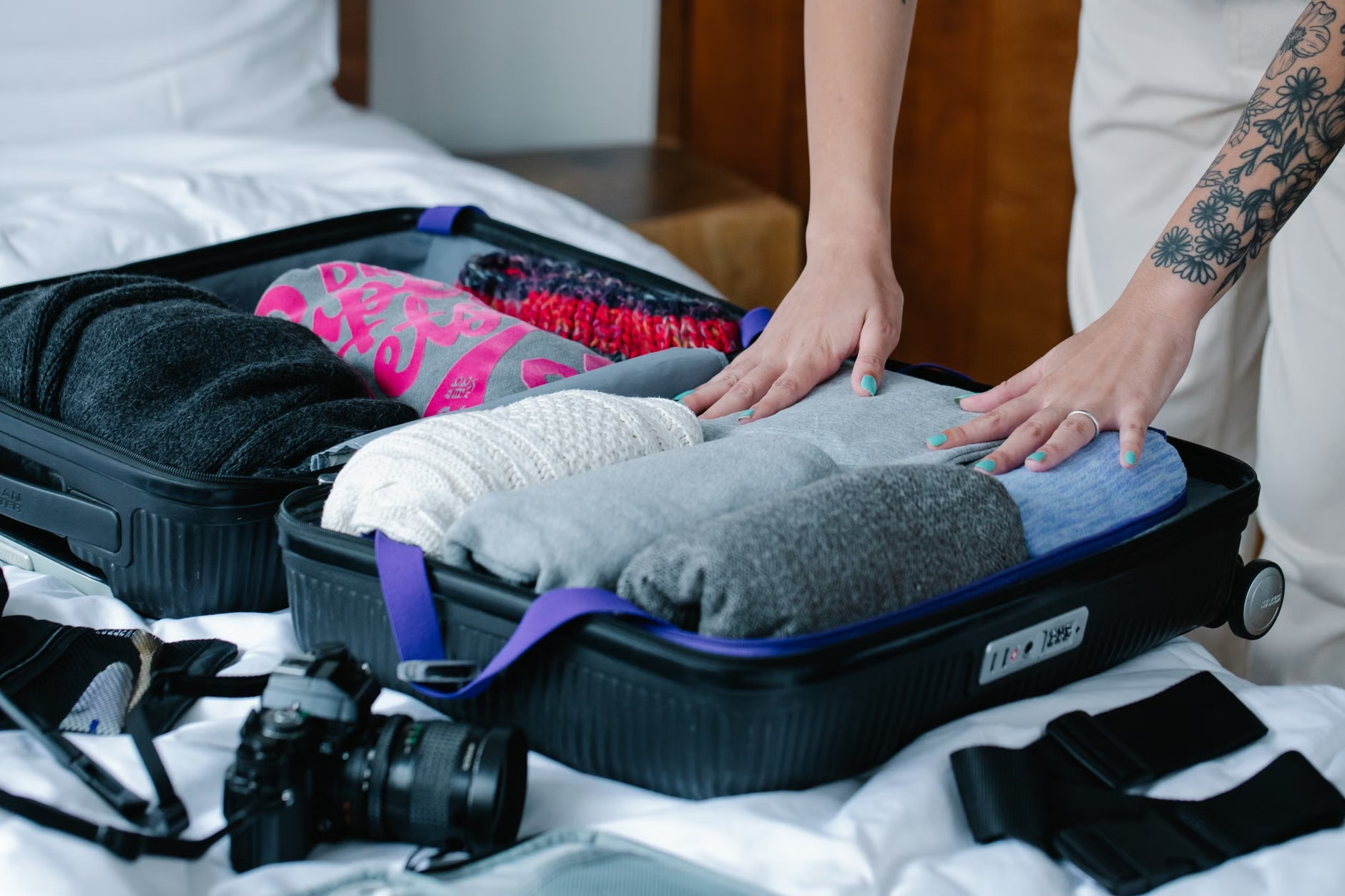
The Physics of Packing: Why Weight Limits Matter
The average train platform, while generally accessible, often presents challenges: gaps between the train and the platform, stairs at older stations, and narrow carriage vestibules. When you carry a heavy suitcase, your center of gravity shifts, increasing the risk of imbalance. For senior travelers, the goal is to keep your luggage weight under 10 kilograms (approximately 22 pounds).
Why this specific number? 10 kilograms is generally the threshold where most individuals can lift their bag onto an overhead rack or up a flight of stairs without straining the lower back or shoulders. If you cannot lift your bag above your head, you are at the mercy of fellow passengers or station staff, which can lead to unnecessary stress and wait times.
The Comparison: Hard-Shell vs. Soft-Shell Luggage
The debate between hard-shell and soft-shell luggage often comes down to weight and accessibility. The following table outlines the decision criteria for senior rail travelers:
| Feature | Hard-Shell | Soft-Shell |
|---|---|---|
| Weight | Generally heavier due to casing | Lighter, often more flexible |
| Accessibility | Clamshell opening (takes more floor space) | Front-pocket access (great for train seats) |
| Durability | Protects fragile items better | Absorbs impact, less prone to cracking |
| Maneuverability | Excellent on smooth platforms | Better for stuffing into tight overhead bins |
For rail travel, soft-shell luggage with a large front pocket is often the superior choice. The front pocket allows you to store your travel documents, a light jacket, or a book without opening the main compartment, which is critical when you are sitting in a cramped train seat.
Equipping Yourself for Mobility: The “Four-Wheel” Rule
If you are still using a two-wheeled “roller” bag, you are likely putting unnecessary strain on your wrists and shoulders. Two-wheeled bags require you to tilt them, which transfers the weight of the bag directly into your arm and shoulder joint. As we age, maintaining joint health is paramount to long-term mobility.
Modern “spinner” luggage (four wheels) allows the bag to move alongside you with zero weight-bearing on your hand. You simply guide the bag; you do not pull it. When navigating a busy train station, this allows you to keep one hand free for a handrail, a cane, or your partner’s hand, significantly increasing your stability.
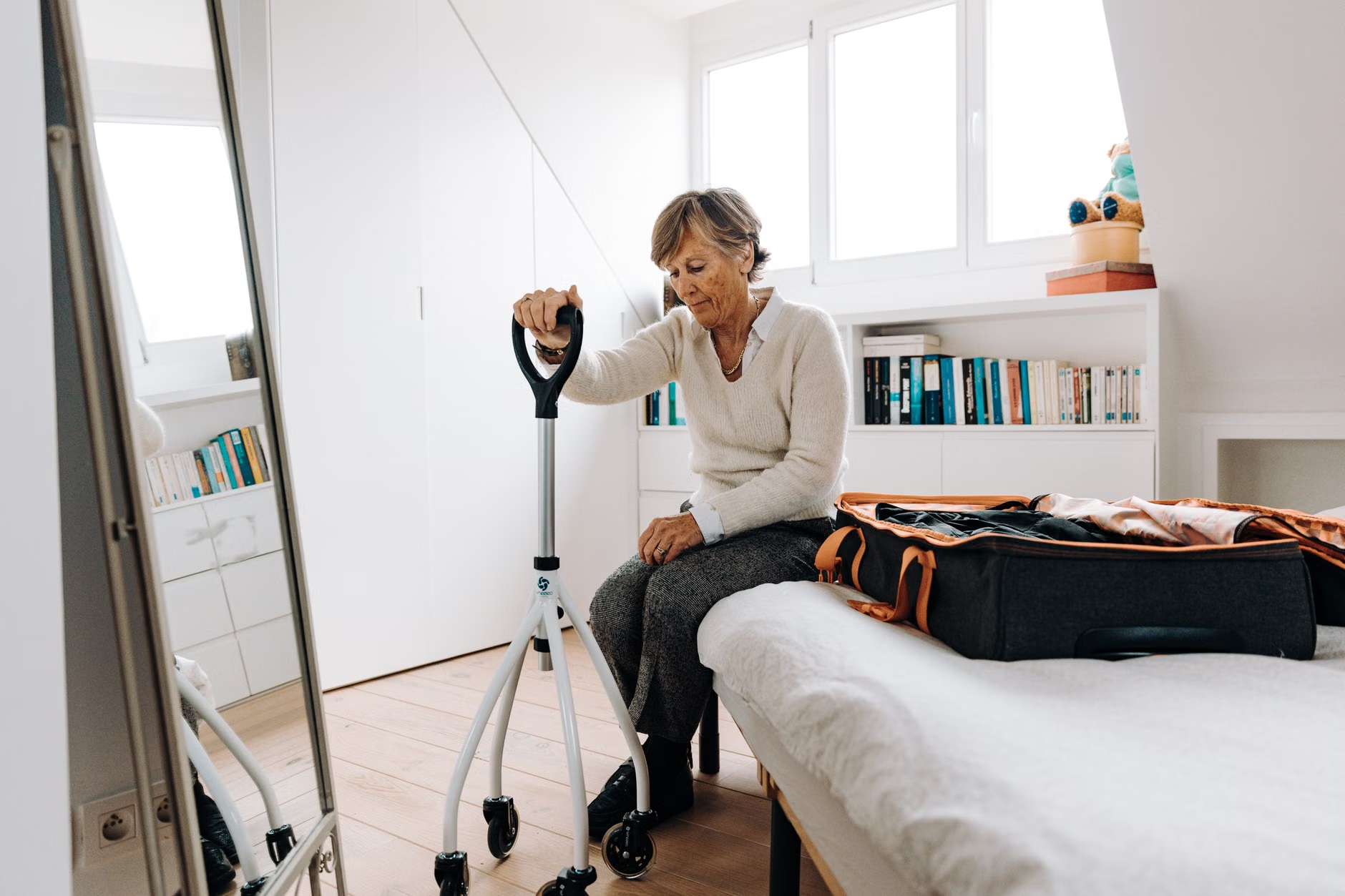
What to Look for in Wheels
- Double-wheel construction: Look for wheels that have two tires per corner. They are more stable on uneven surfaces like cobblestones, which are common near historical European train stations.
- Recessed wheels: These are less likely to be damaged when the bag is tossed into a luggage bay or hit against a platform edge.
- Size: Larger wheels handle gaps between the platform and the train carriage much better than small, recessed wheels.
The “Two-Bag” Strategy: Separation of Needs
The most common mistake senior travelers make is packing everything into one large suitcase. This forces you to open your entire life in the middle of a crowded aisle just to find your reading glasses or a bottle of water. Instead, adopt the “Two-Bag Strategy.”
Bag 1: The Main Luggage (The “Stow-Away”)
This is your 10kg carry-on. It stays in the overhead rack or the dedicated luggage area at the end of the carriage for the duration of the trip. You do not touch this bag until you reach your destination.
Bag 2: The Personal Item (The “Access-Bag”)
This should be a high-quality, lightweight crossbody bag or a small backpack. This bag stays with you at your seat. It must contain:
- Essential Documents: Passport, train tickets (digital and paper backups), and accommodation details.
- Health Essentials: A daily supply of medications, prescription copies, and any necessary health aids (e.g., glucose monitor).
- Comfort Items: A light sweater (trains are notoriously over-air-conditioned), reading glasses, a reusable water bottle, and noise-canceling earplugs.
By keeping these items in a crossbody bag, you ensure that you never have to stand up or reach into an overhead bin while the train is in motion, minimizing the risk of falls due to sudden train movements.
Packing for Stamina: The Art of the Capsule Wardrobe
Packing light is a exercise in discipline. Many senior travelers overpack because they want to be prepared for every weather eventuality. However, the physical cost of carrying those “just in case” items often outweighs their utility. A capsule wardrobe focuses on versatility and layering.
The Rule of Three: For a trip of any length, you only need three of any garment type (three shirts, three pairs of socks, etc.). You can easily wash items in a hotel sink or use a local laundry service. Focus on synthetic or merino wool blends that are moisture-wicking and quick-drying. Avoid heavy denim or bulky knits, which are difficult to pack and slow to dry.
Refining Your Packing List
- Footwear: Wear your heaviest, most supportive shoes on the train. Pack only one additional pair of lightweight, comfortable walking shoes.
- Toiletries: Use solid-state toiletries (shampoo bars, soap) to avoid the “liquids” hassle and save weight.
- Electronics: Consolidate your charging cables. Use a single multi-port USB charger instead of carrying individual plugs for your phone, tablet, and camera.
By keeping your clothing lightweight, you create more “buffer room” in your suitcase for medical equipment or necessary health aids without exceeding your 10kg limit.

Even with a light bag, the station environment can be taxing. Understanding how to navigate these spaces effectively is as important as how you pack.
1. Arrival Timing
Do not arrive at the station at the last minute. Arriving 45 minutes before departure gives you time to locate your platform, find the elevator or lift, and observe the boarding process without feeling rushed. Rushing is the number one cause of travel-related falls.
2. The “Elevator First” Rule
Always look for the lift (elevator) signs as soon as you enter the station. Never assume that the escalator is working or that it is safe to use with luggage. If you are traveling with a companion, have one person scout the elevator while the other stays with the bags.
3. Managing the “Gap”
Many train platforms have a gap between the platform edge and the carriage door. If you are concerned about your balance, ask a station attendant for assistance. Most major rail operators (such as Amtrak in the US, SNCF in France, or JR in Japan) offer “Assisted Boarding” services if requested 24 to 48 hours in advance. This is not a sign of weakness; it is a smart use of available infrastructure to ensure your safety.
Health Considerations: Managing Chronic Conditions on the Move
For travelers managing chronic health conditions, rail travel is often easier than flying, but it still requires preparation. If you require medication, always carry a two-day supply in your “Access-Bag” in case of unexpected delays or lost luggage.
If you use a mobility aid, such as a collapsible cane, ensure it is easily accessible. A telescopic cane that folds down into a small pouch is ideal for rail travel. If you are traveling with an oxygen concentrator or other medical devices, check the rail operator’s specific policies on battery types and power outlet availability at your seat. Most modern long-distance trains provide power sockets at every seat, but it is wise to verify this before booking.
Warning Sign: If you feel lightheaded, short of breath, or experience sudden joint pain during a transfer, stop immediately. Find a seat or a bench, drink water, and assess your condition. The train will wait for its scheduled departure; your health is more important than a few minutes of lost time.
Conclusion: The Freedom of Less
Packing light is the ultimate form of travel insurance. By reducing the physical burden of your luggage, you increase your capacity to enjoy the journey. When you are not struggling with heavy bags, you are more alert, more comfortable, and more capable of handling the small surprises that travel inevitably brings.
Focus on your mobility, choose the right equipment, and prioritize your comfort. Travel is meant to be an exploration, not a test of strength. By simplifying your load, you ensure that your next rail journey is defined by the scenery outside your window, not the weight on your shoulders.
Helpful Resources
- Amtrak Accessible Travel Services – Guidelines for requesting assistance in the US.
- The Man in Seat 61 – An excellent global resource for train travel logistics, including station maps and accessibility information.
- Mobility International USA – Resources for travelers with disabilities and older adults.
Frequently Asked Questions
1. How do I know if my train station has accessible boarding?
Most national rail websites have an “Accessibility” or “Station Information” page. You can search by station name to see if elevators, ramps, and staff assistance are available. If you are unsure, call the station’s customer service line at least 48 hours before your trip.
2. Is it better to bring a backpack or a suitcase for rail travel?
For most senior travelers, a four-wheel spinner suitcase is superior to a backpack. A backpack puts weight on your spine and shoulders, which can cause fatigue and balance issues. A spinner suitcase allows you to move your belongings with minimal physical effort.
3. What should I do if I cannot lift my bag into the overhead rack?
Never hesitate to ask for help. Fellow passengers are often willing to assist, but if you are uncomfortable asking, look for the “luggage area” at the end of each carriage. These are usually ground-level racks that require no lifting. If you are traveling alone and cannot manage your bag, contact the rail operator in advance to arrange for station staff assistance.