- Silicon is a trace mineral that plays a vital role in the synthesis of collagen and the mineralization of bone tissue, making it a valuable component of a preventive diet for adults over 60.
- Unlike many isolated supplements, dietary silicon is most effective when consumed through whole foods such as unrefined grains, root vegetables, and legumes, which provide a complex matrix of nutrients.
- Maintaining bone and nail health requires a holistic approach; silicon works best in synergy with calcium, vitamin D, and protein, rather than as a standalone solution.
Dietary silicon—a trace mineral often overlooked in favor of calcium or vitamin D—is a quiet contributor to the structural integrity of the human body. For adults aged 60 to 80, the focus of preventive health often shifts toward maintaining mobility, bone density, and the health of connective tissues. Understanding the role of silicon in your diet is not about chasing a “miracle cure,” but rather about optimizing your daily nutritional intake to support the natural processes that keep your bones resilient and your nails strong as you age.
This article explores what dietary silicon is, why it matters for the aging body, and how you can practically integrate it into your lifestyle through common, accessible food choices.
What is Dietary Silicon and Why Does It Matter?
Silicon is the second most abundant element in the Earth’s crust, but in the human body, it exists in trace amounts. In the context of human nutrition, we are specifically interested in orthosilicic acid, the bioavailable form of silicon found in food and water. As we move through our 60s, 70s, and beyond, the body’s ability to synthesize and maintain collagen—the primary protein in our connective tissues—naturally slows down. Silicon is thought to play a structural role in the cross-linking of collagen, which is essential for the strength and elasticity of skin, nails, and the organic matrix of bone.
For an older adult, the primary concern is the maintenance of bone mineral density. While calcium provides the “hardness” of the bone, the collagen matrix provides the “flexibility” that prevents bones from becoming brittle. Silicon is believed to influence the mineralization process, acting as a supportive architect for the bone structure. When we talk about nail health, the logic is similar; nails are composed of keratin, a protein that relies on stable connective tissue structures to grow strong and resist splitting or peeling.
It is important to note that silicon is not a substitute for medical treatment for conditions like osteoporosis. If you have been diagnosed with low bone density, your primary care provider will likely have a specific management plan involving medication, exercise, and targeted supplementation. Silicon should be viewed as a foundational nutritional habit that supports the body’s long-term maintenance rather than a corrective therapy for existing medical conditions.

Sources of Dietary Silicon: Moving Beyond Supplements
There is a persistent misconception that the only way to get “enough” of a specific mineral is through a high-dose supplement. In reality, the most reliable and safe way to consume silicon is through a varied, whole-food diet. Because silicon is abundant in the plant world, it is often found in foods that are already staples of a heart-healthy and bone-healthy diet.
Top Food Sources for Your Daily Routine
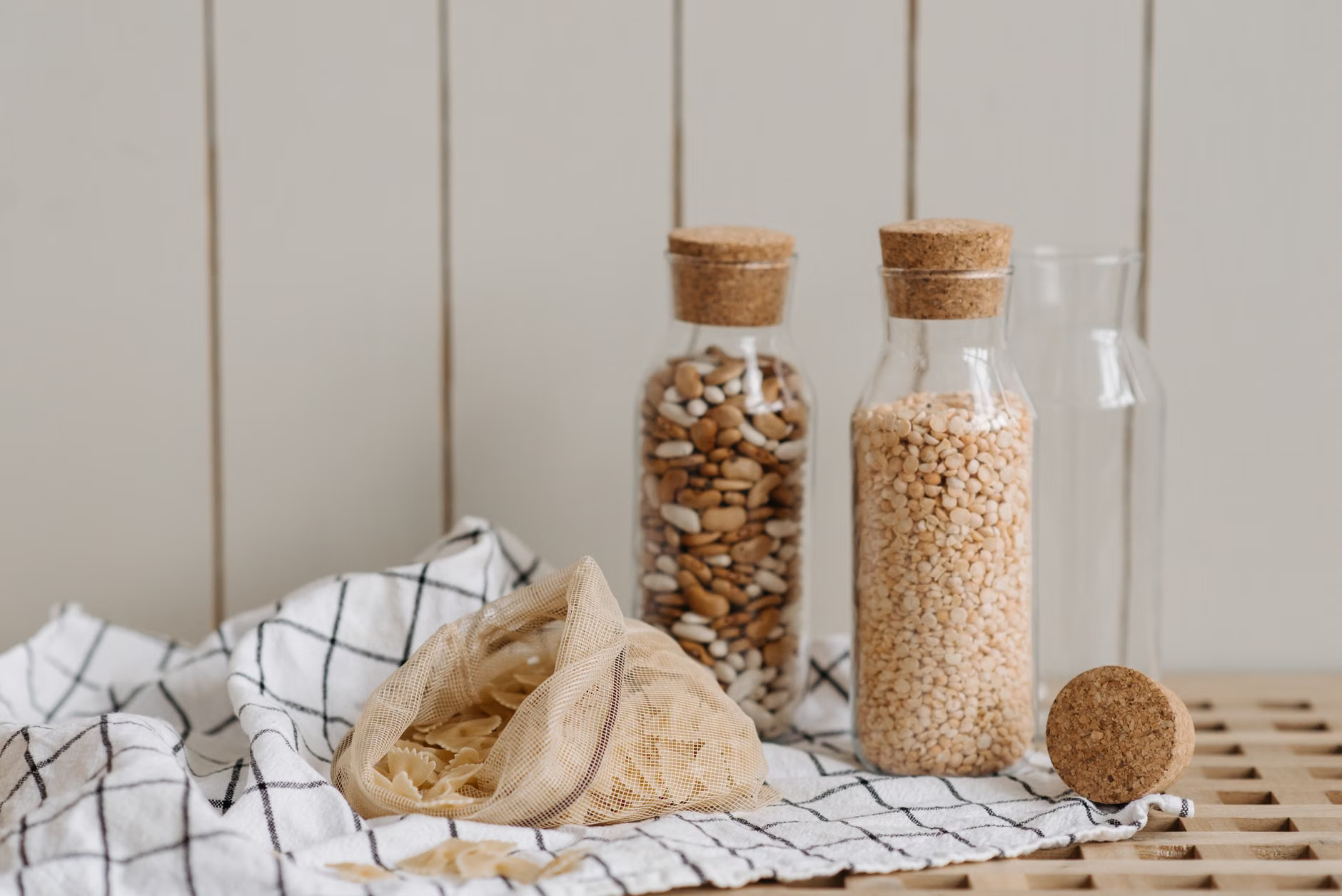
The bioavailability of silicon varies depending on the food source. Unrefined grains, in particular, are excellent carriers of this mineral because it is often concentrated in the outer hulls and husks, which are removed during heavy processing.
| Food Category | Examples | Practical Tip for Seniors |
|---|---|---|
| Unrefined Grains | Oats, barley, brown rice, millet | Choose “steel-cut” or “whole” versions over instant or white grains. |
| Root Vegetables | Potatoes (with skin), carrots, parsnips | Wash thoroughly and eat the skin when possible to capture the highest silicon content. |
| Legumes | Lentils, chickpeas, green beans | Great for fiber and plant-based protein, making them a double-duty food for aging. |
| Beverages | Mineral water (check labels for silicon/silica content) | Some spring waters contain naturally high levels of soluble orthosilicic acid. |
When you look at this table, notice that these foods are not exotic or expensive. They are the building blocks of a traditional, sustainable diet. The common mistake many people make is relying on highly processed “fortified” snacks while ignoring the inherent nutritional density of basic grains and legumes. By switching from white rice to brown rice or barley, you are not just adding fiber; you are effectively increasing your intake of trace minerals like silicon.
The Synergy of Nutrition: Why Silicon Isn’t a Solo Act
One of the most critical insights in nutritional science is that no mineral works in isolation. If you consume high levels of silicon but lack adequate vitamin D, your body will struggle to utilize the calcium necessary for bone health. Similarly, if your protein intake is insufficient, your body lacks the raw materials (amino acids) to build the collagen matrix that silicon is meant to support.
Structuring Your Daily Intake
For an adult aged 60-80, the goal should be “nutritional stacking”—combining foods that work together. Consider this daily approach:
- Breakfast: A bowl of oatmeal (silicon) topped with nuts or seeds (which provide magnesium and healthy fats) and a splash of yogurt (calcium).
- Lunch: A lentil-based soup (silicon and protein) with a side of steamed carrots (silicon).
- Dinner: A portion of fish or lean poultry (protein) with a roasted potato (with skin) and a side of green leafy vegetables.
This approach minimizes the need for complex supplement regimens. Supplements can sometimes lead to an imbalance in other minerals or interact with medications. For example, if you are taking medication for blood pressure or heart conditions, always consult with your pharmacist or doctor before adding any new supplement to your routine. They can check for potential interactions that food does not typically cause.
Lifestyle Factors That Affect Bone and Nail Integrity
Nutrition is only one piece of the puzzle. The health of your bones and nails is also dictated by your daily habits and environmental factors. For seniors, the following areas are often more impactful than any specific supplement:
1. Hydration and Tissue Elasticity
As we age, our thirst sensation may diminish. Dehydration affects the elasticity of your skin and the hydration levels of your nails. Brittle nails are often a sign of chronic dryness. Ensure you are drinking enough water throughout the day, as water is the medium in which nutrients—including silicon—are transported to your cells.
2. Mechanical Stress and Protection
Nails are often damaged by frequent exposure to harsh chemicals (like strong cleaning detergents) or excessive moisture. If you enjoy gardening or washing dishes, wearing gloves is a simple, non-negotiable step to prevent mechanical damage to your nails. This is not about being “frail,” but about protecting your body from unnecessary wear and tear.
3. Physical Activity and Bone Loading
Bones thrive on “loading”—the stress applied to them through weight-bearing exercise. Walking, light resistance training, or even simple gardening exercises the muscles and signals the bones to maintain their density. A diet rich in silicon will be far more effective if your bones are being stimulated to remain strong through regular, moderate movement.
If you notice significant, sudden changes in your nails—such as deep ridges, discoloration, or painful separation from the nail bed—or if you have concerns about bone health due to a recent minor fall, it is time to consult a healthcare professional. These symptoms are not usually the result of a simple “silicon deficiency” and may indicate underlying health issues like thyroid conditions, circulation problems, or nutritional malabsorption.
When preparing for a medical appointment, clarity is your best tool. Use this simple preparation checklist:
- Keep a 3-day food diary: Write down what you eat to show your doctor your typical nutrient intake.
- List your medications: Many medications can affect how your body absorbs minerals.
- Document the specific change: Note when you first noticed the nail or bone concern and whether it has changed over time.
- Ask direct questions: “Do my current blood markers suggest any mineral deficiencies?” or “Are my current medications interfering with my bone health?”
Common Misconceptions and Evidence-Based Reality
The wellness industry often markets “silicon supplements” with promises of “youthful skin” or “immediate bone repair.” It is essential to approach these claims with a healthy dose of skepticism. While research on silicon is ongoing, the current scientific consensus suggests that it is a beneficial trace mineral, but it is not a “magic bullet.”
A common trap is the “more is better” fallacy. There is no evidence that taking massive doses of silicon provides additional benefits. In fact, excessive intake of any trace mineral can potentially disrupt the absorption of others. Stick to the amounts provided by a balanced, whole-food diet. If you are considering a supplement, ask your doctor specifically about the form of the silicon (e.g., choline-stabilized orthosilicic acid vs. silica gel), as the absorption rates differ significantly.
Deep Dive: The Science of Collagen and Aging
To truly understand why silicon is discussed in the context of aging, we must look at the collagen cycle. Collagen is the body’s scaffolding. In our youth, the body produces collagen efficiently. By the time we reach our 60s and 70s, the rate of degradation often outpaces the rate of synthesis. This leads to thinner skin, more fragile nails, and a reduction in the organic matrix of our bones.
Silicon’s role here is to act as a cross-linking agent. Think of collagen as a series of ropes. For these ropes to provide strength, they must be tied together. Silicon helps facilitate these bonds. Without sufficient silicon, the “ropes” may be present, but they are not as tightly bound, leading to a weaker structure. This is why we see the effects of aging in areas with high collagen content: the skin, the hair, the nails, and the connective tissues within our bones.
This process is slow and cumulative. You will not see a change in your bone density or nail strength overnight. This is why the “preventive” aspect is so important. By consistently including silicon-rich foods in your diet, you are providing your body with the consistent supply of raw material it needs to maintain these collagen structures over years, not days.
Practical Strategies for Daily Implementation
Implementation is where most health plans fail. The key is to make these choices automatic. Instead of trying to “add” silicon to your day, look at your existing meals and identify easy swaps.
The “Swap and Add” Strategy
- Swap your toast: If you currently eat white bread, switch to a dense, whole-grain, or sprouted-grain bread. These are significantly higher in silicon and fiber.
- Add a “root” to your roast: When you make a roast or a stew, don’t just use meat and potatoes. Add carrots, parsnips, and even turnips. These root vegetables are excellent, low-cost sources of silicon.
- Diversify your grains: If you find yourself eating rice four times a week, try replacing two of those meals with barley, oats, or quinoa. This not only increases your silicon intake but also provides a wider spectrum of amino acids.
- Check your water: If you buy bottled water, look for brands that list “silica” or “silicon” on their mineral content label. Some mineral waters are naturally rich in this element.
These changes are subtle, cost-effective, and sustainable. They do not require you to change your entire lifestyle, but they do require a commitment to choosing whole foods over processed alternatives. As an older adult, you have the advantage of experience—use it to prioritize the foods that have served humanity well for generations.
Addressing the “Why” and “How” of Long-Term Maintenance
Why is this level of detail important? Because the health of an 80-year-old is built on the habits of the decades preceding it. When we talk about bone health, we are talking about independence. We are talking about the ability to walk comfortably, to travel, to garden, and to participate in the activities that bring joy to our lives.
The “hidden inconvenience” of ignoring nutrition in the 60s is that by the time a problem manifests—such as a fracture or chronic nail fragility—the recovery time is significantly longer than it would have been at age 40. Therefore, the “best choice” is always the one that is consistent, low-risk, and integrated into your daily life. A diet rich in natural silicon is exactly that: a low-risk, high-reward strategy that supports your body’s natural resilience.
Remember that your body is a dynamic system. It is constantly breaking down and rebuilding. Your goal is to ensure that every time your body goes to “rebuild,” it has the necessary materials—including silicon—available to do the job right. This is the essence of preventive health: providing the body with what it needs, when it needs it, so that it can continue to support you for years to come.
Conclusion: Your Path Forward
Dietary silicon is a humble but significant part of the nutritional landscape for adults aged 60 to 80. By focusing on whole, unrefined grains, root vegetables, and legumes, you can naturally support the collagen structures that are essential for bone and nail health. Remember that this is a long-term commitment to your wellbeing, not a quick fix.
Your priority should be a balanced diet that provides a wide range of minerals and vitamins, with silicon playing a supporting role alongside calcium, vitamin D, and protein. Stay active, keep your hydration levels up, and protect your hands from unnecessary mechanical stress. If you experience significant changes in your health, always reach out to your primary care provider for a professional evaluation. By taking these small, consistent steps, you are actively investing in your mobility and comfort for the future.
Frequently Asked Questions (FAQ)
1. Can I get enough silicon just by drinking water?
While some mineral waters are rich in silicon, it is unlikely to be your sole source. It is most effective to get silicon from a combination of drinking water and a diet rich in whole grains and root vegetables. Do not rely on water alone to meet your nutritional needs.
2. Are there any side effects to consuming too much silicon?
When consumed through whole foods, it is extremely difficult to consume “too much” silicon. However, if you are taking high-dose supplements, you may run the risk of imbalances with other minerals. Always stick to food-based sources unless a doctor specifically prescribes a supplement for a diagnosed deficiency.
3. How long does it take to see improvements in nail or bone health?
Bone and connective tissue health are processes that occur over months and years, not days. If you adjust your diet to include more silicon-rich foods, you are supporting long-term structural health. Do not expect immediate changes; focus on the consistency of your new, healthy habits.
Official Sources for Further Reading:
– National Institutes of Health (NIH) Office of Dietary Supplements
– World Health Organization (WHO) Nutrition and Aging Guidelines