- Assess accessibility independently: Never assume a “historical” site meets modern standards; check the operator’s official website or Google Maps “Street View” for platform height and ramp availability before you book.
- Prioritize stamina over speed: Limit yourself to one major rail excursion per day, allowing for a two-hour recovery window to avoid fatigue-related slips or navigation errors.
- Leverage digital and physical backups: Carry a printed itinerary and contact numbers for local transport, as rural depots often have limited cellular service or unstaffed ticket offices.
Historical train depots offer a unique window into the past, combining architectural beauty with the romance of rail travel. However, for travelers aged 60 to 80, these sites present specific challenges—from uneven cobblestone approaches to platforms that were designed long before modern accessibility standards were established. This guide provides a practical framework for navigating these environments safely, ensuring your journey is defined by discovery rather than physical strain.
Evaluating the Physical Landscape of Historical Depots
When planning a trip to a rural rail hub, the term “historical” often serves as a warning regarding accessibility. Many of these structures were built in the 19th or early 20th centuries, prioritizing cargo and steam-era efficiency over the movement of passengers with varying mobility levels.
The “First-Mile” Assessment
The journey does not begin at the platform, but at the approach. Many rural stations are situated at the end of historic town centers where streets may be paved with original cobblestones. These surfaces are notorious for causing trips and falls. Before you depart, use online satellite imagery to look for:
- Drop-off points: Is there a designated area for taxis or private cars that is level with the station entrance?
- Gradient: Does the path from the parking area to the platform involve steep inclines?
- Surface material: Look for visual cues of uneven brickwork or gravel, which can be difficult for those using canes or rollators.
If you find that the approach is challenging, do not hesitate to contact the rail operator directly. Many rural rail lines have “passenger assistance” protocols, even if they are not explicitly advertised. Requesting a drop-off closer to the platform entrance can often be arranged if you provide advance notice.
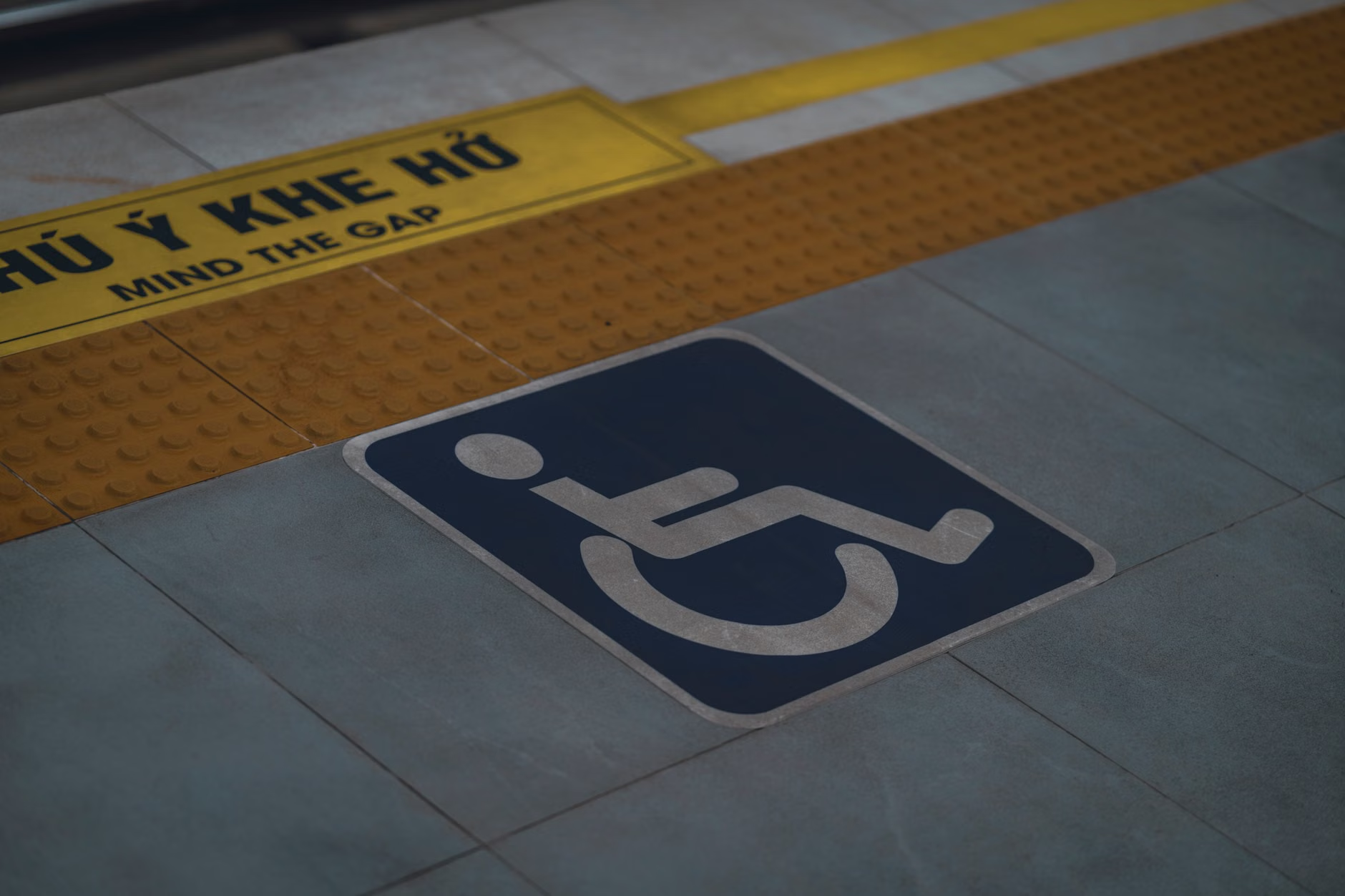
The most critical safety risk at a rural depot is the “gap.” In older stations, the distance between the platform edge and the carriage entrance can be significant, both horizontally and vertically. This is where most boarding-related incidents occur.
The “Gap” Reality Check
Modern trains are designed with retractable steps, but older, heritage-style trains often require passengers to step up from a lower platform. When preparing for your trip, consider the following decision matrix:
| Feature | What to Look For | Actionable Advice |
|---|---|---|
| Platform Height | Is it level with the carriage floor? | If not, confirm if the staff carries portable boarding steps. |
| Staff Presence | Is the station staffed or automated? | If unstaffed, avoid trains that require heavy luggage handling. |
| Boarding Time | How long does the train dwell? | Choose off-peak times; the train will dwell longer, reducing boarding pressure. |
If you are traveling with a companion, the “leader and follower” method is recommended. The more mobile person should board first, place luggage, and then turn back to assist. If you are traveling solo, always alert the conductor as you approach the platform. They are trained to provide a steadying hand or to deploy a ramp if necessary.
Managing Stamina: The “Two-Hour Rule”
Travel fatigue is not just about feeling tired; it is a clinical condition where cognitive function and physical coordination diminish, increasing the risk of accidents. For those aged 60 to 80, the “Two-Hour Rule” is a vital strategy for maintaining long-term energy levels.
The Architecture of Recovery
Limit your active transit time to two hours before scheduling a seated break of at least 45 minutes. Historical depots are often quiet, which makes them perfect for this recovery. Instead of rushing to the next attraction, use the station’s waiting room or a nearby bench to hydrate, check your medication schedule, and review the next leg of your journey.
Warning Signs of Fatigue:
- Cognitive Drift: If you find yourself checking your ticket or watch more than three times in ten minutes, you are likely suffering from travel-induced stress or fatigue.
- Physical Clumsiness: Difficulty lifting your feet properly or feeling “heavy” when stepping onto a train is a sign that your core stability is compromised.
- Decision Paralysis: If a simple menu or a route map suddenly seems confusing, stop moving. Sit down, drink water, and wait for your heart rate and focus to stabilize.

Digital and Physical Preparedness
While digital ticketing is standard, rural depots often have poor cellular connectivity. Relying solely on a smartphone app can leave you stranded if the network fails. A “hybrid approach” is the gold standard for senior travelers.
The Essential Travel Kit
- The Printed Master Sheet: Keep a single sheet of paper containing your ticket numbers, the address of your destination, and the emergency contact for the rail company.
- Tactile Navigation: Download offline maps. Do not rely on real-time GPS in remote areas.
- The “Stationary” Strategy: If you get confused, stay where you are. Do not walk into unknown areas of a station looking for help. Find a staff member or wait for the next scheduled train arrival.
Ensuring Consumer Protection and Rights
When traveling, it is important to know your rights regarding accessibility services. In many jurisdictions, such as the EU (via the Rail Passengers’ Rights Regulation) or the UK (via the Office of Rail and Road), rail operators have a legal obligation to provide assistance to passengers with reduced mobility. This is not a “favor”—it is a service you are entitled to.
If you require assistance, you must book it in advance. Most national rail websites have a specific “Assistance” portal. If you cannot find it, search for the term “[Country Name] rail passenger assistance.” Booking 48 hours in advance ensures that staff at your departure and arrival stations are notified to assist with luggage, boarding, and station navigation.
Conclusion: The Joy of Measured Exploration
Visiting rural historical train depots provides a sense of connection to the past that modern travel often lacks. By assessing your physical environment, managing your stamina through the Two-Hour Rule, and preparing both digital and physical documentation, you can navigate these sites with confidence. Remember, the goal of travel is the experience itself—there is no prize for rushing. Take your time, prioritize your safety, and enjoy the rhythm of the rail.
Frequently Asked Questions
1. How can I determine if a station is wheelchair or walker accessible before I arrive?
Most national rail operators provide an “Accessibility Map” or “Station Information” page on their official websites. Look for symbols representing step-free access, lift availability, and tactile paving. If this information is missing, search the station name on Google Maps and look at the “Street View” to see if there are visible stairs at the entrance.
2. What should I do if my train is delayed and I am at an unstaffed rural station?
First, stay in a well-lit, visible area. Most modern rural stations have “Help Points” or “Emergency Intercoms” that connect directly to a central control room. If you do not have access to one, use your phone to call the rail operator’s customer service number. Do not attempt to walk to another station or leave the platform area to find help unless it is clearly marked.
3. Is it safe to travel solo at my age when visiting remote train stations?
Solo travel is entirely possible and rewarding, provided you do not deviate from your planned itinerary. Stick to daylight hours for your rail travel, ensure a family member has a copy of your full schedule, and always carry a portable power bank for your mobile device. If you feel uncomfortable, the best decision is to wait in a public area or return to a more populated hub.
Official Resources for Reference: