- Reciprocity is not universal: Cross-border rail discounts are rarely automatic; verify if your home senior card is recognized by the destination operator before booking.
- Digital Transition: By 2026, most major rail networks have phased out paper senior passes in favor of mobile-first digital identity verification.
- Planning for Accessibility: Always book “Assistance Services” at least 48 hours in advance, as 2026 policies require pre-registration for priority boarding and station transfers.
As we head into 2026, the landscape of international rail travel for seniors is undergoing a significant transformation. For those aged 60 to 80, the appeal of train travel remains unmatched—offering comfort, scenic beauty, and a pace of travel that respects the body’s need for rest. However, the systems governing senior discounts and “reciprocity” (the recognition of a senior status from one country in another) are becoming increasingly digitized and complex.
This article provides a roadmap for navigating these changes, ensuring that your 2026 travels are as cost-effective and stress-free as possible.
The Reality of Reciprocity in 2026
A common misconception among travelers is that a “Senior Railcard” issued in one country acts as a universal passport to discounts across all international borders. In 2026, this remains a myth. While regional alliances like the European Union’s rail networks have moved toward harmonized digital ticketing, reciprocity is generally limited to specific bilateral agreements or private rail alliances.
What it is: Reciprocity in this context refers to a rail operator honoring the senior fare of a different jurisdiction. For example, if you hold a senior card from a national rail operator, it does not automatically grant you a discount on a high-speed line in a neighboring country unless both operators have a formal partnership agreement.
Why it matters: Relying on the assumption of reciprocity can lead to significant out-of-pocket costs at the point of ticket inspection, where you may be fined for holding an invalid discount fare if your card is not recognized.
What the reader can do: Before departing, visit the official website of the rail operator you intend to use. Look for the “International Terms and Conditions” section rather than the “Senior Discounts” page. The latter often only lists domestic benefits. If the site does not explicitly state that it accepts international senior proof-of-age documents, assume it does not.
Understanding the 2026 Digital Shift
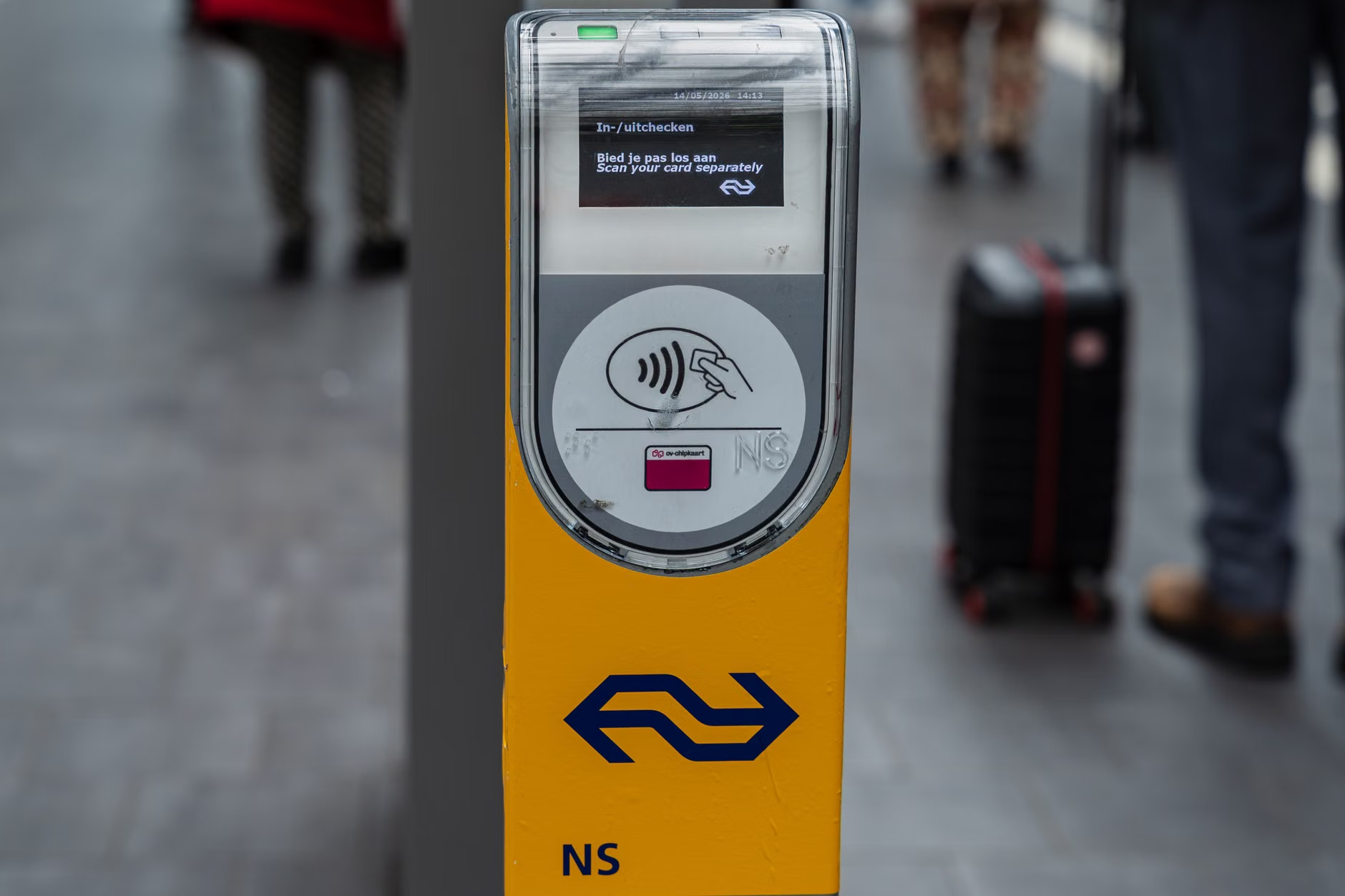
By 2026, the transition from physical plastic senior railcards to digital verification is nearly complete in most developed rail markets. This shift is designed to reduce fraud and streamline boarding, but it creates a technical barrier for some travelers.
The Digital Identity Requirement
Most national operators now require travelers to link their senior status to a verified digital account. This often involves uploading a government-issued photo ID to the operator’s app. Once verified, your “Senior Status” is attached to your account profile, and discounts are applied automatically at checkout.
| Region | Primary Verification Method | Reciprocity Status |
|---|---|---|
| European Union | Digital EU Rail Pass / Operator App | Limited (Depends on carrier) |
| North America (Amtrak/VIA) | Online Account Verification | Minimal (Domestic focus) |
| East Asia (Japan/Korea) | IC Card Integration | Strictly Domestic |
The table above highlights that while digital integration is high, reciprocity remains low. The most practical approach for a senior traveler is to create an account with the specific rail operator at least two weeks before your trip. This allows time for account verification, which can sometimes take 3–5 business days if your documentation requires manual review.
Mobility and Accessibility: Planning for 2026 Infrastructure
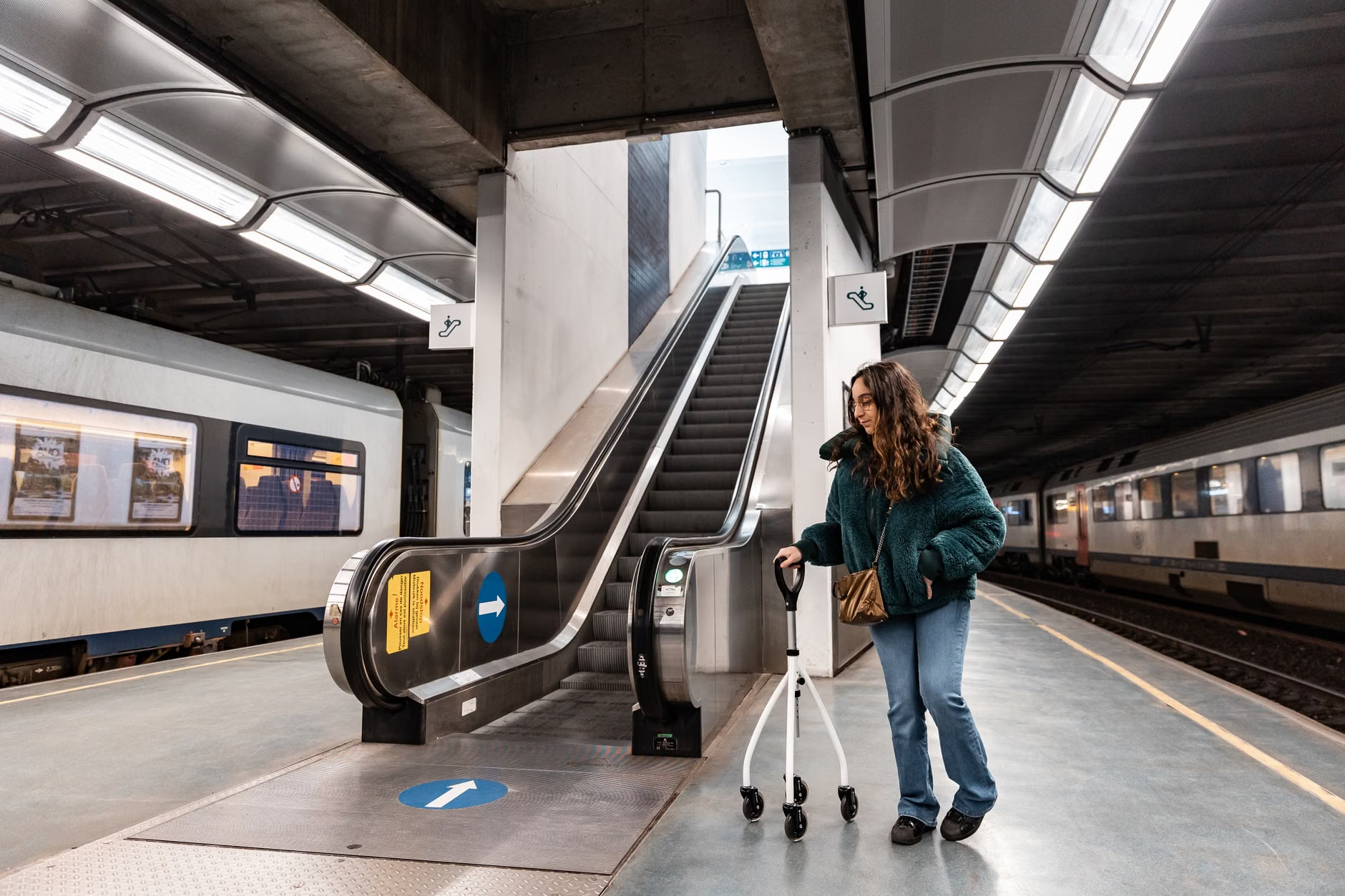
Modern rail travel in 2026 prioritizes accessibility, but “accessible” does not always mean “convenient.” Many historic stations, particularly in Europe and parts of Asia, have undergone renovations to install elevators and tactile paving, but these are not always located near the main entrance.
The “Assistance” Protocol
If you have reduced mobility, do not rely on your own navigation. Most major rail companies now require you to book “Assistance Services” when you purchase your ticket. This is not a request for help; it is a formal reservation for a station staff member to meet you at the platform or entrance to guide you to your carriage.
Why 48 hours matters: Most operators strictly adhere to a 48-hour pre-booking window for assistance. If you show up at the station and request help, you may be told that the staff is already fully booked for that departure time. This is a common source of stress that can be entirely avoided with a calendar reminder.
Strategic Packing for Rail Stamina
Rail travel often involves navigating long platforms and, occasionally, bridging a gap between the platform and the train. In 2026, the trend is toward “self-service” luggage. If you cannot lift your suitcase to waist height, consider using a luggage forwarding service. Many rail hubs now offer “luggage-to-hotel” courier services that are surprisingly affordable and allow you to travel unburdened.
Managing Your Health and Comfort on Long Journeys
Traveling by rail is generally less physically taxing than flying, but long-distance travel still carries risks of dehydration, fatigue, and venous issues. Maintaining your daily routine is the best way to prevent discomfort.
Stamina and Hydration
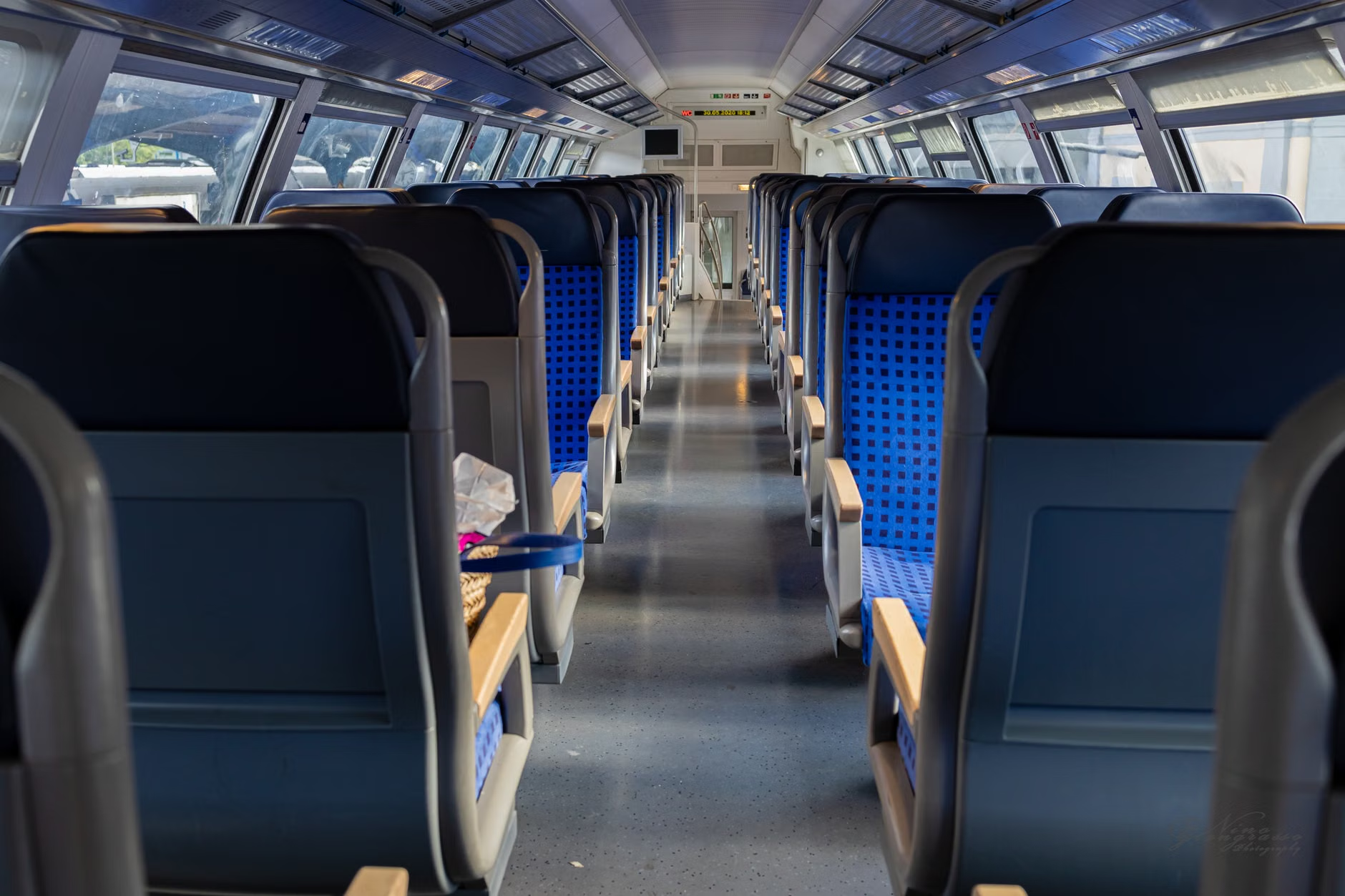
When booking seats, prioritize “Quiet Zones” or near-door carriages. Quiet zones are ideal for resting, but they are often situated at the far end of the train, requiring a longer walk upon arrival. If you have limited stamina, choose a seat closer to the middle of the train where the platform access is usually most direct.
The Hydration Factor: Rail cabin air is often drier than it feels. Make it a habit to carry a reusable water bottle that you can refill at station taps (if potable) or via the onboard service. Avoid relying on the train’s dining car for hydration, as service can be delayed or crowded.
Medication and Documentation
Always keep your essential medications in your carry-on bag, not in your checked luggage or forwarded bags. If you are crossing borders, ensure you have a copy of your prescriptions in English. While you are unlikely to be stopped, having documentation prevents unnecessary delays if a conductor or border official asks about your carry-on contents.
Practical Steps for Your 2026 Itinerary
To successfully plan your trip, follow this checklist:
- Verify Eligibility: Check if your age qualifies you for the specific “Senior” bracket of the operator (some start at 60, others at 65 or 70).
- Account Setup: Download the operator’s app and complete your profile 14 days before departure.
- Assistance Booking: Secure your assistance service at the same time you purchase your tickets.
- The “Backup Print”: Even in a digital world, carry a printed copy of your tickets and your assistance reservation. Digital devices can fail or run out of battery.
Insights on Hidden Trade-offs
A frequently overlooked factor in 2026 rail travel is the “platform change.” Many high-speed rail networks utilize dynamic platform assignment, meaning your train’s platform may not be announced until 10 minutes before departure. For seniors with mobility concerns, this can be a significant source of anxiety.
The Strategy: Use the station’s official app, which often pushes platform notifications to your phone before they appear on the main board. If you are traveling with a companion, have one person watch the board while the other stays seated with the luggage. If you are solo, identify the “Information Desk” as soon as you arrive at the station and ask the staff if the platform is likely to change.
Another trade-off involves “Budget vs. Comfort.” While budget rail lines offer lower fares, they often lack the dedicated staff to assist with boarding. If you require assistance, it is almost always more reliable to book with the “National Carrier” (e.g., SNCF in France, DB in Germany, Amtrak in the US) rather than a low-cost private competitor, as the national carriers have the infrastructure and staffing to support accessibility requirements.
Conclusion: Prioritizing Your Travel Experience
The evolution of rail travel toward digital, high-speed, and automated systems in 2026 offers incredible opportunities for seniors to explore the world. By embracing the digital tools now available and planning for the physical realities of station navigation, you can ensure that your journey is as enjoyable as your destination.
Remember that the goal of travel is enrichment, not speed. If a connection feels too tight, book the later train. If a station looks too vast, book the assistance service. Your comfort is the most important factor in a successful trip.
Frequently Asked Questions
Q: Can I use my home country’s senior discount card for international travel?
A: Generally, no. Senior rail discounts are usually tied to residency or specific national social security programs. Always check the operator’s website to see if they offer a specific “International Senior” fare or if they have a reciprocal agreement with your home provider.
Q: How do I request assistance if I have a last-minute change in travel plans?
A: If you have already booked assistance but your train changes, you must notify the station staff at the “Assistance Point” immediately upon arrival. While they may not be able to guarantee immediate help, they are trained to prioritize travelers with pre-existing bookings.
Q: Is it better to book tickets through a third-party aggregator or the rail operator directly?
A: Always book directly through the rail operator’s official website or app. Third-party aggregators often fail to transmit your “Assistance” or “Senior Status” details correctly to the rail operator’s system, which can lead to problems at the station.
Official resources for further research: