- Cognitive and Motor Benefits: Bookbinding improves fine motor coordination and encourages sustained focus, acting as a meditative practice that reduces stress.
- Accessibility: The craft is highly adaptable; you can start with minimal tools and low-cost materials, making it suitable for those with limited space or mobility.
- Practical Application: Beyond the hobby, bookbinding provides a tangible way to preserve family archives, create personalized journals, or repair cherished books.
The Intersection of Craft and Calm
Bookbinding is far more than the simple act of fastening pages together; it is a historical craft that balances structural engineering with artistic expression. For many adults, the process of folding, measuring, and stitching paper provides a unique form of “active meditation.” Unlike digital hobbies, bookbinding offers a tactile experience that engages the senses—the crisp sound of a paper fold, the texture of linen thread, and the smell of high-quality binding glue.
This practice is particularly well-suited for the 60-80 age demographic because it does not require heavy lifting or rapid movement. Instead, it rewards steady hands, patience, and a methodical approach. By focusing on the incremental steps of construction, practitioners often find that the “chatter” of daily stressors quietens, replaced by the satisfaction of watching a functional object take shape from raw materials.
Why Bookbinding Suits the Mature Practitioner
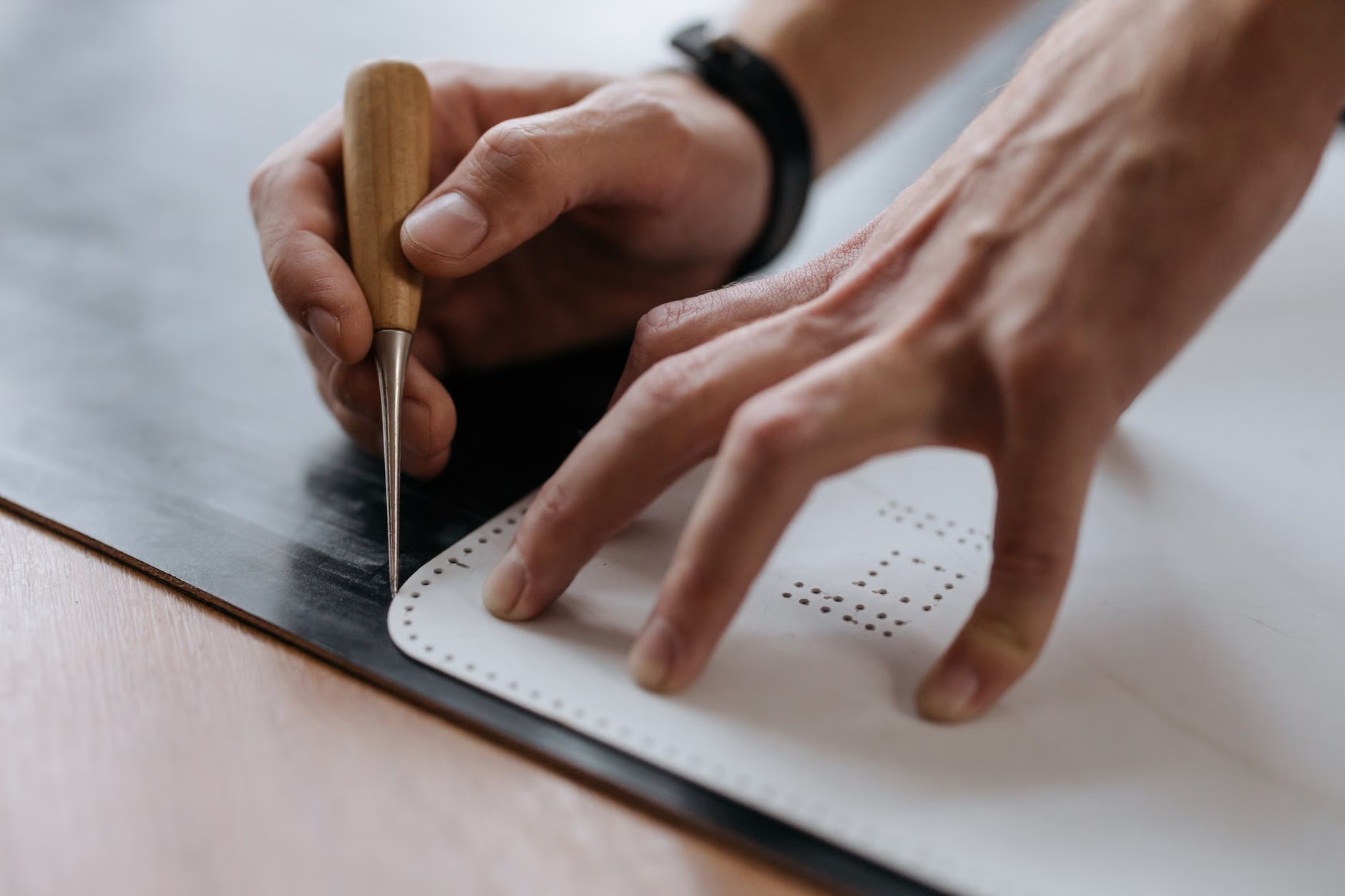
One of the primary reasons bookbinding has gained traction as a therapeutic hobby is its reliance on rhythmic repetition. The process of punching holes in a signature (a group of folded pages), threading a needle, and executing a specific stitch pattern is inherently predictable. This predictability can be deeply grounding.
Cognitive Engagement and Fine Motor Skills
As we age, maintaining fine motor dexterity is essential for daily independence. Bookbinding requires precise movements—placing a needle through a specific hole, folding paper to exact edges, and applying adhesive with controlled pressure. These tasks challenge the brain’s spatial awareness and hand-eye coordination without the physical strain associated with high-impact activities.
Low Barriers to Entry
Many hobbies require expensive machinery or specialized studios. Bookbinding is different. You can start with a kitchen table, a ruler, a pencil, and a few basic hand tools. This makes it an ideal “low-friction” hobby—you can engage with it for ten minutes or two hours, depending on your energy levels, and stop exactly where you left off.
Essential Tools: A Practical Starter Kit
When beginning, it is tempting to purchase elaborate kits. However, most professional bookbinders recommend starting with a few high-quality basics. The following table outlines the essential tools and their specific functions to help you prioritize your initial investment.
| Tool | Function | Why it matters for your hands |
|---|---|---|
| Bone Folder | Creasing and folding paper | Reduces the need to use fingernails or sharp edges, preventing strain. |
| Awl | Punching holes for stitching | Allows for easy, precise penetration without excessive force. |
| Linen Thread | Binding pages | Provides strength; waxed thread is easier to grip and prevents tangling. |
| Cutting Mat | Surface protection | Provides a non-slip surface, increasing safety when using knives. |
Note on Safety: When choosing a cutting mat, ensure it is self-healing to prevent the blade from catching. If you have any concerns regarding grip strength, look for tools with ergonomic, thick handles, which are often easier to hold than traditional thin-handled tools.
A Step-by-Step Approach to Your First Pamphlet Stitch
The “Pamphlet Stitch” is the gold standard for beginners. It is the foundation for almost all other binding techniques. It involves taking a single group of folded papers and stitching them through the center fold.
Step 1: Preparation
Take 4 to 8 sheets of paper and fold them together in half. This is your “signature.” Use your bone folder to make the crease sharp; a sharp crease is the secret to a professional-looking book.
Step 2: Marking
Using a pencil and ruler, mark three points on the inside fold of your signature: one in the center, and two equidistant from the center (about 2 inches or 5 centimeters from the top and bottom).
Step 3: Piercing
Place your signature on a piece of scrap cardboard. Use your awl to pierce through the three marks you made. Ensure the awl is held vertically to keep the holes consistent across all pages.
Step 4: Stitching
Cut a piece of waxed linen thread about three times the height of your book. Thread your needle, start from the inside center hole, go through to the outside, back in through a top hole, out through the bottom, and finish by tying a knot at the center hole.
This process is highly repeatable. Once you master the pamphlet stitch, you can create greeting cards, small recipe books, or personal journals.
Advanced Considerations: Paper and Adhesives
As you progress, the materials you choose will significantly impact your experience. Grain direction is a technical term that is often overlooked but crucial. Paper has a “grain,” similar to wood. If you fold paper against the grain, it will crack and look untidy. Always test your paper by gently bending it in both directions; the direction that offers less resistance is the grain direction. Aim to fold your paper parallel to this grain.
Regarding adhesives, avoid standard office glue sticks, which often contain high water content that can warp paper. Instead, look for archival-quality PVA (polyvinyl acetate) glue. It remains flexible when dry and is acid-free, ensuring your work lasts for decades.
Overcoming Physical Challenges
If you experience arthritis or reduced grip strength, do not be discouraged. Bookbinding can be modified:
- Magnification: Use a desk-mounted magnifying lamp to reduce eye strain and improve the visibility of your needle holes.
- Tool Modification: Wrap tool handles in foam pipe insulation or silicone grip tape to increase their diameter, making them easier to hold.
- Pacing: Do not feel pressured to complete a book in one sitting. The beauty of this craft is that a signature can be prepared one day and stitched the next.
The Therapeutic Value of Tangibility
In a world dominated by screens, the act of “making” provides a sense of agency. When you bind a book, you are creating a repository for your thoughts, sketches, or family history. This physical output serves as a record of your time and effort. Many practitioners find that creating books for family members—such as a memory book for grandchildren or a collection of family recipes—adds a layer of emotional satisfaction that goes beyond the craft itself.
Research into “craft-based therapies” suggests that activities requiring focus and repetitive hand movements can lower cortisol levels. By focusing on the alignment of paper and the tension of thread, you are engaging in a form of mindfulness that is accessible, quiet, and profoundly rewarding.
Conclusion: Your First Steps
To begin, do not worry about perfection. Your first book may have uneven stitches or a slightly crooked spine—this is a normal part of the learning process. The value of bookbinding lies in the practice, not the product. Start by gathering a few sheets of printer paper and a needle and thread. Practice your folds, learn to punch clean holes, and enjoy the quiet precision of the craft. Over time, you will find that your hands become steadier, your eye sharper, and your appreciation for the humble book grows deeper.
For those looking for further instruction, the Bookbinders Guild of America provides excellent resources and historical context on various binding styles. Additionally, local libraries often offer craft workshops that can provide a social dimension to this otherwise solitary, meditative pursuit.
Frequently Asked Questions
- Is bookbinding an expensive hobby to maintain?
No. Once you have the basic tools (awl, bone folder, needle, and mat), the only recurring cost is paper and thread, which are inexpensive and widely available. - Can I repair my old books using these techniques?
Yes, but be cautious. Simple repairs, such as re-gluing a loose page, are easy to learn. However, valuable antique books should be assessed by a professional conservator to avoid causing permanent damage. - What if I have limited space?
Bookbinding is ideal for small spaces. Because the tools are small and the materials are mostly paper, your entire workshop can fit into a single shoebox or desk drawer.