- Bookbinding provides a unique combination of cognitive engagement, fine motor exercise, and creative satisfaction that is highly accessible for older adults.
- The practice encourages “flow state” or mindfulness, which can significantly reduce stress and improve focus by requiring sustained attention to physical detail.
- Starting with “pamphlet binding” allows you to build foundational skills using minimal, low-cost equipment before investing in more complex tools.
Bookbinding is the physical process of assembling a book from a stack of paper sheets. Beyond the final product—a sturdy, personal journal, a photo album, or a restored family heirloom—the act of binding itself is a rhythmic, meditative practice. For adults aged 60 to 80, this hobby offers a rare intersection of intellectual stimulation and physical dexterity, providing a structured way to preserve memories while maintaining hand-eye coordination.
The Therapeutic Value of Crafting Books
In a world dominated by digital screens, the tactile nature of bookbinding offers a grounding sensory experience. When you work with paper, needles, and thread, you are engaging in a process that has remained largely unchanged for centuries. This continuity can feel profoundly stabilizing.
Cognitive Benefits and Mental Engagement
Bookbinding requires planning, sequencing, and spatial reasoning. You must measure paper, align grain directions, and calculate the structure of the spine. This “architectural” thinking keeps the brain active. Research into “leisure-time physical activity” suggests that hobbies requiring fine motor control, such as sewing or model-building, help maintain neural pathways associated with precision and focus. Unlike passive entertainment, bookbinding demands active problem-solving—if a thread snags or a page is misaligned, you must analyze the error and correct it, which keeps cognitive functions sharp.
Fine Motor Skills and Dexterity
As we age, maintaining dexterity in our hands and fingers is vital for daily independence. The repetitive motions of bookbinding—punching holes with an awl, pulling thread through needles, and folding paper with a bone folder—act as a gentle, controlled workout for the intrinsic muscles of the hands. This is not about speed; it is about controlled, intentional movement. By focusing on the precision of each stitch, you are actively working to maintain the flexibility of your joints and the strength of your grip.
Understanding the Basics: What You Need to Start
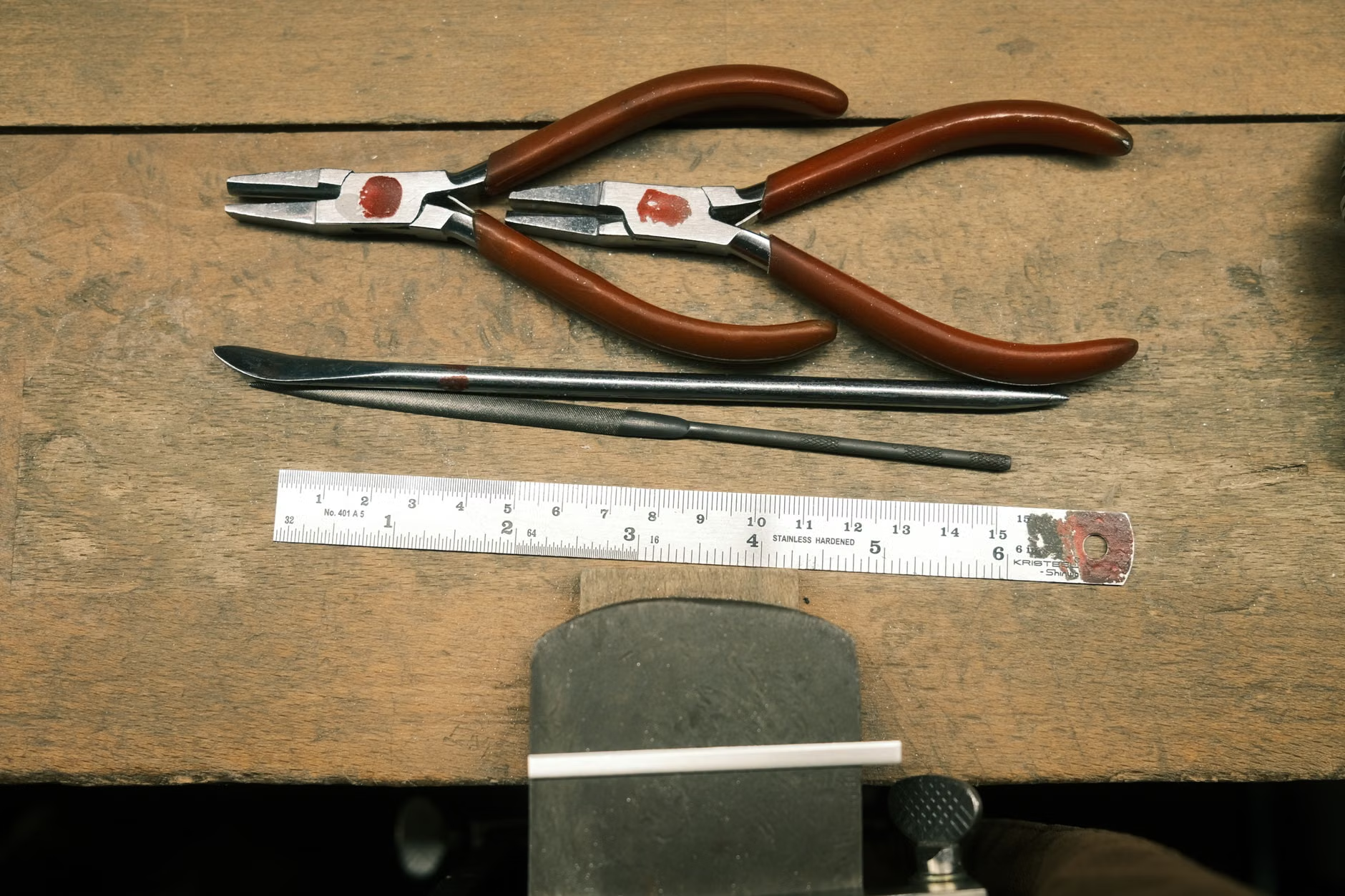
One of the most common mistakes beginners make is purchasing expensive, heavy-duty equipment before understanding the fundamentals. You do not need a professional-grade press or a massive studio to begin. Most of the tools required are either already in your home or can be purchased for a nominal cost.
Essential Tool Checklist
| Tool | Function | Why it matters for seniors |
|---|---|---|
| Bone Folder | Creates sharp, clean creases in paper. | Reduces the need for force when folding multiple sheets. |
| Awl | Punches precise holes for stitching. | Allows for accurate alignment without straining the hand. |
| Linen Thread | Strong, durable thread for binding. | Does not tangle as easily as cotton or synthetic thread. |
| Bookbinding Needle | Blunt tip, large eye. | Easier to thread and safer to handle than sharp sewing needles. |
Safety Note: Always work on a stable, well-lit surface. When using an awl, use a piece of scrap cardboard or a cork mat underneath your paper to protect your table surface and provide resistance, preventing the tool from slipping.
The Pamphlet Stitch: Your First Project
The pamphlet stitch is the foundation of almost all bookbinding. It is the method used to create thin booklets, journals, or notebooks. It is simple, requires only a few minutes to master, and is incredibly rewarding.
Step-by-Step Guide to Your First Booklet
- Prepare your paper: Select 5 to 8 sheets of paper and fold them in half. A bone folder is essential here to ensure the crease is crisp; a loose crease will cause the book to “spring” open.
- Measure and mark: Open the sheets. Use a ruler to mark three points along the crease—one in the center, and two about 2 inches from the top and bottom.
- Punching the holes: Place your paper on a soft cutting mat or cardboard. Using your awl, carefully punch through the marks you made.
- Stitching: Thread your needle with a piece of linen thread about twice the height of your book. Start from the inside of the center hole, go out to the back, back in through the top hole, then out through the bottom hole, and finally tie it off at the center.
What makes this technique effective is its forgiving nature. If the thread is too loose, you can simply pull it tighter. If the pages are misaligned, you can trim the edges with a ruler and a craft knife. This “tinkering” process is where the therapeutic value lies; it teaches us to be patient with our mistakes and methodical in our corrections.
Advanced Considerations: Paper Grain and Materials
As you progress, you will realize that not all paper behaves the same way. This is due to the “grain” of the paper. Paper is made of fibers that align in one direction during the manufacturing process. If you fold against the grain, the paper will crack or resist the fold. You can test the grain by gently bending a sheet; it will bend much more easily in one direction than the other.
For those interested in long-term preservation, such as binding family recipes or photos, consider using “acid-free” or “archival” paper. Acidic paper will yellow and become brittle over time. Archival paper ensures that your work remains intact for future generations, turning your hobby into a legacy project.
Choosing the Right Materials for Comfort
If you have arthritis or reduced grip strength, look for tools with ergonomic, thick handles. A thin awl can be difficult to grip; you can easily modify it by wrapping the handle with foam pipe insulation or using a rubber grip sleeve. These small, practical adjustments allow you to engage in the craft for longer periods without fatigue.

Integrating Bookbinding into Your Daily Routine
Bookbinding does not need to be a marathon session. In fact, it is better suited for short, focused bursts. Because it requires concentration, it is an excellent way to transition from a busy day to a period of rest. Many practitioners find that setting aside 30 to 45 minutes in the late afternoon helps “clear the mind” of the day’s events.
Creating a Low-Stress Environment
- Clear the workspace: Do not try to bind books on a dining table covered in other items. A dedicated space, even if it is just a portable tray, signals to your brain that it is time to focus.
- Good lighting: Use a desk lamp with a high-CRI (Color Rendering Index) bulb to prevent eye strain.
- Posture: Ensure your chair provides adequate lumbar support. Since you will be leaning over your work, avoid chairs that are too low or too deep.
Common Misconceptions and Troubleshooting
Many people believe that bookbinding is a dying art that requires expensive machinery. This is a myth. The “machinery” of the past was simply to increase production speed for commercial publishers. As a hobbyist, you have the luxury of slow, manual production, which is arguably superior for the quality of the final object.
If you find that your stitches are constantly loose, you are likely not “locking” your thread. When you pull the thread through a hole, ensure you are pulling it in the direction of the stitch. If you pull perpendicularly, you increase the risk of tearing the paper or creating a loose, unsightly loop.
The Social Aspect of Bookbinding
While often a solitary pursuit, bookbinding can be a wonderful social activity. Many community centers or local libraries host craft groups. If you are a caregiver or a family member looking to bond with an older adult, learning this craft together is a collaborative experience. It creates a shared language of “this fold,” “this stitch,” and “this paper,” shifting the dynamic from one of caregiving to one of partnership.
Official Resources and Further Learning
For those who wish to delve deeper into the technical aspects of binding, there are excellent global resources available. The Society of Bookbinders provides a wealth of information on traditional techniques. Additionally, many public library systems offer access to digital archives of historic bookbinding manuals.
- The Society of Bookbinders (International Resource)
- The British Library: Preservation and Bookbinding Guides
Conclusion: A Craft for the Mind and Hands
Bookbinding is more than just making books; it is about the preservation of focus and the celebration of the physical world. By engaging in this practice, you are not only creating something beautiful but also investing in your own cognitive and physical well-being. Start small, focus on the process rather than the perfection of the result, and enjoy the quiet satisfaction that comes from creating something with your own two hands.
Frequently Asked Questions
1. Can I do bookbinding if I have arthritis in my hands?
Yes, but you must adapt your tools. Use ergonomic grips on your awl and needle, and work in short sessions of 20 to 30 minutes to avoid muscle strain. If you feel any pain, stop immediately and rest your hands.
2. Is bookbinding an expensive hobby to maintain?
It is one of the most affordable crafts. Once you have a few basic tools like a bone folder, an awl, and a needle, your only recurring cost is paper and thread, which can be sourced inexpensively in bulk.
3. Where can I find high-quality paper for my projects?
Look for “art supply” or “stationery” shops, and ask specifically for “acid-free” or “archival” paper. Avoid standard printer paper if you want your books to last, as it tends to yellow and degrade over time.