- Stability through Geometry: Using two trekking poles creates a “tripod effect” with your legs, significantly reducing the impact on knees and ankles when navigating uneven, historic stone surfaces.
- Equipment Selection: For city travel, prioritize “collapsible” or “telescopic” poles with high-quality rubber tips (ferrules) rather than carbide metal tips, which are designed for hiking trails and can be slippery on smooth stone.
- Technique is Key: Avoid “planting” the pole too far ahead; keep the poles close to your body to maintain an upright, stable posture and prevent tripping hazards for others.
Ancient cities—from the narrow alleys of Rome to the medieval squares of Prague—are visual marvels that often present a significant physical challenge: the cobblestone. For travelers aged 60 to 80, these uneven, hard, and often unpredictable surfaces can turn a leisurely stroll into a high-risk activity for balance and joint health. However, you do not need to avoid these destinations. By incorporating trekking poles into your travel kit, you can transform your mobility, turning a potentially treacherous path into a stable and enjoyable experience.
Understanding the Mechanics: Why Cobblestones Demand Extra Support
Cobblestones are not merely uneven; they are mathematically irregular. Each stone sits at a slightly different height, angle, and tension. When you walk on a standard sidewalk, your brain and body rely on a predictable, flat plane. On cobblestones, the surface actively forces your ankles to micro-adjust with every single step. For an older adult, this repetitive adjustment cycle can lead to rapid muscle fatigue, decreased proprioception (the body’s ability to sense its position in space), and an increased risk of a fall.
Trekking poles function as a “third and fourth leg.” By distributing your body weight across four points of contact instead of two, you offload the pressure from your lower joints—specifically the knees and hips. This mechanical advantage is crucial for maintaining endurance during long days of sightseeing. When you use poles properly, you are not just “carrying” them; you are actively using them to create a stable frame that allows you to scan the architecture rather than staring at your feet.
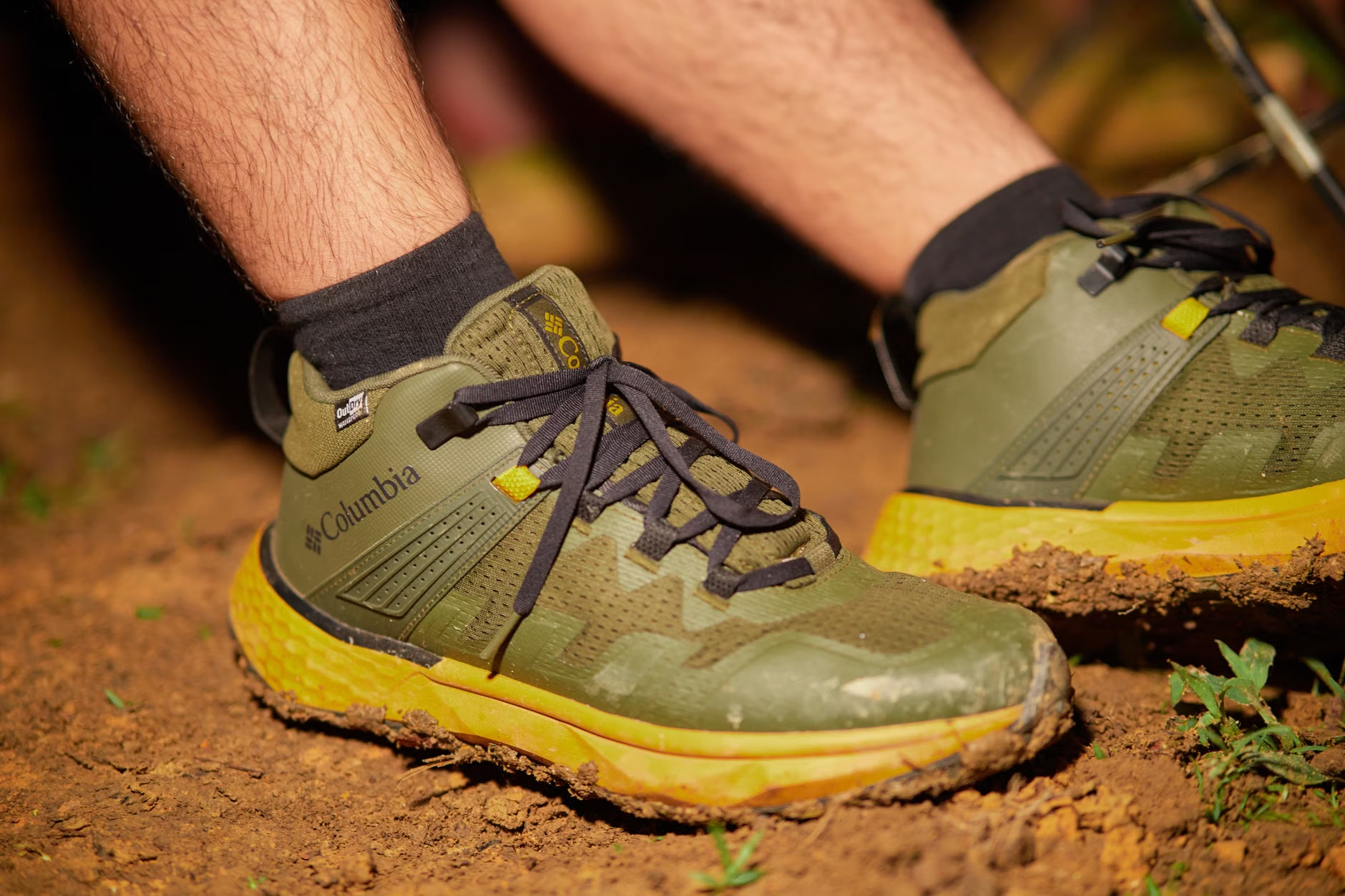
Selecting the Right Gear for Urban Environments
There is a distinct difference between “hiking poles” used for mountain trails and “travel-friendly trekking poles” for urban exploration. If you are flying to your destination, your gear must be portable and compliant with international travel regulations.
The Portability Checklist
- Collapsibility: Look for poles that fold into three sections. These can usually fit inside a standard carry-on suitcase or a daypack, eliminating the need to check your luggage.
- Weight: Carbon fiber is significantly lighter than aluminum. While aluminum is more durable under extreme stress, carbon fiber provides sufficient strength for city walking while reducing the “swing weight” that can tire your arms over several hours.
- The Tip (The Most Important Feature): Most trekking poles come with carbide metal tips. Do not use these on cobblestones or marble floors. They will slip and potentially damage the historic surface. Always ensure your poles have thick, high-traction rubber “feet” or ferrules.
Comparison of Pole Types
| Feature | Telescopic (Twist-Lock) | Folding (Z-Pole) |
|---|---|---|
| Portability | Moderate (Longer when collapsed) | High (Fits in small bags) |
| Stability | High (Adjustable length) | Moderate (Fixed length) |
| Best For | Long-term daily use | Frequent air travel / Day trips |
For most urban travelers, Folding (Z-Pole) designs are superior because they are easier to stow when entering a museum, café, or tight transport space. Ensure you purchase a pair that allows for quick adjustment if you encounter stairs or steep inclines.
Mastering the Technique: The “Urban Gait”
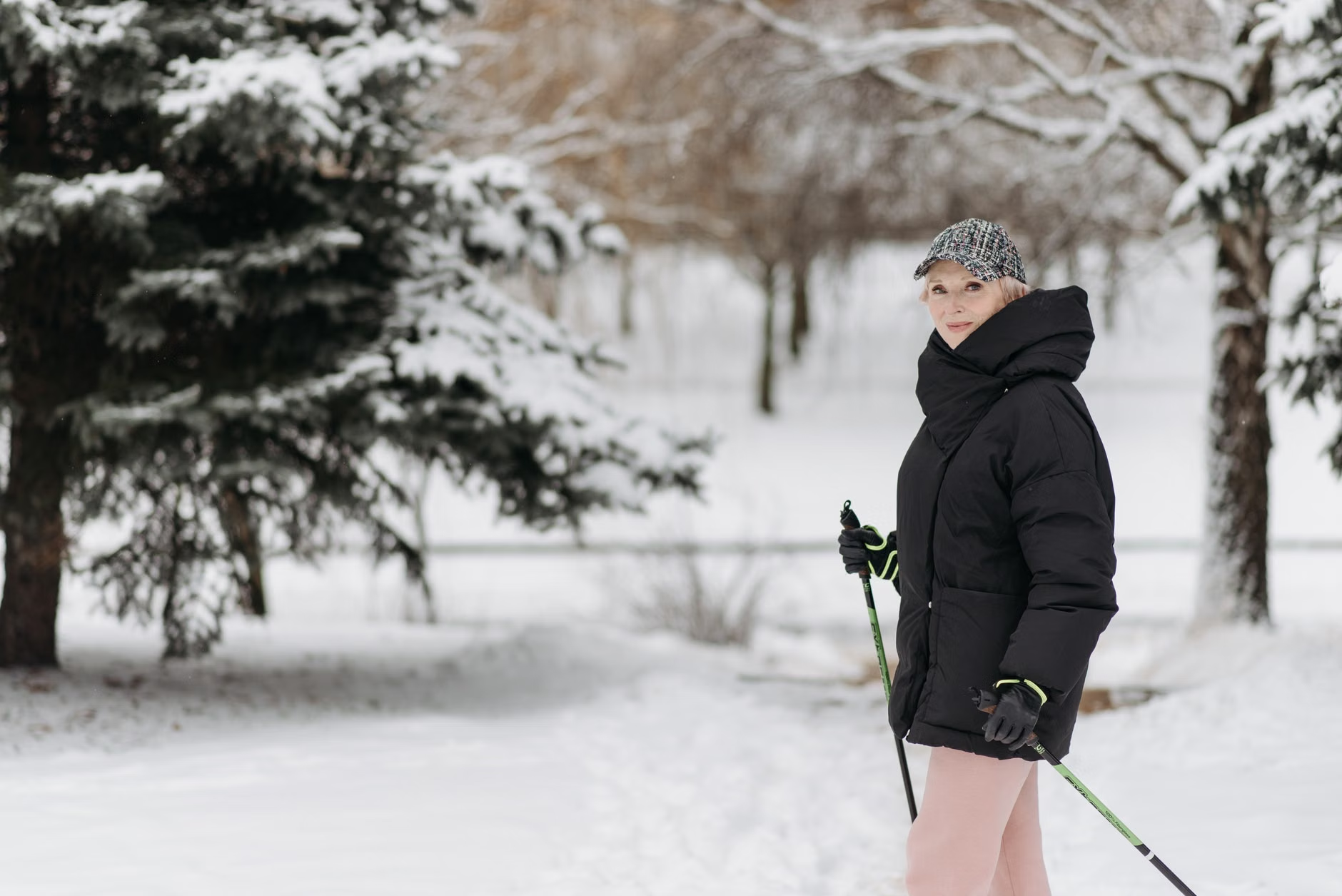
Many travelers make the mistake of extending their poles too far in front of their bodies. This creates a “tripping hazard” for both yourself and other tourists. To navigate ancient cities effectively, adopt the “Urban Gait.”
Step-by-Step Technique
- Adjust the Height: When standing straight, your elbow should be at a 90-degree angle when the pole tip is touching the ground. If you are walking uphill, shorten the poles; if downhill, lengthen them slightly to provide a braking effect.
- Keep it Close: Place the pole tips no further than your lead foot. This keeps your center of gravity neutral.
- The Alternate Rhythm: Move the left pole when you move your right foot, and vice versa. This mimics your natural walking rhythm and prevents you from feeling like you are “lumbering.”
- The “Museum Fold”: Practice folding your poles quickly. Many museums and historic sites prohibit poles with metal tips, but most allow them if they are rubber-tipped and stowed in a bag. Being able to pack them in under 10 seconds is a vital travel skill.
Managing Stamina and Pacing in Historic Centers
Ancient cities were designed for horses and pedestrians, not for the high-intensity, “see-it-all-in-a-day” travel style common today. The combination of uneven terrain and the “tourist pace” is a recipe for physical burnout. Your trekking poles are not just for balance; they are tools for energy management.
The 3-to-1 Rule for Urban Sightseeing
For every three hours of active walking on cobblestones, build in one hour of “static recovery.” This doesn’t mean standing in a queue; it means sitting in a café, a park, or a church where you can fully take the weight off your legs. Even if you feel energetic, sitting down before you feel tired allows your muscles to recover, preventing the “late-afternoon slump” that often leads to falls.
Common Mistake: Pushing through pain. If your knees or lower back begin to ache on the cobblestones, your body is telling you that your current gait is inefficient. Stop, adjust your pole length, and consciously shift more weight onto your arms. If the pain persists, it is time to use public transport (like the local tram or bus) to skip the most uneven sections of your route.
While trekking poles are excellent for stability, they are not a substitute for proper footwear. On cobblestones, the sole of your shoe is your primary interface with the ground. Wear shoes with a “low profile” (a thin but cushioned sole). Avoid high-platform sneakers, which increase the risk of an ankle roll on uneven stones.
When to Consult a Professional
If you experience chronic joint pain or balance issues that persist even when using poles, you should consult a physical therapist or your primary care physician before your trip. Ask them for:
- An assessment of your gait to ensure the poles are not causing shoulder or wrist strain.
- Advice on specific exercises to strengthen the core muscles used to stabilize your body on uneven ground.
- A review of any medications that might affect your balance or blood pressure during long periods of standing.
Always carry a list of your medications and any relevant health conditions in your pocket, especially when traveling abroad where the medical system may operate differently than in your home country.
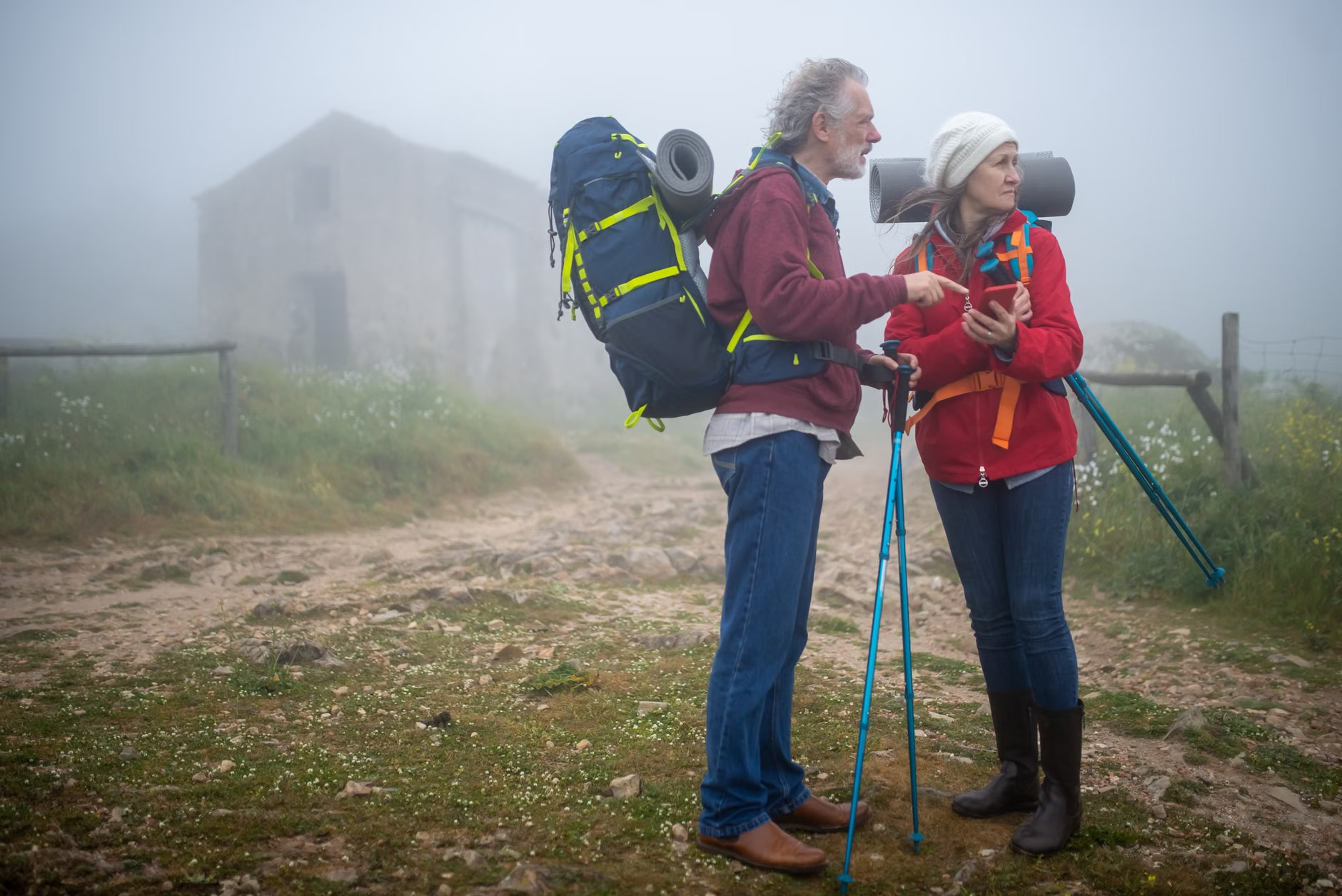
Accessibility and Infrastructure: What to Expect
Not every ancient city is created equal. Some municipalities have invested in “accessibility strips”—flat, smooth stone paths integrated into the middle of heavily trafficked cobblestone streets. Look for these as you walk. They are often intended for strollers and wheelchairs, but they are equally beneficial for seniors using trekking poles.
Jurisdiction-Specific Advice
In many European countries, such as Italy or Spain, public transport is often the best way to bypass the most difficult, hilly, or uneven historic centers. Check if your destination offers “Senior Passes” for public transit. These passes often provide unlimited access to buses and trams, allowing you to “hop off” at the top of a hill and walk down, rather than struggling with the ascent.
Before you depart, search for the official “Accessibility Map” of the city. Many cities now provide digital guides that highlight pedestrian-only zones, the location of public elevators (often found in newer metro stations or parking structures), and the presence of public seating. These resources are invaluable for planning a route that prioritizes your comfort over the shortest distance.
Strategic Decision Making for the Mature Traveler
When planning your daily itinerary, categorize your destinations by “Surface Difficulty.” If you have a day of intense walking on ancient Roman roads, pair it with a “Low-Impact Day” the following day, such as a museum visit or a river cruise. This alternating schedule is the most effective way to maintain your stamina throughout a multi-week trip.
Furthermore, consider the “Weight of the Day.” If you are carrying a camera, a guidebook, and a water bottle, you are adding weight that affects your balance. Use a lightweight, cross-body bag or a small backpack with a waist strap to keep your center of gravity centered. A heavy bag pulling you backward is the enemy of stability when you are trying to navigate a sloped, uneven street.
Finally, do not be afraid to utilize your poles as a signal of your needs. In crowded markets, the poles act as a subtle “personal space” marker, gently encouraging other tourists to give you a bit more room. This is a practical, unintended benefit that can significantly reduce the stress of navigating dense, tourist-heavy environments.
Conclusion: The Freedom of Stability
Trekking poles for seniors are not a sign of frailty; they are a sign of strategic, intelligent travel. By offloading the physical strain of cobblestones, you gain the freedom to focus on what matters: the history, the culture, and the experience of being in a new place. Preparation—choosing the right collapsible gear, mastering the urban gait, and pacing your daily activities—will ensure that your travel memories are defined by the beauty of the city, not the discomfort of the walk.
Frequently Asked Questions
1. Will I look out of place using trekking poles in a city?
Not at all. In major European and Asian tourist hubs, it is increasingly common to see travelers of all ages using trekking poles to manage the terrain. Most locals and fellow tourists will see them as practical travel equipment, similar to a high-quality camera or a comfortable pair of walking shoes.
2. Can I take trekking poles on an airplane?
Rules vary by airline and jurisdiction. Generally, trekking poles must be checked in as they are often prohibited in carry-on luggage due to their potential to be used as a weapon. However, some airlines allow them if they are fully collapsed and packed inside a bag. Always check your specific airline’s “Prohibited Items” list before leaving for the airport.
3. How do I know if my poles are adjusted to the right height?
When you are wearing your walking shoes and standing on flat ground, hold the pole with the tip touching the ground next to your foot. Your arm should be bent at an angle of 90 degrees. If your shoulder is hiked up or your elbow is too straight, adjust the locking mechanism until that 90-degree angle is achieved. This ensures you are supporting your weight effectively without straining your upper body.
Official guidance on travel accessibility can often be found on national tourism board websites. For example, the European Network for Accessible Tourism (ENAT) provides extensive resources for planning inclusive travel within Europe: https://www.accessibletourism.org/. Always check local city tourism portals for specific accessibility maps and public transport guides before your departure.