- The Muscle Pump Mechanism: Ankle-pumps activate the calf muscles, which act as a secondary heart to push venous blood back toward the heart, preventing pooling in the lower legs.
- Consistency Over Intensity: Performing 20 to 30 ankle-pumps every hour during prolonged sitting is more effective for long-term health than a single, high-intensity workout.
- Know When to Seek Help: While ankle-pumps are a great preventive tool, persistent swelling, redness, or heat in one leg requires a professional medical evaluation to rule out conditions like Deep Vein Thrombosis (DVT).
Understanding the Role of the “Second Heart” in Your Legs
For many adults aged 60 to 80, maintaining healthy circulation is a primary factor in preserving mobility and independence. As we age, the efficiency of our venous system—the network of veins responsible for returning blood from our extremities back to the heart—can naturally decline. This process is often complicated by sedentary habits, whether from long hours spent reading, watching television, or enduring long-haul travel.
The “second heart” of the human body is not a single organ, but a functional muscle group: the calf muscles. Every time you walk, your calf muscles contract and compress the deep veins in your lower legs. This mechanical action forces blood upward, against gravity, toward the heart. When we sit for extended periods, this “muscle pump” remains dormant. As a result, blood can pool in the lower extremities, leading to edema (swelling), a feeling of heaviness, and an increased risk of circulatory complications.
Seated ankle-pumps are a simple, low-impact exercise designed to artificially replicate this muscle-pump action while you remain seated. By repeatedly flexing and extending the ankle, you engage the calf muscles, facilitating venous return without the need for strenuous physical exertion. This article explores how to integrate this habit into your daily routine, why it matters for your long-term vascular health, and how to distinguish between normal age-related changes and signs that require medical attention.
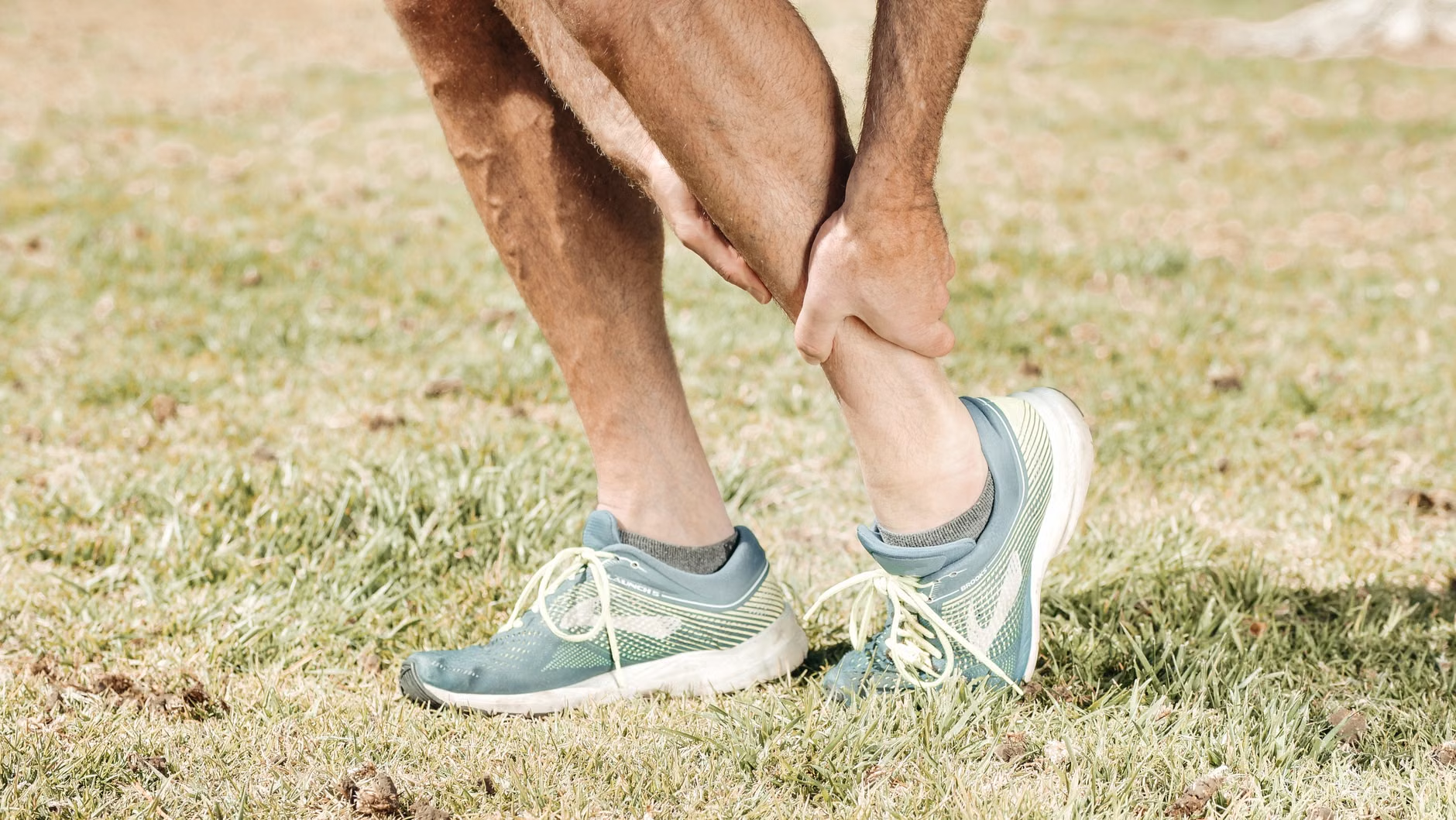
How to Perform Seated Ankle-Pumps Correctly
The effectiveness of an ankle-pump relies on the full range of motion. Many people perform “micro-movements” that do not engage the calf muscles sufficiently. To gain the circulatory benefits, you must be intentional with the movement.
Step-by-Step Technique
- Positioning: Sit in a stable chair with your feet flat on the floor. Ensure your back is supported and your spine is neutral.
- The Upward Phase (Dorsiflexion): Lift the front of your foot toward your shin as high as you comfortably can. You should feel a stretch in your calf and a slight activation of the muscles in the front of your shin.
- The Downward Phase (Plantarflexion): Push your toes downward toward the floor, like you are pressing a gas pedal. Focus on feeling the calf muscle tighten and contract.
- The Rhythm: Maintain a steady, controlled pace. Do not rush. Each pump should take approximately two seconds to complete.
Common Mistake: A frequent error is simply wiggling the toes rather than moving the ankle joint. While toe movement has minor benefits, it does not activate the deep calf muscles required to pump blood effectively. Focus your mental energy on the ankle joint itself.
Recommended Frequency
If you are sitting for more than 45 minutes, aim for two sets of 20 pumps per foot. If you are on a long flight or train ride, set a recurring alarm on your watch or phone to remind you to perform these movements once every hour. This regular interval is the key to preventing the “stagnant” feeling in your legs.
Why Circulation Health Matters for Seniors
Good circulation is more than just avoiding swollen ankles; it is about ensuring that oxygenated blood reaches your tissues and that metabolic waste is efficiently removed. For older adults, poor circulation can lead to several cascading issues.
| Condition | Impact on Quality of Life | Role of Ankle-Pumps |
|---|---|---|
| Peripheral Edema | Swelling causes skin tightness, discomfort, and makes wearing shoes difficult. | Helps mobilize fluid out of the lower legs. |
| Venous Stasis | Can lead to skin changes, including discoloration and increased risk of ulcers. | Maintains consistent blood flow to prevent pooling. |
| Muscle Stiffness | Reduces range of motion, impacting balance and gait. | Keeps ankle joints lubricated and calf muscles flexible. |
The table above highlights that while ankle-pumps are a preventive measure, they also serve as a diagnostic tool. If you notice that your swelling does not subside after regular movement, or if the swelling is asymmetrical (only in one leg), this is a significant indicator that you should consult a healthcare professional. Stagnant blood flow is a risk factor for blood clots, a condition that requires immediate medical intervention.
Integration into Daily Life and Travel
The beauty of the ankle-pump is its invisibility. You can perform these exercises in a crowded theater, a waiting room, or on an airplane without drawing attention to yourself. However, to make it a habit, you must link it to existing cues.
Cues for Routine Integration
- The “Commercial Break” Rule: If you enjoy watching television, commit to performing 20 ankle-pumps during every commercial break or between episodes.
- The “Read-a-Page” Habit: If you are reading a book, perform a set of pumps every time you turn a page.
- Travel Protocols: During long-distance travel, prioritize an aisle seat if possible. This allows you to extend your legs fully and perform your exercises without bumping into fellow passengers.
Hidden Inconvenience: One often overlooked factor is footwear. If you are wearing tight, restrictive shoes or socks with elastic bands that dig into your skin, you are actively working against your circulation. When traveling or sitting for long periods, opt for loose-fitting footwear and consider medical-grade compression stockings if recommended by your physician. Always ensure that compression stockings are properly fitted; wearing the wrong size can actually restrict circulation rather than assist it.
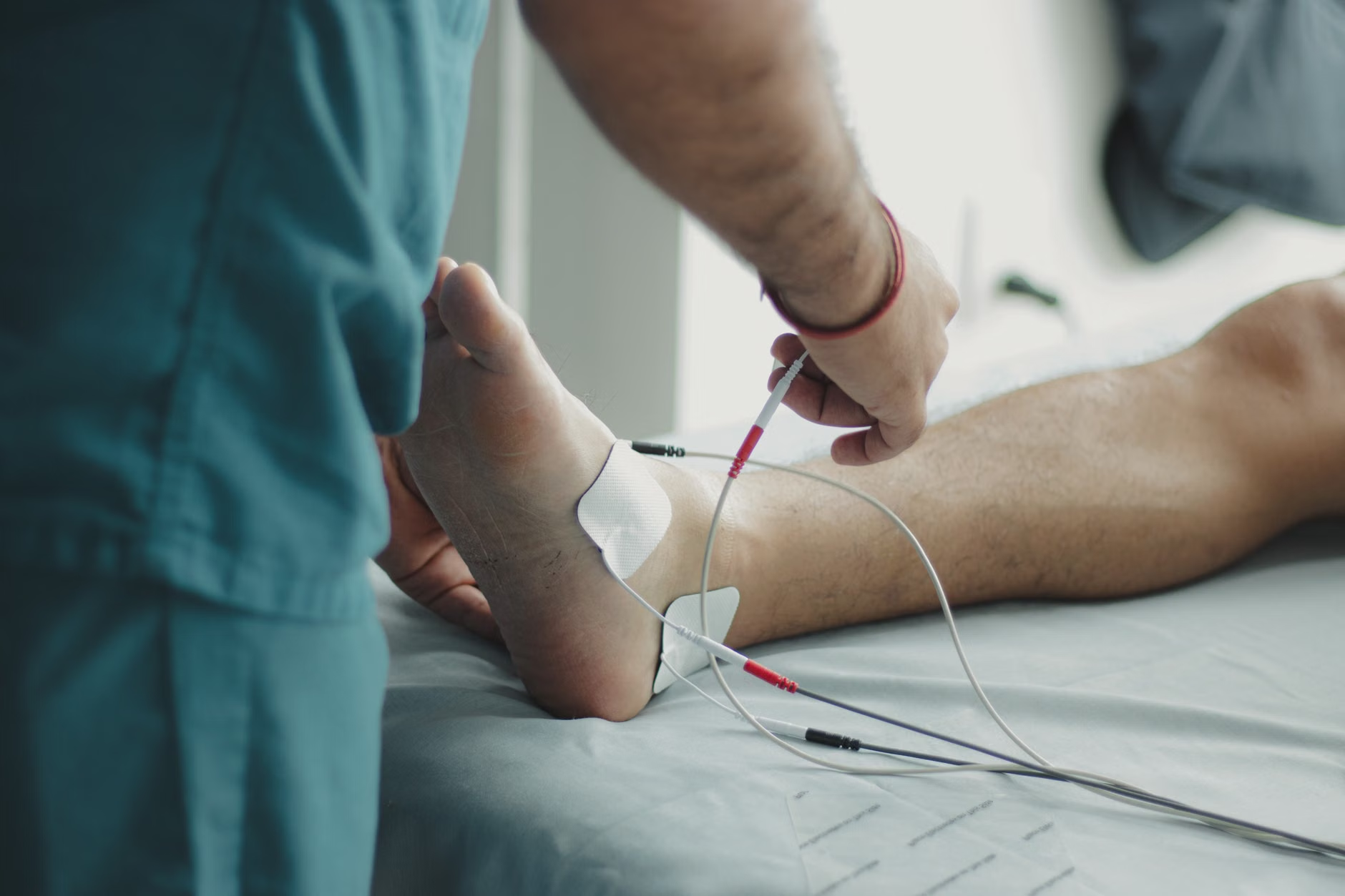
When to Consult a Medical Professional
Preventive health is about knowing the boundaries of self-care. Ankle-pumps are an excellent way to manage minor fluid retention caused by inactivity, but they are not a cure for underlying vascular disease or heart-related conditions.
Warning Signs: You should seek medical advice if you experience any of the following:
- Asymmetry: Swelling that occurs in only one leg. This is a potential red flag for a Deep Vein Thrombosis (DVT).
- Temperature Changes: If one leg feels significantly warmer or colder than the other.
- Pain: Sharp, localized pain in the calf or behind the knee that does not dissipate with rest.
- Skin Changes: Sudden redness, darkening, or the appearance of sores that do not heal.
When you visit a doctor for leg swelling, come prepared. Maintain a simple log for one week detailing:
- When the swelling occurs (e.g., “Always after dinner”).
- What makes it better (e.g., “Elevating feet for 20 minutes”).
- Current medications (some blood pressure medications can contribute to leg swelling).
Sharing this specific information allows your doctor to determine if the swelling is a benign side effect of lifestyle or a symptom of a condition requiring treatment, such as Chronic Venous Insufficiency (CVI).
Scientific Context and Practical Reality
The physiological basis for ankle-pumps is well-documented in clinical literature regarding venous return. Research consistently shows that muscular contraction is the most effective way to facilitate the flow of blood through the deep veins of the calf. While some might look for complex machines or expensive devices to assist with circulation, the body’s own anatomy is highly efficient when utilized correctly.
However, it is important to manage expectations. Ankle-pumps will not reverse advanced vascular damage. They are a tool for maintenance and prevention. For an older adult, the most effective approach is a combination of hydration, consistent movement, and proactive monitoring of one’s physical state. If you find that your mobility is decreasing, do not rely solely on seated exercises. Consult with a physical therapist who can design a program that safely incorporates standing and walking, which are even more effective at engaging the calf muscle pump than seated exercises.
Conclusion: The Power of Small Movements
The health of your circulatory system is largely determined by the accumulation of small, daily habits. By choosing to perform seated ankle-pumps, you are taking an active role in preventing the discomfort of swelling and the risks associated with venous stasis. This habit requires no equipment, costs nothing, and takes only seconds of your time throughout the day.
Remember that the goal is not to achieve a “perfect” workout, but to keep your blood moving. Whether you are at home, in the office, or traveling across the globe, your calf muscles are ready to work for you—provided you give them the signal. Start today by setting a simple reminder, and observe how a few minutes of conscious movement can improve the way your legs feel at the end of the day.
Frequently Asked Questions (FAQ)
1. Can I perform ankle-pumps while wearing compression stockings?
Yes, you can and should. Compression stockings are designed to assist the veins in returning blood to the heart. Performing ankle-pumps while wearing them can enhance their effectiveness by actively engaging the muscle pump to push blood through the pressurized leg.
2. How do I know if my leg swelling is serious?
Serious swelling is often characterized by being asymmetrical (only in one leg), accompanied by pain, redness, or heat, or if the skin remains indented for a long time after being pressed (pitting edema). If you notice these symptoms, please consult a healthcare professional, as these can be signs of a blood clot or heart-related issues.
3. Are there other exercises I should do while sitting?
In addition to ankle-pumps, you can perform seated knee extensions (straightening your leg out in front of you) to engage the quadriceps, and seated leg marches (lifting your knees alternately) to engage the hips. These movements collectively support lower-body mobility and circulation. Always ensure you are sitting in a sturdy, non-rolling chair before performing these movements.
Official guidance on venous health and mobility can be found through resources such as the National Heart, Lung, and Blood Institute (NHLBI), which provides comprehensive information on maintaining vascular health as we age.