- Enhanced Visibility Standards: New 2026 guidelines mandate uniform lighting levels and glare reduction, specifically targeting the improvement of depth perception and obstacle detection for older adults.
- Smart Infrastructure: Many municipalities are transitioning to motion-sensitive, adaptive lighting that increases intensity as pedestrians approach, balancing energy efficiency with personal safety.
- Advocacy and Reporting: Residents are encouraged to identify “dark spots” in local parks and use official municipal reporting channels to request lighting audits based on the new age-inclusive standards.
As we navigate the mid-2020s, urban planning is undergoing a significant shift toward age-inclusive design. A primary focal point for 2026 is the implementation of modernized lighting standards in public parks. These updates are not merely aesthetic; they are critical safety improvements designed to accommodate the changing physiological needs of older adults, particularly regarding vision, contrast sensitivity, and gait stability.
This article explores what these 2026 lighting updates mean for your daily exercise, social outings, and overall access to public green spaces, providing you with actionable insights on how to navigate these changes in your community.
Understanding the Physiological Need for Better Park Lighting
As we age, our eyes undergo natural changes that affect how we perceive light and shadow. The pupil tends to become smaller, allowing less light to reach the retina, and the lens may become denser or yellowed, which reduces color sensitivity and contrast perception. For an older adult, walking through a dimly lit park is not just a matter of convenience; it is a significant safety challenge.
Traditional “decorative” park lighting often creates pools of bright light surrounded by deep shadow. This “high-contrast” environment is particularly difficult for the aging eye to process, as it takes longer for the visual system to adapt when moving from a lit patch to a dark one. The 2026 standards prioritize uniform illumination—a consistent spread of light that eliminates these dangerous pockets of darkness.
Why this matters in real life: When light is uneven, the brain struggles to accurately judge the depth of steps, curbs, or uneven pavement. This leads to an increased risk of trips and falls. By enforcing a standard of uniform brightness, municipalities are aiming to reduce the cognitive and visual load on pedestrians, allowing for safer evening strolls.
Key Components of the 2026 Lighting Standards
The 2026 updates are being adopted by various global jurisdictions with a focus on specific technical requirements. While local regulations vary by city and country, the following elements are becoming the standard for modern, age-inclusive park design.
1. Glare Reduction and Color Temperature
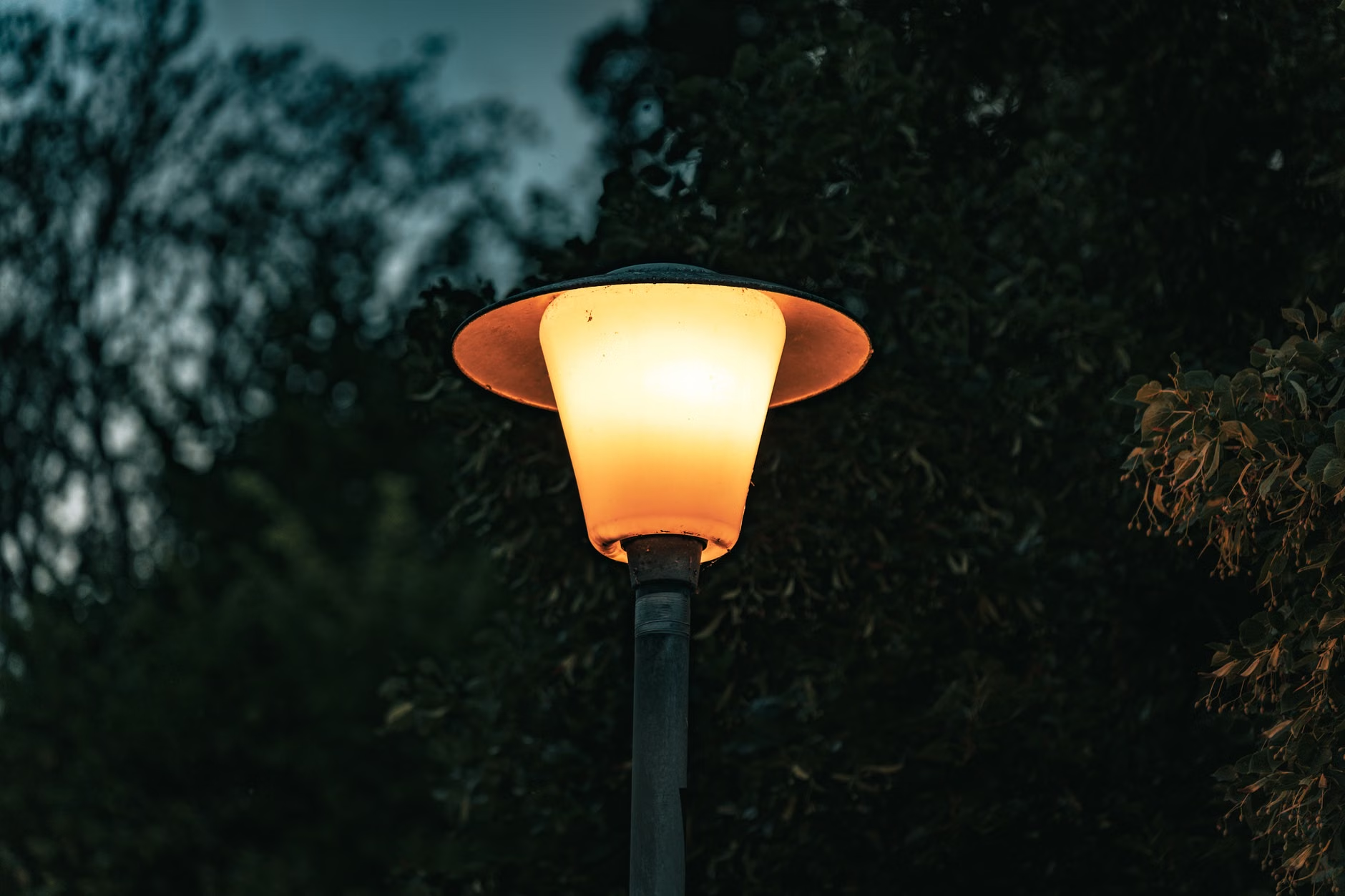
Older eyes are more sensitive to “glare”—the harsh, blinding light often associated with older, high-intensity blue-toned LED bulbs. The new standards mandate the use of “warm” light (typically below 3000K on the Kelvin scale). Warm light provides better contrast without the harsh scattering effect that causes discomfort for those with cataracts or other age-related eye conditions.
2. Adaptive Motion Sensing
To balance environmental sustainability with safety, many cities are installing motion-sensitive lighting. These systems remain at a low, energy-efficient level when a path is empty but brighten significantly as a pedestrian approaches. This ensures that you are never walking into a dark area, while also preventing light pollution.
3. Vertical Illumination
Previous standards focused primarily on lighting the ground. The 2026 updates emphasize “vertical illumination,” which means lighting the space up to five or six feet high. This helps in recognizing faces, identifying potential obstacles, and feeling a greater sense of security, as you can see the environment surrounding the path rather than just the ground beneath your feet.
| Feature | Old Standard | 2026 Update |
|---|---|---|
| Light Temperature | Cool/Blue (High Glare) | Warm/Soft (Low Glare) |
| Light Distribution | Spotty/Uneven | Uniform/Consistent |
| Responsiveness | Always On/Off | Adaptive/Motion-Sensing |
| Primary Goal | Energy Efficiency | Visibility & Safety |
The table above illustrates the transition from older, less efficient lighting to the new, safety-oriented approach. If your local park still utilizes “old standard” lighting, it may be a candidate for an upgrade request.
How to Advocate for Better Lighting in Your Local Park
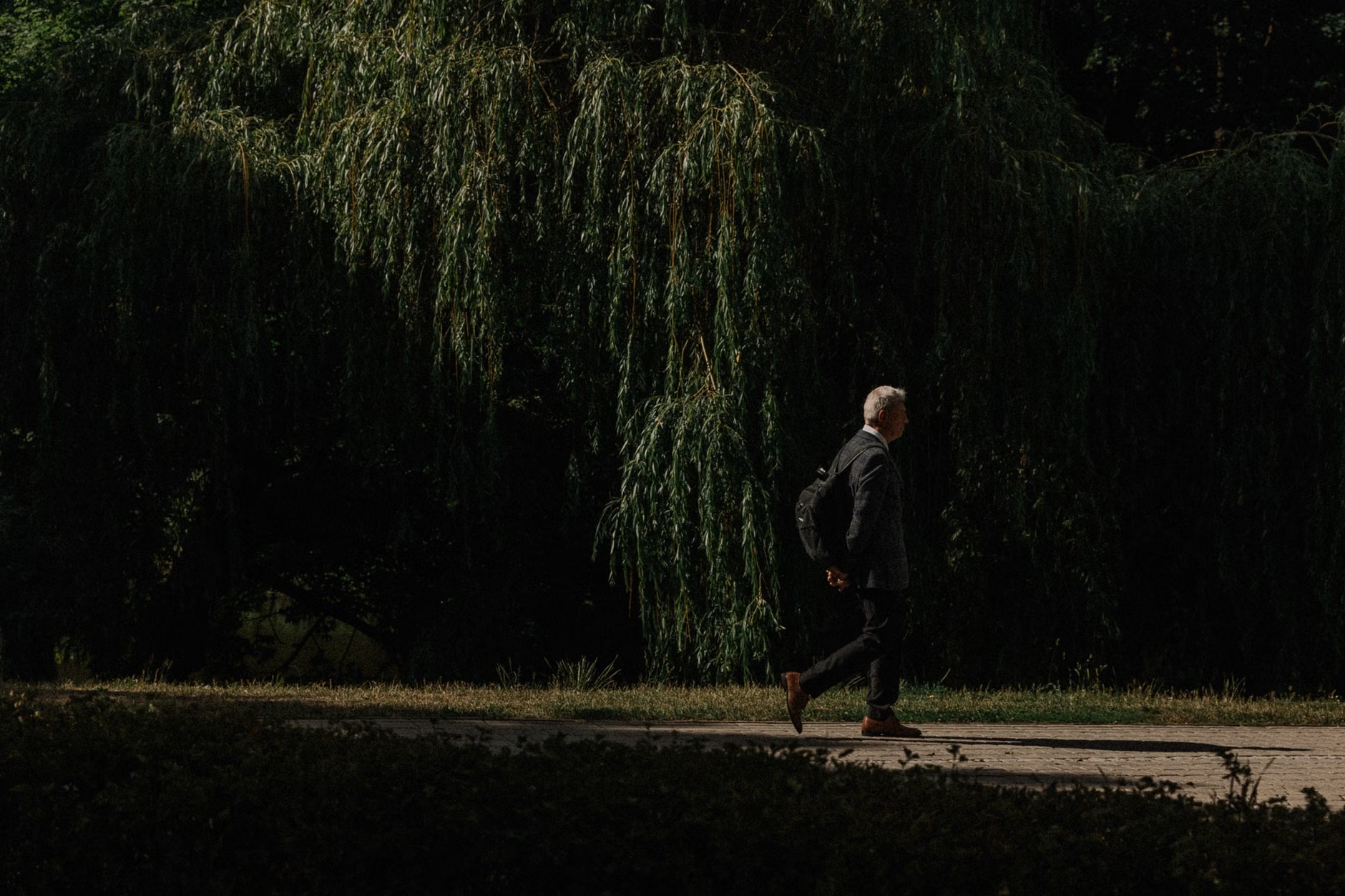
Public policy changes often happen at the municipal level. If you notice that your local park has insufficient or uneven lighting, you have the right to request an audit based on contemporary accessibility standards. Most local governments have a “Parks and Recreation” or “Public Works” department with specific procedures for reporting infrastructure issues.
Step-by-Step Action Plan:
- Document the Issue: Visit the park during twilight hours. Take photos (safely) of areas where the lighting is inconsistent or where you feel unsafe due to lack of visibility.
- Identify the Jurisdiction: Determine if the park is managed by your city, county, or a private entity. Check the official city website for a “Report a Concern” or “Maintenance Request” portal.
- Use Professional Language: When submitting your report, use terms like “accessibility,” “pedestrian safety,” and “age-inclusive design.” Mention that you are concerned about “uniform illumination” and “glare reduction.”
- Engage Local Representatives: If the online portal does not yield results, contact your local city council representative. Frame the request as a community-wide benefit that supports active aging and public health.
Hidden Trade-offs and Considerations
While the 2026 standards are a significant step forward, it is important to be aware of the “unexpected trade-offs.” For example, adaptive motion-sensitive lighting can sometimes be too sensitive or have a delay in activation. If you walk at a slower, more deliberate pace, ensure that the lighting zones are long enough to provide continuous coverage.
Another factor is the “warm-up” time of certain energy-efficient bulbs. While most modern LEDs light up instantly, some older retrofitted systems may have a slight flicker or delay. If you find a specific park light is inconsistent, it is often a maintenance issue rather than a system design flaw, and it should be reported as such.
Maintaining Your Own Safety Regardless of Infrastructure
Even with the best infrastructure, you can take personal steps to enhance your safety during evening walks. Carrying a small, high-quality LED flashlight is a practical habit. It serves a dual purpose: it allows you to illuminate specific areas (like a curb or an uneven surface) if the public lighting is failing, and it makes you more visible to cyclists or other park users.
Additionally, consider the “visibility” of your clothing. Wearing light-colored, reflective gear is not just for runners; it ensures that others in the park can see you clearly from a distance, which is a significant factor in preventing collisions on shared-use paths.
Understanding the Broader Impact of 2026 Policies
The shift toward age-inclusive lighting is part of a larger global trend known as “Age-Friendly Cities,” a movement supported by organizations like the World Health Organization (WHO). This movement recognizes that public spaces are the “living rooms” of the community. When parks are designed with the 60+ demographic in mind, they become safer for everyone, including parents with strollers, people with disabilities, and young children.
In many regions, these updates are being tied to broader “Active Aging” initiatives. By providing safe, well-lit environments, cities are actively encouraging walking as a form of preventive health. Regular walking has been shown to assist in maintaining bone density, cardiovascular health, and cognitive function. Therefore, the lighting in your local park is directly connected to your ability to maintain these healthy habits throughout the year.
It is important to manage expectations regarding the speed of these upgrades. While 2026 is a milestone year, municipal budgets are often planned years in advance. A policy change at the city level does not mean every park will be upgraded overnight. Prioritization usually goes to high-traffic areas, transit corridors, and parks located in high-density senior residential zones.
If you live in a rural area or a smaller municipality, the transition to these high-tech lighting systems may be slower. In these cases, community-led initiatives—such as “Friends of the Park” groups—can be very effective. By pooling local concerns, these groups can demonstrate to city officials that there is a clear demand for improved safety, which can help move your local park up the priority list for funding.
A Note on Technology and Maintenance
One of the most overlooked variables in park lighting is maintenance. A perfectly designed 2026-standard lighting system can become ineffective if trees are not trimmed, obscuring the light, or if sensors are covered by debris. If you notice a light that is perpetually blocked by foliage, reporting it as an “obstruction to public safety” is often more effective than simply reporting it as a broken light. Maintenance crews are generally required to address safety hazards with higher urgency.
Furthermore, be aware that some parks may implement “smart” lighting that is connected to the city’s central network. These systems can often be monitored remotely for outages. If you see a cluster of lights out, mention in your report that you suspect a “network or circuit failure,” which alerts the city to a larger systemic issue rather than a single bulb replacement.
Conclusion: Taking the Next Step
The 2026 updates to public park lighting represent a commitment to creating environments that support, rather than hinder, the lives of older adults. By understanding the principles of uniform illumination, warm light temperatures, and the importance of reporting safety concerns, you can play an active role in shaping the accessibility of your community.
Your next step is to take a walk through your local park this week with a critical eye. Note where the light is good and where it is lacking. Use the official channels available in your jurisdiction to share your feedback. By doing so, you are not just improving a light fixture; you are helping to ensure that public spaces remain accessible and welcoming for everyone, regardless of age.
Frequently Asked Questions
1. How can I tell if my local park is following the new 2026 lighting standards?
The new standards are characterized by uniform, warm-toned light (not harsh blue/white) that illuminates both the path and the surrounding vertical space. If you notice large patches of darkness between light poles or experience significant glare, the park likely has not yet transitioned to these modern standards.
2. Is it safe to walk in the park if the lighting seems to have a delay?
If the lighting is motion-activated, a slight delay is common. However, if the delay is significant enough to cause you to walk in the dark for more than a few seconds, it is a potential safety hazard. We recommend reporting this to your local Parks and Recreation department so they can adjust the sensor sensitivity.
3. Who is responsible for upgrading park lighting in my area?
Responsibility typically falls under the municipal Parks and Recreation department or the Department of Public Works. In some cases, parks may be managed by a county or regional authority. You can usually find the contact information on your city’s official government website under “Parks” or “Infrastructure Maintenance.”
Disclaimer: This article provides general information regarding public policy and safety. It does not constitute legal or technical advice. Policies vary significantly by country and municipality. Always consult your local government’s official guidelines for specific rules and reporting procedures in your jurisdiction.