- Request Advance Assistance: Notify the cruise line at least 30–60 days before departure to secure priority boarding and specialized mobility support.
- Optimize Your Arrival Timing: Aim for mid-day arrival windows to avoid the peak “rush hour” crowds, which significantly reduces physical fatigue and stress.
- Prepare Documentation Kits: Keep your boarding pass, passport, and medical documentation in a single, easily accessible carry-on bag to minimize movement at security checkpoints.
Embarkation is the most physically demanding part of any cruise vacation. For many travelers aged 60 to 80, the process of navigating busy terminals, standing in security lines, and managing luggage can become a source of unnecessary fatigue before the vacation even begins. However, by treating the embarkation process as a logistical operation rather than just “waiting to board,” you can ensure a smooth, dignified, and energy-efficient start to your journey.
1. The Importance of Advance Notification and Documentation
The foundation of a stress-free embarkation is the work done weeks before you leave home. Cruise lines are required to provide reasonable accommodations for passengers with disabilities or mobility needs, but they can only provide these if they are informed in advance.
Why Advance Notification Matters: When you provide your specific requirements early, the cruise line can assign you to a priority boarding group or arrange for wheelchair assistance from the terminal entrance to your cabin. This prevents the “last-minute scramble” where you might otherwise find yourself standing in long, winding queues.
What You Can Do:
- The Special Assistance Form: Every major cruise line (such as Royal Caribbean, Carnival, or Holland America) has a “Special Needs” or “Guest Accessibility” department. Contact them via their official website or phone line to document your mobility level, even if you only need occasional support.
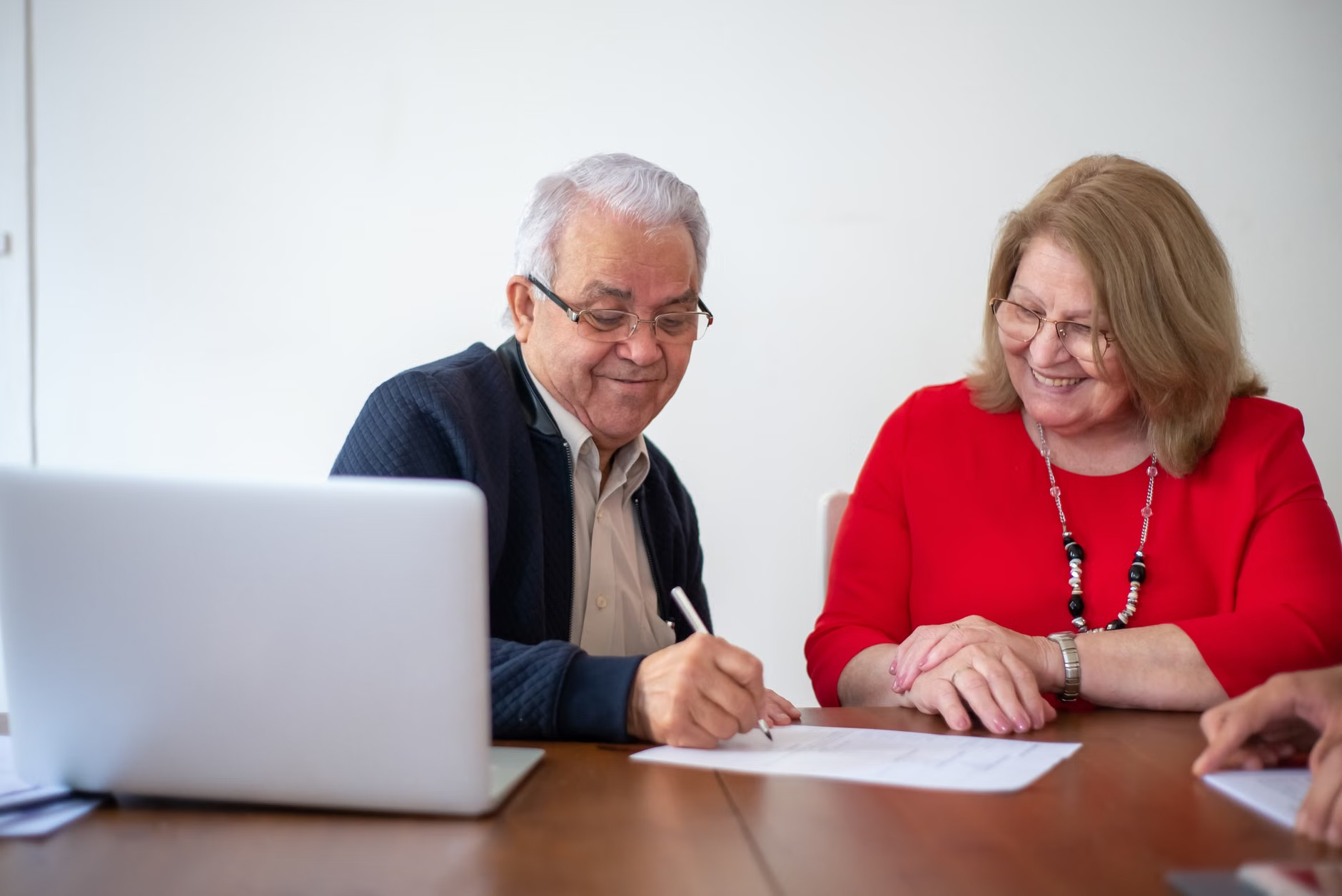
- Carry-on Essentials: Pack a dedicated document folder. This should contain your boarding pass, passport/ID, and a printed copy of your accessibility request. Keep this in the outermost pocket of your carry-on bag so you don’t have to rummage through your belongings at the security scanner.
- Medical Documentation: If you use a CPAP machine, oxygen, or specialized medication, carry a doctor’s note in your hand luggage. While not always requested, it serves as an official document should any questions arise at security regarding medical equipment.
2. Selecting the Optimal Arrival Window
One of the most common mistakes travelers make is arriving too early, hoping to be the first on the ship. While this is a popular strategy for younger, more agile travelers, it often leads to hours of standing in crowded terminal halls.
The “Mid-Day Window” Strategy: Aim for an arrival time that is roughly two to three hours after the terminal opens. Most cruise lines utilize a staggered check-in system where you select a “check-in window” during online registration. Choosing a middle-to-late window often results in a significantly shorter wait time as the morning rush of passengers has already cleared.
Large cruise terminals are designed for high volume, which often means long distances between the drop-off point and the boarding bridge. If you have limited stamina, consider the following:
| Mobility Level | Recommended Strategy | Key Tool |
|---|---|---|
| Full Mobility | Use rolling luggage; avoid overpacking. | Lightweight 4-wheel spinner suitcase. |
| Moderate/Occasional Fatigue | Request wheelchair assistance for the terminal transit. | Pre-booked terminal wheelchair. |
| High/Full-time Mobility Aid | Use your own compact, foldable transport chair. | Travel-grade lightweight foldable chair. |
Note: If you choose to bring your own mobility aid, ensure it is clearly labeled with your name and cabin number. If you are using a powered scooter, verify the cruise line’s battery requirements (usually lithium-ion) well in advance, as some lines have strict safety protocols regarding battery types.
3. Managing Physical Stamina During Security and Check-in
Security checkpoints are the most “stop-and-go” part of the process. You will be asked to place your carry-on on a belt, walk through a scanner, and retrieve your bags. This requires repetitive bending and standing.
Practical Steps for Energy Conservation:
- The Two-Bag Rule: Limit yourself to one small, wheeled carry-on bag and one personal item (like a small backpack or cross-body bag). Carrying too much weight increases your center of gravity and makes you more prone to stumbling.
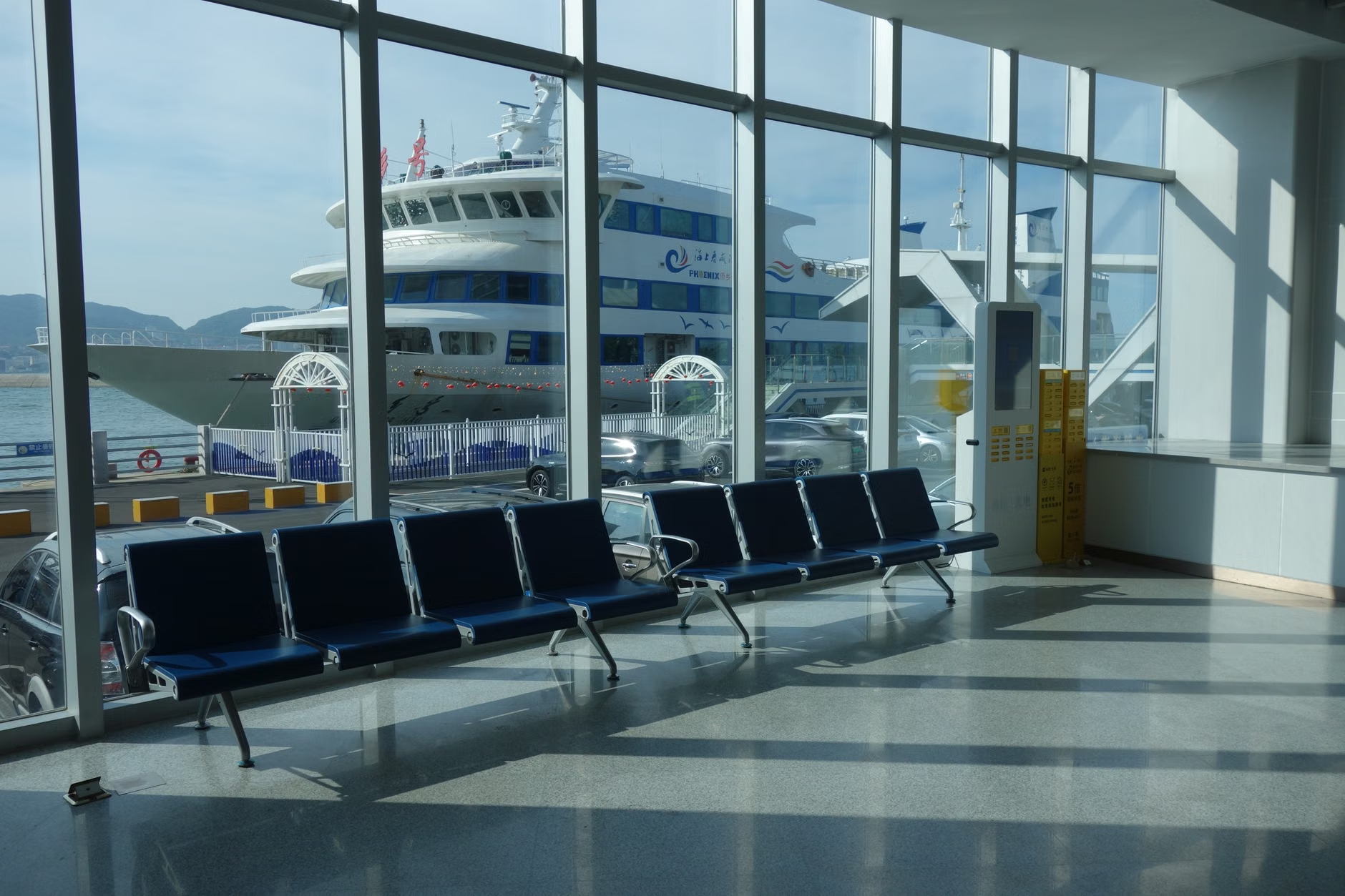
- Seated Waiting: If you arrive and see a long line, look for the “Assistance/Priority” seating area. Even if you do not have a formal disability, many cruise lines allow seniors who struggle with balance or stamina to sit in a designated area while their travel companions manage the check-in line.
- Hydration and Nutrition: Terminals are often climate-controlled and dry. Dehydration is a silent factor in fatigue. Carry a small, empty, reusable water bottle to fill once you have passed through security.
4. Understanding Terminal Accessibility Infrastructure
Not all cruise terminals are created equal. Older ports, especially those in historic European cities, may have cobblestone streets or limited elevator access. Newer ports in North America and parts of Asia are generally built with ADA (Americans with Disabilities Act) or similar international accessibility standards in mind, featuring smooth flooring, ramps, and ample elevators.
How to Research Your Port: Before you travel, search for your specific port’s official website. Look for “Accessibility” or “Terminal Map” sections. If you are arriving by taxi or shuttle, ensure the driver drops you off at the “Accessible Drop-off” point, which is usually closer to the terminal entrance than the general drop-off zone.
Dealing with Stairs and Slopes: If you encounter a terminal that relies on stairs for boarding, always look for the staff member wearing a high-visibility vest. They are trained to direct passengers to the nearest lift or elevator. Never feel pressured to keep pace with the crowd; walk at your own speed and stop as often as you need to.
5. The “Boarding Bridge” Challenge
The gangway (the bridge connecting the terminal to the ship) can be the most intimidating part of the journey. It is often steep, especially at low tide, and can be narrow.
Navigating the Gangway:
- Take the Handrail: Always use the handrail on the side that gives you the most stability.
- Communicate with Staff: If you feel the incline is too steep for your current energy level, alert the staff at the gangway entrance. They can often pause the flow of traffic to allow you to move at a slower, safer pace.
- The “Wait and See” Approach: If you are feeling overwhelmed, it is perfectly acceptable to wait at the terminal gate for a few extra minutes until the initial rush of boarding passengers has passed. The ship will not leave without you, and arriving on board 15 minutes later is a small price to pay for a stress-free boarding experience.
6. Post-Embarkation: Initial Cabin Setup
Once you are on the ship, the embarkation process isn’t quite over. Finding your cabin and settling in is the final step. Ships are massive, and the corridors can be confusingly long.
Strategies for a Smooth Arrival at Your Cabin:
- Locate the Nearest Elevator: As soon as you enter the ship, look for a deck plan. Identify the elevators nearest to your cabin and the nearest stairwells.
- Drop Your Bags: If your cabin is ready, go there immediately to drop off your carry-on. If it is not ready, do not drag your bags around the ship. Find a quiet lounge or a buffet area, sit down, and enjoy a light meal while you wait for the cabin stewards to announce that rooms are open.
- Orientation: Use the first hour to familiarize yourself with the path from your cabin to the main dining room and the medical center. Knowing these two locations will save you significant energy during the rest of your trip.
7. Addressing Common Concerns: A Summary
Many seniors worry that asking for help makes them appear “frail.” In the context of cruise travel, this is a misconception. Cruise lines are highly experienced in assisting passengers with a wide range of mobility needs. Utilizing the assistance offered is not a sign of weakness; it is a smart strategy to preserve your physical resources for the actual vacation.
When to Seek Professional Medical Advice Before Travel:
If you have recently experienced a change in your health, such as a new cardiac condition, balance issue, or significant surgery, consult your doctor specifically about the physical demands of travel. Ask them if you should use a cane or a folding seat during long periods of standing. Having a clear understanding of your physical limits allows you to advocate for yourself effectively at the terminal.
Hidden Inconveniences:
Be aware that cruise terminal Wi-Fi can be unreliable. Do not rely on your phone to show your digital boarding pass. Always have a printed backup. Additionally, terminal temperatures can fluctuate wildly—from freezing air conditioning to humid outdoor queues. Dressing in light, breathable layers is essential to maintaining your comfort level throughout the process.
Ultimately, the goal of your cruise is to enjoy the journey. By approaching embarkation with preparation, patience, and a clear plan, you move from being a passenger who is “managed” by the crowd to a traveler who is in control of their own comfort. Focus on your pace, utilize the available support systems, and remember that the check-in process is merely the curtain-raiser to your vacation, not the main event.
Frequently Asked Questions (FAQ)
1. If I have a mobility issue, can I bring my own wheelchair onto the cruise ship?
Yes, you absolutely can. Most cruise lines encourage you to bring your own mobility equipment, as it ensures you have something you are already comfortable using. Ensure your equipment is collapsible to fit through your cabin door and into your stateroom. It is also a good idea to inform the cruise line’s accessibility department in advance so they can note it on your booking.
2. Does the cruise line provide medical staff during the embarkation process?
While cruise ships have medical centers, the terminal staff are generally trained for logistics and boarding, not medical care. If you have a serious medical condition that may require immediate intervention during the boarding process, you should have your own support person or caregiver with you. If you have an emergency, alert the nearest terminal security or cruise line employee, who can radio for medical assistance.
3. What should I do if my cabin is far from the elevators?
If you have mobility issues and realize your assigned cabin is a long walk from the elevators, speak to the Guest Services desk as soon as you board. While they cannot always move you due to ship occupancy, they are often willing to help you find a more accessible route or offer advice on how to best navigate the ship’s layout. It is always better to ask early in the cruise rather than struggling for the entire duration of your trip.
For further information on accessible travel standards, you may refer to the Americans with Disabilities Act (ADA) guidelines or the accessibility resources provided by the Cruise Lines International Association (CLIA) regarding passenger safety and accommodation.