- Extended Walk Times: By 2026, many major metropolitan areas are adopting “senior-priority” signal timing, which slows down the cycle to ensure a safe crossing for those with reduced walking speeds.
- Smart Sensor Integration: New AI-driven crosswalks use thermal and motion sensors to detect pedestrians who are still in the middle of the road, automatically extending the green light duration.
- Standardized Accessibility: Global urban planning is shifting toward universal design, meaning that tactile paving, high-contrast signals, and auditory cues are becoming non-negotiable requirements for city infrastructure.
As we move into 2026, the global landscape of urban mobility is undergoing a significant transformation. City planners and transportation authorities are finally acknowledging that the “average” pedestrian model—often based on the walking speed of a healthy young adult—no longer reflects the demographic reality of our aging global population. Whether you are navigating a busy intersection in London, Tokyo, New York, or Sydney, you will likely notice that pedestrian crossing signals are becoming more inclusive, responsive, and safer for those of us aged 60 to 80.
This shift is not merely a matter of convenience; it is a critical public safety initiative. Statistics from the World Health Organization (WHO) and various national transport departments have consistently shown that older adults are at a higher risk of accidents at intersections due to traffic signal timing that does not account for mobility challenges. The 2026 updates represent a concerted effort to mitigate these risks through technology and design.
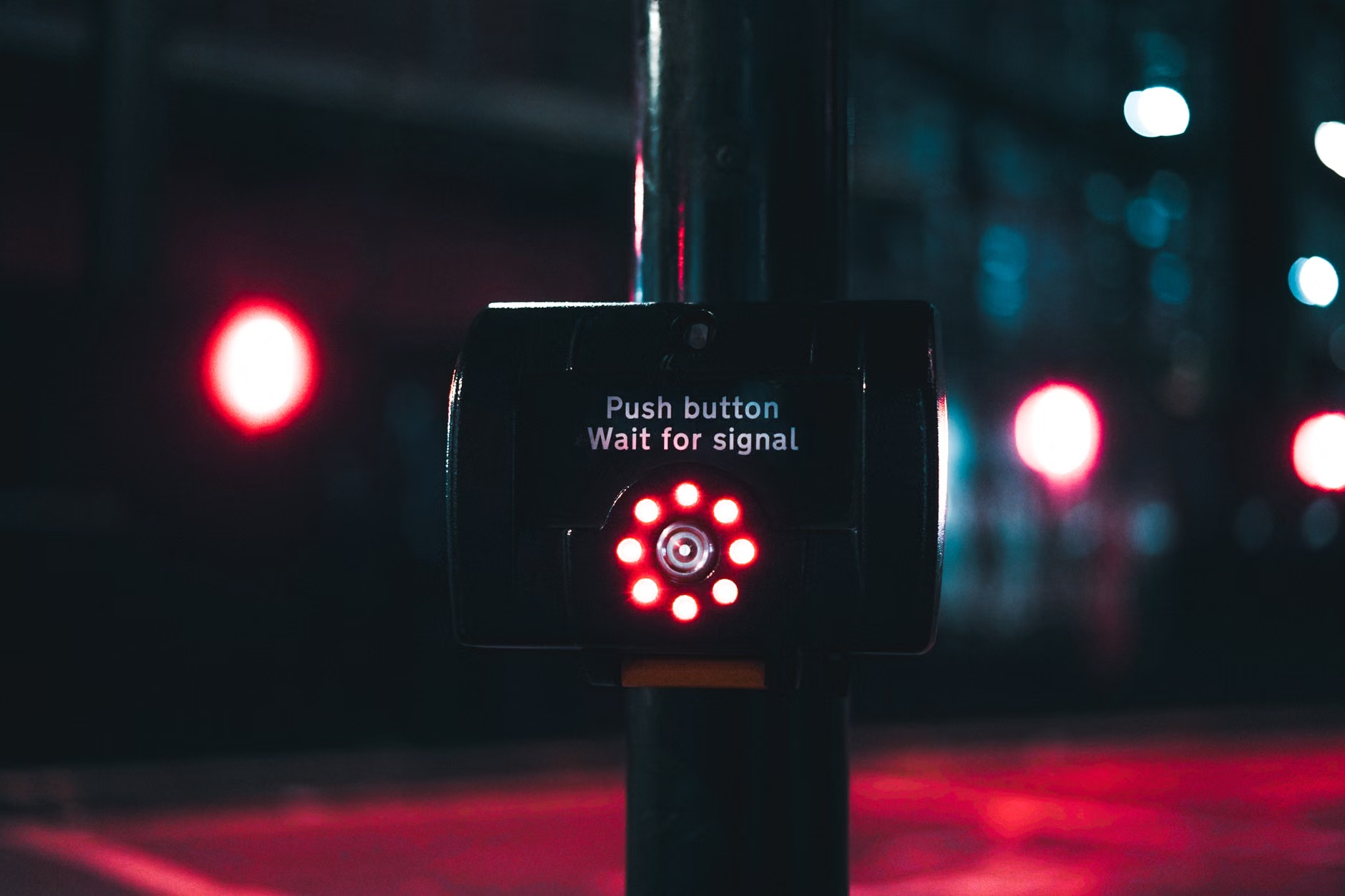
Understanding the “Slow-Walk” Infrastructure Shift
For decades, traffic lights were timed based on a walking speed of approximately 1.2 meters per second (roughly 4 feet per second). This standard has long been criticized by urban advocates because it excludes a vast segment of the population, including those using canes, walkers, or simply those who prefer a more cautious pace. Starting in 2026, many jurisdictions are adopting a new standard: 0.8 to 1.0 meters per second. This seemingly small adjustment is a game-changer for your daily routine.
What this means for you: You will notice that once the “walk” signal is triggered, you have more time to reach the opposite curb before the light changes. In some cities, this is being implemented as a “Leading Pedestrian Interval” (LPI), which gives pedestrians a 3 to 7-second head start before cars are allowed to turn. This ensures you are already visible in the crosswalk before vehicles begin moving, significantly reducing the “blind spot” risk.
The Role of Smart Sensors and AI
The most sophisticated change arriving in 2026 is the deployment of “smart” crosswalks. These systems use thermal imaging or radar sensors mounted on traffic poles. Unlike traditional timers that operate on a fixed loop regardless of who is present, these sensors detect if a person is still in the middle of the intersection. If the sensor sees that you are still walking, it holds the red light for vehicles until you have safely reached the sidewalk.
What it looks like in real life: Imagine you are crossing a wide boulevard. You are halfway across when you realize you may have misjudged the time. Instead of feeling the pressure to rush—which can lead to trips or stumbles—the smart signal detects your presence and keeps the crosswalk light active for an additional 5 to 10 seconds. This technology removes the anxiety of “beat the light” scenarios, allowing you to maintain a pace that is comfortable and safe for your personal mobility level.
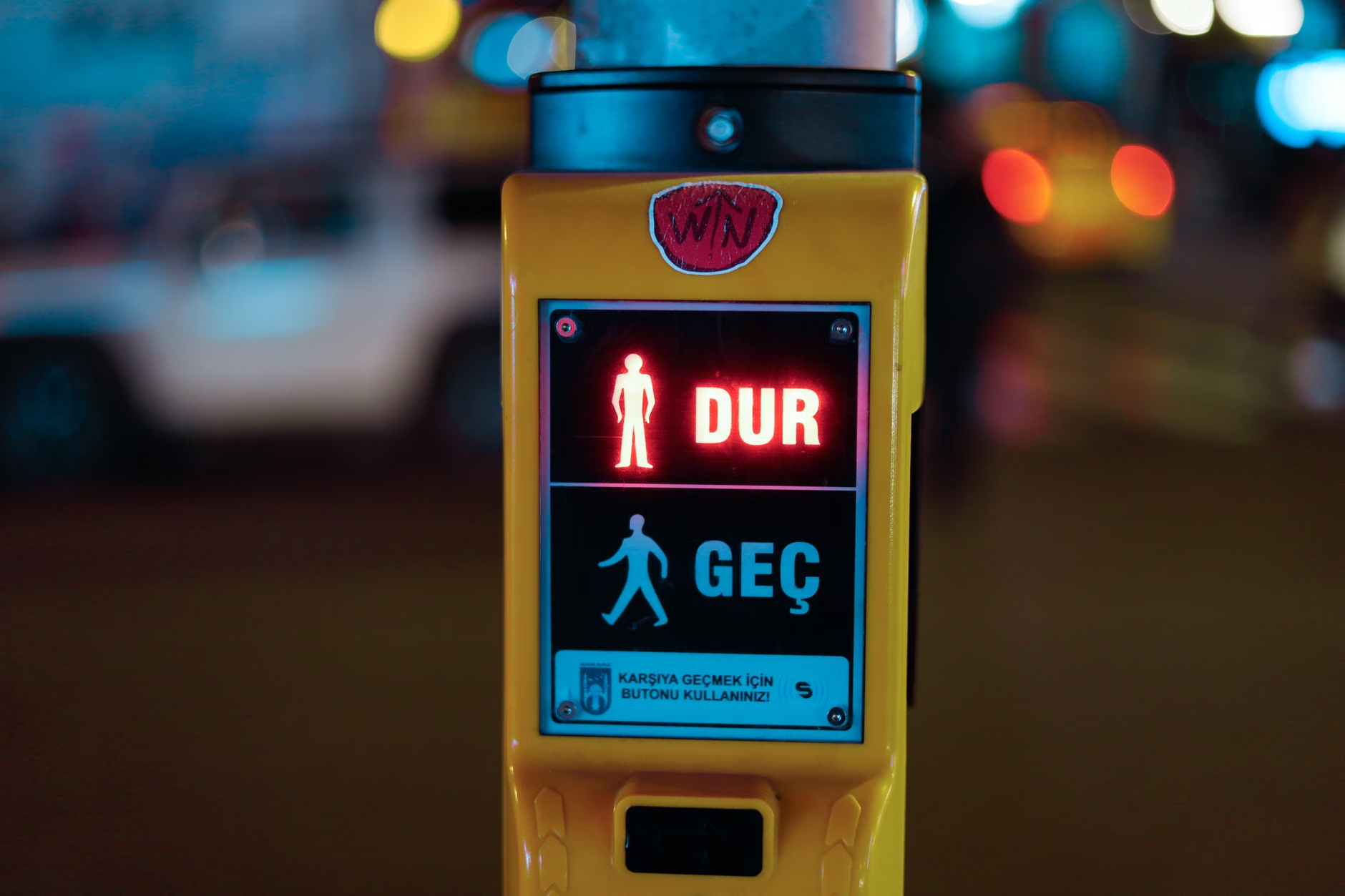
Global Variations in Implementation
While the goal of age-inclusive infrastructure is global, the implementation varies by region. It is important to understand that your local government’s approach may differ based on existing urban density and budget allocation.
| Region | Primary Strategy | What You Can Expect |
|---|---|---|
| European Union | Universal Design Mandates | Focus on auditory signals and tactile paving at every intersection. |
| North America | AI Sensor Retrofitting | High investment in radar-based “extended walk” technology at busy intersections. |
| Asia-Pacific | Countdown Display Standardization | Universal adoption of large, high-contrast countdown timers on all pedestrian poles. |
If you are living in or traveling to these regions, look for these specific features. In the European Union, the focus is heavily on accessibility for those with visual impairments, meaning you will find more “talking” signals that announce when it is safe to cross. In North America, keep an eye out for “Smart Signal” stickers or signs on poles indicating that the intersection is sensor-equipped. In the Asia-Pacific region, the countdown timers are your best friend; if you see a timer that is already counting down from a low number, wait for the next cycle. Never attempt to cross if the timer shows less than 10 seconds, as the “clearance interval” is designed for faster-moving traffic.
Even with improved infrastructure, your personal habits remain the most important factor in your safety. The following checklist provides a practical approach to navigating intersections in 2026.
- Check for the “Smart” Icon: Many cities are now labeling intersections that feature extended-time sensors. Look for a small decal on the signal pole that indicates “Sensor Enabled” or “Extended Walk Time.”
- Use the Full Width: If you are using a mobility aid like a walker or a cane, aim to stay within the center of the painted crosswalk lines. This is where you are most visible to turning vehicles.
- Verify the Signal, Not the Traffic: A common mistake is to follow the movement of other pedestrians. Always look at your own signal. In some cities, “parallel” traffic may get a green light while your crosswalk remains red.
- Manage Your Pacing: If you realize the countdown timer is moving faster than your walking speed, do not panic. Most intersections are designed with a “buffer” period. However, if you feel you cannot make it, it is safer to wait for the next cycle than to rush.
The Hidden Trade-offs: What to Watch Out For
While these technologies are designed for safety, they can occasionally lead to “over-reliance.” A common misconception is that the sensor will stop traffic instantly if you step into the road. In reality, sensors are designed to extend an existing signal, not to override a red light for pedestrians who enter the crosswalk late. Always follow the pedestrian signal—only cross when the “walk” light is illuminated.
Additionally, in areas with high-density traffic, the “extended walk” feature might be disabled during peak morning or evening rush hours to prevent total traffic gridlock. During these times, the timing reverts to the standard, shorter cycle. Being aware of the “time of day” can help you decide whether to take a slightly longer route that avoids the busiest intersections.
Advocating for Better Infrastructure in Your Neighborhood
If you find that your local intersections are difficult to navigate, you have more power than you might think. Urban planning is increasingly data-driven, and local authorities often look for feedback from residents to prioritize which intersections to upgrade next.
Step 1: Document the Issue. If an intersection feels dangerous—perhaps the light is too short, the curb is too high, or the surface is uneven—take note of the specific street name and the time of day. Taking a photo of the signal timing (or noting how many seconds it gives) provides concrete evidence.
Step 2: Contact Your Local Transportation Department. Most cities have a “Public Works” or “Department of Transportation” website with a feedback portal. Do not just complain; provide a solution. For example, “The intersection at Main and 5th has a 12-second walk signal, which is insufficient for pedestrians with mobility aids. I recommend an extension to 18 seconds or the installation of a motion sensor.”
Step 3: Join Local Mobility Advocacy Groups. Many cities have “Age-Friendly City” committees. These groups are specifically tasked with ensuring that public infrastructure serves the needs of older residents. Participating in these meetings ensures that your voice is heard when the city budget is being drafted for the next fiscal year.
Conclusion: Empowerment Through Awareness
The 2026 transition toward age-inclusive pedestrian signals is a positive step toward creating cities that support us as we age. By understanding how these new systems work—from thermal sensors to extended countdowns—you can navigate your environment with greater confidence and safety. Remember that while technology is a great aid, your awareness of your surroundings and your commitment to safe crossing habits remain your most effective tools.
Stay informed about your local city’s infrastructure plans, and don’t hesitate to advocate for the changes that make your daily life easier. Whether it’s a longer green light or better-lit crosswalks, these improvements are designed for you, and you deserve to move through your city with ease and dignity.
Frequently Asked Questions
Q: If an intersection doesn’t have a countdown timer, how do I know if I have enough time to cross?
A: If there is no countdown timer, the safest rule is to wait for the light to change, look for the “walk” symbol, and immediately begin crossing. If the intersection is very wide, look for a “pedestrian island” or “refuge” in the middle of the street. These are designed to allow you to cross half the distance, wait safely, and then finish the crossing on the next signal cycle.
Q: Can I request an extension of the walk time for a specific intersection near my home?
A: Yes, you can. Most local transportation departments have a process for “pedestrian signal timing requests.” You can submit a formal request through their website or by calling the local government representative for your district. Be sure to explain that the current timing poses a challenge for older residents or those with mobility aids.
Q: Are these new smart sensors affected by bad weather, such as heavy rain or snow?
A: Most modern thermal and radar sensors are engineered to operate in all weather conditions. However, in extreme conditions like heavy fog or blizzard-level snow, sensors may have reduced accuracy. During such weather, it is always best to exercise extra caution, wear high-visibility clothing, and wait for a clear gap in traffic even if the signal indicates it is safe to cross.
For further information on global urban accessibility standards, visit the World Health Organization’s Global Network for Age-friendly Cities and Communities.