Maintaining flexibility in the pectoral muscles—the large muscles of your chest—is a cornerstone of functional mobility for adults aged 60 to 80. As we age, a natural tendency to adopt a rounded-shoulder posture can restrict lung capacity, diminish reaching ability, and lead to discomfort in the upper back and neck. By incorporating targeted, seated pectoral stretches into your daily routine, you can counteract these patterns safely and effectively.
- Consistency over Intensity: Gentle, daily movement is significantly more effective for long-term tissue lengthening than infrequent, aggressive stretching.
- Posture is the Foundation: No stretch will be effective if your spine is not properly aligned; always initiate your stretches from a neutral, upright seated position.
- Breathing as a Tool: Deep, controlled diaphragmatic breathing during stretches helps calm the nervous system and allows muscles to release tension more effectively.
Why Pectoral Flexibility Matters for Daily Function
The pectoral muscles (the pectoralis major and minor) are responsible for pulling your shoulders forward and rotating your arms inward. When these muscles become chronically tight—often due to long periods of sitting, reading, or using digital devices—they pull the shoulders into a hunched position. This “forward head” and “rounded shoulder” posture is not just a cosmetic concern; it has direct physiological consequences.
The Impact on Respiratory Efficiency
Your rib cage needs to expand fully to allow the lungs to fill with air. When the chest muscles are tight, they create a physical barrier to this expansion. By lengthening these muscles, you allow for deeper, more efficient breathing. This is particularly important for maintaining stamina during physical activities like walking or climbing stairs, where oxygen demand increases.
Reaching and Overhead Mobility
Have you ever noticed difficulty reaching for a high shelf or pulling a seatbelt across your body? These movements rely on the flexibility of the pectoral girdle. If the chest muscles are rigid, the shoulder joint cannot move through its full range, forcing other parts of your body—specifically the neck and lower back—to compensate. Over time, this compensation leads to chronic aches and muscle strain.

Preparing for Your Stretching Routine
Before you begin, it is essential to establish a safe environment. Stretching while seated provides a stable base, reducing the risk of balance-related injuries. However, the quality of your chair matters.
- Choose the Right Chair: Use a sturdy, armless chair if possible. Avoid chairs with wheels or soft cushions that sink, as you need a firm surface to stabilize your pelvis.
- Warm-Up: Never stretch “cold” muscles. Spend three to five minutes doing light movements first, such as marching in place or gentle shoulder rolls.
- Listen to Your Body: A stretch should feel like a mild, comfortable pull. If you experience sharp, shooting pain, or tingling sensations, stop immediately. These are signals that you have moved too far or are compressing a nerve.
Three Essential Seated Pectoral Stretches
These movements are designed to be performed throughout the day. They require no equipment other than a chair and a wall space.
1. The Seated Chair-Back Opener
This stretch targets the superficial layers of the chest muscles and is excellent for those who spend time at a desk or table.
- Sit toward the edge of your chair with your feet flat on the floor, hip-width apart.
- Reach your hands behind you and grasp the top or sides of the chair back.
- Gently draw your shoulder blades together and downward toward your back pockets.
- Keep your chin tucked slightly to maintain a neutral neck position.
- Hold for 20 to 30 seconds, breathing deeply.
2. The “Cactus Arm” Expansion
This movement is highly effective because it engages the muscles between your shoulder blades (the rhomboids) while lengthening the chest muscles.
- Sit upright, engaging your core muscles slightly to support your spine.
- Lift your arms to shoulder height, bending your elbows at 90 degrees so your palms face forward (like a cactus).
- Slowly draw your elbows backward as if you are trying to touch them behind your back.
- Stop when you feel a gentle stretch across the front of your chest.
- Hold for 15 seconds, then relax. Repeat 3 to 5 times.
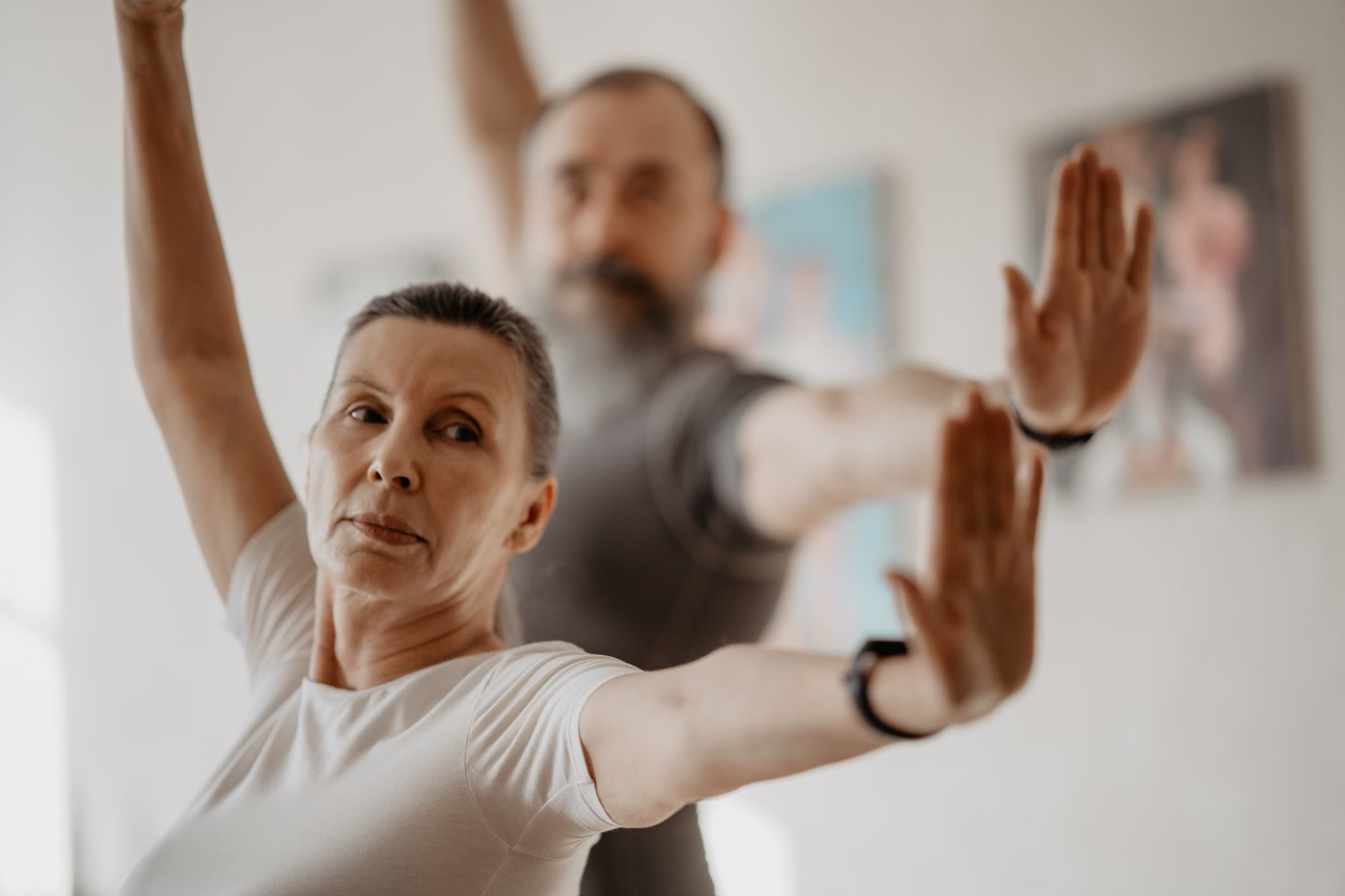
3. The Corner Wall Stretch
While not strictly “seated,” this is a controlled, supported stretch that is safer than a standing floor stretch because you are braced by the wall corner.
- Stand facing a corner of a room, about 12 inches away from the wall.
- Place your forearms on the walls on either side of the corner, with elbows at shoulder height.
- Lean forward slightly until you feel a comfortable stretch across your chest.
- Maintain a straight spine; do not arch your lower back.
- Hold for 30 seconds.
Comparison of Stretching Techniques
Understanding which stretch fits your current mobility level is vital for long-term success.
| Stretch | Primary Benefit | Best For |
|---|---|---|
| Chair-Back Opener | Deep chest opening | Those with good shoulder range of motion |
| Cactus Arms | Posture correction | Daily maintenance/Desk workers |
| Corner Stretch | Controlled intensity | Those with limited shoulder mobility |
If you have limited shoulder mobility, start with the Cactus Arms, as it allows you to control the range of motion without the leverage of a chair back. If you are comfortable, move to the Corner Stretch, which provides the most stability.
Understanding the Role of Professional Guidance
While these stretches are generally safe for healthy adults, there are instances where you should consult a physical therapist or your primary care physician before beginning a new routine. If you have a history of shoulder dislocations, rotator cuff injuries, or recent upper-body surgery, your medical team can provide specific modifications that ensure you do not aggravate existing conditions.
Warning Signs to Watch For:
- Numbness or Tingling: If you feel “pins and needles” in your fingers during a stretch, you are likely putting pressure on the brachial plexus (the bundle of nerves running from your neck to your arm). Adjust your arm position to a lower angle.
- Persistent Pain: If you experience soreness that lasts more than 24 hours after stretching, you have likely overstretched the muscle tissue. Scale back the intensity and duration.
- Joint Clicking: Occasional clicking is often normal, but if it is accompanied by pain, it is a sign to stop and consult a professional to ensure your joint mechanics are sound.
Integrating Flexibility into Your Daily Life
The greatest barrier to flexibility is not age, but inactivity. Our muscles have a “memory”; if we spend 16 hours a day in a hunched position, the body adapts to that shape. To counteract this, you must treat stretching as a routine task, much like brushing your teeth.
Try the “Trigger-Action” method: Every time you finish a meal or finish reading a chapter of a book, perform three repetitions of the Cactus Arm stretch. By tying the activity to an existing habit, you remove the mental effort of “remembering to stretch.”
The Importance of Hydration and Nutrition
Muscle tissue is largely composed of water. If you are dehydrated, your fascia (the connective tissue surrounding your muscles) becomes brittle and less pliable. Ensuring you maintain adequate hydration throughout the day supports the efficacy of your stretching. Furthermore, maintaining a balanced diet with sufficient protein helps your body repair the micro-tears that occur during daily movement and purposeful stretching.
Refining Your Approach: Advanced Considerations
Once you are comfortable with these basic stretches, consider these nuances to maximize your results:
The Role of the Scapula: Your pectoral muscles attach to the shoulder blade. If your shoulder blades are “winged” (protruding outward), your chest stretches will be less effective. Focus on drawing the shoulder blades down—not just together—to engage the lower trapezius, which helps stabilize the shoulder girdle.
Temperature Matters: Muscles are more pliable when they are warm. If you live in a colder climate, consider performing these stretches after a warm shower or while wearing a light sweater to keep your muscles warm.
Conclusion: Your Path to Better Mobility
Flexibility is a perishable skill. By dedicating just five minutes a day to these seated pectoral stretches, you are not just improving your posture; you are investing in your long-term independence. Whether it is improving your breathing capacity or making daily tasks easier, the benefits of a supple chest are profound. Start today with a gentle approach, listen to the feedback your body provides, and remain consistent.
Frequently Asked Questions
1. How long does it take to see results from these stretches?
Most individuals notice a reduction in muscle tension within the first week of consistent daily practice. However, significant changes in resting posture typically take four to six weeks of daily, committed practice.
2. Can I stretch too much?
Yes. Over-stretching can cause micro-tears in the muscle fibers and ligaments. Aim for a “comfortable discomfort” rather than pain, and avoid holding stretches for more than 60 seconds at a time.
3. Does my age affect how quickly I gain flexibility?
While tissue elasticity does decrease slightly with age, the nervous system’s ability to “relax” a muscle remains highly adaptable. Age does not prevent you from gaining flexibility, but it does mean you should be more patient and focus on a gradual, progressive increase in range of motion.
Disclaimer: This article is for informational purposes only and does not constitute medical advice. Always consult with a healthcare professional or qualified physical therapist before starting any new exercise program, especially if you have pre-existing health conditions.
Sources for further reading on senior mobility and health: