- Ergonomic Standards: By 2026, global urban planning is prioritizing benches with high armrests and lumbar support to facilitate safer standing for older adults.
- Inclusive Mobility: New park layouts now integrate “side-by-side” spaces for wheelchairs and walkers, ensuring you can sit with friends rather than being isolated.
- Strategic Placement: Look for “micro-rest” stations placed at 50-meter intervals, a growing standard in cities aiming for age-inclusive certification.
As we move into 2026, urban design is undergoing a significant shift. City planners worldwide are moving away from purely aesthetic park furniture toward “Age-Inclusive Urbanism.” For adults aged 60 to 80, this means that the simple act of visiting a local park is becoming safer, more comfortable, and more socially accessible.
The Evolution of Park Seating: Beyond the Simple Bench
Historically, park benches were designed for mass production, often ignoring the physiological needs of aging adults. In 2026, the global standard is shifting toward active, supportive seating. The core principle is “Ease of Ingress and Egress”—how easily you can sit down and, more importantly, how safely you can stand back up.
Why does this matter? For many older adults, the primary barrier to enjoying outdoor spaces is the fear of losing balance when rising from a low or unsupported seat. Modern 2026 designs now incorporate high-friction armrests and contoured seat pans that distribute weight evenly. These are not merely comfort features; they are essential safety mechanisms that reduce the strain on knees and hips.

What to Look for in 2026 Park Designs
When you visit a park, you can now evaluate the “Accessibility Quotient” of the furniture. Look for these four specific features:
- Armrest Height: Benches should have armrests that extend to the front edge of the seat, allowing you to push off with your arms rather than relying solely on your legs.
- Seat Depth and Angle: The seat should be approximately 45-50 centimeters from the ground, with a slight backward tilt to prevent sliding.
- Backrest Support: A solid, vertical backrest that provides lumbar support, rather than a slatted design that leaves gaps at the lower spine.
- Material Temperature: New coatings are being used that prevent metal from becoming dangerously hot in summer or freezing in winter, a common oversight in older park designs.
The “Side-by-Side” Social Revolution
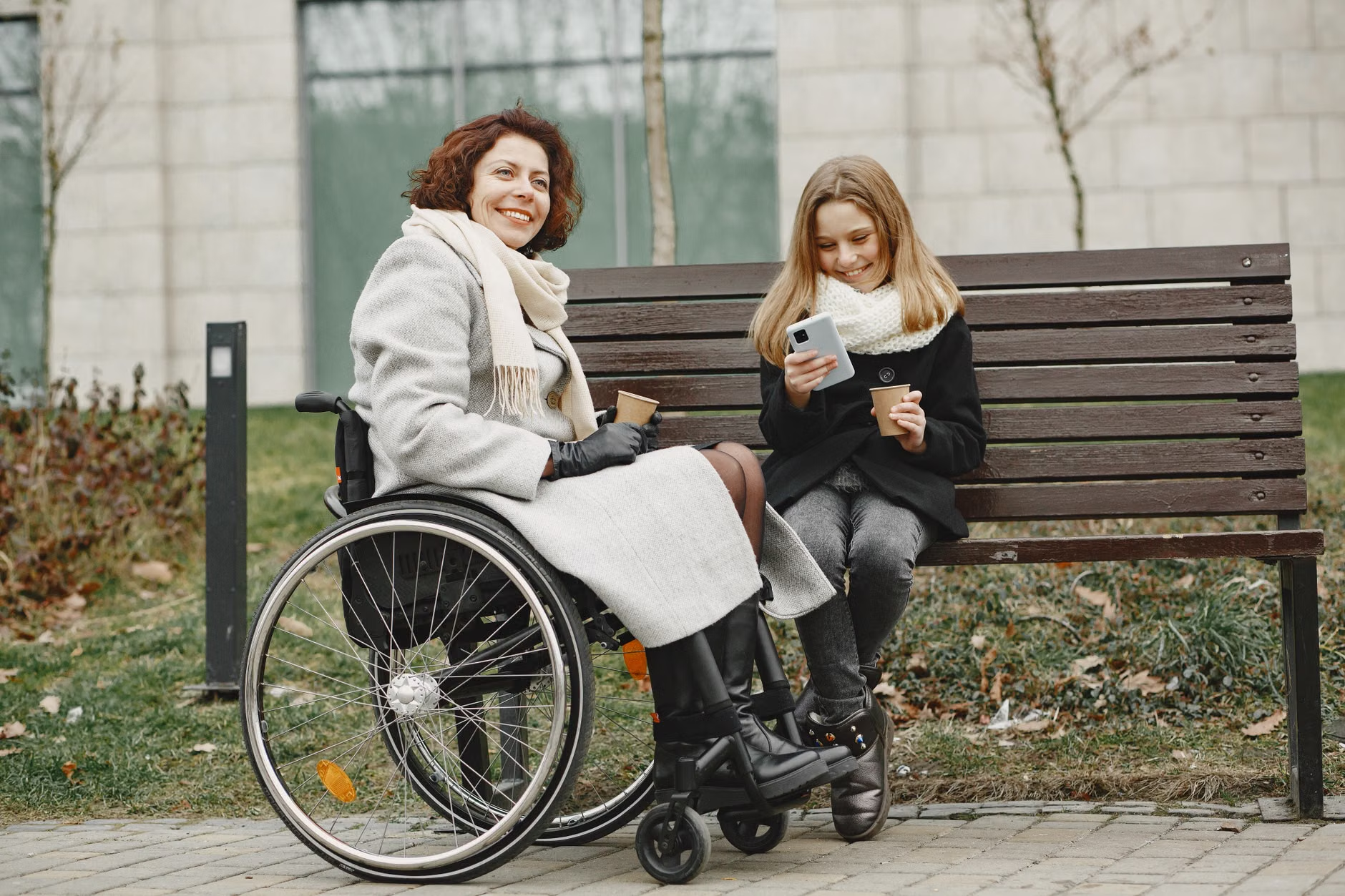
One of the most profound changes in 2026 urban planning is the focus on social inclusion for those with mobility aids. Historically, if you used a walker or a wheelchair, you were often forced to sit at the end of a bench or on a separate path, effectively isolating you from the group. The new “Inclusive Bench” standard mandates a flat, paved space immediately adjacent to the bench seat.
This allows a wheelchair or walker to be parked flush with the bench, so you are sitting directly next to your companion. This is a critical development for maintaining social connections while on walks. If you are a caregiver or family member, look for these “cut-out” designs in your local park’s master plan. They are increasingly being documented in municipal accessibility maps.
Practical Assessment: Is the Park Truly Accessible?
| Feature | What to Check | Why it Matters |
|---|---|---|
| Path Connectivity | Is the bench on a level, paved surface? | Prevents tripping on grass or uneven gravel. |
| Proximity | Are benches within 50 meters of one another? | Ensures you can rest before fatigue sets in. |
| Lighting | Is the area well-lit during twilight hours? | Crucial for depth perception and safety. |
| Armrest Stability | Does the armrest wobble under pressure? | If it moves, it is not a safe aid for standing. |
If you find that your local park fails these checks, you can contact your local council’s parks department. Most cities now have a “Senior Advisory Committee” specifically tasked with updating public infrastructure to meet these 2026 guidelines. When making a request, be specific: cite the need for “stable armrests for mobility support” rather than just asking for “better seating.”
Strategic Resting: The 50-Meter Rule
In 2026, the “50-Meter Rule” is becoming the gold standard for city parks in regions like Northern Europe, Japan, and parts of North America. This planning guideline suggests that for an urban park to be truly age-inclusive, a resting point must be available at least every 50 meters. This distance is calculated based on the average walking stamina of adults aged 70+ who may be managing mild arthritis or stamina-limiting conditions.
Understanding this rule allows you to plan your walks more effectively. Instead of feeling pressured to reach a distant destination, you can map out your route based on these “micro-rest” intervals. If you are using a fitness tracker or a smartphone map, check if your local park’s digital guide lists rest areas. Many cities are now adding this data to public transit apps.
Beyond the Physical: Sensory and Cognitive Inclusivity
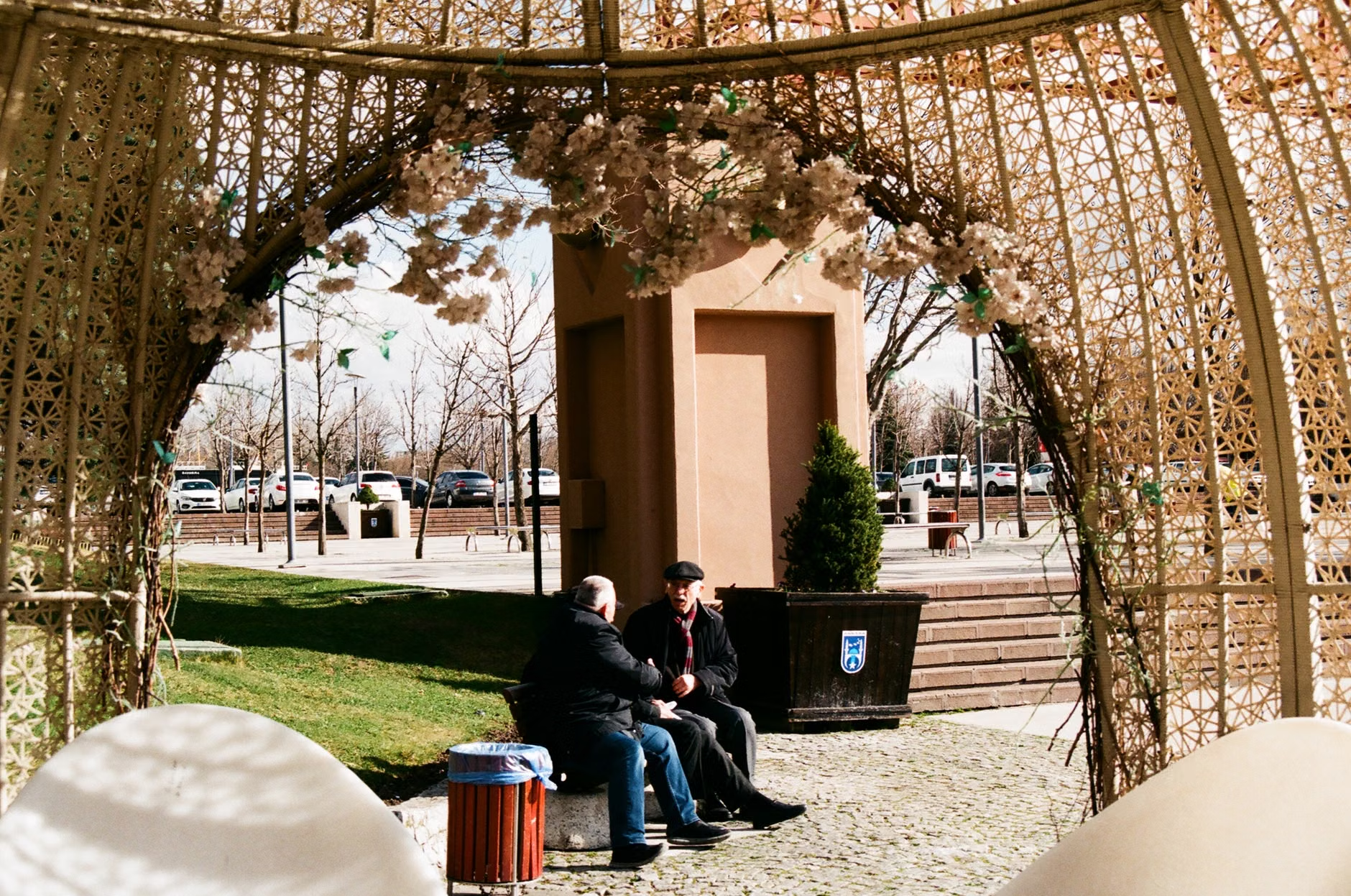
Physical accessibility is only half the picture. In 2026, there is a growing trend toward “Cognitive-Friendly” park design. This involves high-contrast signage that is easy to read, even for those with mild vision impairment. It also includes the use of natural sound-masking, where benches are placed away from high-traffic road noise, allowing for conversation without the need to strain one’s hearing.
If you find that noise levels in urban parks are a barrier to your enjoyment, look for “Quiet Zones”—a new category of urban space design. These areas utilize landscaping, such as hedges or earth berms, to dampen city sounds. They are typically marked with specific signage indicating a low-stimulation environment, which is highly beneficial for those who find busy, loud environments overwhelming.
How to Advocate for Better Seating in Your Community
You do not need to be an urban planner to influence your environment. If you notice that your local park is lacking in inclusive features, you can take practical steps to advocate for improvements. First, document the issue. Take a photo of a bench that is difficult to use—perhaps it lacks armrests or is placed in a muddy area—and submit it to your local government’s “fix-it” portal or parks department.
When writing your request, focus on the Universal Design principle. Explain that these changes benefit everyone: parents with strollers, people with temporary injuries, and older adults. By framing the need as an enhancement for the entire community, you increase the likelihood of your request being prioritized in the next budget cycle.
Conclusion: Empowering Your Outdoor Experience
The 2026 trends in urban park seating reflect a broader global shift toward valuing the presence and participation of older adults in public life. By understanding the features of modern, age-inclusive design—such as high-traction armrests, side-by-side mobility spaces, and strategic resting intervals—you can better navigate your environment and maintain your independence.
Remember, these public spaces are designed for you. You have a right to expect comfort and safety when you choose to spend your time outdoors. As these standards continue to evolve, stay informed about your local council’s development plans, and do not hesitate to advocate for the infrastructure that allows you to enjoy your community to the fullest.
Frequently Asked Questions
- How can I find out if my local park meets these new 2026 accessibility standards?
Most municipal government websites now include an “Accessibility Map” or “Park Infrastructure Report.” You can search your city’s website for “Age-Friendly Park Audit” or contact the Parks and Recreation department directly to ask if they have adopted the latest universal design guidelines. - What should I do if a bench is poorly maintained or unsafe?
Report it immediately via your local council’s mobile app or website. Most cities have a dedicated “Maintenance Request” category for public furniture. Provide the specific location (or GPS coordinates if possible) and a clear description of the hazard, such as “loose armrest” or “uneven pavement,” so maintenance crews can address it efficiently. - Are these 2026 design standards legally binding for all cities?
No, these are international planning guidelines and local regulations vary significantly by country and municipality. While many cities are adopting these standards to promote healthy aging, implementation timelines differ. It is worth checking your national or regional “Age-Friendly City” certification status to see what commitments your local government has made.
For further reading on international standards for age-inclusive environments, you may consult the World Health Organization’s Global Network for Age-friendly Cities and Communities guide.