Key Takeaways:
- Cognitive Engagement: Learning chess tactics stimulates multiple brain regions, specifically those linked to executive function, memory, and pattern recognition.
- Low Barrier to Entry: You do not need to be a grandmaster to reap the benefits; focusing on basic tactical patterns provides immediate mental stimulation.
- Practical Implementation: Integrating chess into your routine through digital apps or local clubs creates a sustainable habit that balances mental challenge with social interaction.
Engaging in intellectually stimulating hobbies is one of the most effective ways to maintain cognitive agility as we navigate our 60s, 70s, and beyond. Among the various activities available, chess stands out not just as a game of strategy, but as a rigorous mental workout that exercises the brain’s ability to plan, anticipate, and solve complex problems. By focusing on basic chess tactics, you can challenge your mind in a structured, rewarding way that requires no prior experience.
The Cognitive Science Behind Chess Tactics
When you sit down to solve a chess puzzle or play a match, you are not simply moving pieces across a board; you are engaging in a high-level cognitive process. Scientific studies have suggested that regular mental stimulation through complex strategy games can help maintain neuroplasticity—the brain’s ability to form new neural connections. Unlike passive activities, chess requires active participation and continuous decision-making.
At its core, chess involves several key cognitive functions:
- Executive Function: This involves planning, organizing, and managing time. In chess, you must decide which piece to move based on the immediate goal and the long-term objective.
- Working Memory: You must keep track of the board state, remembering where your opponent’s pieces are and how they might move in response to your actions.
- Pattern Recognition: Over time, the brain learns to identify recurring tactical themes, allowing you to make decisions faster and with greater confidence.
For an adult aged 60 to 80, these functions are vital for maintaining independence and handling complex daily tasks. By learning basic tactics, you are essentially “training” these cognitive muscles. Think of it as a gym session for your mind, where the “weights” are the tactical patterns you learn to identify and execute.
Understanding Basic Chess Tactics: What They Are
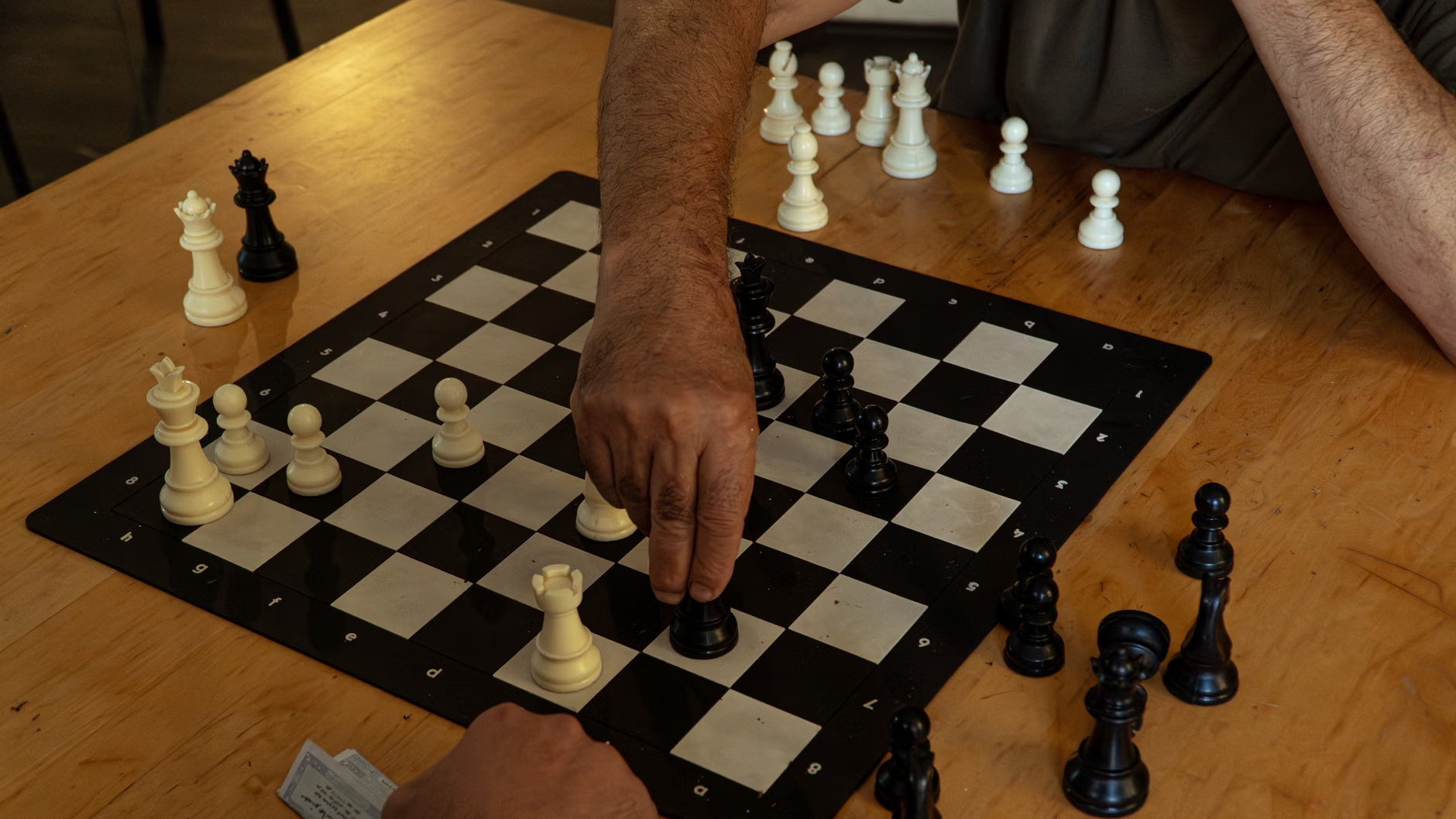
Tactics in chess are short-term sequences of moves that result in a tangible advantage, such as winning a piece or achieving checkmate. Unlike “strategy,” which is a long-term plan, tactics are the immediate tools you use to gain ground. If you are new to the game, you should focus on these three fundamental tactical concepts:
| Tactic | What It Means | Why It Matters |
|---|---|---|
| The Fork | Attacking two or more pieces with one move. | Forces the opponent to lose material or concede a superior position. |
| The Pin | Restricting an opponent’s piece so it cannot move without exposing a more valuable piece. | Neutralizes the opponent’s strongest pieces and limits their choices. |
| The Skewer | Attacking a valuable piece, forcing it to move and exposing a piece behind it. | Similar to a pin but often leads to immediate capture of the second piece. |
Understanding these concepts does not require you to memorize thousands of opening variations. Instead, it requires learning to “see” the board in terms of relationships between pieces. When you look at a board, start by asking: “Can I attack two pieces at once?” or “Is there an opponent’s piece that is protecting something important?” This simple shift in perspective is what develops the cognitive benefit.
Integrating Chess into Your Daily Routine
Consistency is key to reaping the cognitive rewards of any hobby. However, the best routine is one that you enjoy and can maintain without feeling pressured. Here is how you can practically integrate chess into your life:
1. Start with Digital Learning Tools
Digital apps are perhaps the most accessible way to learn chess today. Many platforms, such as Lichess or Chess.com, offer “puzzle” modes. These puzzles present you with a specific board position and ask you to find the winning move. This is an excellent way to practice tactics without the pressure of playing a full game against a human opponent.
Practical Step: Set a goal to solve just three puzzles a day. Each puzzle typically takes 1 to 3 minutes. This keeps the activity manageable and prevents mental fatigue.
2. Join a Local or Virtual Club
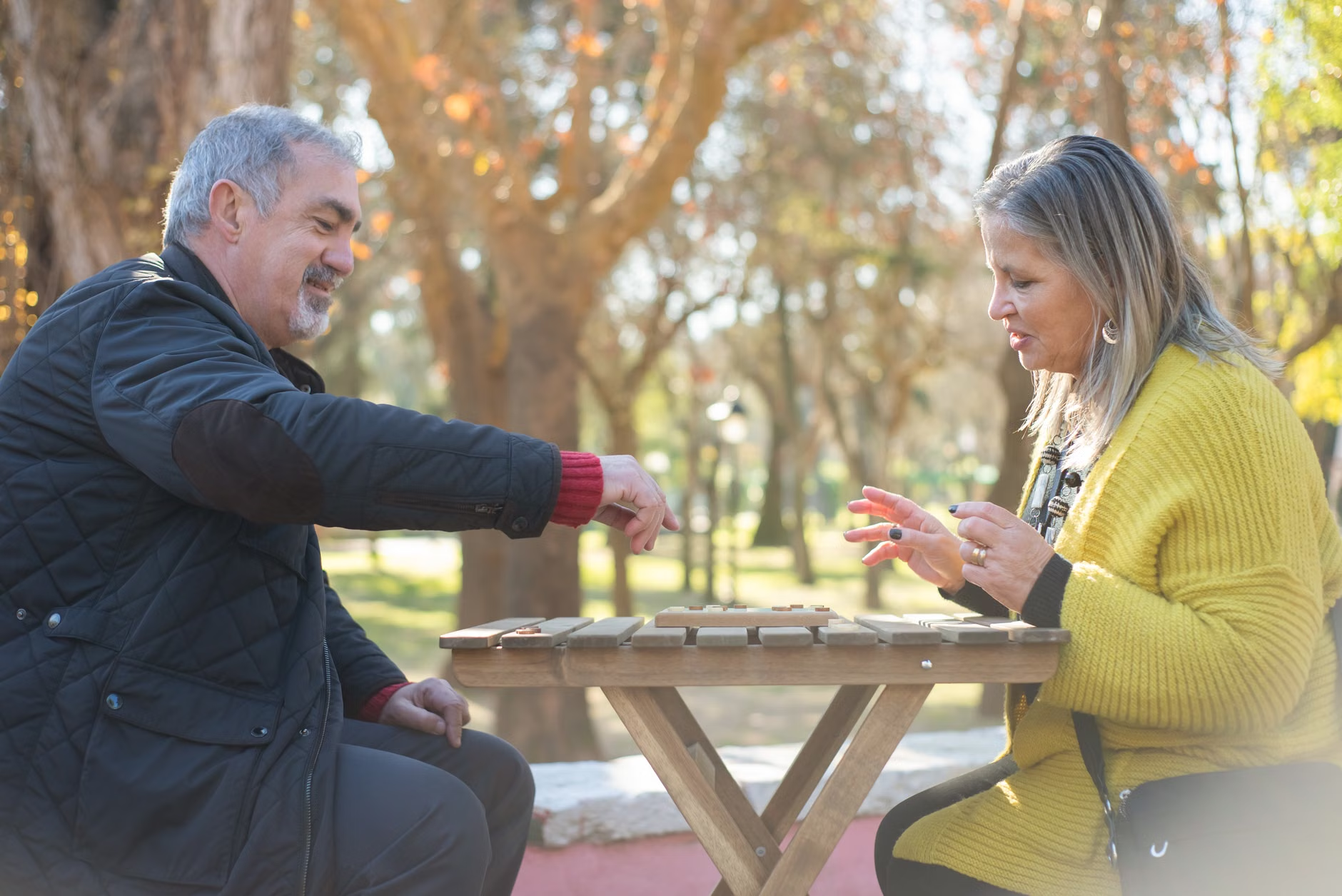
While digital tools are great for learning, the social aspect of chess is equally important for wellbeing. Many community centers, libraries, and senior centers host chess mornings. If mobility is a concern, there are numerous online communities where you can play and chat with others in a relaxed, non-competitive environment.
3. Manage Your Mental Stamina
It is common for beginners to feel mentally drained after a few games. This is normal; your brain is working hard. Do not push through physical or mental exhaustion. If you feel frustrated, take a break. The goal is to keep the activity enjoyable, not to turn it into a stressful chore.
Insight: Many people make the mistake of trying to play “blitz” (very fast) chess. For cognitive benefits, it is better to play “slow” games where you have plenty of time to think. Speed is not the goal; accuracy and logical deduction are.
Overcoming Common Barriers
Many adults feel intimidated by the perceived complexity of chess. It is important to remember that chess is a language, and like any language, you learn it one word at a time. You do not need to understand the entire game to enjoy the benefits of tactical training.
If you find the board confusing, start by playing “mini-games.” For example, set up only the pawns and the kings and try to get a pawn to the other side. This reduces the number of variables on the board while still teaching you how pieces interact.
Another barrier is the fear of losing. In the context of cognitive training, losing a game is actually a learning opportunity. Every time you lose a game because you missed a “fork” or a “pin,” your brain is learning to avoid that mistake in the future. This process of error correction is exactly what strengthens neural pathways.
Safety and Accessibility Considerations
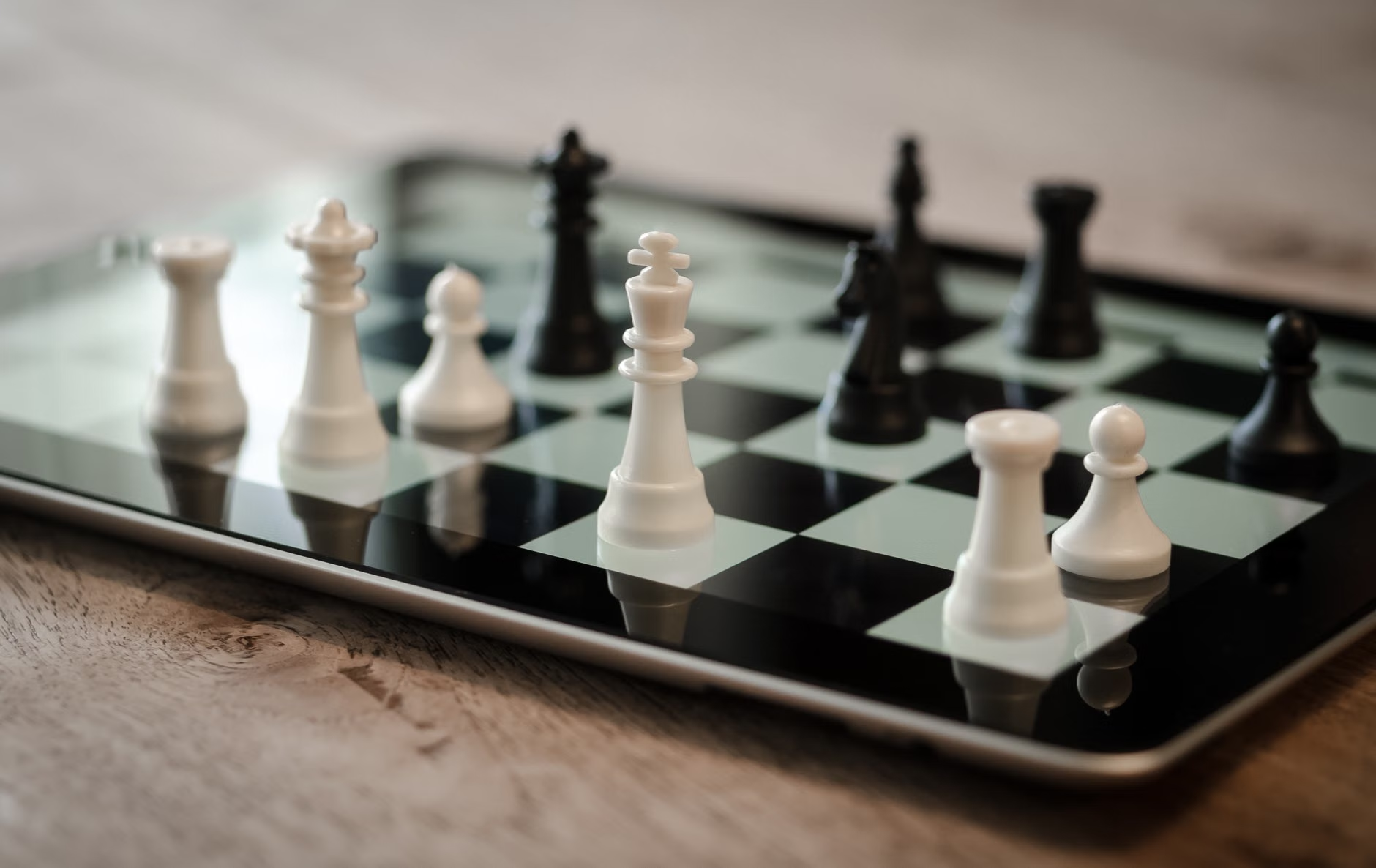
When engaging in hobbies, especially those involving sitting for extended periods, it is important to consider your physical comfort. Ensure that your chair provides adequate support for your back and that the board or screen is positioned at eye level to prevent neck strain. If you are using a tablet or computer, ensure the font size and contrast settings are adjusted for your comfort.
For those with limited hand dexterity, physical chess sets with magnetic pieces or larger-sized pieces can make the game much more accessible. There is no right or wrong way to play, as long as the method you choose allows you to engage your mind comfortably and consistently.
The Long-Term Perspective
The beauty of chess lies in its infinite complexity. You will never “finish” learning chess. This is a major advantage for lifelong learning, as it provides a hobby that grows with you. Whether you are playing a quick game on your phone while waiting for an appointment or joining a weekly club session, you are consistently challenging your brain to think critically.
Remember that the cognitive benefits are cumulative. A single game will not change your brain, but a year of regular, light engagement will contribute to a more agile and resilient mind. Focus on the process, enjoy the small victories when you spot a tactic, and embrace the challenge of the game.
Conclusion
Learning basic chess tactics is more than just a pastime; it is a proactive step toward maintaining cognitive health through the later stages of life. By focusing on fundamental patterns, using accessible digital tools, and maintaining a balanced, pressure-free approach, you can harness the strategic power of chess to keep your mind sharp. Start small, stay consistent, and enjoy the lifelong journey of discovery that the 64 squares of the chessboard offer.
Frequently Asked Questions (FAQ)
1. Do I need to be good at math to learn chess tactics?
Not at all. While chess involves logic and calculation, it does not require mathematical ability. It is more similar to learning a language or understanding spatial relationships. If you can follow a recipe or organize your schedule, you have the necessary skills to learn chess.
2. Is it better to play against a computer or a human?
Both have benefits. A computer (or app) is excellent for tactical drills and puzzles because it is always available and can provide instant feedback. Playing against a human, whether in person or online, adds a social element that is vital for emotional wellbeing. A mix of both is often the best approach for most people.
3. What if I feel frustrated when I lose?
Frustration is a sign that you are pushing your boundaries, which is good for cognitive growth. However, if it stops being fun, it is time to change your approach. Switch to easier puzzles, play against a “weaker” computer setting, or simply take a few days off. The goal is to maintain a positive, curious mindset rather than focusing on a win-loss record.
For more information on cognitive health and brain-stimulating activities, you may consult resources provided by organizations such as the National Institute on Aging (NIA), which offers guidance on healthy aging and lifestyle habits.