- Cognitive Engagement: Learning chess tactics enhances executive functions, such as planning, working memory, and pattern recognition, which are vital for maintaining mental agility.
- Accessibility: Chess is a low-cost, low-impact hobby that can be played physically or digitally, making it highly adaptable to varying levels of mobility.
- Structured Learning: Focusing on three fundamental tactics—the fork, the pin, and the skewer—provides a manageable entry point for beginners, avoiding cognitive overload.
Engaging in intellectually stimulating hobbies is a cornerstone of maintaining cognitive vitality as we navigate our sixties, seventies, and beyond. Among various leisure activities, chess stands out not merely as a game, but as a structured exercise for the brain. For many older adults, the appeal of chess lies in its perfect balance of logic, patience, and incremental challenge.
Unlike many other pastimes, chess does not require physical intensity, yet it demands significant mental focus. By learning basic tactics, you are essentially training your brain to recognize patterns and anticipate outcomes—skills that have direct applications in everyday decision-making and problem-solving.
The Cognitive Mechanics of Chess
When you learn a chess tactic, you are not just memorizing a move; you are strengthening the neural pathways associated with executive function. Executive function refers to the high-level cognitive processes that allow us to plan, focus attention, remember instructions, and juggle multiple tasks simultaneously.
In chess, every move is a micro-problem. You must analyze the current state of the board, predict your opponent’s likely responses, and evaluate the long-term consequences of your decision. This constant cycle of analysis and synthesis is a powerful way to keep the mind sharp. Research into “cognitive reserve”—the brain’s resilience to damage—suggests that lifelong learning and mental engagement can help maintain cognitive function, even if structural changes occur in the brain over time.
For an adult aged 60 to 80, the goal is not to become a grandmaster, but to utilize the game as a tool for mental maintenance. The process of learning the rules and basic tactics provides a sense of achievement and a structured way to spend leisure time.
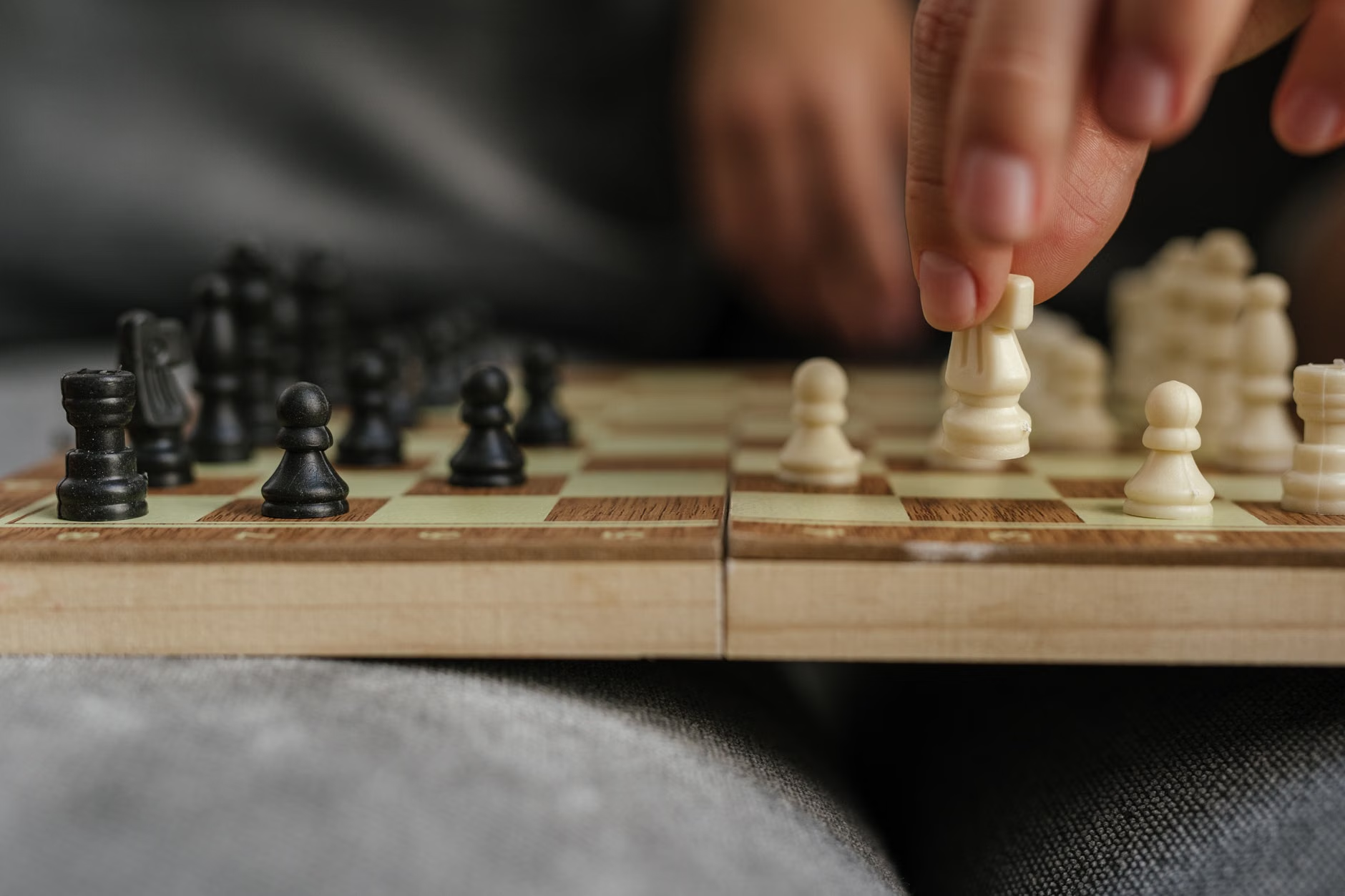
Three Fundamental Tactics to Master First
Trying to learn the entirety of chess strategy can be overwhelming. To keep the experience enjoyable and sustainable, we recommend focusing on three core tactics. These are the building blocks of all advanced play and are highly effective for training your pattern recognition skills.
1. The Fork: Attacking Two Pieces Simultaneously
A “fork” occurs when one piece attacks two or more of your opponent’s pieces at the same time. Because the opponent can only move one piece on their next turn, they are forced to leave one of the attacked pieces vulnerable or trade it away.
Real-life scenario: Imagine you are playing a game and notice your opponent’s King and Rook are positioned in a way that your Knight can jump into a position to threaten both. By placing your Knight there, you force a “win” of material because the opponent must prioritize the King’s safety, allowing you to capture the Rook on your next turn.
2. The Pin: Restricting Mobility
A “pin” happens when you attack a piece that cannot move without exposing a more valuable piece behind it. This effectively paralyzes your opponent’s piece.
Why it matters: This teaches you to look for “lines of sight” on the board. It forces you to think about the relationship between pieces rather than just looking at individual squares.
3. The Skewer: Forcing a Retreat
The skewer is the inverse of a pin. You attack a high-value piece (like the King or Queen), forcing it to move. Once it moves, you are then able to capture the lower-value piece that was sitting behind it.
Comparison of Tactics
| Tactic | Mechanism | Primary Benefit |
|---|---|---|
| Fork | Dual threat | Maximizes material advantage |
| Pin | Restricts movement | Controls board space |
| Skewer | Forced displacement | Removes defensive barriers |
Choosing which tactic to look for depends on the state of the board. If you have many pieces active, look for forks. If the board is crowded, look for pins. This decision-making process is where the real cognitive workout happens.
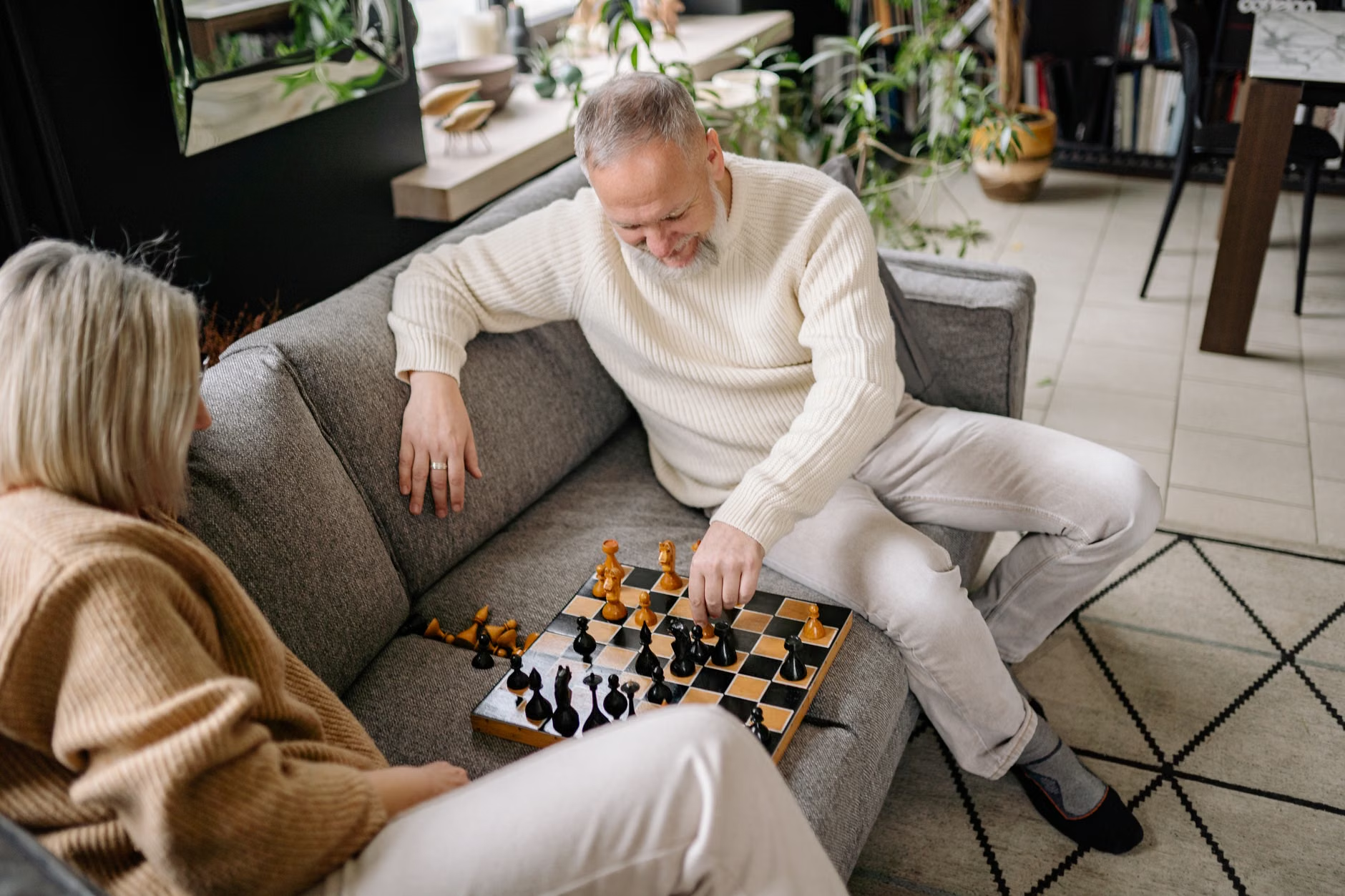
Integrating Chess into Your Daily Routine
Consistency is more important than duration. You do not need to spend hours a day playing chess to reap the benefits. In fact, short, focused sessions of 20 to 30 minutes are often more effective for retaining new information and preventing mental fatigue.
If you are new to the game, consider these steps to get started without unnecessary stress:
- Use Digital Aids: Websites like Chess.com or Lichess.org offer free “tactics trainers” or “puzzles.” These are curated sets of problems that allow you to practice specific moves in a controlled environment.
- Start with Puzzles: You don’t need to play a full game immediately. Puzzles are essentially “chess math problems.” They present a board and ask you to find the best move. This is a low-pressure way to learn.
- Join a Local Club: Many community centers and senior clubs host chess afternoons. This provides a dual benefit: mental stimulation and social connection, which is equally important for overall wellbeing.
Managing Physical Comfort
If you prefer playing with a physical board, ensure your setup is ergonomic. A board placed on a standard dining table might be too high or too low, leading to neck strain. Use a chair with proper back support and ensure the lighting is bright enough to distinguish between the light and dark squares clearly, as contrast perception can shift with age.
Addressing Common Misconceptions
A common mistake is the belief that one must have a “mathematical mind” to play chess. In reality, chess is a language of patterns. Once you learn the “alphabet” (how pieces move) and the “words” (tactics), the game becomes an intuitive exercise. You are not calculating infinite possibilities; you are recognizing scenarios you have seen before.
Another misconception is that chess is only for the highly competitive. While competitive chess exists, the vast majority of players engage with the game for the sheer pleasure of solving the puzzle. You are competing against the board, not just the person sitting across from you.
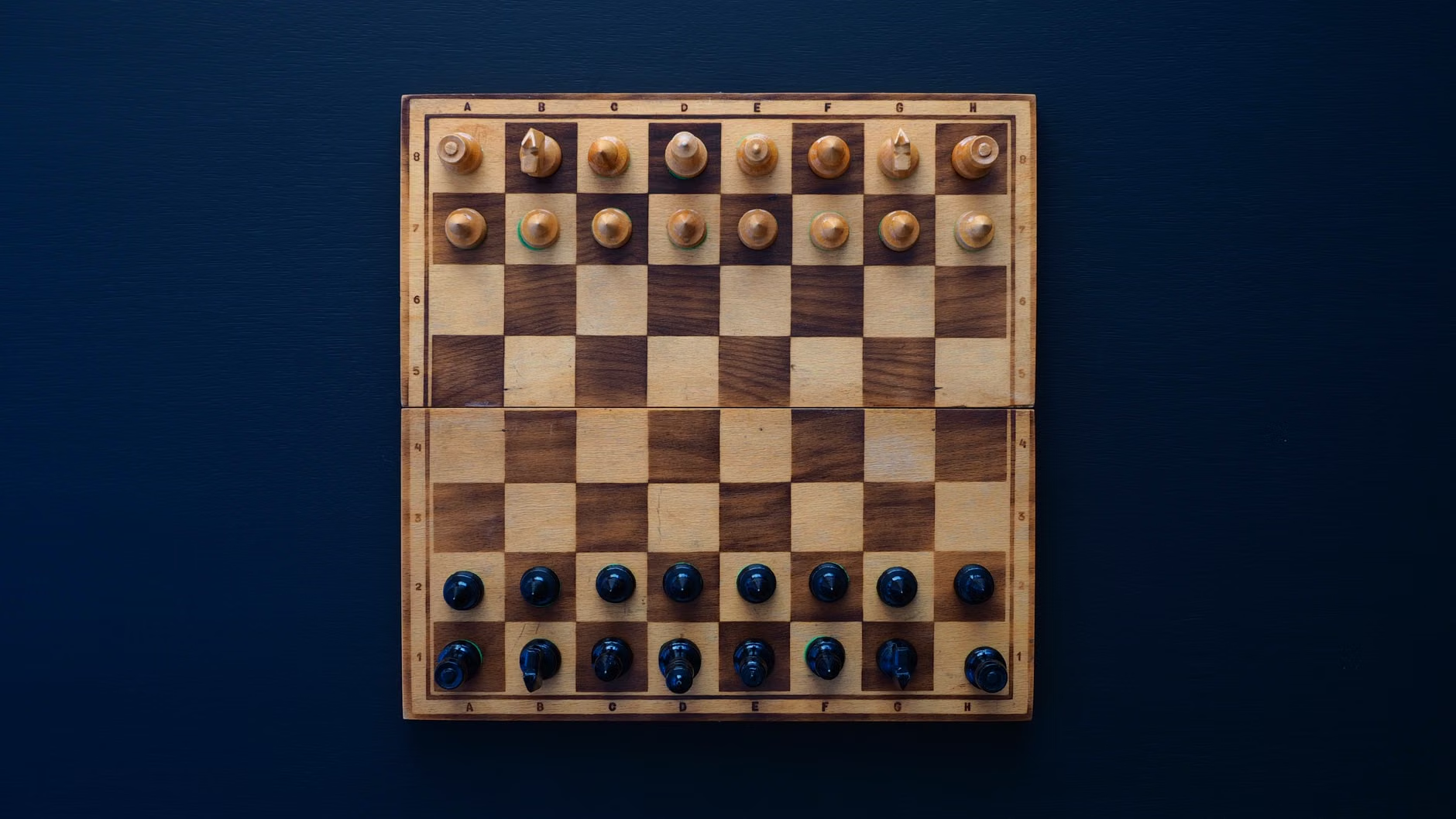
Practical Steps for Beginners
If you are ready to begin, follow this structured approach to ensure progress:
- Week 1: Spend 15 minutes a day reviewing how each piece moves. Use a physical board if possible to build tactile memory.
- Week 2: Focus exclusively on “The Fork.” Use a digital tactics trainer to specifically search for fork puzzles.
- Week 3: Introduce “The Pin.” Continue practicing forks to ensure you don’t lose the skill.
- Week 4: Play your first “slow” game. Do not worry about winning. Worry about identifying the tactics you have learned.
If you find yourself getting frustrated, stop. The goal is to keep the brain engaged in a positive way. Frustration triggers stress hormones like cortisol, which can hinder the very cognitive benefits you are trying to achieve. If a puzzle is too difficult, move on to an easier one. There is no penalty for choosing a lower difficulty level.
The Role of Social Connection
While digital tools are excellent for learning, the social aspect of chess cannot be overstated. Playing in person involves reading body language, managing the rhythm of the game, and engaging in conversation. This multi-sensory experience is distinct from staring at a screen. If you have family members who also enjoy the game, playing a weekly match can be a wonderful way to bridge generations and share a common hobby.
If you have mobility limitations that make traveling to a club difficult, consider using video conferencing tools to play with a friend. You can both set up a board at home and move the pieces simultaneously as you talk through the game. This maintains the social connection while respecting your physical comfort.
Safety and Accessibility Considerations
For those with vision or dexterity challenges, there are specialized chess sets available. “Staunton” style pieces are the standard for tournament play and are designed for high visibility and ease of handling. If you have arthritis, look for weighted pieces that are easier to grip and move firmly across the board.
Regarding health, while chess is mentally stimulating, it is not a substitute for medical advice or treatment. If you are experiencing sudden changes in memory or cognitive function, it is important to consult with a primary care physician. Rather than being a diagnostic tool, chess should be viewed as a lifestyle habit that supports general cognitive health as part of a balanced approach that includes physical activity, social engagement, and proper nutrition.
Deepening Your Understanding: Beyond the Basics
Once you have mastered the fork, pin, and skewer, you may find yourself naturally looking for more complex patterns. This is the “Aha!” moment where the game truly becomes rewarding. You might start to see “discovered attacks”—where moving one piece reveals an attack from another piece behind it. This is a sign that your brain is successfully building the cognitive architecture required for advanced pattern recognition.
Do not feel pressured to move quickly through these stages. The beauty of chess is that it offers a lifetime of learning. A game that has been played for over a millennium will not be “solved” in a few weeks. Enjoy the slow, steady progress.
Conclusion
Learning basic chess tactics is an accessible, low-cost, and highly effective way to support your cognitive health in your later years. By focusing on the fork, the pin, and the skewer, you provide your brain with a structured workout that enhances executive function and pattern recognition. Whether you choose to play online, in a local club, or with family at home, the most important element is the consistency of the practice and the joy of the challenge. Start small, stay curious, and remember that every move you make is a victory for your brain’s health.
Frequently Asked Questions
1. Is it too late to start learning chess in my 70s?
Absolutely not. Chess is a skill that can be learned at any age. While it may take a little more time to build muscle memory for the moves compared to a child, adults often have an advantage in patience and the ability to understand complex strategic concepts.
2. Does playing chess prevent cognitive decline?
While no single activity can “prevent” decline, research shows that regular, challenging cognitive engagement is associated with better cognitive outcomes. Chess provides a high level of mental stimulation, which is a key component of a brain-healthy lifestyle.
3. What equipment do I need to get started?
You only need a basic chess set and a quiet place to play. A standard wooden or plastic Staunton-style set is perfectly adequate. If you prefer digital, a smartphone or tablet with a free chess app is all that is required.
Official resources for further learning:
Chess.com Learning Center – A comprehensive collection of tutorials for beginners.
Lichess.org Learn – A completely free, open-source platform for learning chess basics and tactics.