- Adaptive Lighting: By 2026, cities are shifting toward “smart” lighting that adjusts intensity based on real-time pedestrian presence, reducing glare and energy waste.
- Visual Comfort: New international standards prioritize “warm-spectrum” lighting (under 3000K) to reduce blue light exposure, which helps older adults maintain better depth perception and prevents sleep disruption.
- Safety Infrastructure: High-contrast crosswalk lighting is becoming a standard requirement, significantly reducing trip-and-fall hazards and improving driver reaction times.
As we navigate urban environments, the quality of public lighting is often an overlooked factor in personal safety and independence. By 2026, a significant shift in urban infrastructure design is prioritizing the needs of older adults. This transition is moving away from the harsh, high-intensity “white” lights of the past toward intelligent, human-centric lighting solutions that improve visibility while reducing physical strain.
The Evolution of Public Lighting: Why 2026 is a Turning Point
For many years, the primary goal of public lighting was simple: visibility at the lowest cost. However, this often led to “light pollution” and high-glare environments that are particularly difficult for the aging eye to process. As the global population over 60 continues to grow, urban planners are finally integrating physiological needs into lighting codes.
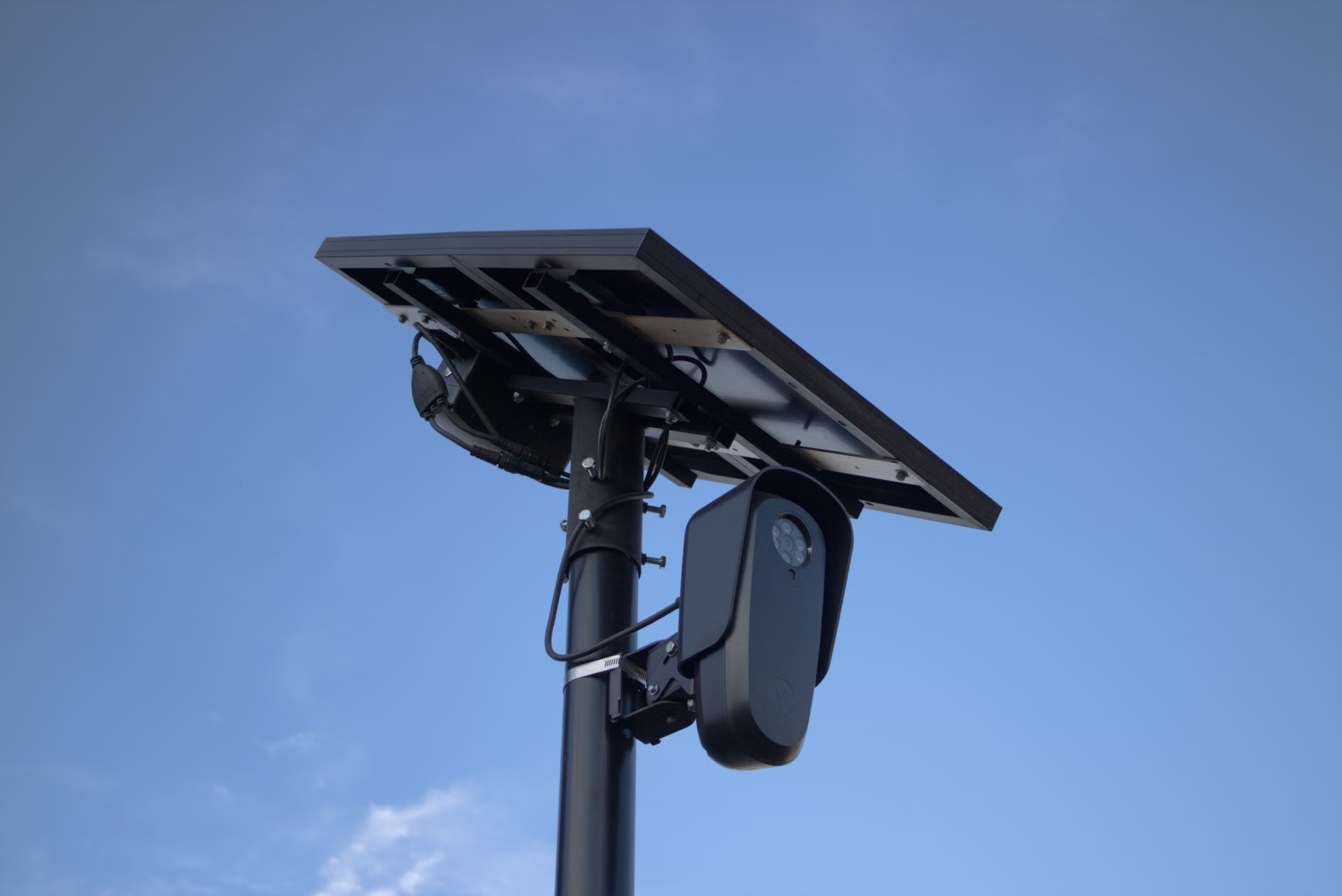
In 2026, the focus has shifted to Adaptive Public Lighting. This technology uses motion sensors and AI-driven grid management to brighten paths specifically when a pedestrian is detected, then dimming them when the area is vacant. For the older resident, this means consistent, high-quality illumination exactly when and where it is needed.
Why this matters: As we age, our pupils naturally become smaller and less able to dilate, which means we require more light to see the same level of detail as a younger person. Simultaneously, the lens of the eye can become more opaque, making us more sensitive to glare. Adaptive lighting balances these two competing needs by providing “targeted” illumination that doesn’t blind the pedestrian with excessive brightness.
Understanding Lighting Specifications: What to Look For
You don’t need to be an electrical engineer to advocate for better lighting in your neighborhood. Understanding two simple metrics can help you identify whether your local area is meeting modern safety standards:
| Metric | What It Is | Why It Matters for Seniors |
|---|---|---|
| Color Temperature (Kelvins) | The “warmth” of the light (e.g., 2700K vs 5000K). | Lower (warmer) temperatures reduce harsh blue light, which causes glare and disrupts circadian rhythms. |
| Uniformity Ratio | The consistency of light across a surface. | Prevents “patchy” lighting that creates dark spots, which are major trip hazards for those with reduced depth perception. |
| Color Rendering Index (CRI) | How accurately the light reveals colors. | High CRI helps in identifying surface textures, such as a curb edge or a change in pavement material. |
If you are concerned about the lighting on your street, check the color temperature. Many municipalities are currently replacing older high-pressure sodium or harsh LED lamps with 3000K (warm white) LEDs. If you encounter lights that feel “blindingly white,” these are likely in the 5000K-6000K range, which are increasingly being phased out in residential areas due to their negative impact on visual comfort.
The Impact of High-Contrast Lighting on Pedestrian Safety
One of the most dangerous moments for any pedestrian is crossing the street at night. Traditional lighting often illuminates the road for cars but leaves the crosswalk itself in a shadow. The 2026 trend is “Vertical Illuminance,” which aims to light the person standing in the crosswalk, not just the asphalt beneath them.
Real-Life Scenario: Imagine standing at a crosswalk at 7:00 PM in late autumn. The streetlights are overhead, but because the light points straight down, you are essentially a silhouette to oncoming drivers. New “pedestrian-centric” lighting uses secondary light sources mounted lower on the pole, angled to illuminate your body and face. This allows drivers to see you clearly from 50 meters away, rather than 10 meters.
How to advocate for better crosswalk safety in your community:
- Document the issue: If a local crossing is poorly lit, take a photo during the evening. Note if there is a “blind spot” where you feel invisible to traffic.
- Contact your local council: Most municipal websites have a “Report a Problem” or “Public Works” portal. Use the term “pedestrian safety lighting” or “vertical illuminance” to show you are aware of modern standards.
- Engage local groups: Safety is often a shared concern. Neighborhood associations or senior centers can amplify your request by presenting it as a broader community safety issue rather than an individual complaint.
Circadian Rhythm and Sleep: The Hidden Benefit of Proper Lighting
It isn’t just about avoiding falls. The spectrum of light we are exposed to in the evening has a direct impact on our hormones, specifically melatonin. Exposure to high-intensity blue-rich light (often found in older LED streetlights) late at night can signal to the brain that it is still daytime, leading to difficulty falling asleep.
By 2026, the adoption of “Night-Sky Friendly” lighting has become more common. These fixtures are fully shielded, meaning the light is directed downward only. This not only reduces light pollution but also prevents stray light from shining into bedroom windows. If you find that street lighting is disrupting your sleep, check if your local authority has a “shielding” policy for residential streetlights.
While infrastructure is improving, you still need to navigate existing environments that may not yet meet these 2026 standards. Here are practical ways to manage current lighting conditions:
- Use High-Visibility Accessories: If you walk in the evening, use reflective gear. Modern reflective materials are lightweight and can be attached to walking aids, bags, or clothing.
- Choose Your Path: If you have a choice between two routes, prioritize the one with “consistent” lighting, even if it is slightly longer. Patchy light-and-shadow environments are more dangerous than uniformly dim environments because the human eye struggles to adjust rapidly between the two.
- The “Pause” Rule: When moving from a brightly lit indoor space (like a shop) to a darker outdoor space, pause for 30 seconds in the doorway. This gives your eyes the necessary time to adjust to the lower light levels, significantly reducing the risk of stumbling on the first step.
The Future of Smart Infrastructure: What to Expect Next
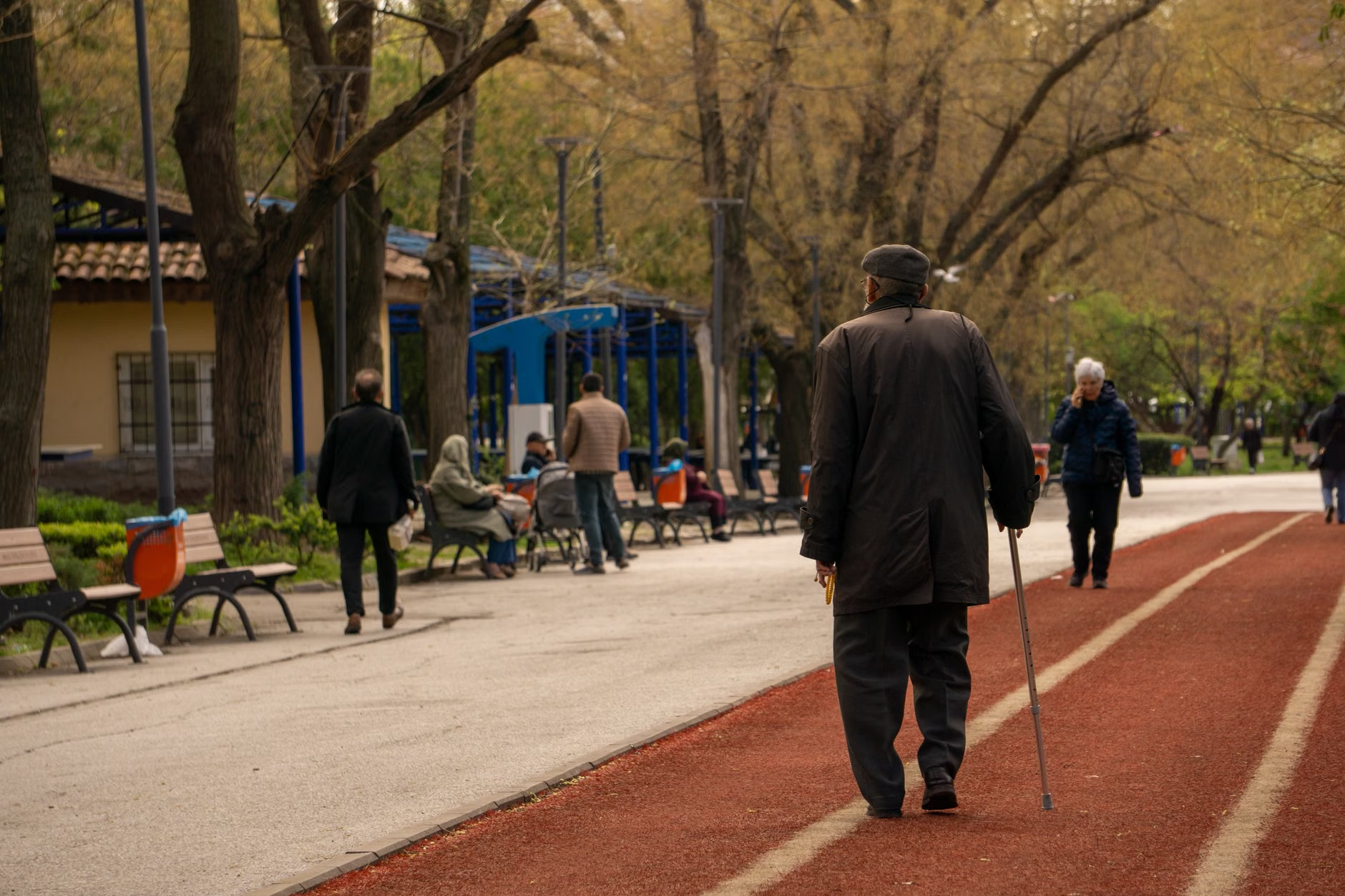
Beyond 2026, we are looking at the integration of “smart pavement.” This involves lighting embedded directly into the sidewalk that glows to indicate path boundaries, obstacles, or even the status of a pedestrian signal. While this is currently in pilot stages in cities like Copenhagen and Singapore, it represents the next step in making the built environment naturally intuitive for older users.
These systems are designed to reduce the “cognitive load” on pedestrians. Instead of searching for a sign or a crosswalk button, the infrastructure communicates the information directly through visual cues on the ground. For those with mobility or visual impairments, this shift from “finding information” to “experiencing information” is a game-changer for independent living.
Conclusion: Taking Action in Your Neighborhood
The transition to age-friendly lighting is not just a technological change; it is a shift toward inclusive urban design. By understanding the importance of color temperature, uniformity, and vertical illuminance, you are better equipped to navigate your surroundings and advocate for improvements. Always remember that your voice matters—local authorities rely on resident feedback to prioritize infrastructure upgrades. If you feel unsafe in a public space, there is likely a modern, evidence-based lighting solution that can be implemented to make that space accessible for you and your community.
Frequently Asked Questions (FAQ)
1. Why do some streetlights look orange and others look white?
The “orange” lights are older High-Pressure Sodium (HPS) bulbs. While they are energy-efficient, they have poor color rendering, making it hard to distinguish colors. The “white” lights are LEDs. While they offer better visibility, older, high-intensity LEDs can be harsh. The 2026 trend is toward “warm white” LEDs (3000K), which provide the benefits of LED technology without the harsh glare of earlier models.
2. Can I request a street lamp to be shielded if it shines into my home?
Yes. Most municipalities have a process for addressing “light trespass.” You can usually file a request with your local public works or department of transportation. Mention that the light is causing a disturbance and ask if a “light shield” or “backlight control” can be installed on the fixture.
3. Where can I find the official lighting standards for my area?
Public lighting standards are usually governed by national or regional road safety authorities. In the US, look for the IES (Illuminating Engineering Society) standards; in Europe, look for the CIE (International Commission on Illumination) guidelines. You can search these organizations’ websites for “pedestrian lighting recommendations” to see what your local government should be striving to achieve.
Sources:
Illuminating Engineering Society (IES) – Lighting Standards and Guidelines
International Commission on Illumination (CIE) – Global Lighting Research