Key Takeaways
- The Calf Muscle Pump: Your calf muscles act as the primary engine for pushing blood from your legs back to your heart; activating them through ankle-pumps is a highly effective, low-impact way to support this process.
- Practical Implementation: You can perform ankle-pumps anywhere—while watching television, reading, or during long-haul travel—making them an ideal habit for maintaining circulation without specialized equipment.
- When to Seek Advice: While ankle-pumps are a preventive tool, persistent swelling, localized pain, or redness in one leg should always be evaluated by a healthcare professional to rule out conditions like Deep Vein Thrombosis (DVT).
For many adults aged 60 to 80, maintaining healthy circulation becomes a primary focus of daily preventive health. One of the most overlooked yet accessible tools at your disposal is the seated ankle-pump. This simple movement—flexing and extending the ankle while seated—is not merely a minor exercise; it is a mechanical intervention that assists your body’s venous system in returning blood from the lower extremities back to the heart.
As we age, the efficiency of our venous valves can naturally decline, and reduced physical activity during long periods of sitting can lead to fluid accumulation in the lower legs, known as peripheral edema. Understanding how to utilize the “calf muscle pump” can help you mitigate these effects, improve comfort, and sustain mobility.
Understanding the Physiology of Venous Return
To understand why ankle-pumps are effective, one must first understand how blood travels from the feet back to the heart. Unlike the arterial system, which relies on the high-pressure pumping action of the heart, the venous system in the legs operates against gravity. It relies on a series of one-way valves and the contraction of surrounding muscles to move blood upward.
When you are standing or walking, the rhythmic contraction of your calf muscles squeezes the deep veins, acting like a pump. However, when you are sedentary for long periods—such as during a long flight, a train journey, or even a quiet afternoon at home—this pump is largely inactive. Blood can pool in the lower legs, which not only causes discomfort and swelling but also places unnecessary strain on your venous valves.
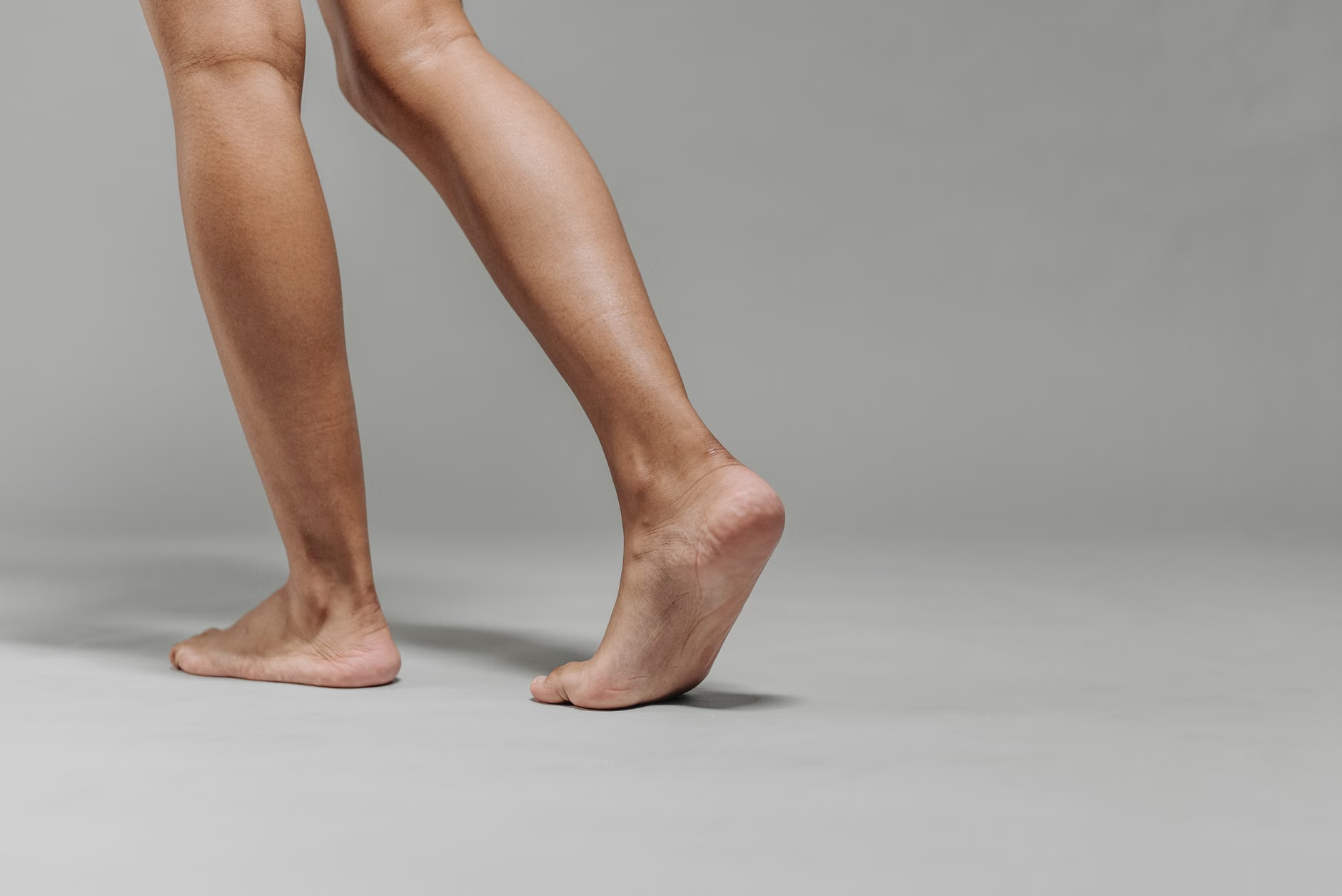
The ankle-pump exercise mimics the muscle contraction that occurs during walking. By consciously moving the ankle, you engage the gastrocnemius and soleus muscles (the primary muscles of the calf). This engagement compresses the veins and encourages blood to flow toward the heart, effectively “rebooting” the venous return process while you remain in a seated position.
How to Perform Seated Ankle-Pumps Correctly
The beauty of the ankle-pump is its simplicity. It requires no specialized equipment, no gym membership, and no significant time commitment. However, to derive the maximum benefit, technique matters. The goal is not just movement, but controlled, full-range engagement of the muscles.
Step-by-Step Execution
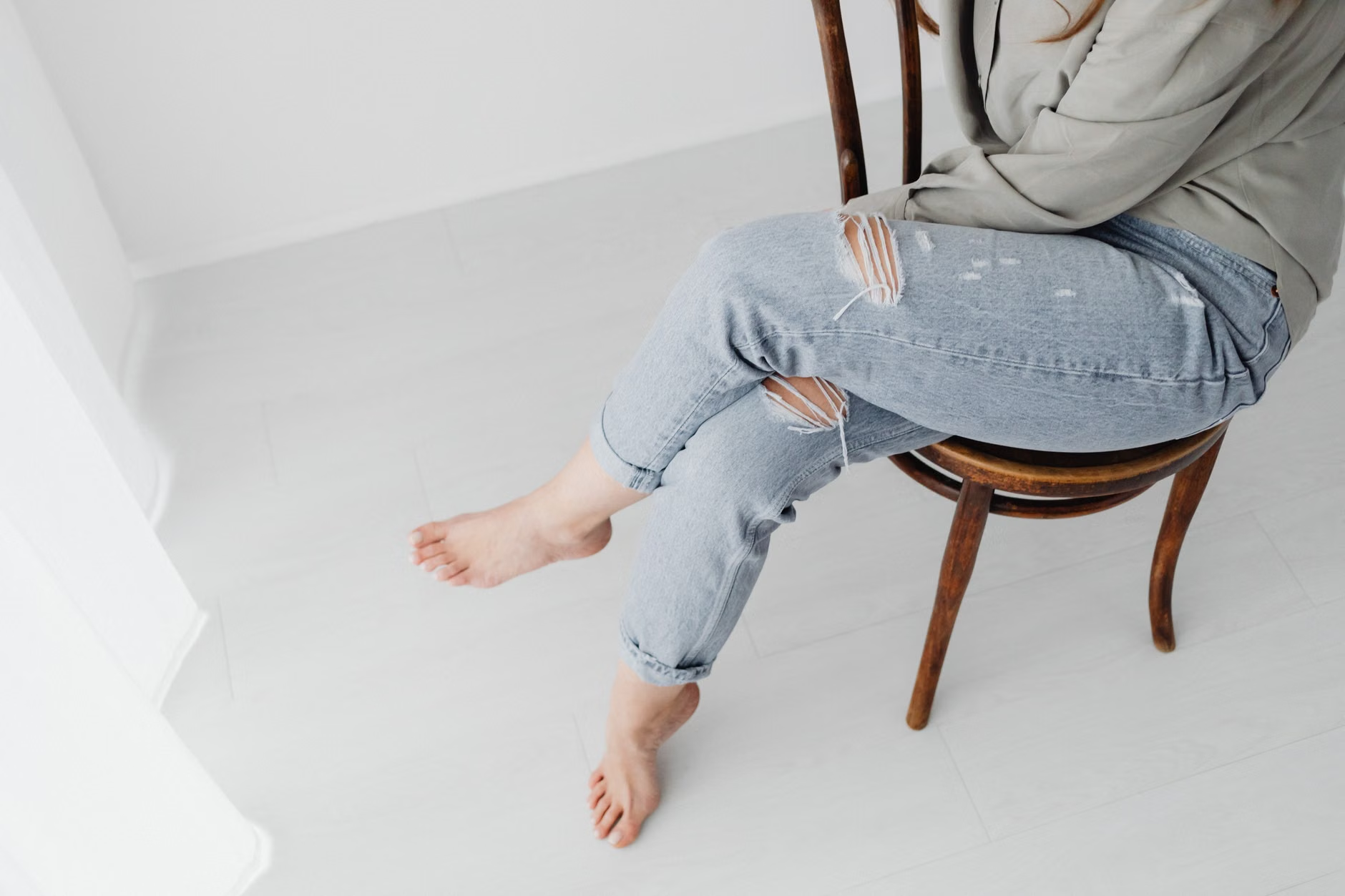
- Find a Stable Seat: Sit in a chair where your feet can rest flat on the floor or on a slightly elevated surface if preferred. Ensure your back is supported to maintain good posture.
- Positioning: Extend one or both legs slightly forward so your heel is on the ground, but your foot is free to move.
- The Dorsiflexion Phase: Pull your toes and the top of your foot toward your shin as far as is comfortably possible. You should feel a stretch in your calf and engagement in the muscles at the front of your shin.
- The Plantarflexion Phase: Push your toes downward toward the floor, as if you are pressing a gas pedal. Focus on feeling the contraction in your calf muscle.
- Repetition: Perform this cycle at a steady, rhythmic pace. A typical recommendation is 20 to 30 repetitions per set, performed several times throughout the day.
Common Mistakes to Avoid
- Moving Too Quickly: If you move too fast, you are not allowing the muscles to fully contract and relax. Focus on the quality of the squeeze.
- Limited Range of Motion: Many people only perform a small flick of the foot. Aim for the full range of motion—from the maximum upward pull to the maximum downward push.
- Breath Holding: Do not hold your breath while performing these movements. Breathe naturally to ensure steady oxygen flow, which is essential for muscle function.
Integrating Ankle-Pumps into Daily Life
The most effective health habits are those that integrate seamlessly into your existing routine. You do not need to set aside a specific “exercise time” for ankle-pumps. Instead, use them as a “micro-habit” during sedentary periods.
| Scenario | Strategy |
|---|---|
| Long-haul travel (Flight/Train) | Perform 30 pumps every 60 minutes to prevent stasis. |
| Watching television | Incorporate a set during every commercial break or between shows. |
| Desk work or reading | Set a timer for every hour to perform two minutes of rhythmic pumping. |
| Waiting at appointments | Use the time in the waiting room to keep blood flowing in your lower legs. |
The table above illustrates that the key to success is consistency rather than intensity. By performing these movements throughout the day, you prevent the blood from pooling for extended periods, which is far more effective than doing a single, high-intensity set once a day.
When to Seek Professional Guidance
While ankle-pumps are an excellent preventive strategy, they are not a cure for underlying vascular conditions. It is important to know the difference between normal fluid retention due to inactivity and symptoms that require medical assessment.
Warning Signs of Vascular Issues
If you notice the following, please consult a healthcare professional, such as a primary care physician or a vascular specialist:
- Unilateral Swelling: Swelling that occurs in only one leg is a significant red flag and should be evaluated immediately to rule out conditions like Deep Vein Thrombosis (DVT).
- Persistent Pain or Tenderness: Any localized pain, especially if it is accompanied by warmth or redness in the calf area.
- Skin Changes: Thickening, discoloration, or non-healing sores on the lower legs or ankles.
- Shortness of Breath: If leg swelling is accompanied by difficulty breathing or chest pain, seek emergency medical care.
When you prepare for a medical appointment regarding leg health, it is helpful to keep a simple record. Note when the swelling typically occurs, whether it subsides with rest or elevation, and any medications you are currently taking. This information helps your doctor make an accurate assessment of your venous health.
The Role of Lifestyle in Venous Health
Ankle-pumps should be viewed as one component of a broader approach to vascular wellness. For adults aged 60 to 80, other factors significantly influence venous return and leg comfort. These include maintaining a healthy weight, staying hydrated, and choosing appropriate footwear.
Hydration is particularly critical. When the body is dehydrated, blood volume may be slightly reduced, and blood viscosity (thickness) can increase. Drinking adequate water throughout the day helps maintain optimal blood flow. Furthermore, the choice of footwear is vital. Shoes that are too tight can restrict circulation in the feet and ankles, effectively counteracting the benefits of your exercise. Opt for footwear that provides proper support and allows for natural movement of the foot and ankle.
Another overlooked variable is the impact of salt intake on fluid retention. Excessive sodium consumption can contribute to water retention, which exacerbates swelling in the legs. By balancing your diet and keeping salt intake within recommended guidelines, you reduce the workload on your venous system.
Comparative Analysis: Ankle-Pumps vs. Other Modalities
It is worth comparing the ankle-pump to other common interventions. Many people consider compression stockings or leg elevation as alternatives. However, these are not mutually exclusive; they often work best in combination.
- Compression Stockings: These provide external pressure to assist the veins in pushing blood upward. They are excellent for those who have diagnosed venous insufficiency. However, they must be properly fitted. A poorly fitted stocking can actually restrict circulation.
- Elevation: Elevating your legs above the level of your heart uses gravity to help drain fluid. This is highly effective but requires you to lie down, which is not always practical in public settings.
- Ankle-Pumps: These are the most versatile. They require no equipment, can be done anywhere, and actively engage the muscle rather than relying on passive support.
The ideal strategy for most individuals is a combination: perform ankle-pumps during the day to keep the blood moving, use elevation when you are at home resting, and consult a doctor regarding the potential benefit of compression stockings if you have chronic symptoms.
Practical Decision Framework for Implementation
To determine how to best implement this, consider your current mobility and lifestyle:
- If you have high mobility: Focus on walking as your primary pump. Use seated ankle-pumps as a secondary tool during times when you must remain seated for more than an hour.
- If you have limited mobility: Ankle-pumps are essential. Make them a core part of your daily routine. Consider performing them in sets of 50 throughout the day to ensure consistent stimulation of the calf muscles.
- If you are a frequent traveler: Make ankle-pumps a non-negotiable part of your travel protocol. Use a “trigger”—such as every time the pilot turns off the seatbelt sign or every time you finish a chapter of your book—to remind yourself to perform the exercise.
Remember that the goal is progress, not perfection. If you forget for a day, simply resume the next. The cumulative effect of these small movements is what contributes to long-term venous health.
Understanding Clinical Research and Guidance
Clinical guidance from organizations like the Society for Vascular Surgery emphasizes the importance of movement in preventing venous stasis, particularly in hospital settings or during long-distance travel. While “ankle-pumps” are a common clinical recommendation, they are often described under the broader umbrella of “early mobilization” or “venous thromboembolism (VTE) prophylaxis.”
The research is clear: sedentary behavior is a primary risk factor for venous issues. By choosing to incorporate ankle-pumps, you are taking a proactive stance on your health. You are essentially using your body’s own mechanics to perform a task that the heart cannot do alone when you are inactive. This is a testament to the power of simple, consistent physical engagement.
Long-term Benefits and Expectations
What can you expect from a consistent ankle-pump routine? You should not expect an overnight transformation. Instead, look for gradual improvements in comfort. You might notice less “heaviness” in your legs at the end of the day, a reduction in visible swelling around the ankles, or simply a greater ease of movement when you stand up after sitting for a long period.
It is also important to manage expectations regarding chronic conditions. If you have significant venous insufficiency, ankle-pumps will help manage symptoms and prevent worsening, but they may not eliminate the underlying condition entirely. Always maintain a partnership with your healthcare provider to monitor your progress and adjust your care plan as needed.
Conclusion: A Proactive Approach to Wellbeing
Taking control of your health often involves small, deliberate choices that accumulate over time. The seated ankle-pump is a perfect example of how a modest, simple, and accessible action can have a profound impact on your physical comfort and long-term vascular health. By understanding the “why” behind the movement and integrating it into your daily life, you empower yourself to stay active, mobile, and comfortable throughout your later years.
Start today by identifying the periods in your day when you are most sedentary. Whether it is while reading, traveling, or relaxing, use that time to support your body’s natural circulation. Your legs will thank you.
Frequently Asked Questions
- How many times a day should I perform ankle-pumps?
There is no strict limit. A good rule of thumb is to perform 20 to 30 repetitions every hour that you are sitting for an extended period. Consistency throughout the day is more important than the total number of repetitions done in a single sitting. - Can I do ankle-pumps if I have arthritis in my ankles?
Yes, but you should move within your comfortable range of motion. Do not force the movement if it causes pain. If you have significant joint issues, consult a physical therapist who can help you modify the exercise to be both safe and effective for your specific condition. - Are there any side effects to doing this exercise?
Ankle-pumps are a low-risk, natural movement. The only potential side effect is mild muscle fatigue in the calf or shin, which is normal when engaging muscles that haven’t been used regularly. If you experience sharp, persistent pain, stop the exercise and consult your doctor to ensure there isn’t an underlying injury.
For further reading on venous health and circulation, you may consult the Society for Vascular Surgery for patient-focused resources and guidance.