Historic villas offer a unique window into the past, but their centuries-old architecture—often designed with steep stairs, uneven cobblestones, and narrow corridors—can present significant challenges for senior travelers. Choosing the right tour requires moving beyond the marketing brochures and conducting a rigorous, objective assessment of accessibility, logistics, and physical demand.
- Prioritize Verified Accessibility: Never assume “historic” means accessible; always request specific details on elevator access, ground-floor tour options, and floor surface types before booking.
- Manage Your Energy Budget: Plan for a 1:1 ratio of tour time to rest time, ensuring that your daily itinerary includes frequent, seated recovery periods in climate-controlled environments.
- Vet the Logistics: Confirm not just the tour path, but the “last-mile” transport—how you get from the drop-off point to the villa entrance—as this is often the most overlooked mobility barrier.
Understanding the Reality of “Accessible” Historic Sites
In the context of historic preservation, “accessible” is not a universal standard. A site that is fully compliant with the Americans with Disabilities Act (ADA) in the United States may look very different from a site in rural Tuscany or the Loire Valley. For the traveler, this means you must define your own mobility requirements clearly before evaluating any tour operator’s claims.
When a tour company labels a villa as “accessible,” ask for the following clarifications:
- Path of Travel: Is the route from the parking area to the entrance paved, or is it loose gravel, which is notoriously difficult for canes and walkers?
- Vertical Access: Does the tour utilize elevators, or are there “only a few steps” at the entrance? In historic buildings, even two or three steps can be a major barrier if they lack a permanent or portable ramp.
- Restroom Facilities: Are the accessible restrooms located within the main tour path, or do they require navigating stairs or long distances away from the group?

Conducting a Pre-Tour Mobility Assessment
Before committing to a tour, you must assess your personal stamina in the context of the specific environment. Historic villas often involve large, sprawling gardens and expansive interior rooms that require significant walking even if the floors are level.
The Three Pillars of Mobility Planning
| Factor | What to Check | Actionable Step |
|---|---|---|
| Ground Surfaces | Cobblestone, gravel, or polished marble | Wear supportive, high-traction footwear regardless of the weather. |
| Stamina Threshold | Maximum continuous walking time | Ask the operator for the average walking distance in meters for the full tour. |
| Seating Availability | Frequency of benches or chairs | Bring a lightweight, collapsible cane-seat if the site has limited seating. |
The table above helps you match your physical capabilities to the site requirements. If a site has high “walking distance” and low “seating availability,” ensure you carry an assistive device that provides immediate rest.

Logistics: The “Last-Mile” Problem
The most common failure in senior-friendly travel is the disconnect between the transport drop-off and the villa entrance. Many historic villas are located on hillsides or behind long, ornate driveways that are not accessible by shuttle buses or taxis.
What it looks like in real life: You arrive at a villa in a pre-booked taxi. The driver drops you at the main gate. However, the gate is 300 meters from the actual villa entrance, and the path is a steep incline. You arrive at the tour already fatigued, which compromises your ability to enjoy the experience or safely navigate the interior.
What the reader can do: Always confirm the “drop-off point” coordinate. Use satellite view on digital mapping tools to look for gates, driveways, and slopes. If the drop-off is not at the door, verify if the villa provides an internal shuttle or golf cart service for guests with limited mobility. Do not assume this service is standard; it is often an “on-demand” feature that must be reserved 48 hours in advance.
Evaluating Tour Operators and Guides
Not all tour guides are equipped to lead groups with diverse mobility needs. A guide who is accustomed to moving quickly to cover “the highlights” may inadvertently leave behind seniors who need a slower pace. When booking, look for operators that specialize in “slow travel” or “small-group, accessible tours.”
The “Pace-Check” Strategy: When speaking with a tour coordinator, ask: “What happens if a member of the group needs to sit down or move at a slower pace?” A high-quality operator will have a protocol, such as having a second guide, a designated meeting point, or a flexible itinerary that allows for skipping certain stair-heavy sections while the rest of the group explores them.
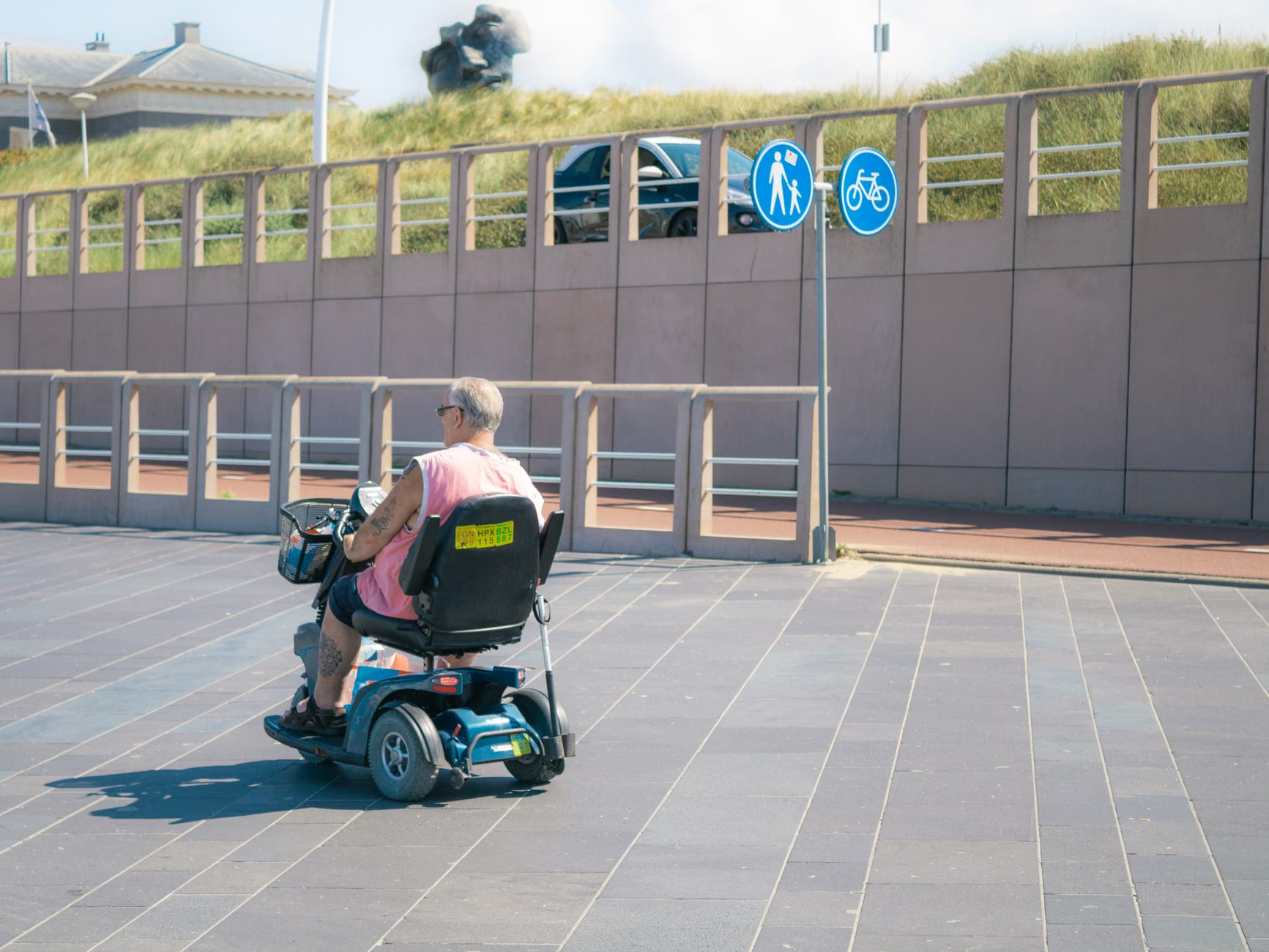
Health Preparation and Safety Considerations
Traveling to historic sites often involves exposure to varying climates and long periods of standing. Preventive care is essential to ensure your trip remains enjoyable rather than exhausting.
Daily Wellbeing Checklist for Villa Tours
- Medication Timing: If you are on a strict medication schedule, ensure your tour window does not conflict with your peak dose times, especially if you need to take medication with food.
- Hydration and Climate: Historic villas can be extremely warm in the summer and drafty in the winter. Carry a portable water bottle and dress in layers.
- Symptom Awareness: If you experience lightheadedness or joint pain, have a pre-planned exit strategy. Identify where the “emergency exit” or “exit to garden” is located as soon as you enter the building.
Note on Professional Care: If you have a chronic condition that requires monitoring, carry a summary document in the local language that includes your primary medications, allergies, and emergency contact information. This is a simple but critical safety measure when traveling abroad.
The Hidden Trade-offs of “Accessible” Modifications
It is important to understand that in many historic villas, “accessibility” is often a retrofitted solution. This means that a ramp may be steeper than modern standards, or an elevator may be located in a service wing, requiring you to take a “back-of-house” route. While this ensures you can reach the destination, it may mean you miss some of the grand entrance architecture or the intended visitor experience. Weigh this trade-off: is the accessibility modification sufficient to keep you safe and comfortable, even if it changes your route through the villa?
Deep Dive: Managing Stamina and Pacing
The “maximum capacity” approach—trying to see as much as possible—is the primary cause of travel-related fatigue among seniors. Instead, adopt a “pacing-first” model. If a villa tour is scheduled for 90 minutes, treat it as a 180-minute commitment. This accounts for the time it takes to navigate the entrance, the tour itself, and the necessary recovery time afterward.
Consider the “split-session” method. If a villa offers both a garden tour and an interior tour, schedule them on different days or with a long lunch break in between. This prevents the “compounding fatigue” that occurs when you push through physical discomfort during the first half of the day, leaving you with little energy for the remainder of your trip.
Financial and Practical Planning
Accessibility often carries a price tag. Private tours, while more expensive, are frequently the most senior-friendly option because they allow for complete control over the pace. When budgeting, factor in the cost of private transport (to avoid public transit walking distances) and potential entrance fees that include “skip-the-line” access. Standing in a queue for 45 minutes can be more physically taxing than the tour itself; paying for priority access is an investment in your stamina.
Conclusion: Your Strategy for Success
Selecting an accessible historic villa tour is a proactive process of information gathering and personal assessment. By prioritizing your own mobility requirements, vetting the “last-mile” logistics, and adopting a pacing-first approach to your itinerary, you can fully enjoy the cultural richness of historic sites without compromising your safety or wellbeing. Start by identifying your “must-see” villas, then reach out to the site’s management directly—not just the booking platform—to get the most accurate, up-to-date information on accessibility features.
Frequently Asked Questions
- How can I verify if a historic villa is truly wheelchair or walker accessible?
Do not rely on online photos. Call or email the villa’s visitor services department directly and ask for the “access guide” or specific dimensions of the narrowest doorways and the gradient of any ramps. If they cannot provide this, assume it may be difficult to navigate. - Should I bring my own mobility aid even if the site says they provide them?
Yes. Rental equipment at historic sites is often limited in number, may not be ergonomically suited to your needs, or might be unavailable during high-traffic periods. Having your own lightweight, foldable aid ensures reliability. - What should I do if I feel overwhelmed or fatigued during a tour?
Always identify the location of the nearest exit or “quiet zone” as soon as you arrive. Do not feel pressured to complete the entire tour; the most important part of the experience is your comfort. If you are with a group, inform the guide early on that you may need to step out or take a slower route.
For further information on international accessibility standards, you can consult resources such as the European Network for Accessible Tourism (ENAT), which provides guidance on inclusive travel practices across various regions.