- The 2026 global standards focus on high-contrast, non-reflective, and larger-font signage to improve navigation for older adults with age-related visual changes.
- Local municipalities will begin rolling out these updates as part of “Age-Friendly City” initiatives, prioritizing high-traffic transit hubs and medical districts.
- You can advocate for better signage in your own community by reporting visibility issues to local public works departments using specific accessibility criteria.
By 2026, a significant shift in urban infrastructure will begin to take hold worldwide. As populations age, international bodies, including the World Health Organization (WHO) and regional transport authorities, have finalized new guidelines for street signage. These standards are not merely about aesthetics; they are a direct response to the need for safer, more inclusive environments that allow older adults to maintain their independence and mobility.
Understanding the 2026 Global Standards for Street Signage
The 2026 standards represent a transition from “standardized” signage to “inclusive” signage. For decades, street signs were designed for the average driver or pedestrian, often overlooking the physiological changes that occur with aging, such as reduced contrast sensitivity, slower processing speeds, and decreased peripheral vision.
The new standards mandate three specific improvements: increased character size, high-contrast color combinations, and the use of non-glare materials. These changes are designed to counteract the natural yellowing of the eye lens and the reduction in pupil size that makes reading small or low-contrast text difficult in bright or dim lighting.

Why These Changes Matter for Your Daily Life
If you have ever felt rushed at a crosswalk or struggled to read a bus schedule in low light, you have experienced the limitations of current signage. The 2026 standards aim to provide you with more “cognitive time.” By making information easier to digest at a glance, the new signs reduce the mental load required to navigate a city, allowing you to focus on your physical safety and surroundings.
| Feature | Old Standard | 2026 Global Standard |
|---|---|---|
| Font Style | Variable (often serif) | Universal Sans-Serif (High legibility) |
| Contrast Ratio | Minimum requirements | High-contrast (e.g., black on white/yellow) |
| Surface Finish | Reflective/Glossy | Matte/Non-glare (prevents bloom) |
The transition to matte, high-contrast signage is the most critical change for those with cataracts or other vision sensitivities, as it eliminates “light bloom”—the halo effect caused by reflected sunlight on glossy surfaces.
Implementation: What to Expect in Your Jurisdiction
The implementation of these standards is not instantaneous. Because infrastructure updates are costly and labor-intensive, most countries are adopting a “phased approach.”
The Phased Rollout Strategy
Most urban centers will prioritize areas with high pedestrian traffic involving older adults. This typically includes:
- Medical Districts: Areas surrounding hospitals and outpatient clinics will be the first to receive upgraded, high-visibility signage.
- Transit Hubs: Major bus, train, and light-rail stations will be retrofitted to ensure that wayfinding is accessible.
- Residential Zones: Neighborhoods with high concentrations of senior housing will see updates as part of regular maintenance cycles.
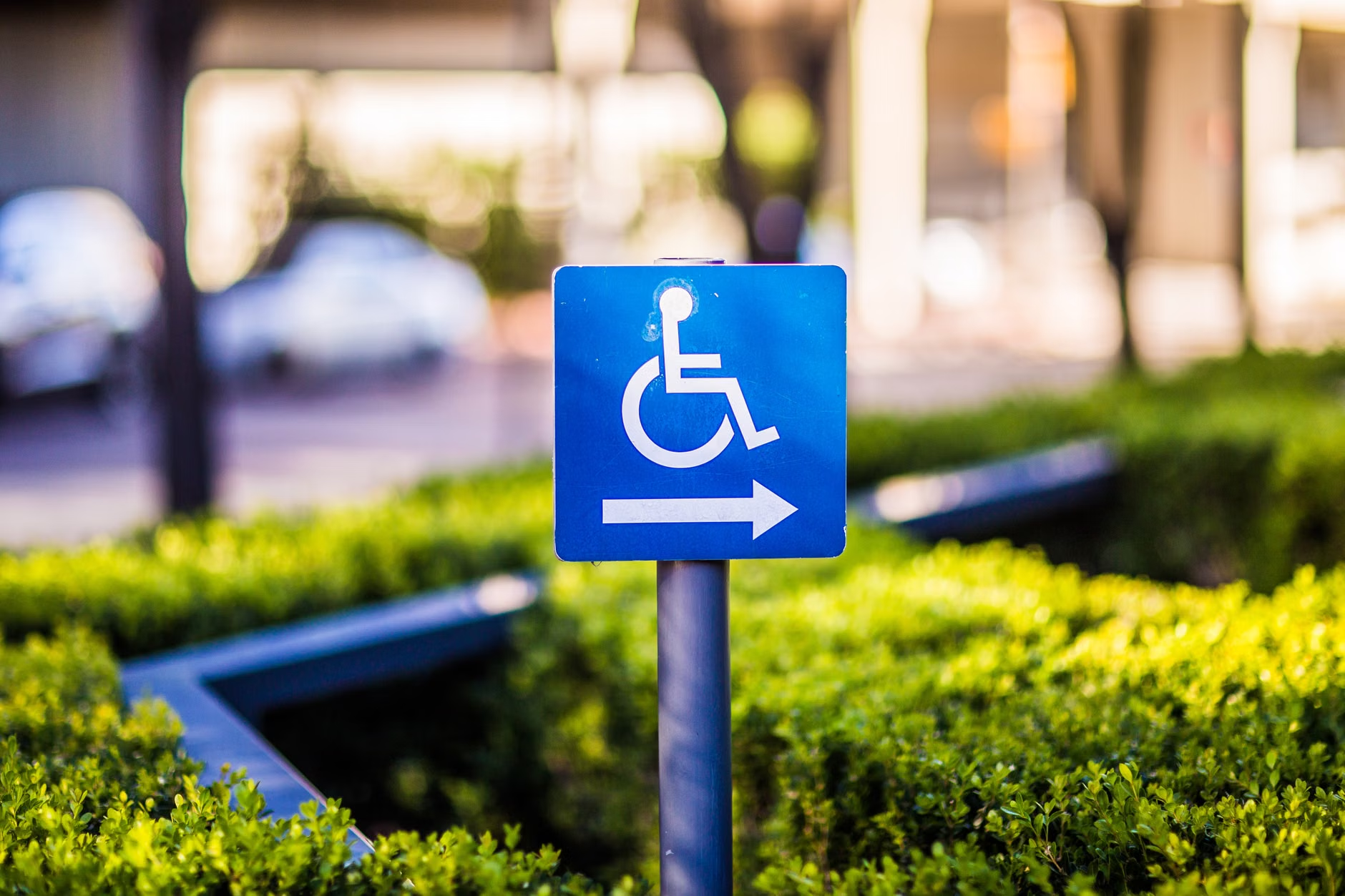
It is important to note that while the standards are global, the enforcement and funding mechanisms differ by country. In the European Union, the “European Accessibility Act” provides a legal framework that mandates these changes in public spaces. In the United States, updates to the Manual on Uniform Traffic Control Devices (MUTCD) are being aligned with these inclusive goals, though implementation relies heavily on state and municipal budgets.
Practical Steps: How to Advocate for Better Signage
You do not have to wait for your city to reach out to you. If you encounter a street sign that is consistently difficult to read, or a crosswalk that lacks clear, high-contrast information, you can take proactive steps to request improvements.
- Identify the Problem: Is the sign too small? Is it blocked by tree branches? Does it reflect too much sunlight? Document the specific issue.
- Locate the Responsible Authority: In most cities, public works or the department of transportation manages signage. Their websites often have a “Report an Issue” portal.
- Use Professional Language: When submitting a request, reference the need for “age-inclusive accessibility” and “high-contrast legibility.” Using these terms signals that you are aware of modern standards.
Many believe that digital apps on smartphones have replaced the need for physical signage. However, reliance on mobile devices can be dangerous for older adults who may need to keep their eyes on the road or sidewalk. Physical signage is a passive safety feature—it provides information without requiring you to stop walking or divert your attention to a small screen.
The Impact on Travel and Mobility
For those who enjoy travel, these global standards will eventually make international cities more welcoming. A standardized approach means that a pedestrian sign in Tokyo will follow similar legibility principles as one in London or New York. This reduces the “cognitive exhaustion” that comes with navigating unfamiliar environments.
When planning trips, look for cities that explicitly state they are part of the “WHO Global Network for Age-friendly Cities and Communities.” These cities are usually the first to adopt the 2026 standards, ensuring that your travel experience is focused on enjoyment rather than the stress of navigation.
Maintaining Your Personal Visual Health
While infrastructure is evolving to accommodate us, it remains vital to manage your own visual health. The 2026 standards are designed to assist, not replace, regular eye exams. Ensure you are scheduling annual comprehensive eye exams that check for age-related macular degeneration, glaucoma, and cataracts.
Practical Tip: If you find yourself frequently struggling with street signs, it may be a sign to update your prescription or discuss contrast-enhancing eyewear with your optometrist. Always keep a current list of your medications and any vision-related conditions in your wallet or on your phone in case of an emergency.
Conclusion: A More Accessible Future
The 2026 global standards for street signage represent a victory for inclusive urban design. By prioritizing readability and contrast, cities are acknowledging that the built environment should serve all citizens, regardless of age. By staying informed about these changes and advocating for their implementation in your community, you are contributing to a safer and more accessible world for everyone.
Frequently Asked Questions (FAQ)
1. Will these new signs be installed everywhere at once?
No. The rollout is phased. Cities will prioritize high-traffic areas, medical districts, and transit hubs before moving to residential streets. Expect to see these changes appear during scheduled maintenance or new construction projects.
2. How can I confirm if my local city is adopting these 2026 standards?
Visit your city or municipal government’s website and search for “Age-Friendly City action plan” or “pedestrian accessibility master plan.” These documents usually outline the city’s commitment to following current international standards for signage and infrastructure.
3. Are these standards mandatory for private property?
Generally, these standards apply to public rights-of-way and public infrastructure. However, many private commercial areas (like shopping malls or large office complexes) voluntarily adopt these standards to improve customer experience and reduce liability, as better signage makes their locations more accessible to a wider demographic.
For further reading on global age-friendly initiatives, visit the World Health Organization’s Age-Friendly World portal.