- The “Two-Bag Rule”: Limit yourself to one lightweight carry-on (under 10kg) and one small personal item to maintain independence during transfers.
- Prioritize Spinner Wheels: Four-wheeled 360-degree spinner luggage reduces physical strain on shoulders and wrists, making platform navigation significantly safer.
- Strategic Packing: Use modular packing cubes to keep essentials accessible, ensuring you don’t need to rummage through your bag while on the move.
The success of a multi-modal rail journey—where you might transition from a high-speed train to a local metro, a bus, or a station elevator—relies almost entirely on your ability to manage your luggage. For travelers aged 60 to 80, the goal is to eliminate the physical burden of heavy lifting, which allows for greater stamina and a more relaxed, enjoyable travel experience.
The Physics of Packing: Why Weight Distribution Matters
When you are 65, the strain of hauling a 20kg suitcase through a crowded station isn’t just about fatigue; it is about balance and joint health. The human body’s center of gravity shifts when pulling heavy, unbalanced loads, which increases the risk of tripping or losing footing on uneven platform surfaces.
What it is: Packing light for rail travel means adopting a “modular” approach. Instead of one massive suitcase, you split your belongings into smaller, manageable units that can be handled individually.
Why it matters: Rail travel often involves stairs, gaps between the platform and the train, and narrow corridors. A heavy suitcase is a liability in these spaces. By keeping your total weight under 12-15kg, you ensure that you can lift your own bag when necessary, maintaining your autonomy without needing to rely on strangers or staff.
What you can do: Start by weighing your empty luggage. Many modern hard-shell bags weigh 4kg alone. Aim for a lightweight carry-on (approx. 2.5kg empty). If you cannot lift your fully packed bag to shoulder height, you are carrying too much. This is a simple, non-negotiable safety test for any solo or couple traveler.
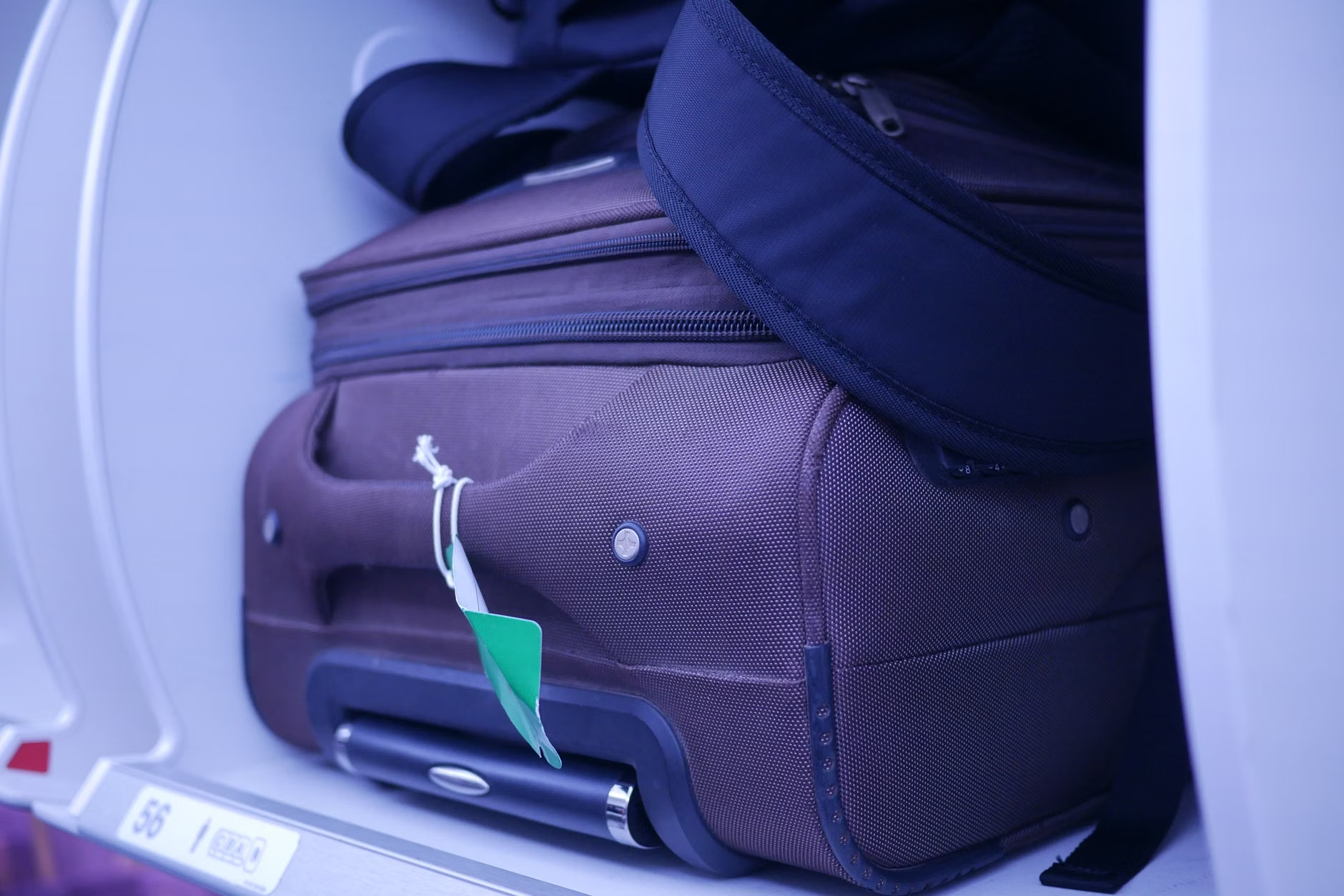
Selecting the Right Luggage for Multi-Modal Transfers
Not all luggage is created equal. For older adults, the mechanics of the suitcase are just as important as the capacity. When navigating transitions between trains, you need equipment that requires minimal force to maneuver.
The Case for Four-Wheeled Spinners
Traditional two-wheeled suitcases require you to tilt the bag, putting significant torque on your wrist and shoulder. A four-wheeled spinner suitcase allows the bag to roll upright alongside you. This reduces the strain on your joints and allows you to keep your posture straight, which is crucial for maintaining balance.
The “Two-Bag” Hierarchy
We recommend a specific configuration for rail travel:
| Bag Type | Purpose | Weight Target |
|---|---|---|
| Carry-on Spinner | Clothing, toiletries, bulky items. | 8kg – 10kg |
| Crossbody Personal Bag | Documents, medication, phone, charger. | 1.5kg – 2kg |
Why this works: The crossbody bag ensures your critical items—passport, tickets, and essential medications—are always attached to your body. You never have to worry about leaving a bag behind on a train seat when you rush to disembark. The spinner bag, meanwhile, is your secondary unit that stays within your sight at all times.
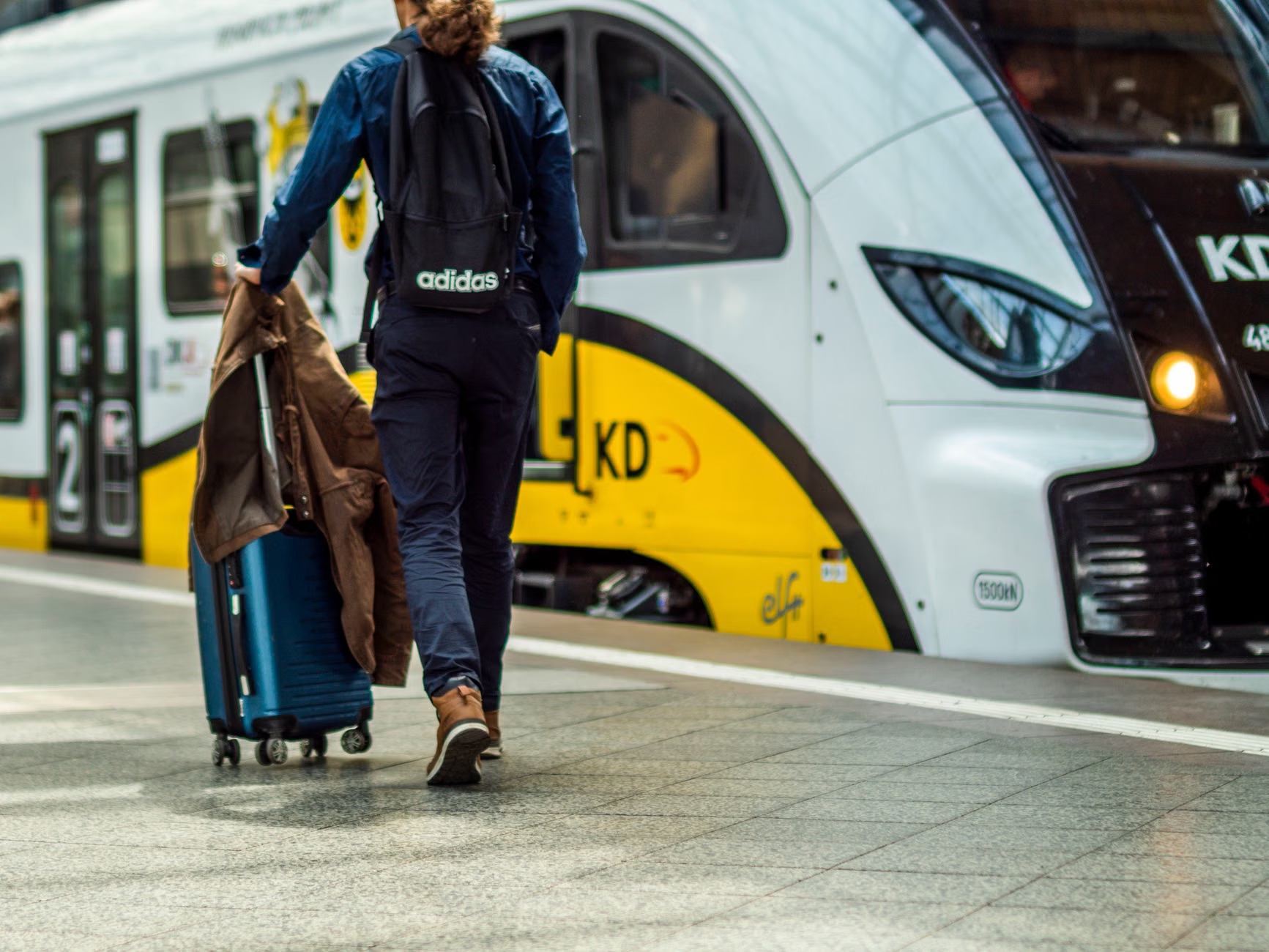
Strategic Packing: The “Ready-to-Move” Method
The biggest mistake travelers make is “top-loading” their bags, where they have to unpack everything to find one item. This is a recipe for stress during a 5-minute station transfer.
Use Modular Packing Cubes
Packing cubes act as drawers for your suitcase. If you need to find your sweater, you pull out one cube rather than turning your entire suitcase inside out. This keeps your belongings contained, which is vital if you are staying in smaller rail-side hotels with limited floor space.
The “Top-Layer” Rule
Always pack your most frequently used items (a light jacket, a water bottle, your train ticket) in the top compartment or a specific pocket of your carry-on. If you are ever forced to check your luggage or place it in a luggage rack at the end of a train carriage, you must have your essentials in your personal crossbody bag.
Insight: Many older travelers worry about having “enough” clothes. However, rail travel often takes you through urban centers where laundry services are readily available. Packing for 5 days of clothing—regardless of the trip length—is a standard rule of thumb for experienced travelers. You can wash items as you go, which keeps your load consistently light.
Rail stations are dynamic, often chaotic environments. Your packing strategy should be dictated by the infrastructure you are likely to encounter.
The Elevator vs. Escalator Dilemma
Always look for elevators in large transit hubs. While escalators are convenient, they can be hazardous with luggage if the steps are narrow or if there is a sudden stop. If you must use an escalator, keep your bag in front of you, not behind. If you are using a four-wheeled spinner, ensure you lock the wheels or keep a firm grip on the handle to prevent the bag from rolling away.
The “Gap” Awareness
In many regions (such as the UK, parts of Europe, and Japan), there is a significant gap between the train and the platform. If you are traveling with a suitcase, step onto the train first, then pull the suitcase after you. Do not try to carry the suitcase while stepping across the gap. This prevents over-extending your reach and protects your lower back.

Managing Medication and Health Records
When traveling by rail, you are in transit for hours. Your health management should be seamless.
- Medication Portability: Keep all prescription medications in their original packaging. Carry a list of your medications, including dosages, in your wallet or a dedicated pocket in your crossbody bag.
- Hydration and Nutrition: Rail travel can be dehydrating. Carry a reusable water bottle that fits into a side pocket of your personal bag. Avoid relying on station food, which can be high in sodium and unpredictable in availability.
- Documentation: If you have specific mobility needs, keep a digital or printed copy of your seat assignment, which often indicates proximity to exits or accessible areas.
Planning for the “Last Mile”
The “last mile” is the distance from the station to your accommodation. Even if you have packed light, this is where fatigue often sets in. If you are traveling in a city with cobblestones or uneven pavements, a suitcase with larger, more durable wheels is essential. Small, plastic wheels often get stuck in street cracks, which can cause a sudden jolt to your wrist.
Decision Rule: If you are traveling to a destination with known rough terrain (e.g., historic European city centers), consider a backpack with wheels or a high-quality duffel that can be carried if necessary. Always check the distance to your hotel on a map app before booking. If it is more than 800 meters, budget for a local taxi or ride-share service. It is a small cost for significantly reduced physical strain.
Advanced Tips for Multi-Modal Comfort
Beyond the luggage itself, your clothing choices play a role in your comfort during rail transfers. Wear layers. Trains can fluctuate between being freezing (due to air conditioning) and overly warm. A light, merino wool cardigan or a technical windbreaker is more versatile than a heavy coat.
Furthermore, consider your footwear. You will be walking through stations, boarding trains, and potentially navigating platforms. Wear supportive, broken-in walking shoes with non-slip soles. This is the single most effective way to prevent falls in station environments.
If you are traveling in a country with a complex rail system—such as Germany’s DB or Japan’s JR—research the station layout online beforehand. Most major rail websites now provide maps that highlight elevators and accessible routes. Knowing where the elevator is before you step off the train saves you from unnecessary walking with your luggage.
Conclusion: The Freedom of Simplicity
The secret to enjoyable rail travel as you age is not about how much you can carry, but how little you need to worry about your belongings. By limiting your luggage to a manageable, high-quality spinner suitcase and a secure personal bag, you regain the freedom to move through stations at your own pace. Preparation, strategic packing, and an awareness of your own physical limits are the keys to a successful trip. Focus on the journey, not the gear, and you will find that rail travel remains one of the most accessible and rewarding ways to see the world.
Frequently Asked Questions (FAQ)
1. How do I know if my luggage is too heavy for a rail trip?
A simple test is the “overhead bin test.” If you cannot lift your suitcase above your head in one smooth motion, it is too heavy for multi-modal travel. On trains, you may need to place your bag in overhead racks or behind seats. If you cannot lift it, you will be dependent on others, which compromises your independence.
2. What should I do if the station elevator is out of order?
Always check the station’s official website or app for “accessibility alerts” before you leave. If you arrive and the elevator is broken, do not attempt to carry a heavy bag up the stairs alone. Find a member of the station staff; they are trained to assist travelers with luggage or mobility needs. If no staff is present, wait for a fellow traveler and politely ask for assistance with the suitcase only.
3. Are hard-shell or soft-shell suitcases better for seniors?
Hard-shell suitcases are generally better for protecting your belongings and are often lighter than older soft-shell designs. However, choose one with a high-quality polycarbonate shell, which is flexible and less likely to crack. Soft-shell bags can be easier to squeeze into tight overhead bins, but they often lack the 360-degree stability of modern hard-shell spinners. For rail travel, the four-wheeled spinner mechanism is the most important feature regardless of the shell material.
For further information on accessible rail travel, consult the official guidance provided by your national rail operator or international resources such as the The Man in Seat 61, which provides comprehensive advice on station accessibility and train travel worldwide.