- Cognitive Engagement: Strategy games provide “cognitive reserve” by challenging executive functions like planning, memory, and pattern recognition.
- Social Health: Incorporating face-to-face games combats isolation, a critical factor in long-term mental wellbeing.
- Sustainability: The best cognitive workout is one you enjoy consistently; variety and moderate difficulty are more effective than high-intensity, sporadic mental tasks.
Understanding the Cognitive Value of Strategy Games
For adults aged 60 to 80, the pursuit of cognitive fitness is often compared to maintaining physical fitness. Just as we use resistance training to maintain muscle mass, strategy games serve as a form of “neural resistance training.” These games—ranging from classic chess and card games to modern tile-based logic puzzles—require the brain to engage in complex executive functions.
Executive function is a set of mental processes that include working memory, flexible thinking, and self-control. When you play a strategy game, you are not just “passing time.” You are actively managing multiple variables: anticipating an opponent’s move, adjusting your long-term plan based on new information, and suppressing impulsive reactions. This constant toggling between analytical modes is what keeps the brain’s “cognitive reserve” robust.
Why Strategy Games Outperform Passive Entertainment
It is important to distinguish between “active” cognitive leisure and “passive” consumption. Watching television or reading a static text requires information processing, but it rarely demands the active, recursive problem-solving found in strategy games. In a game, the environment changes based on your input, creating a feedback loop that forces the brain to adapt.
The Mechanism of Change:
- Anticipation: You must predict the consequences of your current choice three or four steps ahead.
- Inhibition: You must resist the urge to make a “good” move that leads to a “bad” long-term outcome.
- Adaptation: When an opponent makes an unexpected move, your initial strategy must be discarded or modified instantly.
This process stimulates neuroplasticity—the brain’s ability to reorganize itself by forming new neural connections. While no game can “cure” or prevent neurodegenerative conditions on its own, maintaining an active, stimulated mind is a recognized component of a healthy lifestyle that supports brain health as we age.
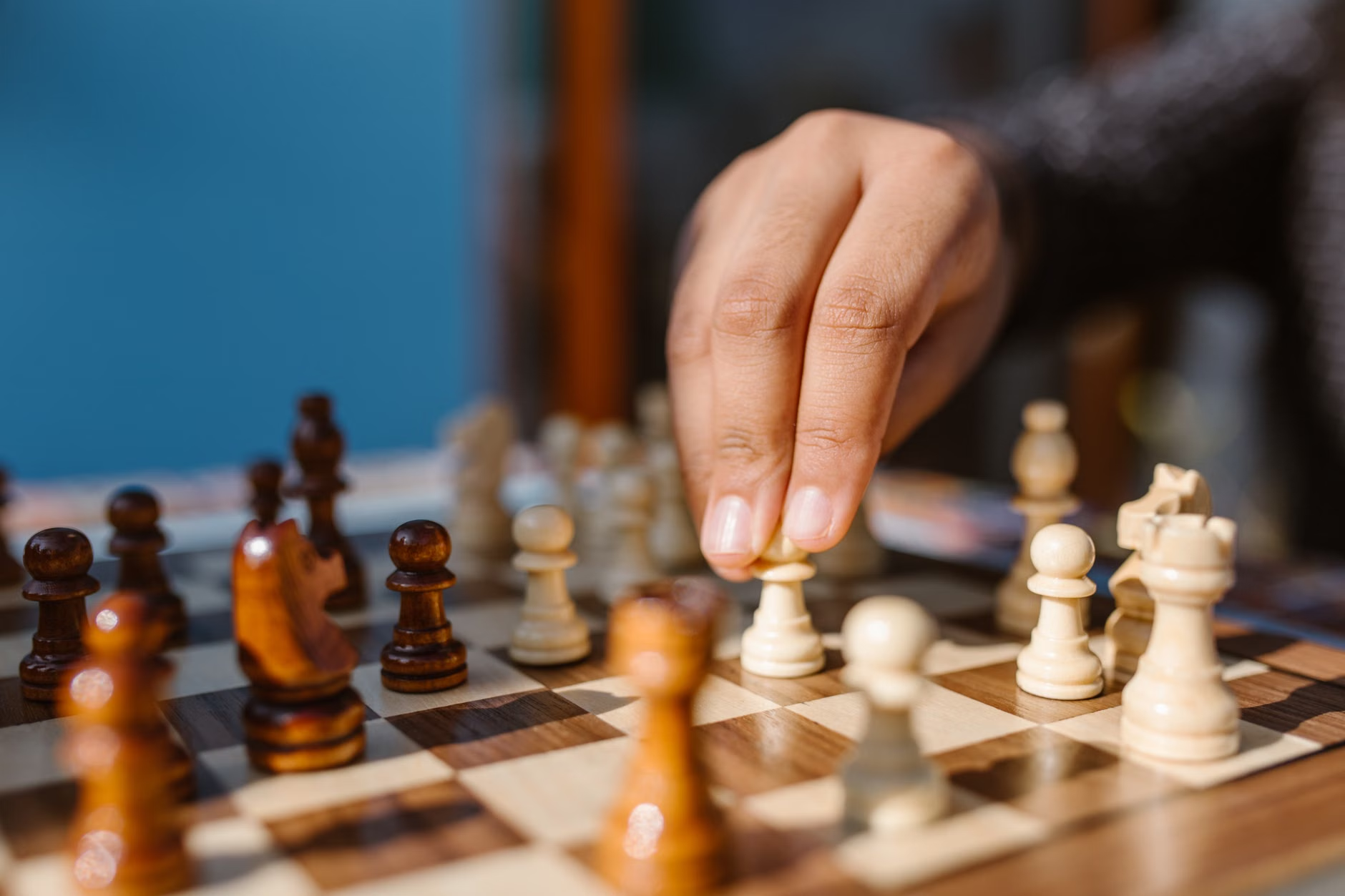
Selecting the Right Game for Your Cognitive Goals
Not all games offer the same cognitive benefits. The key is to find a game that sits in the “Goldilocks zone”—challenging enough to be difficult, but not so complex that it becomes a source of frustration. Frustration can lead to cortisol spikes, which are counterproductive to cognitive health.
| Game Category | Primary Cognitive Focus | Social Element | Learning Curve |
|---|---|---|---|
| Classic Chess/Checkers | Long-term planning & spatial reasoning | High (1-on-1) | Steep |
| Contract Bridge/Whist | Memory & partnership communication | High (Group) | Moderate/Steep |
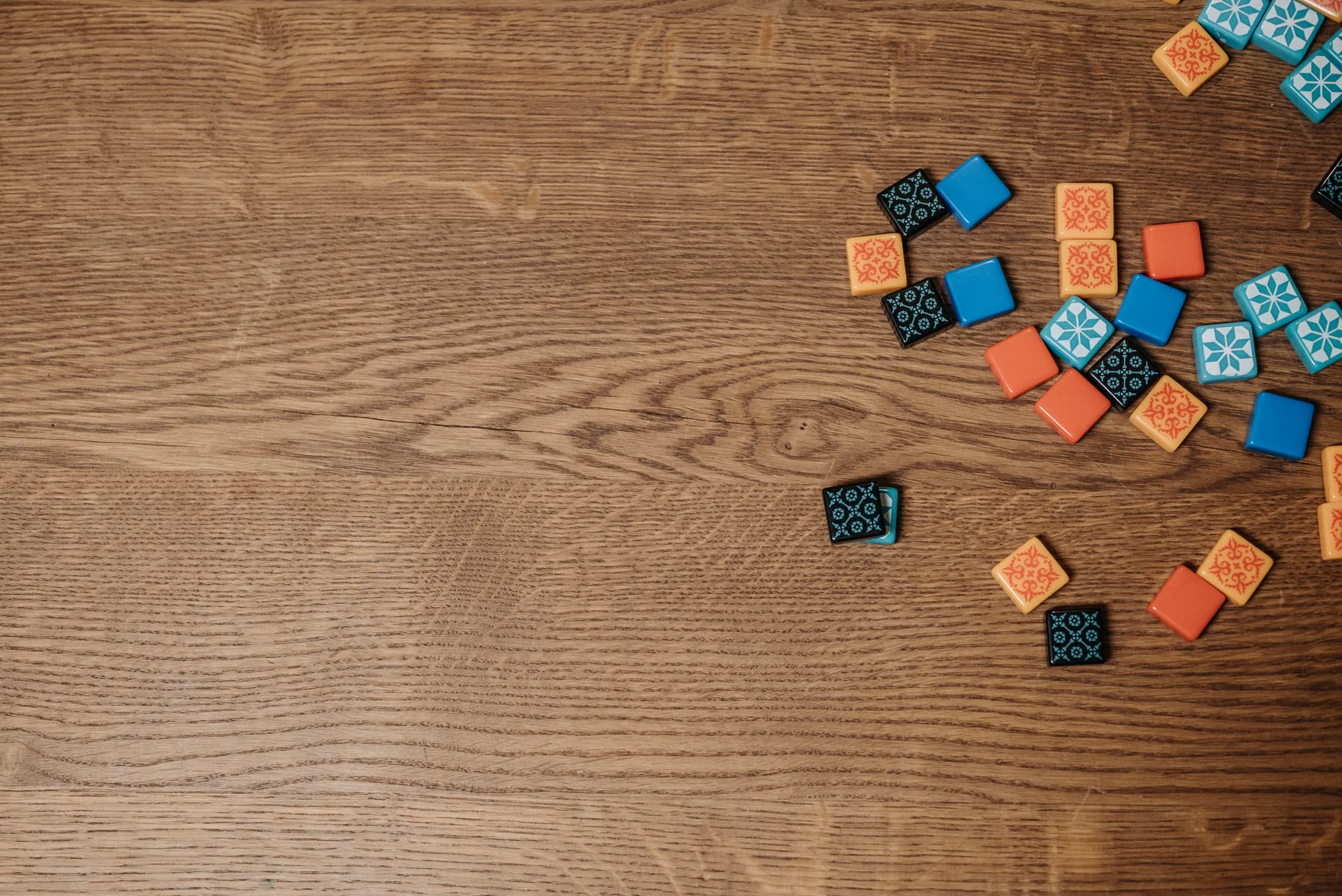
| Tile-Placement Games | Pattern recognition & risk assessment | Moderate/High | Low |
| Digital Logic Puzzles | Abstract reasoning & focus | Low | Low |
How to choose: If you are looking for social interaction, prioritize Bridge or group-based tile games. If you prefer solo analytical work, digital logic puzzles or chess engines are ideal. If you have mobility concerns or fatigue, digital formats allow you to play from a comfortable position at your own pace.
The Role of Social Interaction in Cognitive Games
One of the most overlooked variables in cognitive health is social isolation. Research consistently shows that social engagement is an independent predictor of cognitive health in older adults. When you play a game with others, you are performing a “dual-task”: you are managing the game strategy while simultaneously managing social cues, conversation, and emotional regulation.
This dual-tasking is significantly more demanding on the brain than playing alone. In a real-life scenario, an older adult playing a card game in a community center must remember the rules of the game, track what cards have been played, and converse with partners. This combination of social presence and cognitive load provides a comprehensive workout for the brain.
Practical Steps to Incorporate Strategy Games into Your Routine
To gain the most benefit, consistency is more important than intensity. You do not need to spend six hours a day playing games to see benefits. In fact, short, focused sessions are often more effective at keeping the mind sharp without leading to burnout.
- Start with a “Discovery” Week: Try a variety of games. Do not commit to a complex game like Bridge immediately. Spend one week trying simple logic puzzles, one week with classic board games, and one week with card games.
- Set a Realistic Schedule: Aim for 30 to 45 minutes, three to four times a week. This prevents fatigue and keeps the activity feeling like a pleasure rather than a chore.
- Join a Community: Check your local library, community center, or senior center for game nights. If you prefer online play, use reputable platforms that allow for chat, which helps maintain the social aspect.
- Monitor Your Response: If you find yourself consistently feeling stressed or anxious during a game, it may be too difficult or the environment may be too high-pressure. Switch to a lower-stakes game.
Addressing Potential Barriers: Mobility and Technical Confidence
For some, physical limitations or digital barriers can make accessing these games difficult. It is important to remove these friction points to ensure the hobby remains sustainable.
Physical Adaptations
If you have arthritis or limited hand dexterity, look for games with larger pieces or magnetic boards. Many card games can be played with card holders or “hands-free” stands. If you are playing digitally, tablets (like an iPad or Android tablet) are often easier to use than computers because they allow for direct touch interaction, which is more intuitive for many people than using a mouse.
Digital Literacy
If you are intimidated by digital games, start with simple, single-purpose apps. Avoid games that require complex account setups or frequent updates. Many tablets have “accessibility settings” that can increase font size, contrast, and touch sensitivity. Ask a family member or a librarian to assist you in setting up the device once—you rarely need to change these settings once they are configured to your preference.

The Hidden Trade-offs: What to Watch For
While the benefits are clear, there are nuances to consider. Some digital games are designed with “dark patterns”—features like constant notifications, “daily streak” rewards, or micro-transactions—designed to keep you addicted rather than stimulated. These are not cognitive games; they are dopamine loops. A healthy cognitive game should be something you can walk away from easily.
Additionally, beware of “brain training” apps that promise to “reverse aging” or “boost IQ.” There is no scientific consensus that these specific commercial apps are superior to playing a standard game of chess or cards. In fact, standard games have the added benefit of being culturally rich, socially interactive, and essentially free.
Conclusion: Prioritizing Enjoyment for Long-Term Success
The most effective strategy game is the one you actually enjoy. If you force yourself to play chess but find it tedious, you will eventually stop. If you find joy in the social banter of a bridge club or the quiet satisfaction of a daily crossword, those are the activities that will stick. Your goal should be to create a sustainable habit of mental engagement that complements your physical health, social life, and daily routine.
By shifting your perspective on “leisure” to include these forms of active cognitive engagement, you are investing in your long-term independence. Start small, prioritize social connection where possible, and always choose games that bring you a sense of accomplishment rather than frustration.
Frequently Asked Questions
1. Does it matter if I play strategy games alone or with others?
Both have benefits, but they serve different purposes. Playing with others provides the added cognitive benefit of social interaction, which is vital for mental health. Playing alone is excellent for deep focus and can be easier to fit into a flexible schedule.
2. How do I know if a game is “too hard” for me?
A game is likely too hard if you find yourself feeling consistently frustrated, anxious, or if you feel a sense of dread before playing. The goal is to reach a state of “flow”—where you are challenged but still enjoying the process. If you feel this way, look for a simpler version of the game or a different game entirely.
3. Are there any specific games that are better for memory?
Games that require you to track information over time, such as Bridge, Whist, or memory-matching card games, are excellent for working memory. However, any game that requires you to remember rules, strategies, or previous moves contributes to cognitive maintenance.
For further reading on cognitive health and aging, you may consult the National Institute on Aging (NIA), which provides comprehensive resources on maintaining brain health through lifestyle choices.