- 2026 Standardization: Many major transit authorities are moving toward uniform, high-contrast, and digital-first priority seating identification to reduce confusion.
- Active Enforcement: Expect more automated monitoring systems and clearer reporting channels for when priority seats are occupied by non-eligible passengers.
- Digital Accessibility: Real-time apps now integrate “accessibility status” for specific vehicles, allowing you to check if a bus or train has available priority space before you arrive at the stop.
Introduction: The Changing Landscape of Public Transit
As we move through 2026, public transit systems worldwide are undergoing a significant shift in how they manage, signpost, and enforce priority seating. For older adults, these changes are not merely administrative; they are central to maintaining independence, managing physical stamina, and ensuring safe travel across urban environments. Understanding these updates is essential for planning your daily errands or leisure travel with confidence.
The core objective of the 2026 transit upgrades is to remove the “guesswork” from public transport. Previously, priority seating rules were often ambiguous, relying on social etiquette that varied wildly between cities. New international standards are shifting toward explicit, high-contrast visual cues and, in some jurisdictions, digital integration that allows passengers to anticipate the availability of seating before the vehicle even pulls into the station. This article details these updates, how they affect your daily commute, and how you can advocate for your needs when traveling.
Understanding the 2026 Priority Seating Framework
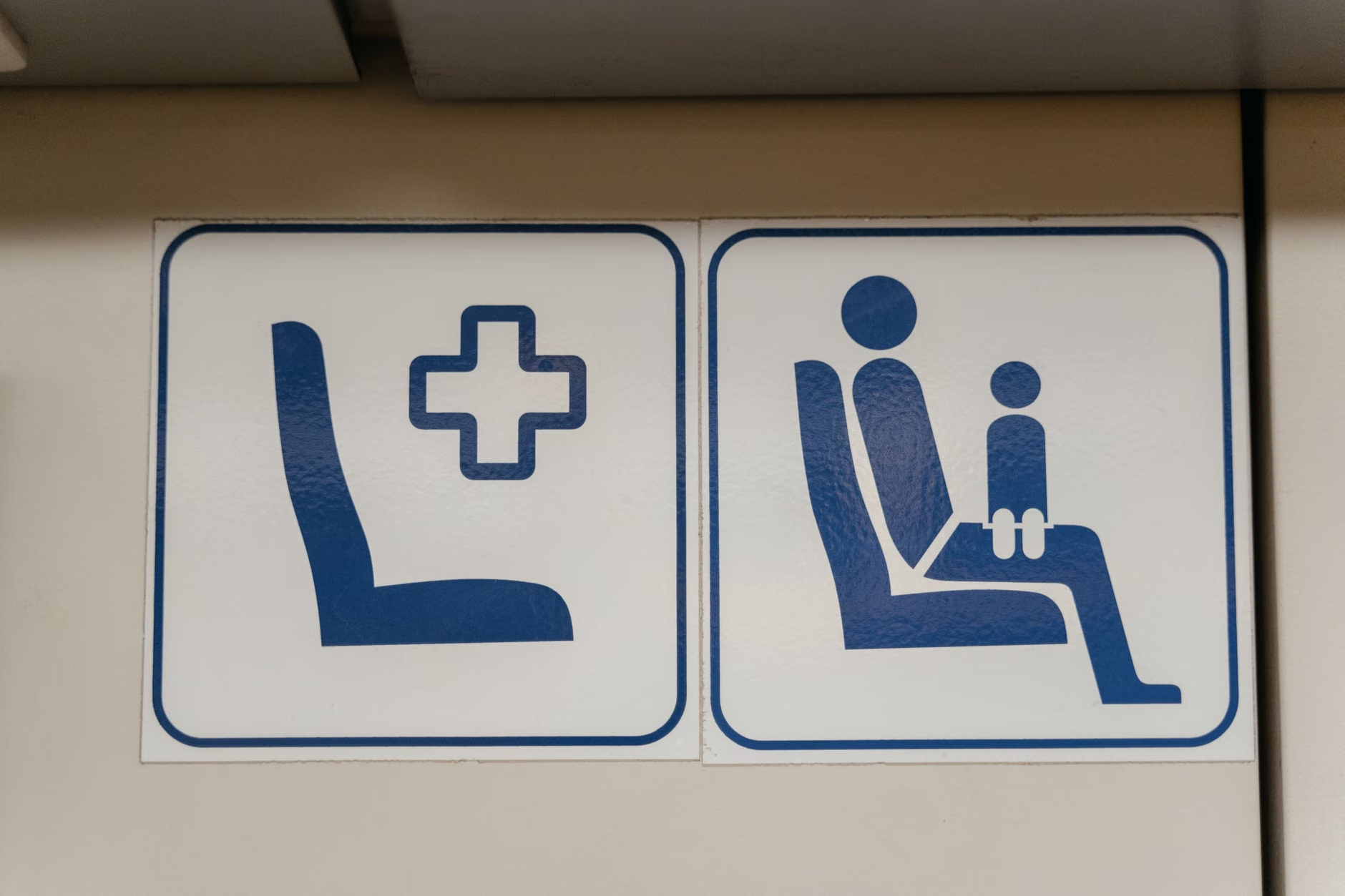
In 2026, the concept of “priority seating” is being redefined. It is no longer just a sticker on a seat; it is a comprehensive service model. Most major metropolitan transit authorities are now adopting a three-tier approach to accessibility:
- Physical Signage: High-contrast, color-coded seating areas that are easily identifiable even for those with visual impairments.
- Digital Integration: Real-time data feeds that indicate the “crowdedness” of specific carriages, allowing travelers to choose less congested boarding points.
- Policy Enforcement: Clearer guidelines on who qualifies for priority seating, often removing the “invisible disability” stigma by emphasizing “need over age.”
Why These Changes Matter for Your Daily Routine
For individuals aged 60 to 80, the primary challenge of public transit is often not the distance to the station, but the uncertainty of the journey. Will there be a seat? Will I have to stand in a moving, jerky bus? The 2026 updates address these anxiety-inducing variables. By standardizing the signage, authorities are reducing the social friction that often occurs when someone needs to ask for a seat. When the rules are clearly displayed, the burden of “asking” is replaced by the expectation of “compliance.”
Global Variations: A Comparative Look at 2026 Policies
While the goal of accessibility is universal, the implementation differs by region. It is important to recognize that what you experience in London may differ significantly from what you encounter in Singapore, New York, or Berlin.
| Region | Primary 2026 Focus | Key Mechanism |
|---|---|---|
| European Union | Universal Design Standards | Mandatory acoustic and visual alerts for all new fleet vehicles. |
| North America | Digital Real-Time Monitoring | App-integrated occupancy sensors for priority zones. |
| East Asia | Social & Cultural Awareness | Enhanced public information campaigns and automated priority seat reminders. |
Understanding the Table: If you are traveling within the European Union, look for the “Universal Design” logo on transit maps; these routes are guaranteed to meet the highest accessibility criteria. In North America, prioritize downloading the local transit app, as it is your best tool for avoiding crowded vehicles. In East Asia, be aware that automated announcements are the primary tool for encouraging seat vacancy, and these are now being updated to be more frequent during peak hours.

Knowing the policy is one thing; applying it to your day is another. Here is a step-by-step approach to utilizing the 2026 priority seating infrastructure effectively.
1. Pre-Trip Preparation: The Digital Check
Before leaving home, check your local transit provider’s official website or app. Many cities now include an “Accessibility Status” feature. Look for icons that represent “Low Occupancy” or “Priority Seats Available.” If you find that a specific train line is consistently crowded during your preferred travel time, consider adjusting your departure by 15–20 minutes to avoid the morning or evening rush.
2. Identifying the “Gold Standard” Seats
In 2026, look for the “High-Contrast Zone” markings. These are typically located near the doors for easy boarding and exiting. Unlike older, faded stickers, these are often integrated into the upholstery or flooring color, making them impossible to miss. If you are ever unsure whether a seat is a priority seat, look for the wall-mounted signage directly above the seat, which in 2026 is required to be at eye level for a seated passenger.
3. Managing Social Dynamics
One of the most common mistakes travelers make is hesitating to ask for a seat when all priority spots are taken by non-eligible passengers. Remember that in 2026, most transit authorities have updated their “Code of Conduct” to support passengers who request a seat for health or mobility reasons. You do not need to disclose your specific medical condition; a simple, polite, “Excuse me, I have difficulty standing, could I please have this priority seat?” is usually sufficient and aligns with the new, more assertive public transit policies.
Safety and Stamina: Beyond the Seat
While priority seating is critical, your overall stamina depends on the entire journey. In 2026, many transit hubs have introduced “Resting Points” between platforms. These are not just benches; they are designated areas with higher-back seating and lower-level lighting to reduce sensory fatigue. When planning a trip involving transfers, check the station map for these “Resting Points.”
If you have mobility aids, such as a cane or a folding walker, ensure that you position yourself near the “Level Boarding” zones. In 2026, these zones are increasingly marked with blue floor lighting to indicate that the gap between the platform and the vehicle is minimized. Always aim for these sections, as they significantly reduce the physical strain of boarding.
Addressing Hidden Inconveniences: What to Watch For
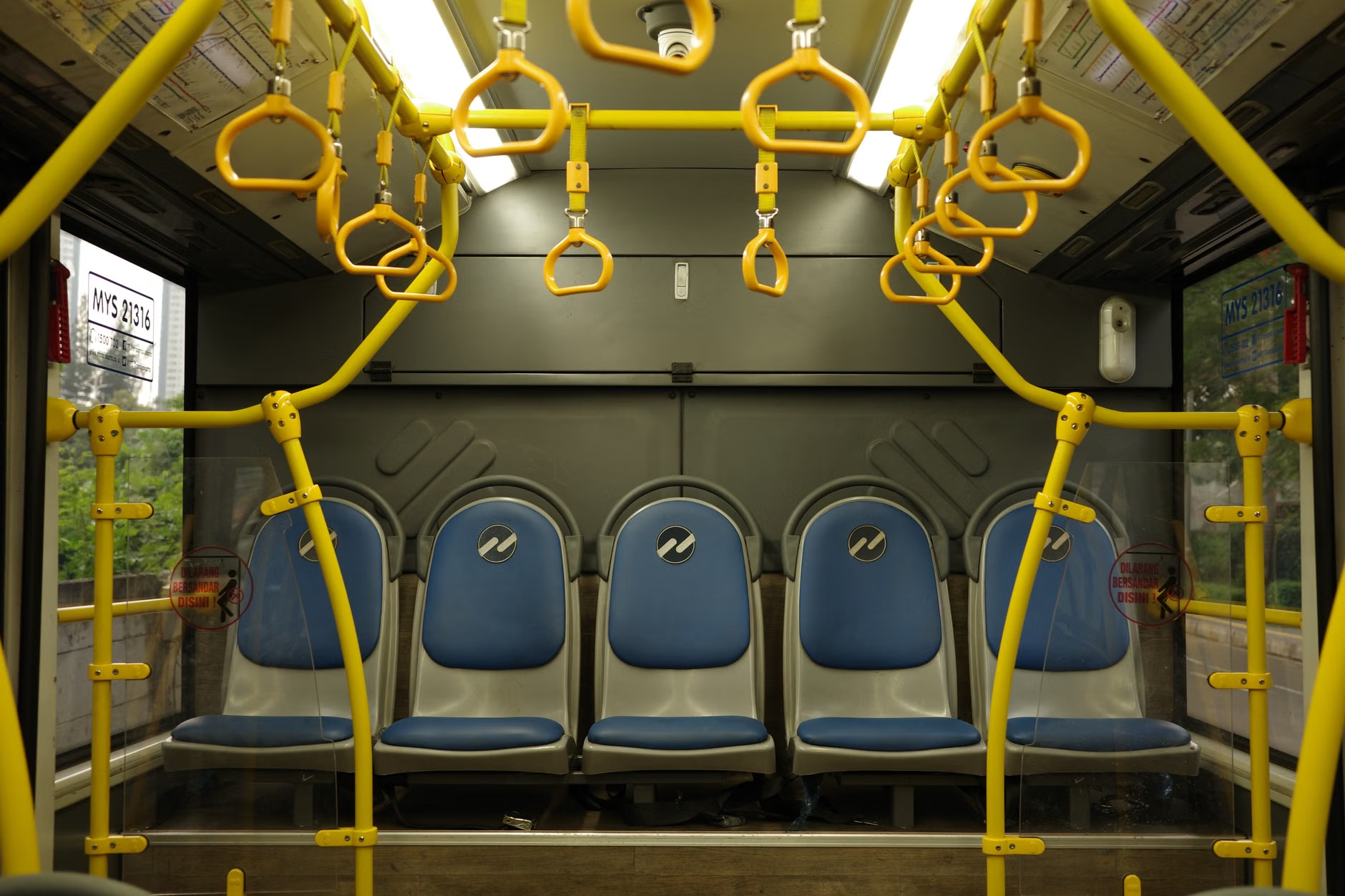
Even with the best policies, there are “hidden” variables that can impact your experience. One such issue is the “Express vs. Local” service discrepancy. In many major cities, Express trains or buses are often more crowded and have fewer priority seats per carriage compared to local lines. If your journey allows for it, choosing a local service—even if it takes five minutes longer—can be a strategic choice for your comfort and stamina.
Another overlooked variable is the “Maintenance Gap.” Occasionally, a vehicle will be in service, but its digital signage or automated announcements may be malfunctioning. In such cases, do not assume that the lack of electronic guidance means the priority seating policy is suspended. The physical signage (stickers, floor markings, and upholstery colors) remains the legal standard. If you encounter a lack of compliance, focus on the physical markers to identify your seat.
Advocacy and Reporting: Making Your Voice Heard
The 2026 updates are a living framework. If you encounter a situation where priority seating is consistently ignored or if the signage is obscured, you have the right to report it. Most transit authorities have moved their reporting systems to mobile-friendly web forms. When reporting, be sure to note:
- The exact time and date.
- The vehicle number (usually found on the inside wall near the door).
- The nature of the issue (e.g., “Priority signage obscured,” “Persistent overcrowding in priority zone,” or “Lack of clear floor markings”).
Reporting is not just about complaining; it provides the data that city planners use to allocate funding for future accessibility upgrades. Your feedback is a vital part of the system’s improvement.
Conclusion: Empowering Your Future Travel
The 2026 transit landscape is designed to be more inclusive and transparent. By leveraging the new digital tools, understanding the standardized physical markers, and being prepared to advocate for your needs, you can maintain your mobility and confidence. Public transit is a public service that you have every right to use comfortably and safely. As these policies continue to evolve, staying informed will ensure that your travel remains a source of connection and independence rather than stress.
Remember, the goal of these updates is to normalize the use of priority seating. You are not “taking” a seat that someone else might need more; you are utilizing a facility that has been specifically designed, reserved, and optimized for your comfort and safety. Travel with the confidence that the system is intended to work for you.
Frequently Asked Questions (FAQ)
1. Does the 2026 priority seating policy apply to all passengers with health conditions, or only those over a certain age?
Most 2026 transit policies define eligibility based on “need” rather than strictly by age. This includes older adults, pregnant women, people with visible mobility aids, and individuals with “invisible” conditions. You are generally entitled to request these seats if standing causes you discomfort, pain, or a risk of falling, regardless of your exact age.
2. What should I do if a priority seat is occupied and the passenger refuses to move?
If you are in a situation where a passenger refuses to yield a priority seat, try to remain calm. You can politely reiterate your request. If they continue to refuse, look for a transit staff member or use the intercom system if you are on a train. If you are on a bus, the driver is often authorized to remind passengers of the priority seating rules. Never put yourself in a position of physical conflict; if the vehicle is too crowded, it is often safer to wait for the next bus or train.
3. Are these 2026 updates universal across all countries?
No, these updates are being implemented on a city-by-city or national basis. While there is a strong global trend toward better accessibility, the specific rules, signage, and digital tools will vary. Always check the official website of the transit authority in the city you are visiting before your trip to understand their specific 2026 accessibility guidelines.
Official resources for transit accessibility (examples):