Key Takeaways
- Infrastructure Expansion: By 2026, many global cities are prioritizing “rest-stop” infrastructure to ensure that public spaces are navigable for individuals with varying levels of stamina.
- Design Standards: New bench installations are mandated to include armrests, back support, and specific height requirements to assist with sitting and standing.
- Strategic Planning: Local councils are now using “pedestrian mapping” to place seating at intervals of 100 to 200 meters, directly supporting those with mobility limitations.
As urban centers across the globe prepare for an aging demographic, the year 2026 marks a pivotal shift in public infrastructure planning. The “Age-Friendly Bench Initiative” is moving from a niche urban design concept to a core requirement for city planners. This initiative is not merely about adding seats to sidewalks; it is about re-engineering the urban environment to support independent mobility for adults aged 60 to 80.
Understanding the 2026 Age-Friendly Bench Mandate
For many older adults, the ability to walk to a local shop, a park, or a transit station is the primary indicator of independence. However, chronic conditions such as arthritis, respiratory issues, or simple fatigue can make long, uninterrupted walks daunting. The 2026 mandate focuses on “rest-linked mobility.”
What this means in practice is that city councils are moving away from decorative, uncomfortable street furniture toward standardized, functional seating. In many jurisdictions, this includes a legal requirement that seating must be placed within a specific distance of pedestrian crossings, transit stops, and public buildings.
Why Seating Design Matters
A bench is not just a bench. When designing for an older population, specific ergonomic factors become critical. An “age-friendly” bench must meet the following criteria:
- Armrests: These are essential for stability. They provide the necessary leverage for an older adult to push themselves up when standing.
- Back Support: A full backrest is required to alleviate pressure on the lower spine.
- Seat Height: A height of approximately 45 to 50 centimeters is considered optimal, as it minimizes the strain on the knees during the transition from sitting to standing.
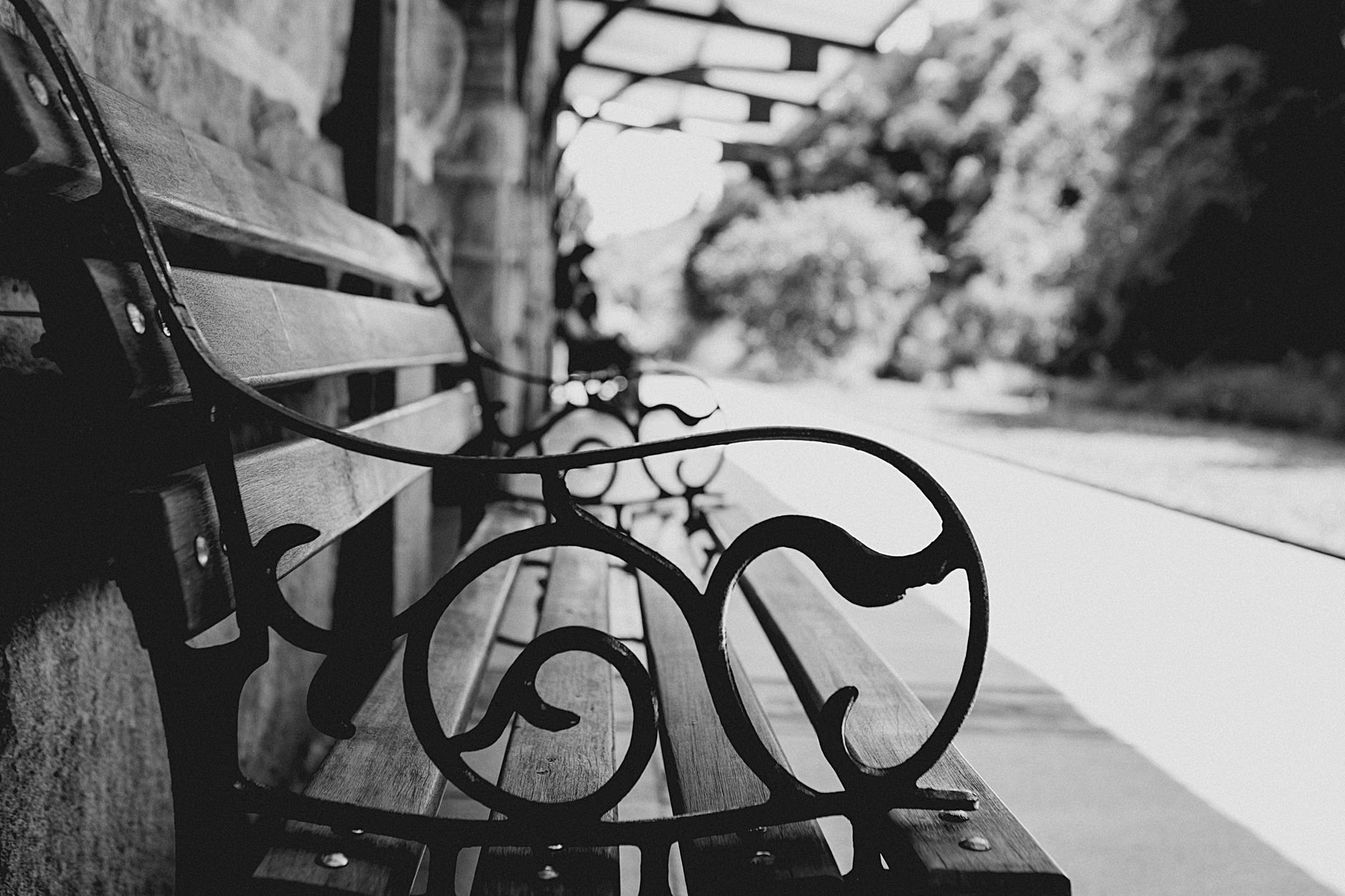
- Material Choice: Materials must be temperature-neutral. Metal benches that become scorching hot in summer or freezing in winter are increasingly being phased out in favor of wood or high-density composite materials.
The Science of “Rest-Stop” Urban Planning
Urban planners are now utilizing “pedestrian fatigue modeling” to determine where benches should be placed. The standard rule being adopted in several regions (notably in parts of the EU and Japan) is the 200-meter rule. This suggests that in high-traffic pedestrian areas, a person should never be more than 200 meters away from a place to sit and rest.
This is not an arbitrary number. Research into the gait and stamina of adults aged 65+ indicates that for those with mild mobility impairment, 200 meters represents roughly 3 to 5 minutes of walking—the typical threshold before the need for a short recovery period arises.
How to Advocate for Better Infrastructure in Your Neighborhood
While the 2026 initiative is a government-led directive, local implementation often depends on community feedback. If you find that your local route lacks adequate seating, you can take a proactive approach:
- Document the Route: Use a pedometer or a mobile map app to identify the “gap” in seating. If there is a 500-meter stretch without a bench, this is a clear data point for your local council.
- Identify Hazards: Note if existing benches are obstructed by overgrown hedges, placed on uneven terrain, or situated too close to busy, high-pollution traffic lanes.
- Contact Local Representatives: Use the terminology of the “Age-Friendly Cities” movement. Mention that the lack of seating is a barrier to “active aging” and “social inclusion.”
Comparing Global Approaches to Public Seating
Different jurisdictions are approaching this mandate in ways that reflect their local urban culture. The table below outlines how these approaches vary.
| Region | Primary Focus | Typical Implementation |
|---|---|---|
| Japan | High-density transit hubs | Sheltered seating near bus and train stops with digital arrival information. |
| European Union | Pedestrianized city centers | Integrated seating in plazas and along historical walking routes to encourage tourism. |
| North America | Safety and accessibility | Focus on lighting, proximity to parking, and ADA (Americans with Disabilities Act) compliance. |
Understanding these differences is crucial for the global traveler. If you are planning a trip, look for “Age-Friendly City” certifications in your destination. These cities have committed to the WHO (World Health Organization) Global Network for Age-friendly Cities and Communities, which guarantees a certain baseline of accessibility, including adequate public seating.
Hidden Challenges: The Trade-offs of Public Seating
While the expansion of benches is largely positive, it comes with logistical complexities. One common criticism is the maintenance of these assets. A bench that is broken, dirty, or surrounded by litter becomes a barrier rather than a benefit. Furthermore, there is the issue of security. In some urban environments, residents may express concerns about public seating becoming areas for loitering, which can lead to friction between different community groups.
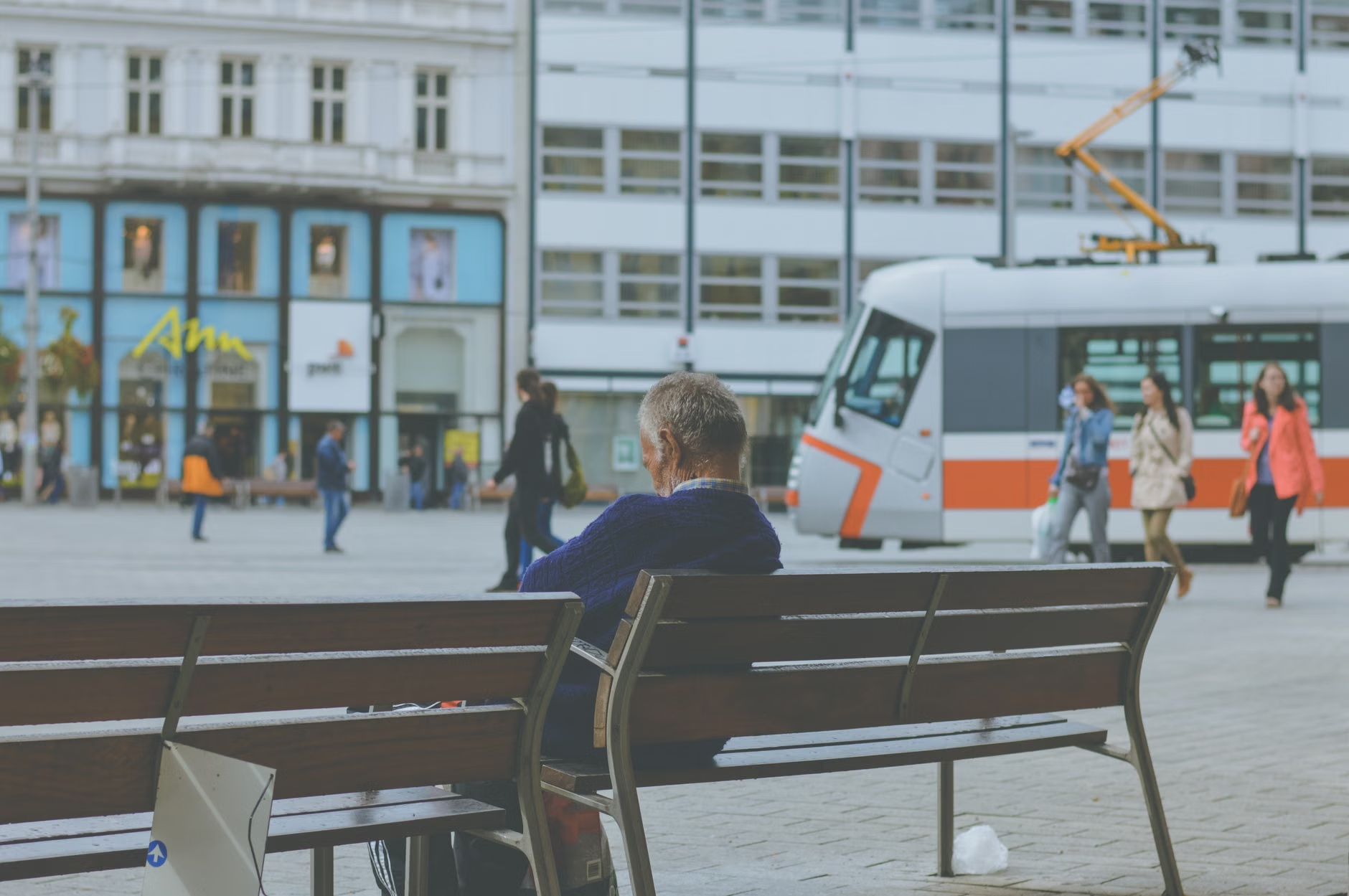
To mitigate these concerns, modern urban design is moving toward “active supervision.” This means placing benches in locations that are visible to shop owners, near security-monitored transit stops, or in areas with high pedestrian footfall. This increases the sense of safety for everyone, including older adults who may be more cautious about where they choose to sit.
As these initiatives roll out, you can optimize your own daily life by adopting a “rest-aware” approach to your routine:
- Plan Your Path: Before setting out for a walk, check if your route follows “main street” corridors where new bench installations are prioritized.
- Carry a Lightweight Seat: For those who enjoy hiking or walking in less developed areas, consider a lightweight, foldable cane-seat. These provide independence regardless of municipal infrastructure.
- Monitor Your Stamina: If you find yourself needing to sit more frequently than usual, it may be a sign to consult with your primary care provider regarding your cardiovascular or musculoskeletal health. Keep a log of how far you walk before needing a rest.
Conclusion: A More Inclusive Urban Future
The 2026 expansion of age-friendly benches is a significant step toward making our cities truly multi-generational. By recognizing that the pace of life changes as we age, and by adjusting our physical environment to accommodate those changes, cities can ensure that their most experienced citizens remain active, visible, and engaged. When you see a new, high-backed bench with sturdy armrests in your neighborhood, view it as a recognition of your right to inhabit and enjoy public space at your own pace.
Frequently Asked Questions (FAQ)
Q1: Are these benches free to use for everyone?
Yes, these are public infrastructure projects funded by municipal taxes. They are intended for public use, and there is no charge for utilizing them. However, they are generally intended for short-term rest, not for overnight or extended occupation.
Q2: How do I report a broken or unsafe bench in my area?
Most cities have a “311” or a local government service portal. You can report the location and the nature of the issue (e.g., loose bolts, broken wood, or an obstruction). Taking a photo with your smartphone and uploading it to the city’s app is usually the fastest way to get a repair request processed.
Q3: Will these benches be available in all parks, or just city streets?
The 2026 initiative focuses primarily on “pedestrian thoroughfares”—the routes that connect homes to services. While parks are typically already well-equipped, the new mandate specifically targets the gaps in street-level infrastructure where seating has historically been ignored.
For further information on global standards for age-friendly environments, visit the World Health Organization’s Age-Friendly Cities portal.