- Chess clubs provide a low-cost, high-impact environment for maintaining cognitive agility and building meaningful social connections in later life.
- Success in a community club is defined by consistent social engagement rather than competitive ranking; focus on finding groups that prioritize camaraderie over tournament-style pressure.
- Before joining, evaluate the club’s physical accessibility, transportation links, and meeting frequency to ensure the hobby remains sustainable and enjoyable long-term.
For many adults between the ages of 60 and 80, the search for a rewarding hobby often balances the need for mental stimulation with the desire for genuine human connection. While many activities are solitary, community chess clubs offer a unique, structured environment that addresses both needs simultaneously. Chess is not merely a game of logic; it is a social ritual that has been practiced for centuries, providing a common language that transcends cultural and professional backgrounds.
The Cognitive and Social Synergy of Chess
When we discuss the benefits of chess for older adults, the conversation often centers on “brain training.” While it is true that chess engages complex cognitive functions—such as pattern recognition, long-term planning, and spatial visualization—the true value for the 60-80 demographic lies in the social context of the game. Engaging with a board in a physical space requires a different set of skills than playing against an app or a computer.
In a face-to-face setting, you are practicing non-verbal communication, empathy, and patience. You are reading your opponent’s body language, managing the pacing of a conversation, and participating in the shared silence that occurs during deep concentration. This combination of mental focus and social interaction creates a “cognitive-social loop” that is significantly more effective at combating feelings of isolation than solitary activities.
Why Real-World Interaction Matters
Digital chess platforms are excellent for convenience, but they lack the nuance of a physical club. In a club setting, you are forced to step outside your immediate comfort zone. You might be paired with someone from a different generation, a different cultural background, or someone with a vastly different life experience. These interactions foster “social capital”—the networks of relationships among people who live and work in a particular society, enabling that society to function effectively.
Consider the difference between a virtual move and a physical one:
- Digital: You click a button, receive an instant response, and often never see the person behind the screen.
- Physical: You physically handle the piece, make eye contact, acknowledge a good move from your opponent, and often engage in a “post-mortem” discussion where you analyze the game together.
Evaluating the Right Club for Your Lifestyle
Not all chess clubs are created equal. Some are hyper-competitive, focused on FIDE (International Chess Federation) ratings and tournament play. Others are purely social, meeting in libraries or community centers for casual games and conversation. For the 60-80 age group, the latter is often more sustainable and rewarding.
When searching for a club, use the following criteria to evaluate if it fits your physical and social needs:
| Feature | What to Look For | Why It Matters |
|---|---|---|
| Accessibility | Ground floor, ramps, wide doorways. | Ensures mobility aids can be used without stress. |
| Atmosphere | Casual, “drop-in” friendly. | Reduces performance anxiety and encourages long-term attendance. |
| Transportation | Near public transit or has ample parking. | Removes the barrier of “getting there” as a deterrent. |
| Pacing | Slow-play or casual formats. | Allows for breaks and conversation without time pressure. |
If you have mobility challenges, prioritize clubs that meet in well-lit community centers or senior-specific hubs. These venues are typically designed with older adults in mind, featuring adequate seating, accessible restrooms, and a quieter environment that makes hearing and communicating easier.
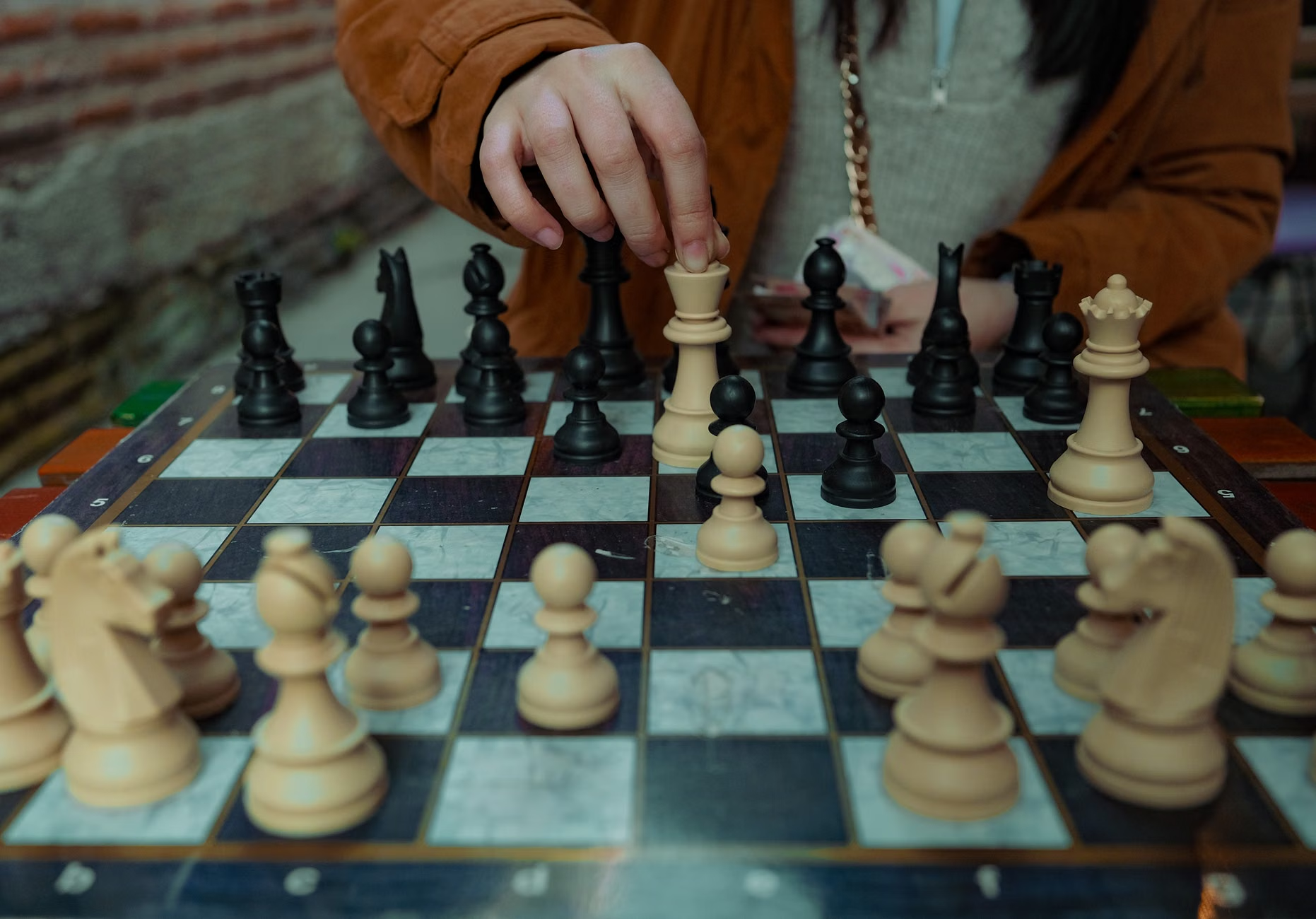
Practical Steps to Getting Started
You do not need to be a grandmaster to join a club. In fact, most clubs welcome beginners or those who haven’t played in decades. The goal is engagement, not mastery. If you are feeling hesitant, follow this step-by-step approach to ease into the community:
- Research: Start by visiting your local library, community center, or municipal recreation office. Many maintain lists of local hobby groups.
- Observe First: If you are nervous, ask if you can visit once as an observer. Sit, have a coffee, watch how the group interacts, and decide if the vibe matches your personality.
- Check the Schedule: Ensure the meeting times align with your natural energy levels. If you are a “morning person,” avoid evening leagues that might interfere with your sleep hygiene.
- Equipment: Most clubs provide boards and pieces. Do not feel the need to purchase expensive sets initially. If you do, look for “weighted” pieces, which are easier to grasp and less likely to tip over.
Managing Physical and Logistical Considerations
While chess is a low-impact activity, your comfort during the session is paramount. Long periods of sitting can be taxing if the environment isn’t set up correctly. Here are some practical adjustments to ensure you remain comfortable:
- Ergonomics: If you find club chairs uncomfortable, consider bringing a small, portable seat cushion. Good lumbar support is essential if you plan to play for more than 45 minutes.
- Hydration and Nutrition: Never skip a meal before going to a club. Cognitive effort burns glucose. Bring a water bottle and, if the club allows it, a small, healthy snack.
- Vision and Lighting: If you struggle with low-light environments, choose a club that meets in a bright, naturally lit room. Don’t hesitate to ask for a seat near a window or a lamp.
Common Mistake: Many newcomers try to play too many games in one session. Over-exertion can lead to mental fatigue, which makes the game less enjoyable. Start with one or two games per visit and gradually increase as you build your stamina. Remember, the social connection is the primary goal; the game is merely the catalyst.
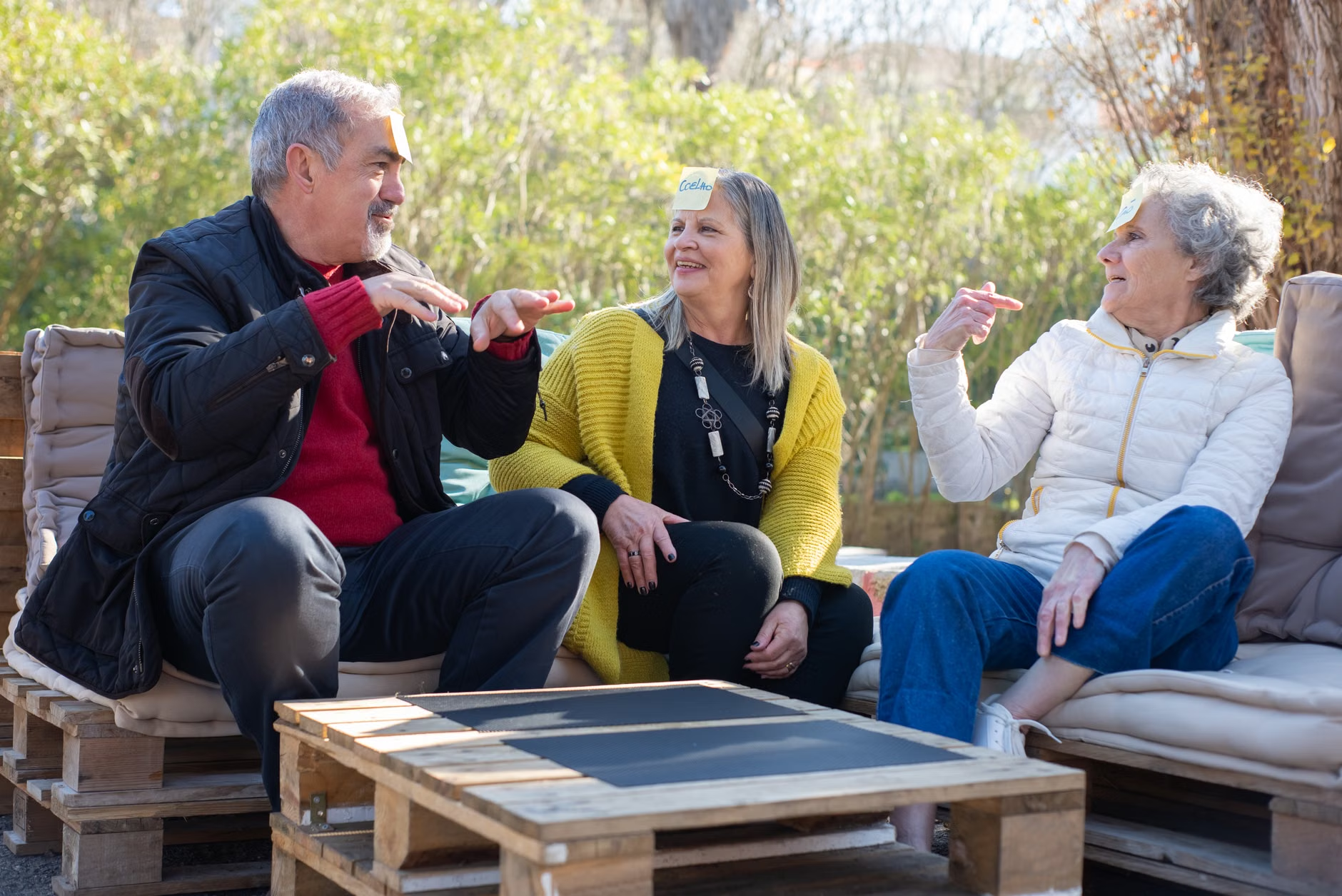
The Role of Family and Caregivers
If you are a family member or caregiver, you can play a vital role in supporting an older adult’s interest in chess. You don’t need to be an expert to encourage this hobby. Simply helping with the logistics of transportation or helping them find a club that matches their interests can be a significant boost to their wellbeing.
If your loved one is housebound, consider setting up a “virtual club” environment. Use a video call platform to play a game together. It provides the same mental stimulation and offers a structured way to stay in touch beyond simple “check-in” calls. The key is to make the experience feel like an event—perhaps playing at the same time every Sunday afternoon with a cup of tea.
Like any social activity, there can be challenges. You might encounter a “gatekeeper”—an overly competitive player who takes the game too seriously. If this happens, do not take it personally. Politely decline to play with that specific person in the future and seek out partners who share your desire for a friendly, relaxed game.
Another challenge is consistency. It is easy to skip a week when you are tired. However, the benefits of community clubs are cumulative. The sense of belonging comes from being a “regular.” Even if you don’t feel like playing, showing up for the conversation and the atmosphere is often enough to reap the social rewards.
Understanding the “Social-Health” Connection
Research suggests that social integration is a strong predictor of health outcomes in older adults. By joining a club, you are not just playing a game; you are creating a “social safety net.” You are making friends who will notice if you don’t show up, who will share local news, and who will provide a sense of purpose in your weekly routine. This is a form of preventive health that is often overlooked in medical settings.
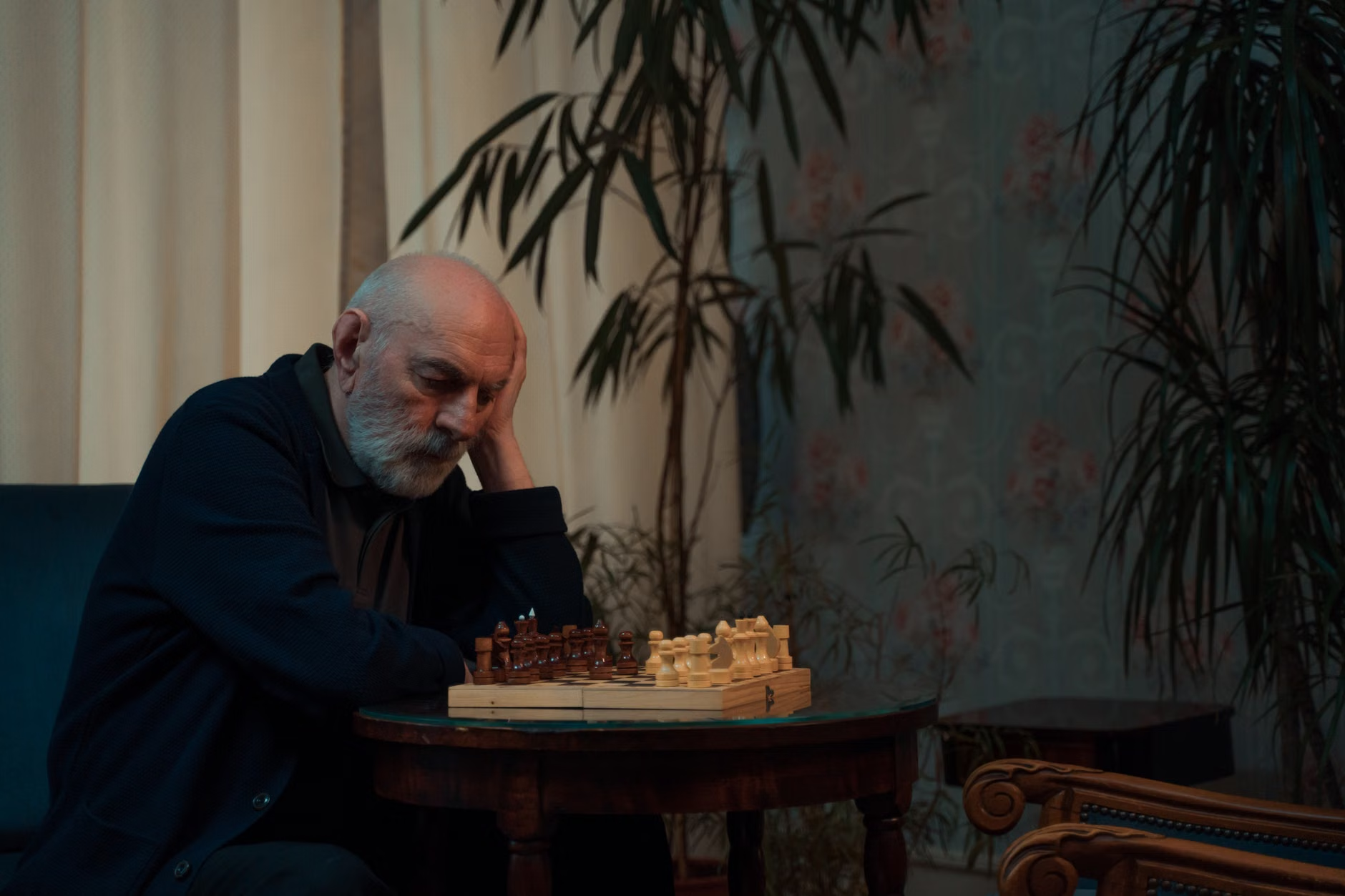
Conclusion: The Long-Term Value of the Board
The beauty of chess is that it is a lifelong pursuit. It is a game where your experience counts for as much as your calculation. By joining a community chess club, you are choosing to remain active, engaged, and connected. You are prioritizing a hobby that respects your intelligence and enhances your social world.
Whether you are a seasoned player or someone who hasn’t touched a pawn in decades, there is a seat waiting for you. Take the first step today: look up your local community center, make that initial call, and discover the quiet, intellectual, and deeply social world of the local chess club. It is a small investment of time that pays off in lifelong friendships and sharpened cognitive health.
Frequently Asked Questions (FAQ)
1. I haven’t played chess in 40 years. Will I be behind everyone else?
Not at all. Most community clubs are very welcoming to returning players. The rules of chess have not changed, and the “muscle memory” often comes back faster than you expect. Most clubs will be happy to help you refresh your knowledge. The focus is on the social experience, not tournament-level performance.
2. Are there any physical requirements for playing chess?
Chess is very accessible. The main physical requirement is the ability to sit comfortably for the duration of a game and move small pieces on a board. If you have limited dexterity, look for sets with larger pieces or magnetic boards that are easier to handle. Always ensure the venue has comfortable, supportive seating.
3. How do I know if a club is “too competitive” for me?
Look for clues in their outreach. If a club’s website or flyer mentions “casual play,” “coffee and chess,” or “social evenings,” it is likely a good fit. Avoid clubs that focus heavily on “official ratings,” “competitive leagues,” or “tournament preparation” if you are looking for a relaxed experience. You can also call ahead and ask the organizer directly: “Is this a competitive club or a casual social group?”
For further information on the benefits of social engagement and cognitive health, visit the World Health Organization’s resources on healthy aging.