- Thoracic Mobility is Respiratory Health: Improving the flexibility of your middle back directly allows your rib cage to expand more fully, increasing your vital lung capacity.
- Consistency Over Intensity: Gentle, daily seated extensions are far more effective for long-term spinal health than sporadic, high-intensity workouts.
- Safety First: Always maintain a neutral neck position and avoid “cranking” your spine; the movement should be felt in the middle back, not the lower back or neck.
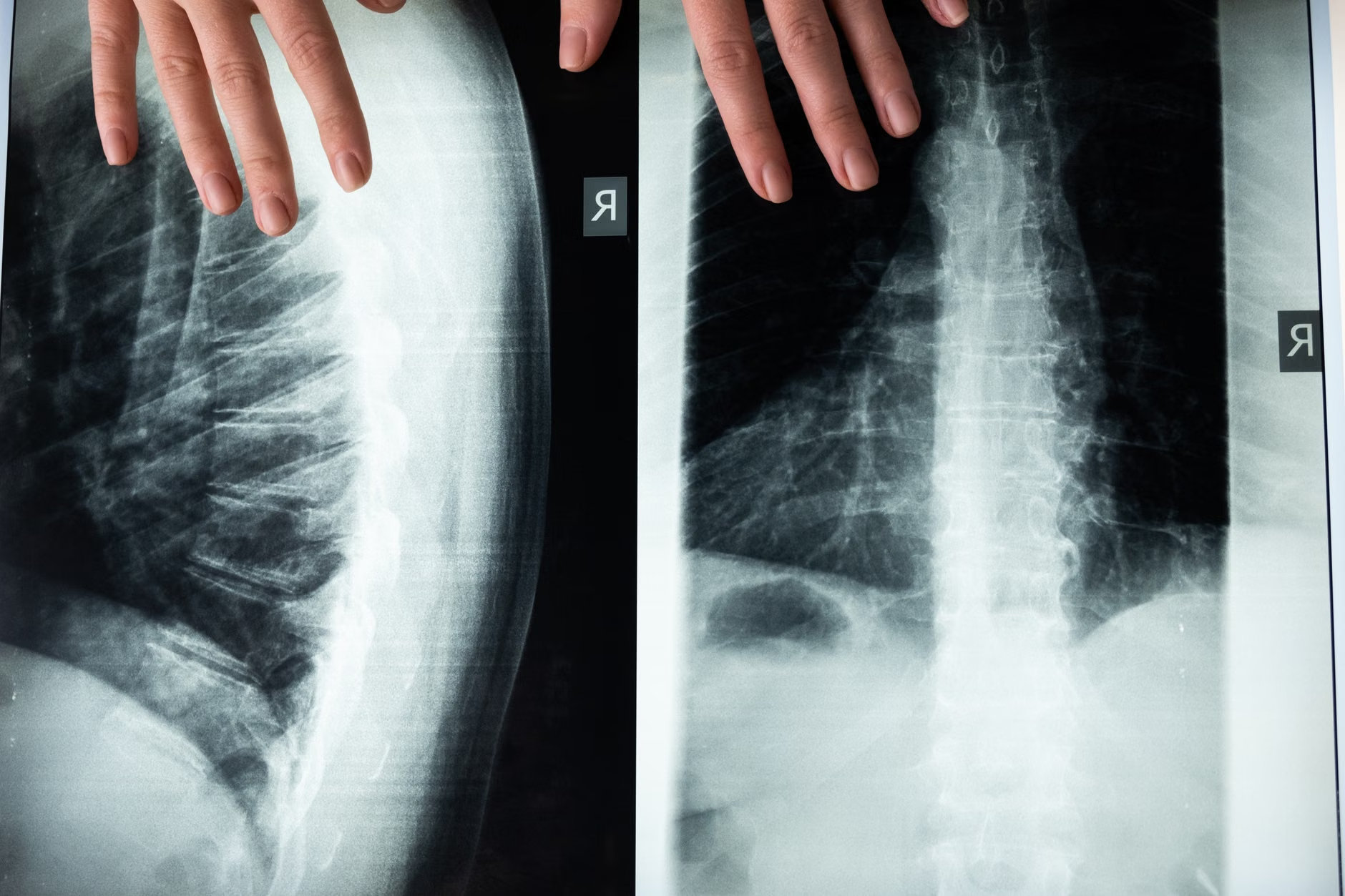
For many adults between 60 and 80, the natural curvature of the upper back—the thoracic spine—tends to become more pronounced over time. This rounding, often called kyphosis, does more than just affect posture; it physically restricts how much your rib cage can expand when you inhale. By performing seated thoracic extensions, you are not just “stretching”; you are actively creating the mechanical space necessary for deeper, more efficient breathing.
Understanding the Connection Between Your Spine and Your Lungs
The thoracic spine consists of the 12 vertebrae located between your neck and your lower back. Unlike the lower back (lumbar), which is designed for stability and weight-bearing, the thoracic spine is designed to work in concert with your ribs to facilitate breathing. When these vertebrae become stiff due to prolonged sitting, age-related changes, or lack of movement, the rib cage loses its ability to hinge outward during inhalation.
Think of your rib cage as an accordion. If the “hinges” of that accordion—the joints connecting your ribs to your spine—are rusted or stuck, the accordion cannot open fully. This leads to shallower breathing, which can leave you feeling fatigued more quickly during physical activity. By regularly practicing thoracic extensions, you are effectively “oiling the hinges” of this system.

The Anatomy of a Safe Seated Thoracic Extension
A thoracic extension is a movement that involves gently arching the middle back while keeping the lower back and neck stable. It is not a backward bend of the entire spine. If you feel pinching in your lower back, you are likely overcompensating because your thoracic spine is not moving enough. Here is the breakdown of how to perform this movement safely:
1. Choosing the Right Chair
Not all chairs are created equal for this exercise. You need a chair with a relatively low backrest. If the backrest reaches your shoulder blades, it will block the very movement you are trying to facilitate. A standard dining room chair is often perfect. Ensure your feet are planted firmly on the floor to provide a stable base.
2. The Hand Position and Core Engagement
Place your fingertips lightly behind your ears or cross your arms over your chest. Avoid pulling on your neck. Before moving, engage your core muscles—imagine you are gently bracing yourself as if someone were about to poke your stomach. This protects your lumbar spine from taking on the stress of the movement.
3. The Movement Phase
Inhale as you slowly lift your chest toward the ceiling. Focus the movement specifically on the area between your shoulder blades. Your eyes should follow your chest upward, but keep your chin tucked slightly to avoid straining the cervical spine (the neck). Hold for two to three seconds, then exhale as you return to a neutral, upright position.
| Feature | Correct Technique | Common Mistake |
|---|---|---|
| Focus Area | Middle back (between shoulder blades) | Lower back or neck |
| Breath | Inhale on extension, exhale on return | Holding breath |
| Neck | Neutral, chin slightly tucked | Looking too far back/straining |
| Range | Small, controlled movement | Forcing a deep arch |
Why “Micro-Movements” Win Over Large Ranges of Motion
There is a common misconception that a “good” stretch must be large or intense. For the thoracic spine, the opposite is true. The joints in this area are small and intricate. When you force a large range of motion, your body’s natural protective mechanism—the muscle stretch reflex—will cause the muscles to tighten up, the exact opposite of your goal.
By focusing on small, controlled “micro-movements,” you signal to your nervous system that it is safe to relax and allow the vertebrae to glide against one another. Over time, these small movements compound, leading to a significant increase in functional range of motion that translates directly into easier breathing while walking, climbing stairs, or simply sitting at a desk.
Integrating Extensions Into Your Daily Routine
Consistency is more important than duration. Performing these exercises for two minutes, three times a day, is significantly more effective than doing a 20-minute session once a week. Here is a practical schedule for incorporating this into your day:
- Morning (Upon Waking): Perform five gentle extensions while sitting at the edge of your bed to “wake up” the spine.
- Mid-day (After Lunch): If you have been reading or using a computer, perform five extensions to counteract the “slump” that occurs after 30 minutes of sitting.
- Evening (Before Bed): Perform five slow, mindful extensions to release the day’s tension and prepare for restful, deep breathing during sleep.
It is important to note that if you have pre-existing spinal conditions, such as osteoporosis or severe arthritis, you must consult with a physical therapist or your primary care physician before beginning any new spinal mobility program. They can provide specific modifications that ensure you are moving within a safe range for your unique skeletal structure.
Recognizing When to Seek Professional Guidance
While thoracic extensions are a powerful tool for prevention, they are not a substitute for medical intervention if you are experiencing specific symptoms. You should pause your routine and consult a healthcare professional if you notice:
- Sharp, radiating pain that travels down your arms or into your ribs while stretching.
- Numbness or tingling sensations in your hands or fingers.
- Persistent breathlessness that does not improve with rest or gentle movement.
- Pain that does not dissipate within a few minutes of finishing the exercise.
A physical therapist can perform a “mobility assessment” to identify which specific segments of your spine are the most restricted. They might use techniques like thoracic mobilization (manual therapy) or recommend specific equipment, such as a foam roller or a dedicated thoracic extension wedge, to assist you in your progress.

The Role of Breathing Mechanics in Longevity
The efficiency of your respiratory system is a key indicator of overall health. As we age, the compliance of the chest wall decreases. This means it takes more muscular effort to pull air into the lungs. When the thoracic spine is rigid, the diaphragm—the primary muscle for breathing—cannot descend as effectively. This forces the body to rely on secondary muscles in the neck and shoulders to assist with breathing. This is why many older adults report tightness in the neck and upper traps; they are essentially “breathing with their neck.”
By restoring thoracic mobility, you allow the diaphragm to take over the primary workload of breathing again. This reduces the burden on your neck and shoulder muscles, which can lead to a decrease in tension-related headaches and upper body stiffness. It is a cascading benefit: better spine health leads to better breathing, which leads to less muscular strain, which leads to greater comfort in daily activities.
Advanced Considerations: Beyond the Chair
Once you are comfortable with the basic seated version, you may find it helpful to vary your approach. For example, using a small, rolled-up towel placed horizontally across the middle of your chair’s backrest can provide a passive “reminder” for your spine to stay upright. This is not for forcing an arch, but rather for providing tactile feedback. If you feel your spine “slumping” into the towel, you know it is time to engage your core and sit tall.
Another variation is the “seated thoracic rotation.” Once you have mastered the extension, you can add a gentle twist while keeping the spine tall. This helps open up the rib cage in a different plane of motion, further enhancing your overall respiratory capacity. Always move slowly, and never force a rotation beyond what feels comfortable.
Conclusion: Small Steps to a More Open Life
The goal of these exercises is to maintain your independence and comfort. You do not need expensive equipment or a gym membership to improve your spinal health. By taking just a few minutes each day to focus on your thoracic spine, you are actively investing in your ability to breathe deeply and move freely. Remember to focus on the quality of the movement, listen to your body’s signals, and prioritize consistency over intensity. Your spine is the pillar of your body—give it the attention it deserves, and it will support you for years to come.
Frequently Asked Questions
How long does it take to see improvements in mobility?
Most individuals notice a reduction in stiffness within 1 to 2 weeks of consistent daily practice. Significant improvements in range of motion usually manifest after 6 to 8 weeks of regular, gentle sessions. Remember that your goal is long-term maintenance, so think of this as a permanent addition to your daily routine, similar to brushing your teeth.
Can I perform these exercises if I have back pain?
If you have chronic back pain, it is essential to determine the source of that pain before starting. If the pain is muscular due to poor posture, these exercises are often highly recommended. However, if the pain is related to disc issues or fractures, you must get clearance from a doctor. Never push through sharp or shooting pain; the movement should feel like a gentle stretch, not a cause for distress.
Should I use a foam roller for these exercises?
While foam rollers are popular for thoracic mobility, they can be too intense for some older adults, especially those with bone density concerns. It is best to start with the seated version described in this article. If you wish to progress to a foam roller, do so only under the guidance of a physical therapist who can ensure you are using it safely and targeting the correct area of your spine.
Official guidance on physical activity for older adults can be found through the World Health Organization’s guidelines on physical activity and sedentary behavior. Always consult your local health authority for specific recommendations tailored to your region’s healthcare standards.