Engaging in strategic games like chess provides a structured, intellectually stimulating environment that supports cognitive maintenance and executive function in adults aged 60 to 80. By shifting the focus from simply moving pieces to understanding the “why” behind each maneuver, players can exercise memory, pattern recognition, and logical reasoning—skills that are essential for daily independence and mental agility.
- Cognitive Engagement: Chess acts as a “gym for the brain,” specifically targeting the prefrontal cortex, which governs decision-making and planning.
- Accessible Entry: You do not need to be a grandmaster to reap the benefits; the cognitive gains occur during the learning and problem-solving process, regardless of win-loss records.
- Social and Emotional Value: Chess facilitates intergenerational connection and social interaction, which are critical factors in long-term mental wellbeing.
Understanding the Cognitive “Why”: How Chess Interacts with the Aging Brain
As we age, the brain’s neuroplasticity—the ability to form new neural connections—remains active, though it requires consistent, varied stimulation. Chess is unique because it is not a game of chance; it is a game of perfect information. Every move requires a player to synthesize visual spatial data, recall previous patterns, and calculate future consequences.
When you play chess, you are essentially engaging in a complex, multi-step problem-solving exercise. Research into cognitive leisure activities suggests that activities requiring high levels of sustained attention and strategic planning may help in maintaining cognitive reserve. Cognitive reserve is the brain’s ability to improvise and find alternate ways of getting a job done, which can be bolstered by challenging, non-routine activities.
The Pillars of Strategic Thinking
In chess, strategy is often divided into three phases: the opening, the middlegame, and the endgame. For the adult learner, focusing on the concepts rather than rote memorization is the key to cognitive benefit.
- Opening: Focuses on control of the center and piece development. This teaches prioritization—identifying which tasks (or pieces) are most critical at a given moment.
- Middlegame: Involves tactical combinations and long-term planning. This exercises working memory as you hold several potential “what-if” scenarios in your mind simultaneously.
- Endgame: Requires precision and economy of movement. This teaches the importance of efficiency and identifying the most direct path to a goal.
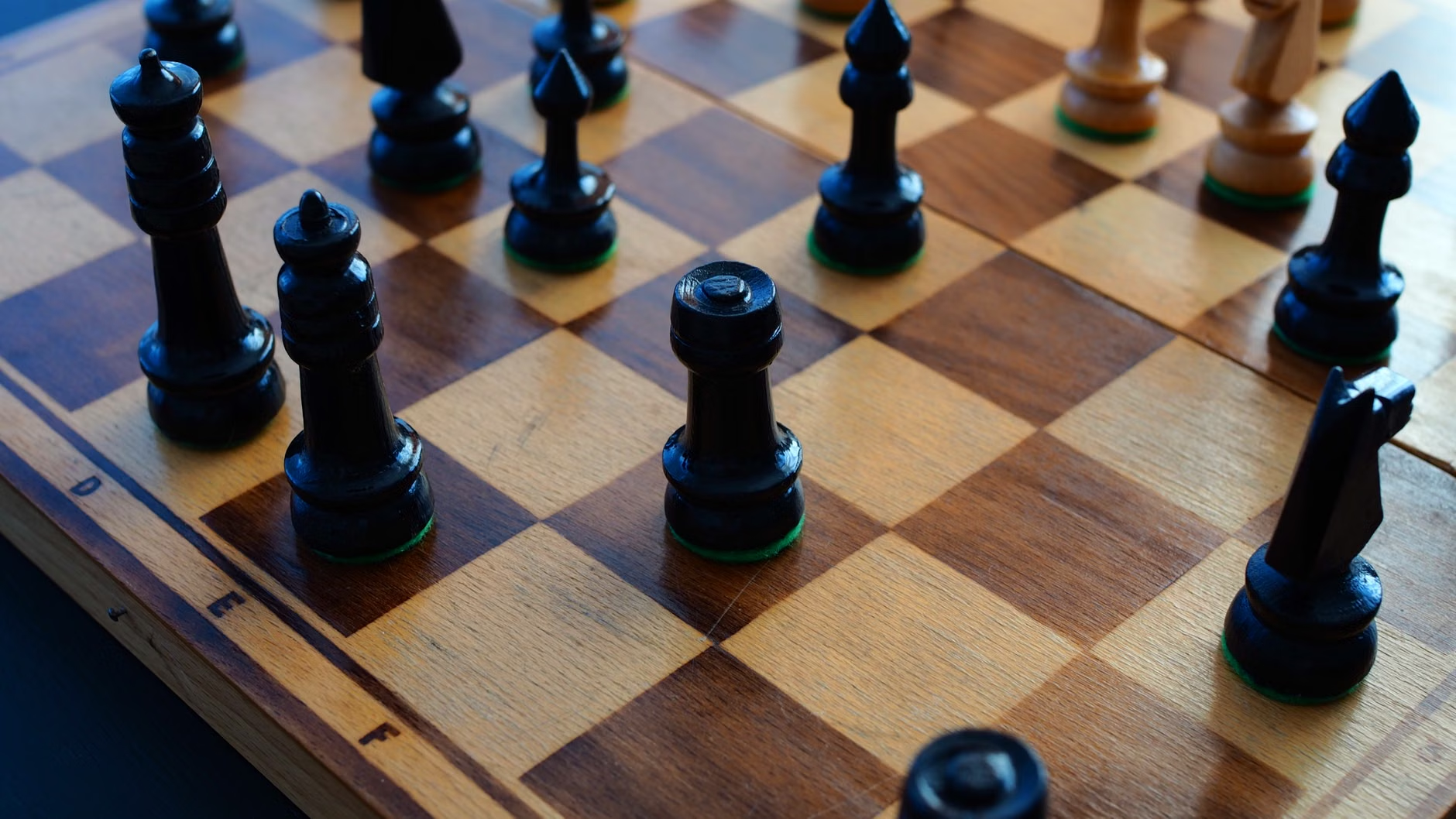
Practical Steps: How to Start (or Restart) Your Chess Journey
Many adults feel intimidated by the perceived complexity of chess. However, the goal is not to win tournaments, but to enjoy the process of improvement. Here is a recommended approach for integrating chess into your routine without unnecessary stress.
1. Choose Your Learning Environment
There are three primary ways to learn, each suited to different levels of technical comfort:
| Method | Pros | Best For |
|---|---|---|
| Physical Board | Tactile, no screen fatigue, promotes focus. | Those who prefer a traditional, unplugged experience. |
| Mobile Apps | Adjustable difficulty, instant feedback, portability. | Those looking for practice on-the-go or at their own pace. |
| Local Chess Clubs | Social interaction, peer mentorship. | Those seeking community and human connection. |
Recommendation: For most adults, a hybrid approach works best. Use a mobile app or website (such as Chess.com or Lichess.org) to learn the basic moves and tactics, then visit a local community center or library club to play in person. This balances the convenience of digital tools with the mental health benefits of social engagement.
The Role of Strategy in Daily Decision Making
The strategies used in chess—such as “thinking ahead,” “evaluating trade-offs,” and “managing resources”—have direct parallels in daily life. When you decide how to manage your schedule, organize your household finances, or plan a trip, you are using the same cognitive muscles as you do when analyzing a chess board.
Applying “Piece Economy” to Daily Tasks
In chess, “piece economy” refers to the concept of getting the most value out of every piece on the board. In daily life, this translates to energy management. For an adult aged 60-80, stamina is a finite resource. Applying the “strategic thinking” of chess means:
- Anticipating Roadblocks: Just as you anticipate an opponent’s move, anticipate potential fatigue or mobility challenges in your daily plans.
- Prioritizing High-Value Actions: Identify which daily tasks yield the most “value” (e.g., physical exercise, social connection, or mental stimulation) and prioritize those over low-value, repetitive chores.
Creating a Sustainable Practice Routine
Consistency is more important than duration. Engaging in 20 minutes of chess three times a week is significantly more beneficial for cognitive maintenance than playing a four-hour marathon once a month. The brain thrives on regular, moderate challenges.
Common Mistakes to Avoid
- Over-focusing on Winning: If you view every loss as a failure, you will quickly lose interest. View every game as a “puzzle” to be solved. If you lose, look at the move where your strategy went wrong—that is the “learning moment.”
- Ignoring Physical Comfort: Ensure your seating is ergonomic. If playing for extended periods, use a chair with back support and ensure your lighting is sufficient to prevent eye strain.
- Neglecting Variety: Don’t just play the same opponent or use the same app. Try different formats, such as “puzzles” (where you solve a specific tactical problem) to keep the brain engaged in new ways.
If you have concerns about your cognitive health or are experiencing noticeable changes in memory or executive function, it is important to speak with your primary care provider. While chess is a powerful tool for wellness, it is not a replacement for professional medical evaluation if you notice persistent changes in your daily functioning.
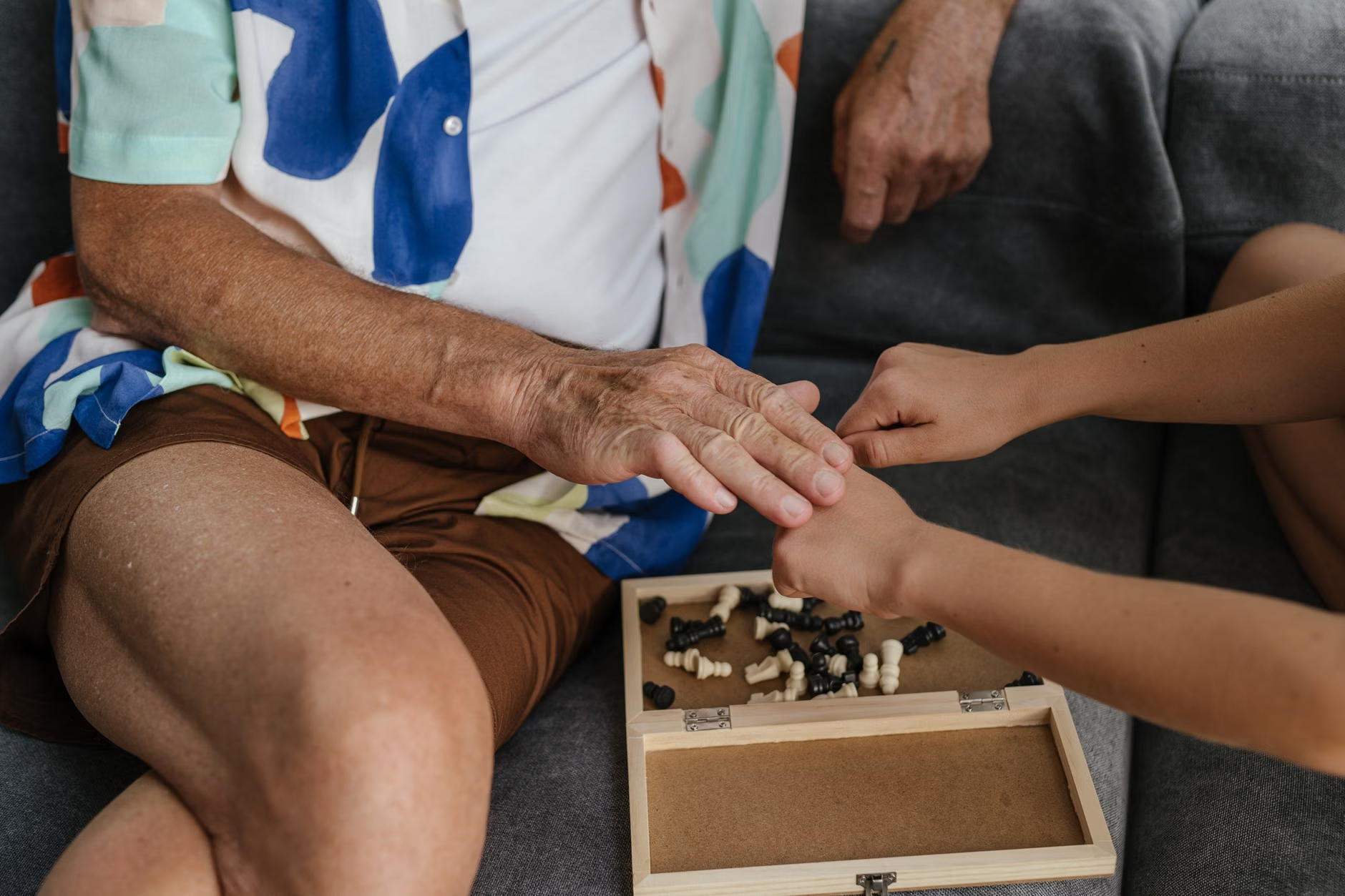
One of the most profound benefits of chess for older adults is its ability to bridge generational gaps. If you have grandchildren, teaching them to play—or learning together—creates a shared language that transcends the age difference. It provides a structured activity where both parties are on equal footing, fostering mutual respect and communication.

Practical Tips for Teaching/Learning with Family
- Start with the “Why”: Don’t just explain how a piece moves. Explain what that piece is “good at.” For example, explain that the Knight is good at jumping over obstacles, which makes it useful in crowded positions.
- Keep it Short: Children and busy family members may have shorter windows of attention. Play “mini-games” that focus on specific aspects, like playing with only pawns and kings to learn movement.
- Embrace the “Co-Op” Approach: Work together against a computer opponent. This removes the pressure of competition and allows for a dialogue about strategy.
Deep Dive: The Science of Executive Function
Executive function is a set of mental processes that include working memory, flexible thinking, and self-control. Chess is essentially a laboratory for these skills. When you look at a board, your brain is performing “visual search” to identify patterns, “working memory” to hold the current board state, and “inhibitory control” to stop yourself from making a move before you have fully considered the consequences.
Research published by the National Institute on Aging (NIA) emphasizes that cognitive engagement is a key component of maintaining brain health. While no single activity can prevent age-related decline, the cumulative effect of challenging, novel, and socially engaging activities is supported by a growing body of evidence. For more information on maintaining cognitive health, you can visit the National Institute on Aging guide on cognitive health.
Refining Your Strategy: A Step-by-Step Approach for Improvement
To truly gain the cognitive benefits, you must move beyond the “beginner” phase. This doesn’t mean becoming a master; it means becoming a more deliberate thinker. Follow this progression to keep your brain challenged:
Phase 1: The Tactical Foundation (Months 1-3)
Focus on “tactics.” Tactics are short-term sequences of moves that result in a gain. Common tactics include “forks” (attacking two pieces at once) and “pins” (immobilizing a piece). Use online puzzle trainers that provide one puzzle at a time. This is excellent for short-term memory training.
Phase 2: Positional Understanding (Months 4-6)
Move from “what can I take right now?” to “is my position improving?” Learn about piece activity. Are your pieces working together, or are they getting in each other’s way? This teaches systems thinking—the ability to see how individual parts contribute to a whole.
Phase 3: The Art of the Endgame (Ongoing)
The endgame is where most games are won or lost. It requires the most precision. Practicing endgames is a meditative process that rewards patience and attention to detail. It is the ultimate exercise in “planning for the long term.”
Accessibility and Safety Considerations
For those with limited mobility or vision, chess remains highly accessible. Large-print chess sets, magnetic boards (which prevent pieces from sliding), and high-contrast pieces are readily available. If you are using digital platforms, most modern apps allow for screen reader compatibility and custom high-contrast modes, making them accessible for those with visual impairments.
If you find that sitting for long periods causes discomfort, consider a “standing desk” setup or alternating between a comfortable armchair and a more supportive desk chair. The goal is to keep the activity enjoyable. If you experience physical pain during play, it is a sign to adjust your environment, not to stop the activity.
Conclusion: The Long-Term Value of the Game
Chess is more than a board game; it is a lifelong companion for the mind. By embracing the challenge of strategy, you are choosing to remain an active participant in your own cognitive wellbeing. Whether you are playing a quick game on your tablet or sitting across from a friend at a local club, remember that the value lies in the thought process, the social connection, and the sheer joy of solving a complex problem.
Start small, stay consistent, and remember that every game is an opportunity to learn something new about the board—and about yourself.
Frequently Asked Questions
Is it ever too late to learn how to play chess?
Absolutely not. The brain remains capable of learning new skills at any age. While the learning curve may feel steeper than it would for a child, the cognitive benefits of the *process* of learning are actually more significant for adults, as it forces the brain to form new neural pathways.
Do I need to be good at math to play chess?
No. Chess is not about calculation in the mathematical sense; it is about pattern recognition and logical reasoning. You do not need to be a math expert to be a competent and successful chess player.
How much time should I spend playing each day?
Quality is more important than quantity. 20 to 30 minutes of focused play, three to four times a week, is sufficient to maintain cognitive benefits. Pushing yourself to play for several hours can lead to fatigue, which reduces the quality of your decision-making and the enjoyment of the game.