- Verify “Accessibility” Definitions: Always check if a boardwalk is “wheelchair accessible” (flat/paved) or merely “scenic,” as definitions vary significantly by local jurisdiction.
- Prioritize Infrastructure over Scenery: Choose trails with confirmed frequent seating, accessible restrooms within 500 meters, and non-slip surfaces to ensure your stamina is managed.
- Plan Around Micro-Climates: Coastal environments change rapidly; check local tide charts and wind speeds, as high winds or extreme heat can drastically change the physical exertion required for a walk.
Selecting the right coastal boardwalk is about more than just finding a pretty view; it is about matching the environment to your personal mobility needs and energy levels. For many adults aged 60 to 80, the seaside offers a perfect environment for low-impact exercise and relaxation, provided the infrastructure supports safety and comfort.
Understanding Boardwalk Infrastructure: What to Look For
Not all boardwalks are built equally. When planning a trip, the term “accessible” is often used loosely in tourism marketing. To determine if a trail is truly suitable for your needs, you must look for specific technical indicators.
Surface Materials and Traction
The material of the boardwalk directly impacts your stability and the ease of using mobility aids. Older, weathered wood can be uneven, prone to warping, or slippery when wet. Look for composite decking or treated, smooth-sanded wood that is regularly maintained. If you use a cane, walker, or wheelchair, avoid boardwalks with large gaps between planks, as these can trap wheels or become tripping hazards. A solid, continuous surface—often found in newer municipal projects—is the gold standard for safety.
Gradient and Slope Management
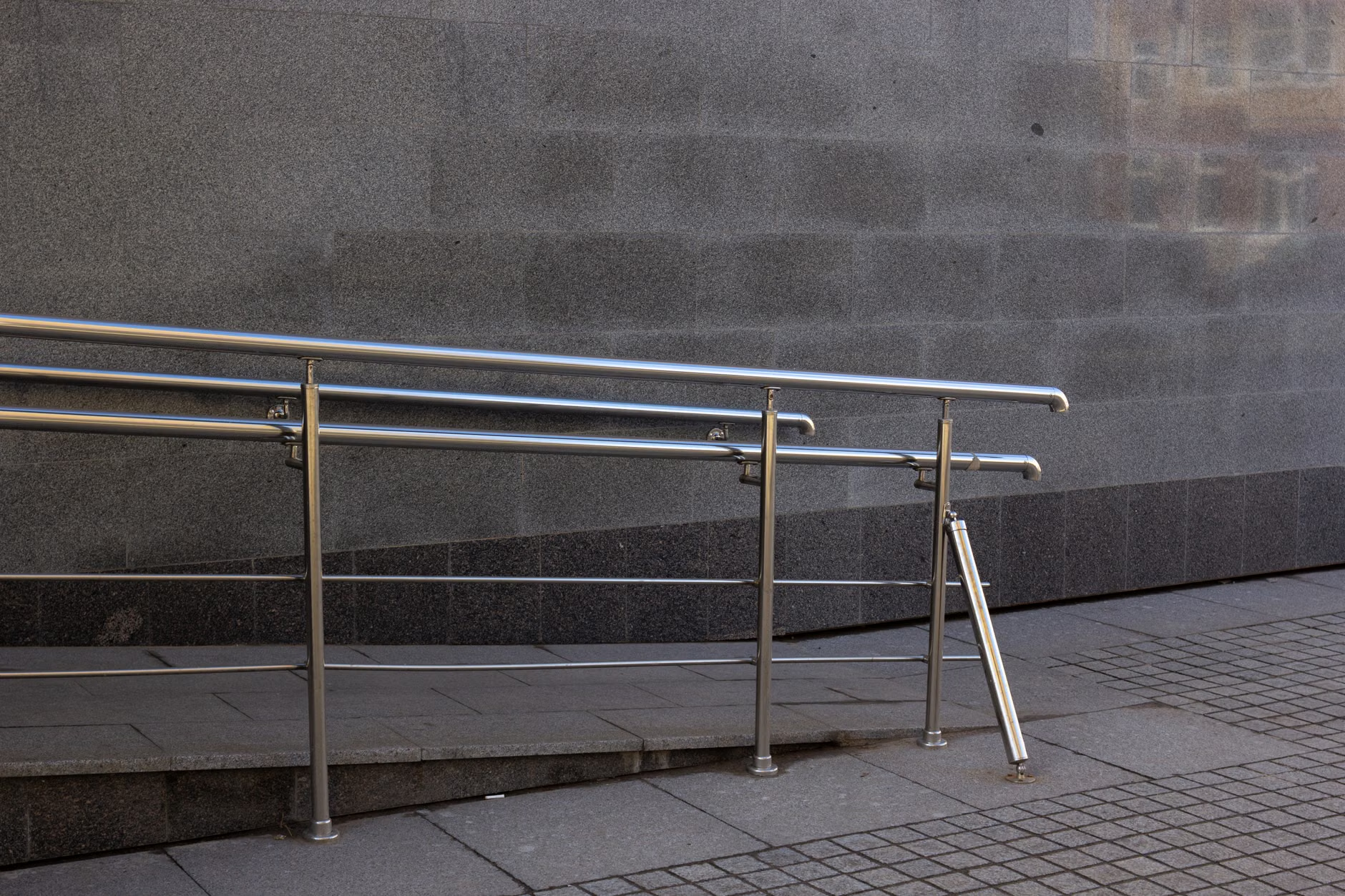
A boardwalk that appears flat in photographs may have hidden inclines. According to international standards like the Americans with Disabilities Act (ADA) or the UK’s Equality Act guidelines, public paths should ideally maintain a slope no greater than 1:20 (5%). Anything steeper requires handrails on both sides. When researching a destination, look for trail maps that specifically denote “grade” or “incline percentages.” If a trail is described as having “rolling terrain,” it likely includes short, sharp inclines that can quickly fatigue your joints.
Assessing Your Personal Mobility and Stamina
Before heading to the coast, conduct a self-assessment of your current mobility capacity. This is not about self-limitation, but about strategic planning to ensure you can enjoy the entire experience without overexertion.
The 500-Meter Rule
A practical rule of thumb for coastal exploration is the “500-meter rule.” Can you walk 500 meters (about 0.3 miles) comfortably on a flat surface without needing to sit down? If the answer is no, you must prioritize boardwalks that feature frequent, high-quality seating. Many modern boardwalks now integrate benches every 100 to 200 meters. If a map does not indicate seating, assume it is sparse and consider bringing a lightweight, portable folding stool.
Evaluating Access to Essential Facilities
Accessibility is not just about the path; it is about the entire experience. Before committing to a location, verify the proximity of accessible restrooms. Public coastal facilities are often closed in off-seasons or may be located at the far ends of a trail. Use local municipal websites to confirm that toilets are not only available but are also equipped with grab bars and sufficient space for mobility aids.
| Feature | Ideal Standard | Warning Sign |
|---|---|---|
| Surface | Continuous composite or smooth wood | Loose planks or gaps >1cm |
| Resting Points | Bench every 150m | No seating for >500m |
| Restrooms | Within 200m of the entry | Seasonal closure or stairs-only |
| Handrails | Continuous, ergonomic height | Missing or unstable sections |
This table helps you categorize the “effort level” of a boardwalk. If a destination fails on two or more of these points, it may require a higher level of planning, such as arranging for a companion or ensuring you have a motorized mobility device.

The Hidden Variables: Tide, Wind, and Light
The ocean environment is dynamic. Even a perfectly constructed boardwalk can become difficult to navigate due to environmental factors that are often overlooked by younger travelers.
Managing Wind Resistance
Coastal winds are often significantly stronger than those reported in general city weather forecasts. High winds can be a major challenge for those using walkers or those with balance issues. If the wind speed is predicted to be over 25 km/h (approx. 15 mph), consider postponing your walk. The resistance against a mobility aid or the physical effort required to maintain balance can lead to rapid exhaustion.
Tide and Light Considerations
Many coastal boardwalks are built over tidal zones. During high tide, the humidity can increase, making wooden surfaces slick even without rain. Furthermore, avoid boardwalks during the “golden hour” if you have vision sensitivities. While the light is beautiful, the high contrast between shadows on the boardwalk and the glare from the water can make it difficult to perceive changes in elevation or gaps in the path.
Strategic Preparation for Your Trip
Preparation reduces anxiety and increases the time you can spend enjoying the scenery. Follow these steps to ensure a smooth outing:
- Call the Local Parks Department: Do not rely solely on online reviews, which are often written by younger, more mobile hikers. Call the local authority responsible for the boardwalk and ask specifically: “Is the path clear of sand, and is the surface currently even?”
- Check Parking Proximity: Even if a boardwalk is accessible, the walk from the parking lot to the start of the trail can be long. Look for “drop-off” points where a driver can leave you at the entrance before parking the car.
- Assess Footwear: Coastal air often brings moisture. Wear shoes with high-traction rubber soles, not leather or smooth-soled walking shoes, which can slip on damp wood.

Common Mistakes to Avoid
One of the most frequent mistakes is assuming that because a path is paved, it is safe. Many “paved” coastal paths are actually asphalt that has been eroded by salt spray and sand, leading to “potholes” or cracked surfaces that are more dangerous than wood. Another error is neglecting hydration. Sea breezes often mask the feeling of dehydration; carry water even if it feels cool outside.
Furthermore, avoid the temptation to try “shortcut” paths off the main boardwalk. These are often unpaved, sandy, or steep trails that lead to beaches. If you are relying on a walker or wheelchair, these shortcuts can quickly become impassable, leading to a situation where you have to turn back or require assistance.
Maintaining Mobility Through Informed Choices
The goal of selecting the right coastal boardwalk is to maintain your independence and enjoy the restorative effects of the ocean. By focusing on the infrastructure—the stability of the surface, the frequency of rest stops, and the proximity of facilities—you can choose destinations that empower rather than exhaust you. Remember that your capacity may fluctuate; it is perfectly acceptable to choose a shorter, flatter, and more “urbanized” coastal path that offers better support, rather than a rugged, natural trail that presents unnecessary risks.
Always prioritize your comfort. If you find yourself needing to stop more frequently than planned, listen to your body and cut the walk short. The coast will be there tomorrow, and the best travel experiences are those that leave you feeling refreshed, not physically drained.
Frequently Asked Questions (FAQ)
1. How can I find out if a specific boardwalk is truly wheelchair or walker accessible?
Do not rely on general “accessible” labels. Visit the official website of the local municipality or the park authority. Look for terms like “ADA compliant” (in the US) or “Step-free access” (in the UK/EU). If this information is missing, call the local parks or tourism office and ask: “What is the width of the narrowest point of the path?” and “Are there any stairs or steep ramps?”
2. Should I bring a mobility aid even if I feel I don’t need one?
Yes, if you have any history of balance issues or stamina concerns. A collapsible cane or a lightweight, foldable walker can provide peace of mind. Even if you don’t use it for the whole duration, having it available for the return journey—when you are likely to be more tired—is a sensible safety precaution.
3. Are there specific times of day that are better for older adults on boardwalks?
Mid-morning is generally the best time. By then, the morning dew has dried, reducing the risk of slipping on wooden planks, and the area is usually less crowded than in the late afternoon. Avoid peak weekend hours if possible, as crowds can make it harder to navigate with a mobility aid or to find available seating.
For further information on accessibility standards, you can consult resources such as the Americans with Disabilities Act (ADA) guidelines for outdoor developed areas, or the UK Equality Act guidance regarding public spaces.