- Prioritize Off-Peak Hours: Traveling outside of mid-morning and mid-afternoon rushes significantly reduces physical strain and ensures access to seating.
- Assess Mobility Requirements: Not all funiculars are fully step-free; always check the station’s specific accessibility status on official municipal transit websites before arriving.
- Manage Your Energy Budget: Use funiculars as a strategic tool to bypass steep inclines, allowing you to save your stamina for flat-ground walking tours at the summit.
Navigating Ancient City Funiculars: A Practical Guide for Senior Travelers
For the active senior traveler, few experiences are as rewarding as exploring the historic hilltop districts of cities like Lisbon, Budapest, or Quebec City. However, these ancient locales are often defined by steep, cobblestone streets that can be challenging to navigate. The funicular—a cable railway that uses a counterbalancing system to haul cars up extreme gradients—is the perfect solution for bypassing these climbs. This guide provides a comprehensive framework for utilizing funiculars safely, efficiently, and comfortably.
Understanding Funicular Mechanics and Why They Matter
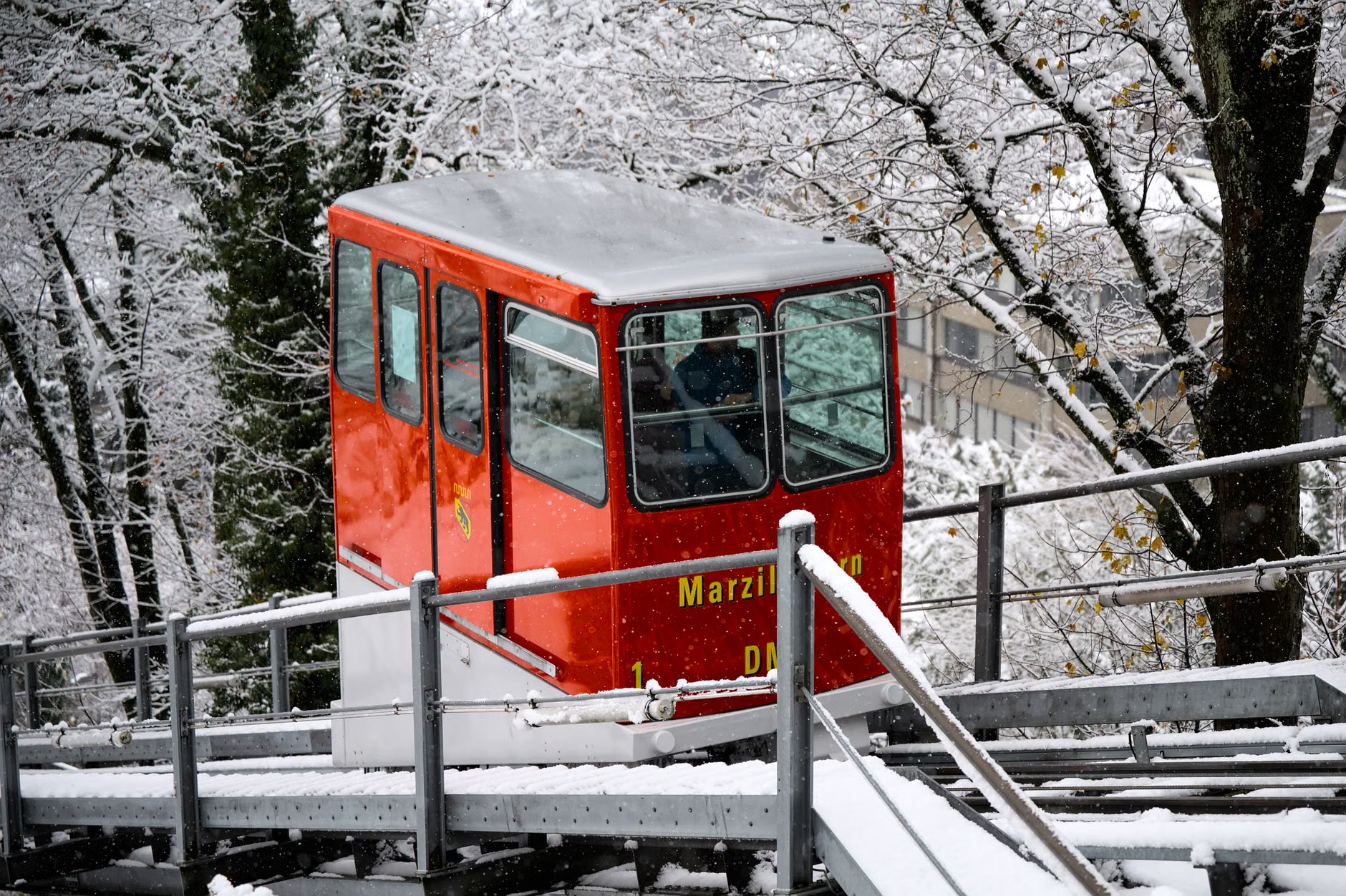
A funicular is distinct from a cable car or a gondola. While cable cars are suspended from overhead wires, a funicular runs on tracks fixed to the ground. This difference is critical for travelers with mobility concerns: funiculars offer a much more stable, grounded ride with significantly less swaying.
Why this matters: For travelers who experience vertigo or balance issues, the physical sensation of a funicular is closer to that of a train or a tram. The cars are usually designed to accommodate the slope of the hill, meaning the floor remains relatively level even as the vehicle climbs a 30-degree incline. Understanding this stability allows you to plan your itinerary with confidence, knowing that the journey itself is unlikely to trigger motion sickness or discomfort.
Pre-Trip Planning: Assessing Accessibility and Infrastructure
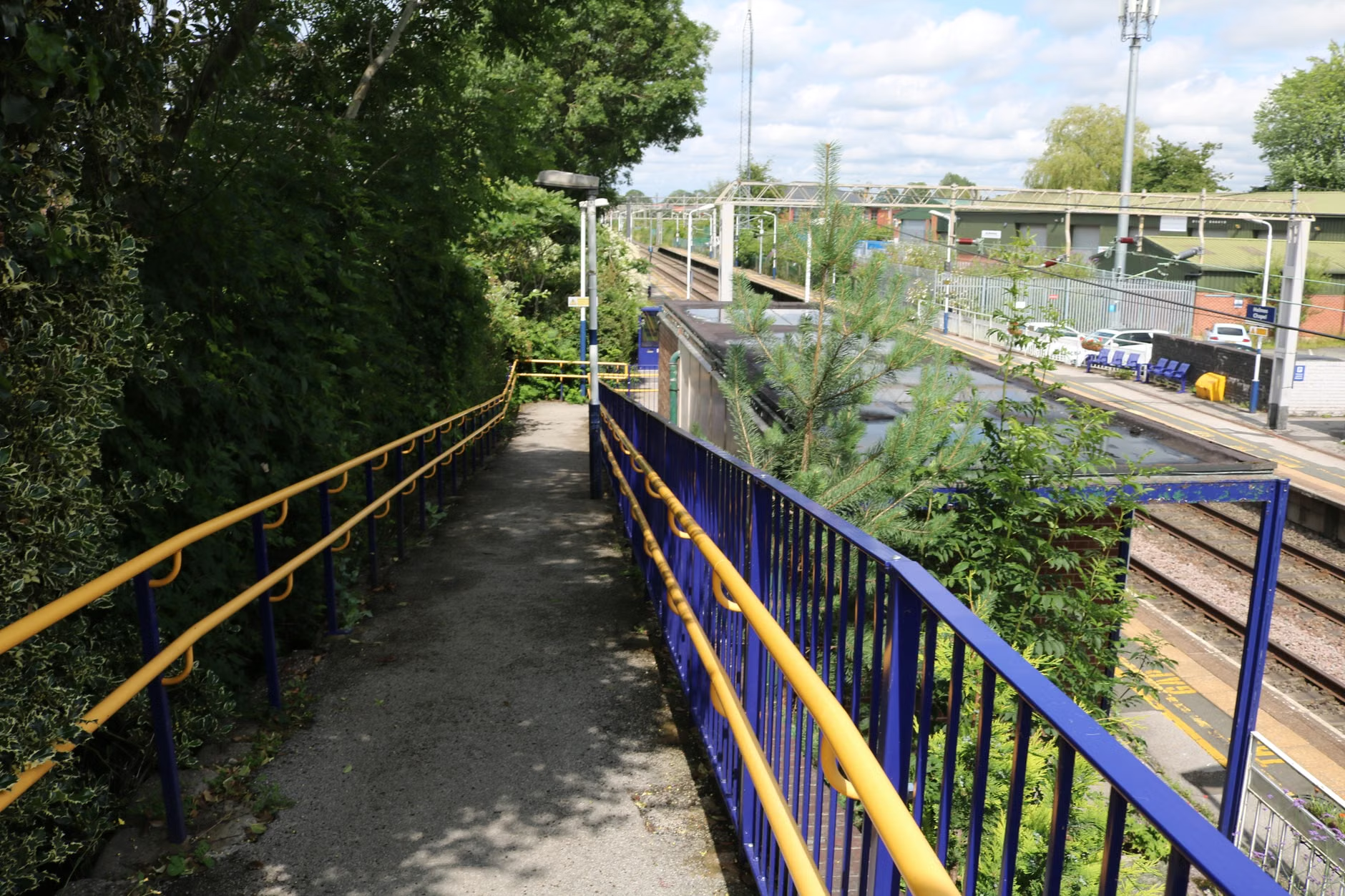
Before you depart, it is essential to recognize that “historic” often means “pre-modern infrastructure.” Many funicular stations were built in the 19th or early 20th centuries, and their accessibility levels vary wildly depending on local heritage preservation laws.
The Accessibility Checklist
When researching your destination, do not rely on general travel blogs. Instead, look for the official municipal transport authority website. Use the following criteria to evaluate if a specific funicular is suitable for your current mobility levels:
| Feature | What to Look For | Why It Matters |
|---|---|---|
| Step-free access | Check for lift or ramp availability at the entrance. | Essential for those using canes, walkers, or wheelchairs. |
| Platform Gap | Look for “level boarding” indicators. | Wide gaps can be a significant trip hazard. |
| Seating Availability | Does the car have dedicated priority seating? | Vital for managing stamina during busy periods. |
| Ticket Systems | Are there automated kiosks or mobile apps? | Avoids standing in long queues at the ticket window. |
Practical Decision Rule: If an official website does not explicitly state that a station is “wheelchair accessible” or “step-free,” assume it involves at least one flight of stairs. If you have mobility limitations, contact the local tourist board via email at least two weeks before your trip to request specific information regarding station elevators.
Strategic Timing: Avoiding the Peak Rush
Funiculars in popular tourist cities are often overwhelmed during mid-morning (10:00 AM – 11:30 AM) and late afternoon (4:00 PM – 6:00 PM). During these times, you may find yourself standing for the duration of the trip or waiting in multiple cycles of the cable car.
The “Golden Window”: The best time to use a funicular is either immediately after the service opens (usually 8:00 AM) or during the lunch hour (1:00 PM – 2:00 PM). By choosing these times, you ensure that you can secure a seat, which is the most effective way to prevent fatigue and maintain your balance during the ascent. If you are traveling as a group, this also allows you to stay together without the stress of being separated by crowded car capacity limits.
Historic stations often feature narrow corridors, uneven stone flooring, and limited signage. To navigate these environments successfully, treat every station visit as a three-stage process:
1. Arrival and Orientation
Upon arrival, take a moment to stand to the side of the entrance. Observe the flow of traffic. Identify the boarding area and look for the “priority” queue, which is often marked for seniors or those with limited mobility. If the station is crowded, do not rush. It is always better to wait for the next carriage than to attempt to board in a crush of tourists.
2. The Boarding Process
When the carriage doors open, wait for passengers to exit completely before moving forward. If you have a walking aid, ensure it is securely tucked in before the doors close. If the floor of the carriage is slightly higher or lower than the platform, look for a staff member who can assist with a portable ramp. Never hesitate to ask for a “moment to board” if you are moving slowly; operators are trained to prioritize safety over speed.
3. During the Transit
Once inside, immediately secure a seat. If no seats are available, position yourself near the center of the car, away from the doors, and hold onto a vertical pole or handrail. Because funiculars climb steep grades, you may feel a slight shift in your center of gravity. Keep your feet shoulder-width apart to maintain stability.
Health and Stamina Management
While the funicular saves you the physical exertion of walking up a hill, the day’s itinerary still requires careful management. A common mistake is to treat the funicular as a “rest break” that allows for an immediate, high-intensity walking tour at the destination.
The Recovery Buffer: After exiting the funicular at the summit, allow yourself 15 minutes of quiet time. Find a bench, observe the view, and hydrate. This “recovery buffer” helps your inner ear adjust to the change in elevation and allows your heart rate to normalize. If you are experiencing any dizziness or shortness of breath—common at higher altitudes or after rapid elevation changes—do not push through the discomfort. Sit down and wait for the symptoms to pass before proceeding.
When to Seek Professional Assistance
If you have pre-existing cardiovascular conditions, consult your physician before planning a trip to a city with significant elevation changes. While funiculars are safe, the altitude difference can sometimes be enough to trigger minor respiratory issues in sensitive individuals. Always carry a list of your current medications and, if applicable, your medical alert information in your wallet.
Common Mistakes to Avoid
Even seasoned travelers can fall into traps when using specialized transport like funiculars. Here are the most frequent errors and how to avoid them:
- Assuming “Tourist Pass” Includes All Funiculars: In some cities, the funicular is managed by a private company rather than the public transit authority. Check if your city pass covers the fare. If not, having small denominations of local currency is often faster than using a credit card at an old, slow machine.
- Ignoring the Descent: Many seniors focus on the uphill journey but forget that the downhill walk can be harder on the knees and hips than the climb. If you have joint issues, budget for a round-trip ticket. There is no shame in using the funicular to return to the base.
- Overestimating Walking Distances: Tourist maps often look deceptively simple. A “five-minute walk” from the funicular station to a cathedral might involve steep, uneven cobblestones. Use tools like Google Street View to inspect the terrain around the station before you arrive.
The Role of Digital Tools
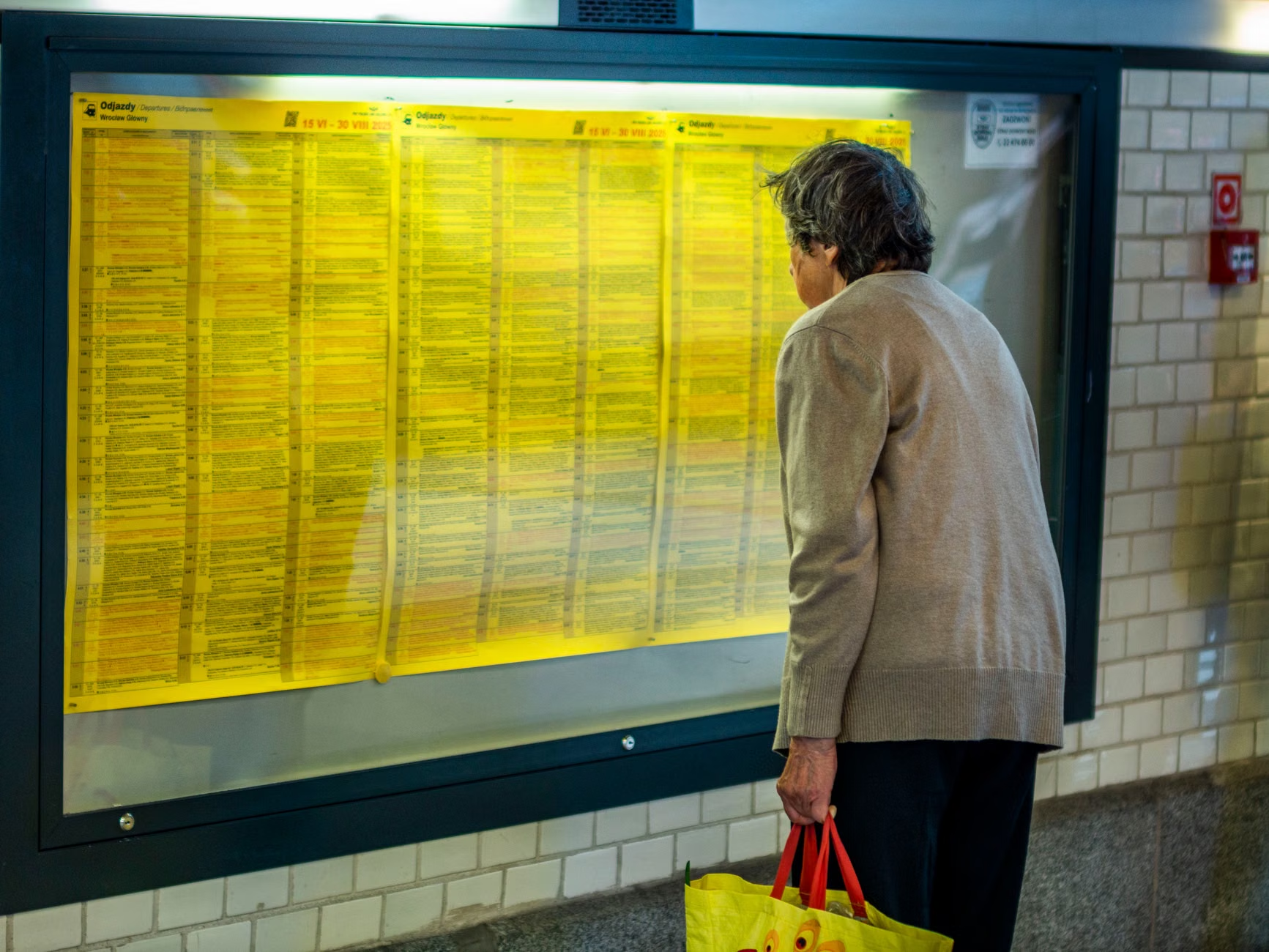
Technology can be your greatest ally. Apps like Citymapper or Google Maps provide real-time updates on transit delays, which is crucial if you are on a tight schedule. Furthermore, many transit authorities now offer mobile ticketing. By purchasing your tickets in advance on your smartphone, you bypass the need to navigate complex, often poorly lit ticket machines in crowded stations.
Technical Confidence: If you are not comfortable using a smartphone for ticketing, print out your itinerary and any necessary travel vouchers before leaving your hotel. Keep these in a clear plastic sleeve to protect them from the elements. Having a physical backup provides peace of mind and ensures that you are never stranded if your battery dies or the internet connection is unstable.
Comparative Analysis: Funiculars vs. Alternative Transport
When considering how to reach a high-altitude district, you often have choices. Use this table to decide which transport mode fits your needs best:
| Mode | Pros | Cons | Best For |
|---|---|---|---|
| Funicular | Fast, scenic, reliable. | Can be crowded, fixed route. | Direct access to steep hills. |
| Taxi/Rideshare | Door-to-door, private. | Expensive, traffic-prone. | Those with limited mobility. |
| Public Bus | Cheap, goes everywhere. | Slow, often crowded. | Budget-conscious travelers. |
| Walking | Free, flexible. | Physically demanding. | Flat urban areas. |
Decision Criteria: If your priority is safety and energy conservation, the funicular is almost always superior to the bus. If you have severe mobility constraints, a taxi or rideshare is the safest choice as it avoids the need to navigate station platforms entirely. However, for most seniors, the funicular provides the best balance of local experience and physical ease.
Deep Dive: The Hidden Inconvenience of Cobblestones
A frequently overlooked variable is the “last mile” problem. Even if a funicular drops you off at a beautiful, flat summit, the surrounding streets are often made of historic cobblestones. These surfaces are notoriously difficult for those with balance issues or those using walking aids.
Practical Tip: Wear shoes with thick, rubberized soles that provide excellent grip. Avoid shoes with thin heels or smooth leather soles, as these are slipping hazards on polished stone. If you use a cane, look for a rubber tip with a wide base to prevent it from getting stuck in the gaps between cobblestones. Taking these precautions ensures that your funicular journey is the start of a pleasant day, not the end of your comfort.
Conclusion: Empowering Your Journey
Traveling as a senior is an opportunity to engage with the world at your own pace. By treating the funicular not just as a transport option, but as a strategic tool for your itinerary, you can unlock access to historic sites that might otherwise feel out of reach. Remember: the goal is not to see everything, but to enjoy what you do see. Prioritize your comfort, use the resources available to you, and don’t be afraid to adjust your plans if the day becomes too demanding. Your travel experience is defined by your enjoyment, not by the number of attractions you check off a list.
For more information on specific city accessibility standards, you can refer to the European Network for Accessible Tourism (ENAT), which provides resources and guidance for travelers with accessibility needs across many major global destinations.
Frequently Asked Questions
1. Can I take my walker or wheelchair on a funicular?
Most modern funiculars are equipped to handle walkers and wheelchairs. However, older, historic systems may have narrow doors or platform gaps. Always check the official website for the specific city’s funicular to confirm “step-free” or “wheelchair accessible” status before heading to the station.
2. Is it better to buy tickets online or at the station?
If available, buying online is almost always better. It saves you from standing in queues and allows you to avoid interacting with potentially confusing or slow automated kiosks. If you are not tech-savvy, ask your hotel concierge to help you print tickets in advance.
3. What should I do if I feel dizzy or unwell during the ride?
If you feel unwell, remain seated if possible. If the ride is short, wait until you reach the next station to exit. If you feel like you might faint, alert the staff member or a fellow passenger immediately. Most funiculars have emergency stop buttons and communication systems, and operators are trained to assist passengers in distress.