- Prioritize “Flat-Access” Cities: Choose destinations like Vienna, Copenhagen, or parts of Berlin where historic centers have been retrofitted with flat paving and modern elevators, avoiding cities dominated by steep hills and uneven cobblestones.
- Verify Real-Time Accessibility: Never assume a site is accessible based on general descriptions; use official “Accessibility Guides” (often found on national tourism websites) to verify the status of elevators and wheelchair-friendly entrances.
- The “One Major Site” Rule: Plan no more than one major historic attraction per day to maintain stamina and allow for recovery, ensuring travel remains an enjoyable experience rather than an endurance test.
Europe is a continent defined by its history, but that same history—steeped in medieval architecture, narrow alleyways, and grand staircases—can present significant challenges for older travelers. Selecting accessible historic sites requires a shift in mindset: moving away from “must-see” bucket lists toward “must-experience” itineraries that prioritize safety, mobility, and comfort.
Understanding Accessibility Infrastructure in European Historic Centers
When evaluating a potential historic destination, the primary factor is not just the age of the building, but the level of municipal investment in accessibility. Modern European urban planning has made significant strides, but these improvements are not uniform. To make informed decisions, you must distinguish between “historic preservation” and “functional accessibility.”
The “Cobblestone Factor” and Terrain Assessment
Cobblestones are a hallmark of European charm but a major deterrent for those with balance concerns, mobility aids, or joint sensitivity. When researching a city, look at satellite imagery on mapping services to identify the ground material of the main thoroughfares. Cities that have replaced traditional rounded cobbles with flat-set stone or paved “pedestrian ribbons” are far more suitable for comfortable walking.
Practical Decision Rule: If a city center is described as “well-preserved medieval,” expect uneven ground. If it is described as “UNESCO World Heritage site with modern urban integration,” there is a higher probability of accessible pathways. Always check the city’s official tourism portal for an “Accessibility” or “Disabled Access” section; these sites often provide specific maps highlighting routes that avoid stairs.
Public Transport Integration
The accessibility of a historic site is often dictated by how you get there. In cities like Prague or Lisbon, the historic centers are built on steep hills. While the sites themselves might have elevators, the journey to reach them can be exhausting. Prioritize cities with extensive, low-floor tram networks or funiculars that bypass steep inclines.
How to Evaluate Specific Historic Sites Before You Travel
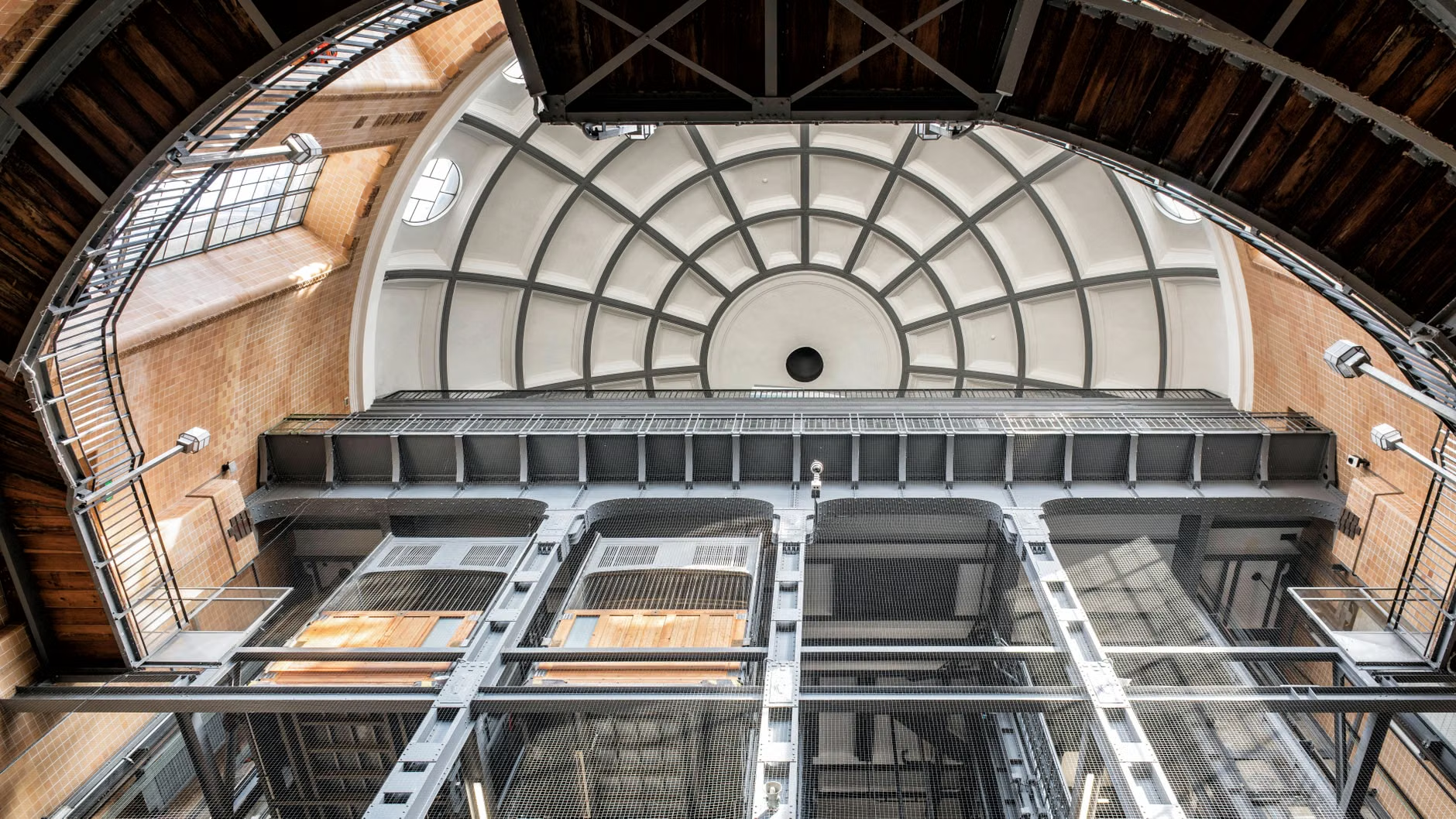
Before committing to a visit, you must perform a “pre-flight” check of the site’s infrastructure. Do not rely on generic travel blogs; look for technical details that confirm the site can accommodate your specific mobility needs.
The Three-Point Accessibility Checklist
When investigating a museum, palace, or cathedral, verify these three elements:
- Entryway Thresholds: Are there steps at the entrance? Many historic buildings use portable ramps, but these can be steep. Look for “level access” or “ground-floor entry.”
- Vertical Mobility: Does the building have a functional lift (elevator)? If so, is it large enough for a wheelchair or walker? Check if the lift serves all levels or just the ground floor.
- Sanitary Facilities: Are there accessible restrooms located within the main exhibition area, or are they located outside the building?
Common Mistake: Assuming that because a site is “famous,” it is accessible. Many iconic historic sites, such as certain towers or cliffside castles, have limited retrofitting options due to heritage protection laws. In such cases, the “accessibility” may only extend to the ground-floor courtyard.
Strategic Itinerary Planning for Stamina and Safety
The biggest threat to an enjoyable European trip is over-scheduling. Fatigue is not just an inconvenience; it increases the risk of trips, falls, and medical issues. A “senior-friendly” pace is not a sign of weakness—it is a strategy for longevity and deeper engagement with the culture.
The “One-Major-Site” Rule
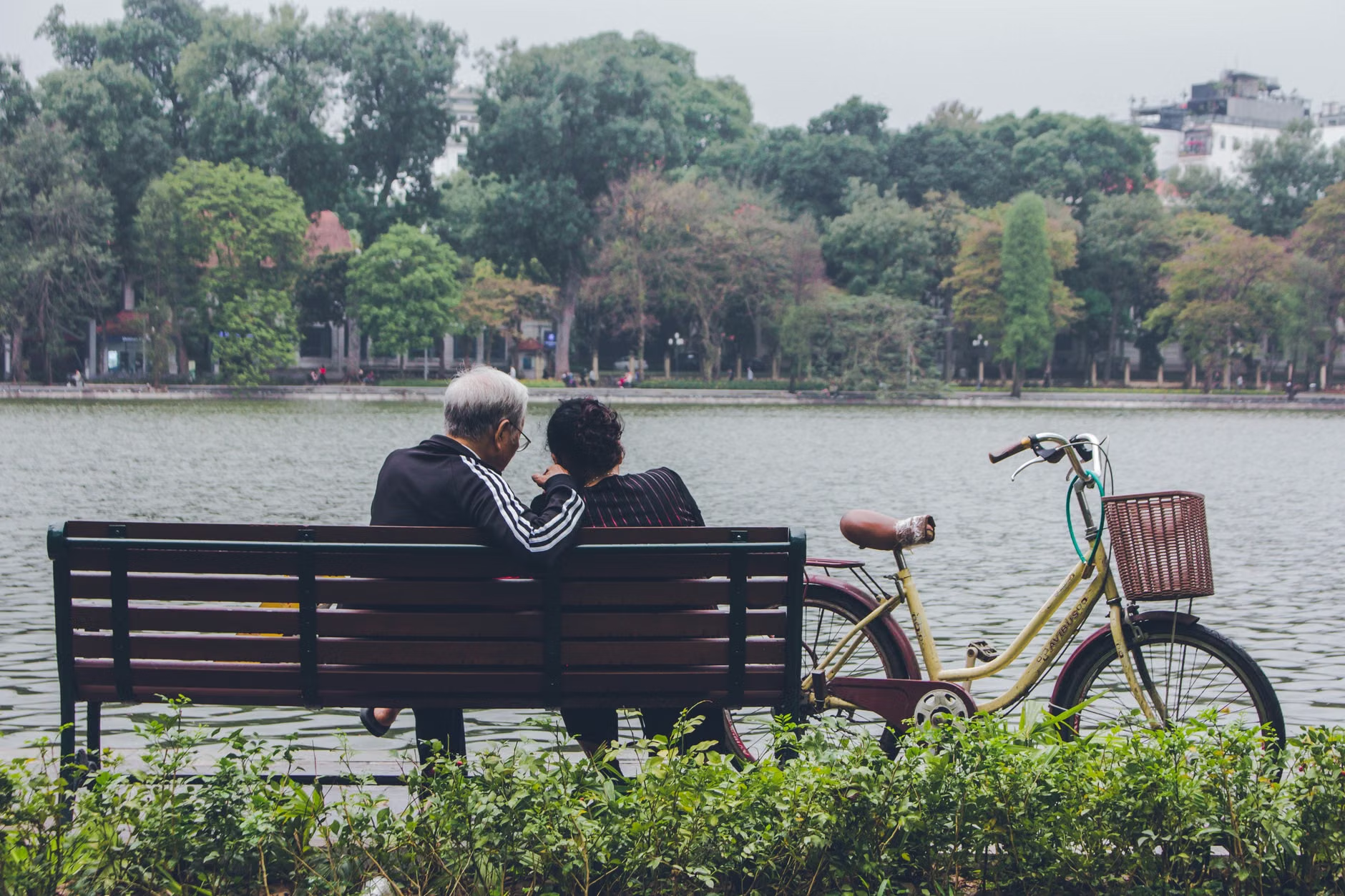
Limit your itinerary to one primary historic attraction per day. This allows you to explore at a leisurely pace, take necessary rest breaks, and avoid the peak crowds that often make navigating narrow spaces more difficult. Use the afternoon to sit in a local park or a café near the site, observing the rhythm of the city rather than rushing to the next landmark.
Utilizing “Slow Travel” Tools
Incorporate technology to reduce physical strain. Use dedicated navigation apps that allow you to set “avoid stairs” or “mostly flat” preferences. If you are traveling with a companion, consider the use of lightweight, foldable mobility aids that can be stored easily in a daypack or under a restaurant table, providing support when needed without being cumbersome.
| Feature | Senior-Friendly Option | High-Risk Option |
|---|---|---|
| Transport | Low-floor buses/trams | Subway systems with only stairs |
| Pacing | One site per day | Multiple sites per day |
| Walking | Paved, flat city centers | Historic hilly, cobblestone lanes |
This table illustrates the trade-offs between convenience and physical exertion. For travelers with limited stamina, the “Senior-Friendly” column is not a recommendation, but a baseline requirement for a safe trip.
Traveling as an older adult requires a proactive approach to health. Before departure, confirm your health insurance coverage for international travel. If you have chronic conditions, carry a summary of your medical history, a list of current medications (with generic names), and contact information for your primary care physician in your home country.
Practical Steps for Medical Preparedness
- Medication Management: Carry extra supplies of all essential medications in your carry-on luggage, not your checked bags. Ensure you have copies of original prescriptions.
- Finding Local Care: Identify the location of the nearest hospital or urgent care center in your destination city before you arrive. Most major European cities have excellent, English-speaking medical facilities.
- Hydration and Nutrition: Historic sites are often hot and lack air conditioning. Carry a reusable water bottle and plan your meals to avoid the “tourist rush” hours, which can be overwhelming and chaotic.

Hidden Variables: What Most Travelers Overlook
Beyond the obvious physical challenges, there are subtle variables that can impact your experience. First, consider the “lighting threshold.” Many historic sites, such as cathedrals or subterranean ruins, are intentionally kept dim for preservation. If you have any degree of visual impairment or sensitivity to light changes, these environments can be disorienting. Carry a small, high-intensity LED flashlight, which can be useful for reading signs or navigating uneven steps.
Second, consider the “seating desert.” While many museums have benches, they are often placed in high-traffic areas. Look for “quiet rooms” or educational centers within the museums, which are usually less crowded and offer comfortable seating to rest for 15–20 minutes. Taking these micro-breaks is the secret to maintaining energy levels throughout the day.
Third, check for “event-based accessibility.” Some historic sites are significantly more accessible during special events, such as guided tours for seniors or “quiet hours.” These events often provide additional staff assistance, slower pacing, and priority access to elevators, which are usually shared with the general public.
Conclusion: Empowerment Through Planning
Selecting accessible historic sites in Europe is a process of curation. By prioritizing cities with modern infrastructure, verifying accessibility details through official channels, and maintaining a balanced, slow-paced itinerary, you can fully enjoy the richness of European history without compromising your safety or comfort. Remember that accessibility is not just about physical ramps; it is about having the information and the autonomy to choose the experiences that best suit your personal needs and physical capabilities.
The most successful travelers are those who acknowledge their limits and plan around them, turning potential hurdles into manageable parts of the journey. Start your planning by identifying one city that meets your accessibility requirements and build your trip outward from there, ensuring every step of the journey is as rewarding as the destination itself.
Frequently Asked Questions
1. How can I confirm if a specific historic site is truly wheelchair or walker accessible?
Always visit the official website of the specific site and look for an “Accessibility” or “Visitor Information” tab. If this information is missing, email their visitor services department directly. Ask specific questions, such as: “Are there any stairs between the entrance and the main exhibition area?” or “Is the lift large enough for a standard mobility scooter?”
2. Are there specific European countries that are better for accessible travel?
Northern and Western European countries, such as Germany, Austria, Denmark, and the Netherlands, generally have more rigorous standards for public building accessibility compared to Southern European countries, where historic preservation laws often conflict with modern retrofitting. However, most major European capitals have invested in making their primary tourist attractions accessible.
3. What should I do if I find myself exhausted while visiting a historic site?
Immediately seek out a staff member and ask for the nearest “rest area” or “quiet room.” Most major museums in Europe are required to have these spaces. If you are outside, locate the nearest museum, library, or hotel lobby—these are often the most reliable places to find a clean, accessible restroom and a place to sit for a few minutes to recover your energy.
For further information on traveling with accessibility needs, you may consult the European Commission’s guidance on accessibility.