- Seated side-bends improve lateral spinal mobility, which is essential for daily tasks like reaching, turning, and maintaining balance.
- Safety and stability are the primary goals; always use a chair without wheels on a non-slip surface.
- Consistency over intensity: performing small, controlled stretches daily is more effective for long-term spinal health than sporadic, deep stretching.
Spinal mobility is one of the most critical factors in maintaining independence as we age. The spine is not merely a central support structure; it is a complex, dynamic system that facilitates almost every movement we make. When the muscles surrounding the spine become tight—which is a common byproduct of prolonged sitting or reduced physical activity—it can lead to stiffness, restricted range of motion, and discomfort during everyday tasks like reaching for a shelf or checking over your shoulder while driving.
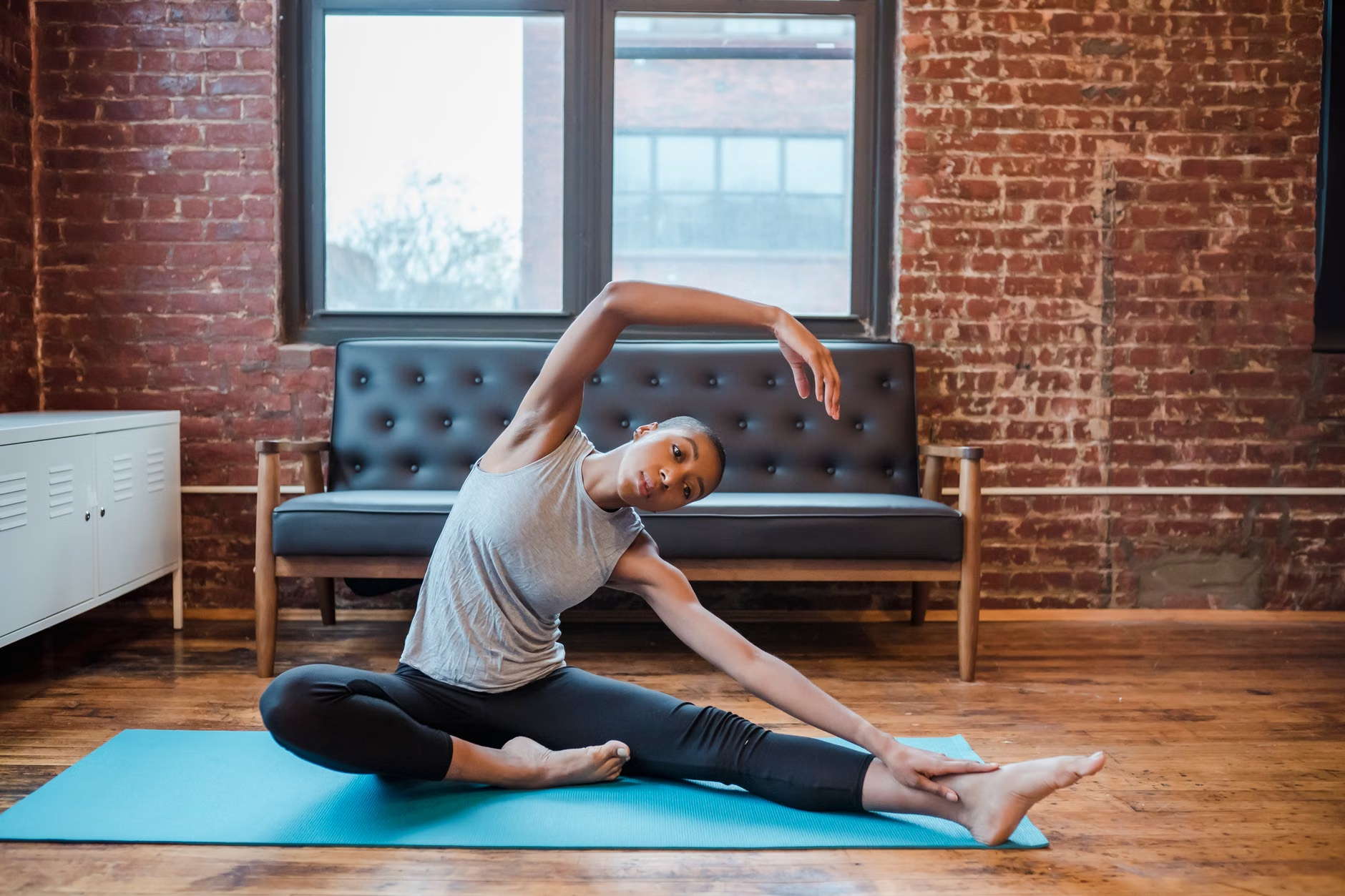
Seated side-bends are an accessible, low-impact exercise designed to target the lateral muscles of the torso, including the obliques and the intercostal muscles between the ribs. By practicing these movements in a seated position, you eliminate the challenge of maintaining balance on your feet, allowing you to focus entirely on the quality and control of the stretch. This guide explores the mechanics of the movement, how to integrate it safely into your routine, and why it is a foundational practice for long-term spinal health.
Understanding the Mechanics of the Seated Side-Bend
The seated side-bend is a form of lateral flexion. In physiological terms, lateral flexion is the movement of the spine to the side, away from the midline of the body. Throughout our lives, we often move in the sagittal plane (forward and backward, such as walking or bending to pick something up), but we rarely challenge our spines in the frontal plane (side to side). This lack of movement leads to the “freezing” of the connective tissues in the lateral torso.
What it is: A controlled movement where the torso leans to one side while the hips remain firmly anchored to the seat.
Why it matters: By stretching the lateral chain of muscles, you improve the flexibility of the rib cage, which can actually assist in deeper, more efficient breathing. Furthermore, improved lateral mobility prevents the spine from becoming “locked” in a forward-rounded position, commonly referred to as kyphosis or “stooped posture.”
The Anatomy of a Safe Stretch
When you perform a side-bend, you are lengthening the muscles on the side opposite to the direction of the bend. For example, if you lean to the right, you are stretching the left side of your torso. This includes the latissimus dorsi (the large back muscle), the external and internal obliques, and the quadratus lumborum (a deep abdominal muscle that connects the bottom of the ribs to the pelvis).
Many adults assume that a “good” stretch must be painful or intense. In reality, the most effective stretches for the spine are those that feel like a gentle “opening” or “lengthening.” If you feel sharp, shooting pain, or if you feel as though you are pinching the vertebrae on the side you are leaning toward, you have gone too far.
Step-by-Step Execution for Maximum Safety
Before beginning any exercise, it is important to ensure your environment is conducive to safety. A chair with wheels is dangerous for this movement, as it may slide out from under you. Always choose a sturdy, armless chair if possible, and place it on a non-slip rug or bare floor.
| Step | Action | Key Focus Point |
|---|---|---|
| 1. Positioning | Sit upright with your feet hip-width apart, planted firmly on the floor. | Ensure your pelvis is neutral, not tilted forward or backward. |
| 2. Stabilization | Place your right hand on the side of the chair seat to anchor yourself. | Keep your weight distributed evenly across both sit-bones. |
| 3. The Reach | Inhale deeply, and as you exhale, reach your left arm up and slowly lean to the right. | Focus on “reaching up and over” rather than just collapsing to the side. |
| 4. The Return | Inhale to return to the center. Repeat 3-5 times before switching sides. | Move slowly; avoid momentum or jerky motions. |
The table above outlines the basic flow. Note that the “anchor” hand is crucial. By gripping the seat, you create a counter-tension that prevents your hip from lifting off the chair. If your hip lifts, the stretch is no longer isolating the spine and instead becomes a full-body tilt, which reduces its effectiveness and increases the risk of losing your balance.
Common Mistakes and How to Avoid Them
Even with simple movements, small errors can accumulate into discomfort or lack of progress. Below are the most common pitfalls observed in adult fitness programs.
1. “Collapsing” the Rib Cage
Many people lean to the side by simply crunching their ribs toward their hip. This creates compression on the side you are leaning toward. Instead, visualize your spine as a long, flexible rod. When you reach overhead, imagine you are trying to touch the corner of the ceiling. This “lengthening” action ensures that the vertebrae are being decompressed rather than squashed.
2. Holding the Breath
It is natural to hold your breath during a stretch, but this increases blood pressure and creates unnecessary muscle tension. Aim to exhale during the exertion phase—when you are moving into the stretch. The exhalation helps the nervous system relax, allowing the muscles to elongate further.
3. Looking Down at the Floor
Keep your head in line with your spine. If you look down, you round your upper back, which negates the lateral stretch. Keep your gaze forward or slightly upward toward the inside of your reaching elbow to maintain proper cervical alignment.
Integrating Mobility into Your Daily Routine
Consistency is the primary driver of improved flexibility. You do not need a dedicated hour-long session to see benefits. In fact, short, frequent sessions are often superior for older adults because they prevent the body from entering a state of prolonged inactivity.
The “Transitions” Method: Use the seated side-bend as a transition between activities. For example, perform a few repetitions after you finish your morning coffee, or after you have been reading for 30 minutes. This acts as a “reset” for your posture and helps combat the stiffness that settles in after sitting for extended periods.
When to Consult a Professional
While gentle stretching is generally safe, there are conditions where you should exercise caution or seek guidance from a physical therapist or your primary care physician:
- Osteoporosis: If you have been diagnosed with low bone density, deep spinal twisting or extreme lateral bending should be approached with caution. Ask your doctor about the specific range of motion that is safe for your spine.
- Chronic Back Pain: If you have a history of herniated discs, spinal stenosis, or sciatica, the movement might irritate the nerve roots. A physical therapist can provide modified versions of this stretch that are safe for your specific condition.
- Recent Surgery: Always wait for medical clearance before beginning a new exercise program following any surgery, especially abdominal or spinal procedures.
Understanding the Role of Connective Tissue
As we age, the composition of our connective tissues, such as fascia, undergoes structural changes. Fascia is the web-like tissue that surrounds your muscles and organs. Over time, it can become less hydrated and more prone to adhesions (areas where the tissue sticks together). These adhesions are often what people feel as “tightness” or “knots.”
Seated side-bends act as a form of “flossing” for this tissue. By moving through a range of motion, you are mechanically encouraging the hydration and sliding of these tissues. This is why you might feel an immediate, albeit temporary, sense of relief after stretching. Over weeks and months, this consistent movement helps maintain the elasticity of the fascia, keeping you mobile for longer.
Advanced Considerations for Long-Term Mobility
Once you are comfortable with the basic seated side-bend, you may wonder how to progress. It is important to note that “progression” in this context does not mean reaching further or pushing harder. Instead, it means improving the quality of the movement and integrating it into more complex patterns.
One way to enhance the effectiveness of the stretch is to focus on the intercostal muscles. These are the muscles between your ribs. When you reach overhead, take a deep breath into the side of your rib cage that is being stretched. This internal pressure expands the rib cage from the inside out, providing a deeper, more effective stretch than movement alone can achieve.
Another consideration is the “hip anchor.” As you become more adept at the movement, focus on the weight distribution on your seat. If you find that your left hip is rising when you reach to the right, place a small weight (like a heavy book) on your left thigh or simply focus more intently on pressing your left sit-bone into the chair. The goal is to isolate the movement to the spine while the pelvis remains the stable, unmoving foundation.
The Connection Between Mobility and Daily Independence
Why go to the effort of doing these stretches? The answer lies in the “activities of daily living” (ADLs). The ability to reach for a glass on a high shelf, buckle a seatbelt, or turn to look at someone speaking to you from the side all require some degree of lateral spinal mobility.
When our lateral range of motion decreases, we compensate by using other joints. For instance, if you cannot turn your torso, you might twist your neck excessively or rotate your knees, which puts undue stress on those joints. By maintaining the flexibility of your spine, you essentially “outsource” the work to the muscles designed for it, protecting your more vulnerable joints like the hips and knees.
Evaluating Your Progress
How do you know if the exercises are working? Avoid looking for “miracle” results. Instead, look for these subtle, practical markers of improvement:
- Reduced Morning Stiffness: You may find that you feel less “creaky” when getting out of bed in the morning.
- Ease of Movement: Tasks like reaching into the backseat of a car or grabbing an item from a cupboard feel less effortful.
- Better Postural Awareness: You might find yourself naturally sitting taller throughout the day without having to consciously “force” your posture.
Keep a simple log if you find it helpful. A weekly check-in—noting how your back feels on a scale of 1 to 10—can provide objective evidence that your efforts are paying off. If you find that your mobility is not improving, or if you are experiencing persistent discomfort, it is a signal to revisit your technique or speak with a movement professional who can provide personalized feedback.
Resources and Further Guidance
For those interested in the science of aging and mobility, the following resources provide evidence-based guidance on maintaining physical health in later life:
- National Institute on Aging (NIA) – Exercise and Physical Activity: A comprehensive resource for safe, evidence-based exercise guidelines for older adults.
- World Health Organization – Physical Activity Guidelines: Global standards for the amount and type of activity required for healthy aging.
Remember that your spine is a lifelong companion. Treating it with the respect of regular, gentle maintenance—like the seated side-bend—ensures that it remains a source of strength and support for years to come. Start small, be consistent, and listen to your body’s signals.
Frequently Asked Questions
1. How many times a day should I perform seated side-bends?
There is no strict rule, but doing 3-5 repetitions per side, 1-2 times a day, is a great starting point. The goal is to integrate the movement into your day rather than treating it like a grueling workout. If you spend a lot of time sitting, performing a few stretches every time you stand up or sit down can be highly effective.
2. Can I do this stretch if I have lower back pain?
If you have chronic back pain, you should consult your doctor or a physical therapist before starting. While many people find relief through gentle movement, some specific conditions (such as acute disc issues) may be aggravated by lateral bending. A professional can help you determine if this specific movement is appropriate for your diagnosis.
3. What should I do if I feel dizzy while reaching overhead?
Dizziness when reaching overhead can occur for a few reasons, including blood pressure changes or neck stiffness. If you feel dizzy, stop the movement immediately and keep your head in a neutral position. You can modify the exercise by keeping your hand on your shoulder or waist rather than reaching overhead. If dizziness persists, please consult your physician to rule out underlying issues.