- Cognitive Engagement: Landscape sketching forces the brain to transition from passive observation to active analysis, which strengthens visual-spatial processing and sustained attention.
- Low Barrier to Entry: Unlike many hobbies, basic sketching requires minimal financial investment and can be adapted to any physical stamina level, whether at home or outdoors.
- Mental Restoration: The act of sketching acts as a mindfulness practice, reducing cortisol levels and providing a structured creative outlet that enhances emotional resilience.
Learning to sketch landscapes is more than just a creative pursuit; it is a rigorous exercise for the brain that supports neuroplasticity—the ability of the neural networks in the brain to change through growth and reorganization. For adults aged 60 to 80, integrating a practice like landscape sketching offers a unique combination of fine motor skill maintenance, visual-spatial training, and psychological stress reduction.
This article explores the cognitive mechanisms involved in sketching, provides a practical framework for beginners, and addresses how this hobby can be sustained safely and effectively.
The Cognitive Mechanics of Landscape Sketching
When you look at a scene with the intention of drawing it, your brain undergoes a significant shift in processing. This is not the same as merely “seeing” a view. It is an active process of deconstruction.
From Passive Viewing to Active Analysis
In our daily lives, we often use “top-down” processing, where the brain recognizes objects based on memory (e.g., “that is a tree”). When you sketch, you must switch to “bottom-up” processing. You are forced to look at the world as a collection of shapes, values (light and dark), and relationships. You stop seeing a “tree” and start seeing an irregular vertical cylinder paired with a textured, rounded mass. This shift engages the parietal lobe, which is responsible for spatial awareness and sensory integration.
Strengthening Sustained Attention
Sustained attention, the ability to focus on a task for an extended period, naturally fluctuates with age. Sketching provides a tangible, feedback-loop-driven task. Because the paper changes based on your input, the brain receives immediate reinforcement for its focus. This “flow state”—a term coined by psychologist Mihaly Csikszentmihalyi—occurs when the challenge of the task matches your skill level, leading to deep absorption that suppresses the “background noise” of daily worries.
Physical and Practical Considerations for the Senior Artist
Before beginning, it is essential to consider the physical realities of your current mobility and environment. Sketching is highly adaptable, but it requires thoughtful setup to prevent strain.
Ergonomics and Fine Motor Skills
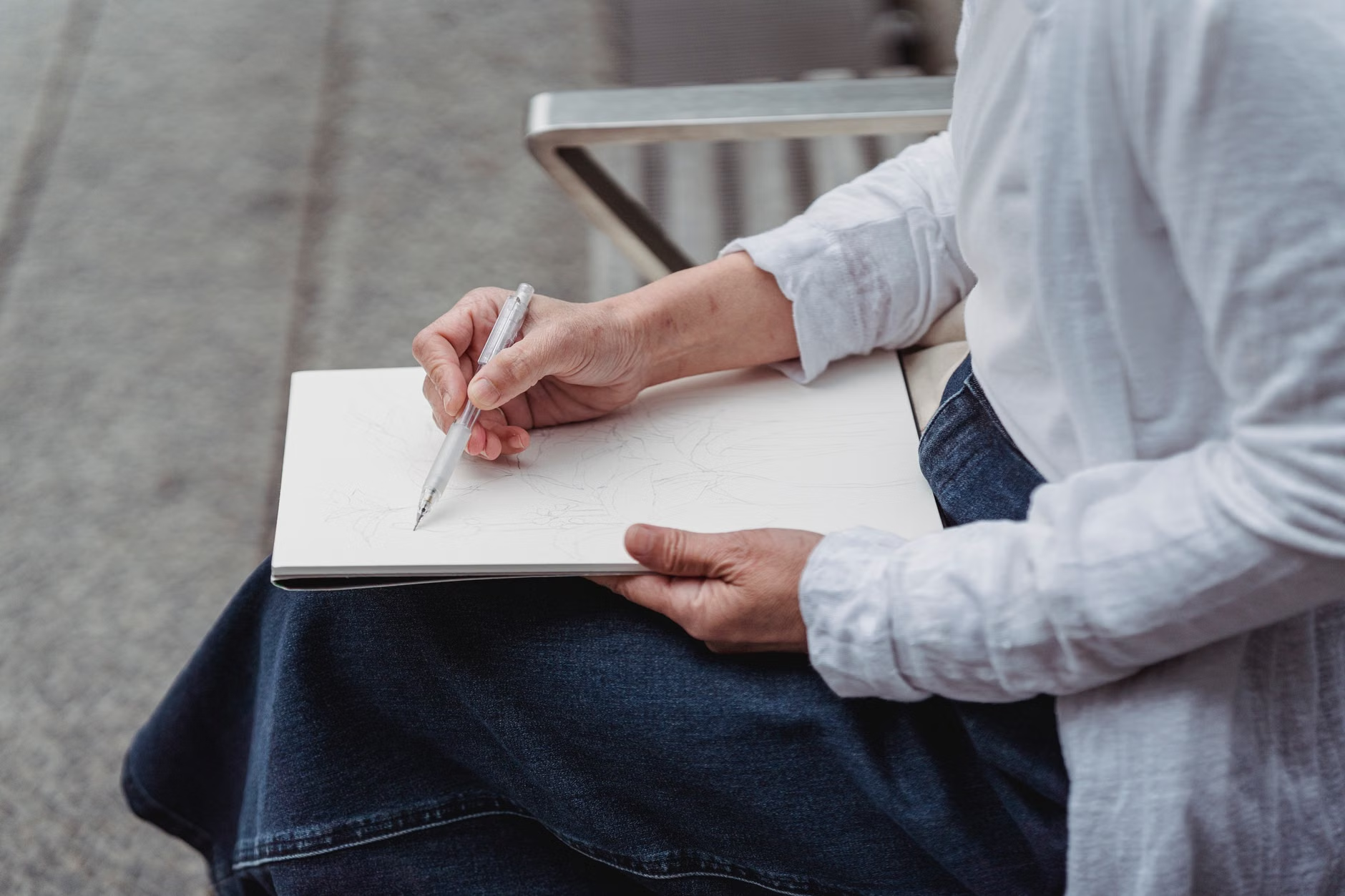
For those experiencing arthritis or reduced grip strength, standard pencil grips can be uncomfortable. A few simple adjustments can prevent fatigue:
- Use Thicker Pencils: Wrapping a standard wooden pencil in a foam grip or using a mechanical pencil with a wide, rubberized barrel reduces the need for a tight pinch.
- Angle Your Surface: Avoid hunching over a flat table. Use a tabletop easel or a sturdy book to prop your sketchbook up at a 45-degree angle. This keeps your neck and back in a neutral position.
- Short Sessions: Do not aim for hours of work. Limit sessions to 20–30 minutes to avoid muscle stiffness.
Choosing the Right Environment
The “landscape” does not need to be a mountain range. It can be your backyard, a local park bench, or even a view from a window. For those with limited mobility, sketching from a window is a perfect starting point. It provides a controlled environment with access to restrooms, comfortable seating, and protection from weather—all of which are critical for maintaining a consistent, stress-free practice.
| Environment | Pros | Cons | Suitability |
|---|---|---|---|
| Indoor (Window) | Comfort, climate control, safety. | Limited perspective. | Best for beginners or those with mobility issues. |
| Local Park | Fresh air, social interaction. | Requires mobility, seating management. | Best for those seeking light exercise and nature. |
| Studio/Table | Total control, no distractions. | Less visual stimulation. | Best for focused technical practice. |
The table above suggests that the most effective way to start is in a controlled environment. If you have limited mobility, do not force yourself to travel to a “scenic” location. The cognitive benefit is derived from the act of drawing, not the prestige of the subject matter.
A Step-by-Step Approach for Beginners
Many adults fear starting because they believe they “cannot draw.” It is important to distinguish between “artistic talent” and “observational skill.” Anyone can learn to observe; talent is merely a bonus.
Phase 1: The Essential Toolkit
Do not be overwhelmed by professional supplies. You only need three things to begin:
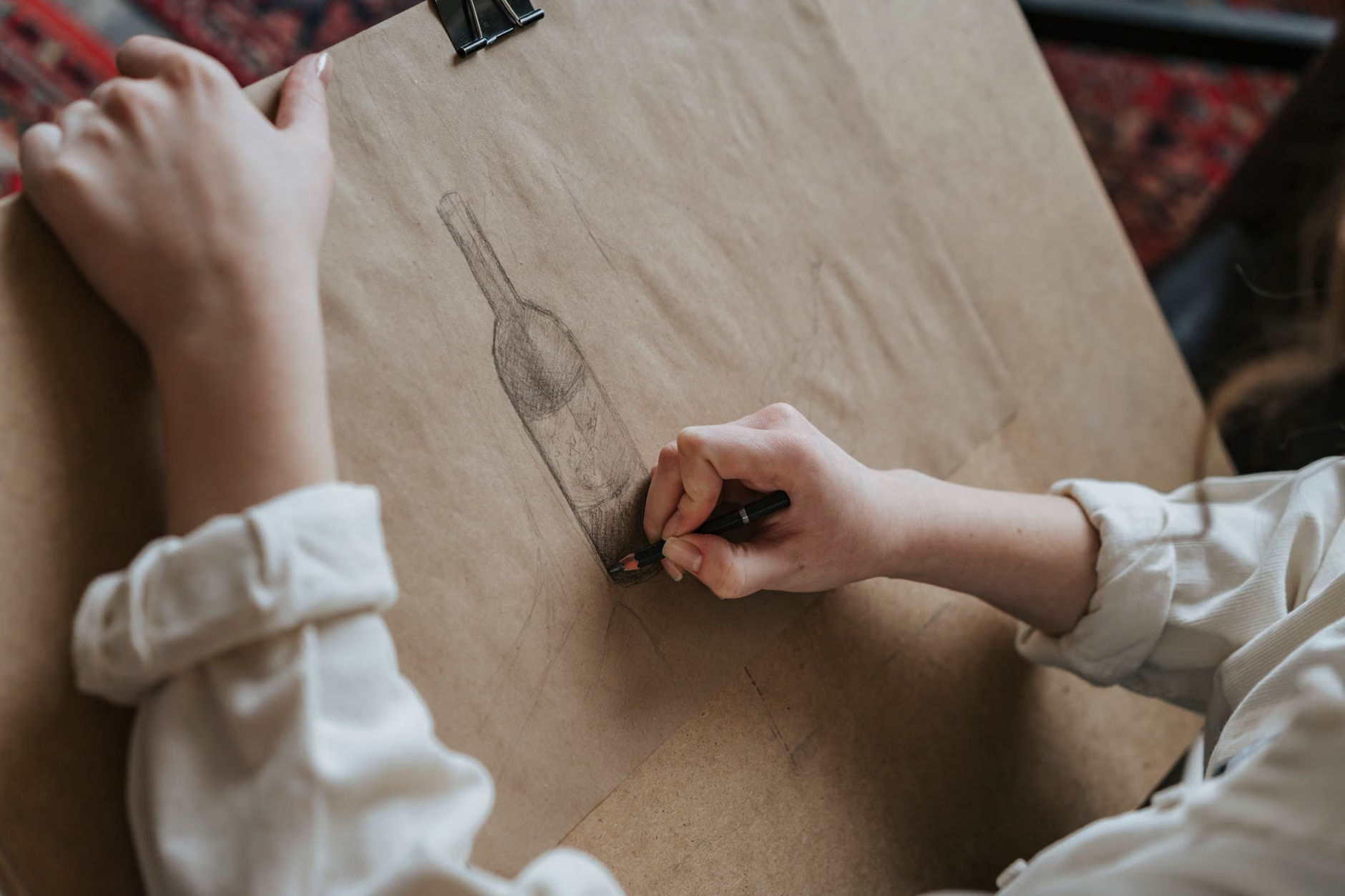
- Graphite Pencils: A 2B pencil for general sketching and a 4B pencil for darker shadows.
- Sketchbook: A spiral-bound book with at least 100gsm (grams per square meter) paper. The spiral allows the book to lie flat.
- Soft Eraser: A high-quality vinyl or kneaded eraser that does not tear the paper.
Phase 2: The “Shapes First” Method
When you start a sketch, do not begin with details. Follow this sequence:
- Identify the Horizon Line: Draw a faint horizontal line to ground your page.
- Block in Large Shapes: Use light lines to map out the largest objects (mountains, large trees, buildings). Do not press hard.
- Identify the Light Source: Look at where the sun is. Everything on the opposite side of that direction should be shaded.
- Add Value: Use your 4B pencil to add shadows. Shadows are what give a drawing “weight” and realism.
Common Misconceptions
A common mistake is trying to “outline” everything. In nature, there are no lines—only edges where two colors or values meet. If you draw a hard line around every object, your drawing will look like a cartoon. Instead, use soft shading to define where one object ends and another begins.
Health and Wellness: The “Mental Hygiene” Aspect
Beyond the cognitive training, sketching serves as a form of “mental hygiene.” Research suggests that engaging in creative activities can lower cortisol—the body’s primary stress hormone—regardless of the skill level of the participant. For older adults, this is a powerful tool for managing the daily stresses of aging, such as health anxieties or social isolation.
The Role of Mindfulness
Mindfulness is often misunderstood as meditation. However, mindfulness is simply the act of being present. When you are focused on the texture of a rock or the angle of a branch, you are not ruminating on the past or worrying about the future. This “anchoring” effect is scientifically linked to improved emotional regulation and lower levels of self-reported anxiety.
Social Connection and Community
Sketching can also be a communal activity. Many local community centers or art clubs offer “Urban Sketching” groups. These groups are often informal and inclusive. If you choose to join one, ensure the location is accessible (check for seating, ramp access, and nearby parking). If you are a caregiver, this is an excellent activity to share with an older family member, as it is a quiet, parallel activity that allows for conversation or comfortable silence.
Safety and Sustainability in Your Practice
To keep this hobby sustainable, you must treat it like any other form of physical activity. Overdoing it can lead to “artist’s cramp” or eye strain.
Preventing Eye Strain
Older eyes require more light to perceive contrast. Ensure your workspace is well-lit, preferably with natural, indirect light. Avoid working in direct, harsh sunlight, as the glare off the white paper can be fatiguing. If you find yourself squinting, take a 10-minute break, look at a distant object, and then return to your work.
Managing Expectations
The goal of this practice is not to create a masterpiece for display; it is to keep your brain active. If you feel frustrated, stop. The moment you feel irritation, the cognitive benefits diminish because the brain switches from a “learning” state to a “stress” state. If a drawing isn’t working, turn the page. The paper is inexpensive, and the process is the prize.
When to Seek Professional Guidance
If you notice persistent pain in your wrists, hands, or neck while sketching, pause your practice. While sketching is generally low-impact, underlying conditions like carpal tunnel syndrome or cervical spine issues can be exacerbated by poor posture. Consult a physical therapist or your primary care physician if pain persists for more than a few days, and ask them for specific stretches for your hands and shoulders.
Conclusion
Landscape sketching is a low-cost, low-risk, and high-reward activity that provides a tangible boost to cognitive function. By shifting your perception from “naming” objects to “analyzing” their forms, you engage the brain in a way that promotes focus, spatial awareness, and mental clarity. Whether you are sketching the trees in your garden or the view from your living room, you are building a habit that supports long-term mental vitality. Start small, keep your tools simple, and focus on the joy of observation rather than the perfection of the result.
Frequently Asked Questions (FAQ)
1. Do I need expensive art supplies to start sketching?
No. You can begin with a simple graphite pencil and a basic sketchbook. The quality of your brain’s engagement does not depend on the price of your tools. As you become more comfortable, you may choose to experiment with different pencil grades (like 6B for darker tones), but this is entirely optional.
2. I have arthritis; is sketching still a good hobby for me?
Yes, but you must adapt your tools. Using thicker, rubberized grips or foam pencil sleeves can significantly reduce the strain on your joints. It is also important to maintain a relaxed grip—if your hand hurts, take a break. Focus on short sessions of 15 to 20 minutes to prevent muscle fatigue.
3. How do I know if I am “doing it right”?
In sketching, “right” is defined by your personal observation. If your sketch looks like the object you were trying to draw, you have succeeded. There is no standard of perfection in learning to see. If you are struggling, try drawing a simple shape, like a square or a circle, and focusing only on the light and shadow on that shape. This builds the foundational skills needed for more complex landscapes.
Disclaimer: This article is for informational purposes only and does not constitute medical advice. Always consult with a healthcare professional before beginning a new physical activity or if you experience persistent pain or discomfort.