Selecting a hobby after the age of 60 is rarely about simply “passing the time”; it is a strategic investment in long-term cognitive reserve, physical mobility, and emotional resilience. As professional and family obligations shift, the opportunity arises to engage in activities that were perhaps sidelined for decades. This guide provides a detailed framework for evaluating and starting new pursuits that specifically cater to the needs and goals of adults in the 60 to 80 age bracket, focusing on evidence-based benefits and practical implementation.
- Cognitive Diversity Matters: Engaging in “high-challenge” hobbies like learning a new language or complex strategy games builds neuroplasticity more effectively than passive entertainment.
- Social Integration is a Health Metric: Hobbies that involve regular group interaction significantly reduce the risks associated with social isolation, which has been linked to better cardiovascular and mental health outcomes.
- Adaptability is the Key to Longevity: Choosing hobbies that can be modified for different mobility levels ensures that physical changes do not force the abandonment of a beloved activity.
The Science of Cognitive Play: Why Strategy and Learning Matter
The brain remains capable of forming new neural pathways throughout the human lifespan, a concept known as neuroplasticity. However, for adults aged 60 and older, the “use it or lose it” principle becomes increasingly relevant. Hobbies that require active problem-solving, memory recall, and the acquisition of new skills act as a form of “cognitive cross-training.”
Strategic Games: Bridge, Chess, and Mahjong
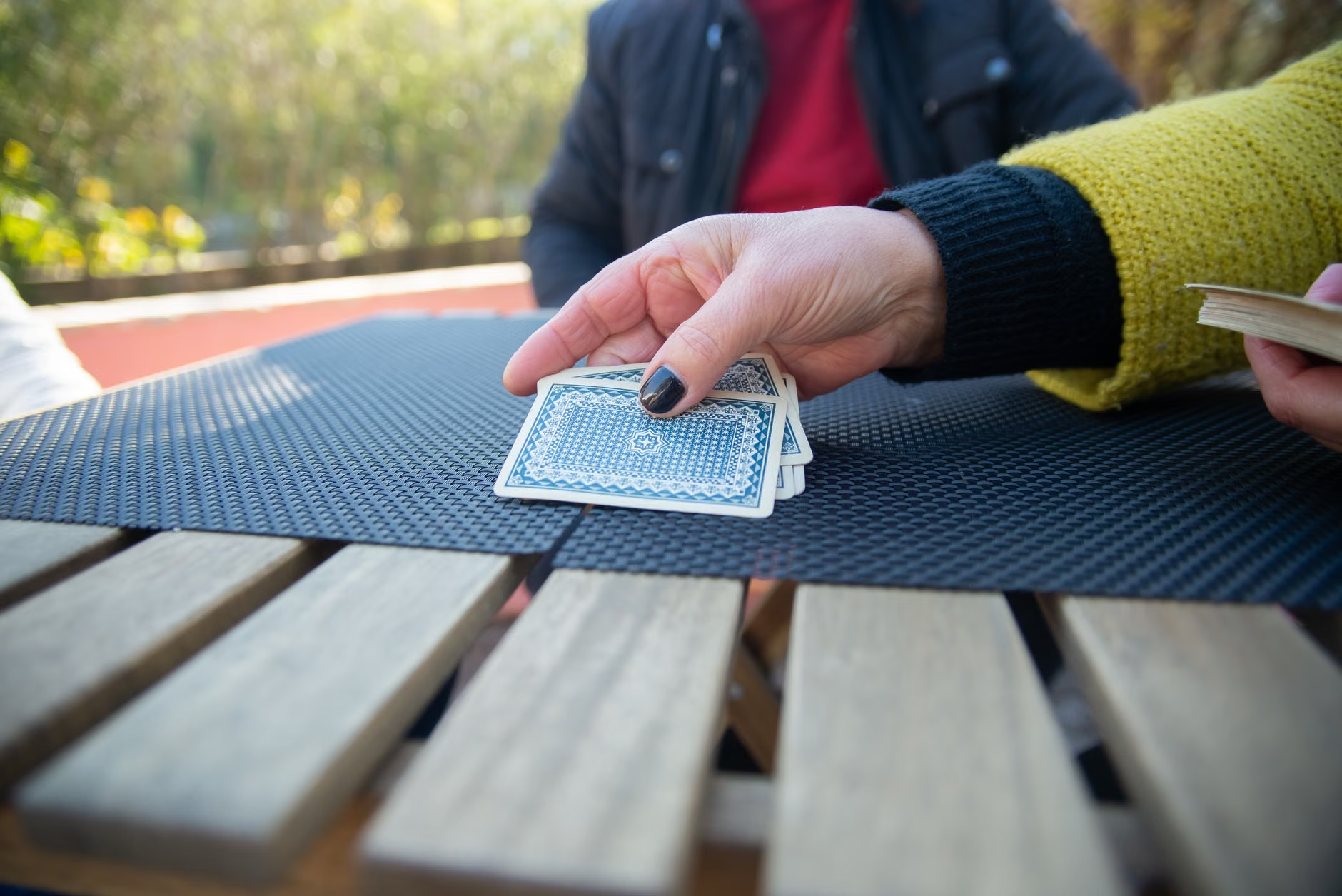
Strategic games are distinct from games of pure chance because they require the player to anticipate an opponent’s moves, manage resources, and adapt to changing variables. Bridge, for example, is highly regarded by cognitive health experts because it combines complex mathematics, memory, and social cooperation. Unlike Solitaire, Bridge requires a partner and two opponents, creating a social contract that encourages regular attendance and mental sharpness.
What it looks like in real life: Imagine a local community center that hosts a weekly Bridge club. A newcomer doesn’t just learn the rules; they learn the nuances of communication with their partner through “bidding.” This requires learning a new “language” of signals and responses, which keeps the prefrontal cortex highly engaged.
Practical Step: If you are new to strategy games, start with digital versions (like Chess.com or Bridge Base Online) to learn the basic mechanics at your own pace before joining a local physical club. This builds confidence and ensures you understand the etiquette of the game.
Language Acquisition in Later Life
Contrary to the myth that you cannot learn a language after childhood, older adults often bring superior focus and vocabulary knowledge to the task. Learning a language involves “switching costs”—the mental effort required to move between two different systems of grammar and vocabulary. This switching is excellent for executive function.
| Method | Best For | Estimated Cost | Social Level |
|---|---|---|---|
| Mobile Apps (Duolingo/Babbel) | Building basic vocabulary and daily habits. | Free to $15/month | Low (Solo) |
| Local College Auditing | Deep grammar and cultural understanding. | $0 – $100 (Senior discounts) | High (Classroom) |
| Conversation Circles | Practical speaking and social connection. | Free (Libraries/Groups) | Very High |
The comparison above shows that while apps are convenient, local college auditing or conversation circles offer the social interaction that is crucial for maintaining motivation. For an adult aged 70, the goal may not be perfect fluency, but rather the cognitive challenge of the process itself.
Movement as Medicine: Low-Impact Physical Hobbies
Physical activity in the 60-80 age range must balance cardiovascular benefits with joint protection and fall prevention. Hobbies that emphasize “proprioception”—the body’s ability to sense its position in space—are particularly valuable for maintaining balance.
The Rise of Pickleball
Pickleball has become the fastest-growing sport for older adults globally, and for good reason. It is played on a smaller court than tennis, reducing the amount of running required, and uses an underhand serve, which is easier on the rotator cuff. However, it still provides a significant aerobic workout.
Common Mistake: Many beginners jump into Pickleball without proper footwear. Regular running shoes do not provide the lateral support needed for the side-to-side movements of the game. Always invest in court-specific shoes to prevent ankle rolls and falls.
Actionable Advice: Before your first game, perform a dynamic warm-up focusing on the calves and Achilles tendons. Older adults are more prone to tendon strains in racket sports; a five-minute warm-up of leg swings and ankle circles can reduce this risk significantly.
Tai Chi and “Meditation in Motion”
Tai Chi is a low-impact hobby that focuses on slow, deliberate movements and deep breathing. Clinical studies have shown that Tai Chi is one of the most effective ways to improve balance and reduce the fear of falling in adults over 65. Because it does not require special equipment or high levels of initial fitness, it is accessible to almost everyone.
What the reader can do: Look for “Tai Chi for Arthritis” or “Silver Sneakers” programs at local gyms. These versions are specifically modified to be gentler on the knees and hips. If a local class isn’t available, reputable instructors like Dr. Paul Lam offer DVDs and online courses that are medically vetted for safety.
Creative and Artistic Pursuits: Expression and Fine Motor Skills
Artistic hobbies provide a sense of “flow”—a state of deep immersion that reduces stress and promotes emotional well-being. They also help maintain fine motor skills and hand-eye coordination.
Gardening: Ergonomics and Adaptation
Gardening is a multi-sensory hobby that provides vitamin D exposure, moderate exercise, and the reward of growth. However, traditional gardening can be hard on the back and knees. The transition to raised-bed gardening or vertical gardening is a practical next step for those who want to continue this hobby into their 80s.
- Raised Beds: Build or buy beds that are at waist height (roughly 30-36 inches). This eliminates the need for kneeling or bending.
- Ergonomic Tools: Look for tools with “ratchet” mechanisms (for pruners) or enlarged, soft-grip handles. These require less grip strength, making them ideal for individuals with arthritis.
- Irrigation: Install a simple drip irrigation system with a timer. This removes the physical strain of carrying heavy watering cans.
Digital Photography and Editing
Photography is an excellent hobby because it encourages walking and exploration while also requiring technical learning. Modern digital cameras and smartphones have made the “cost per photo” zero, allowing for endless experimentation.
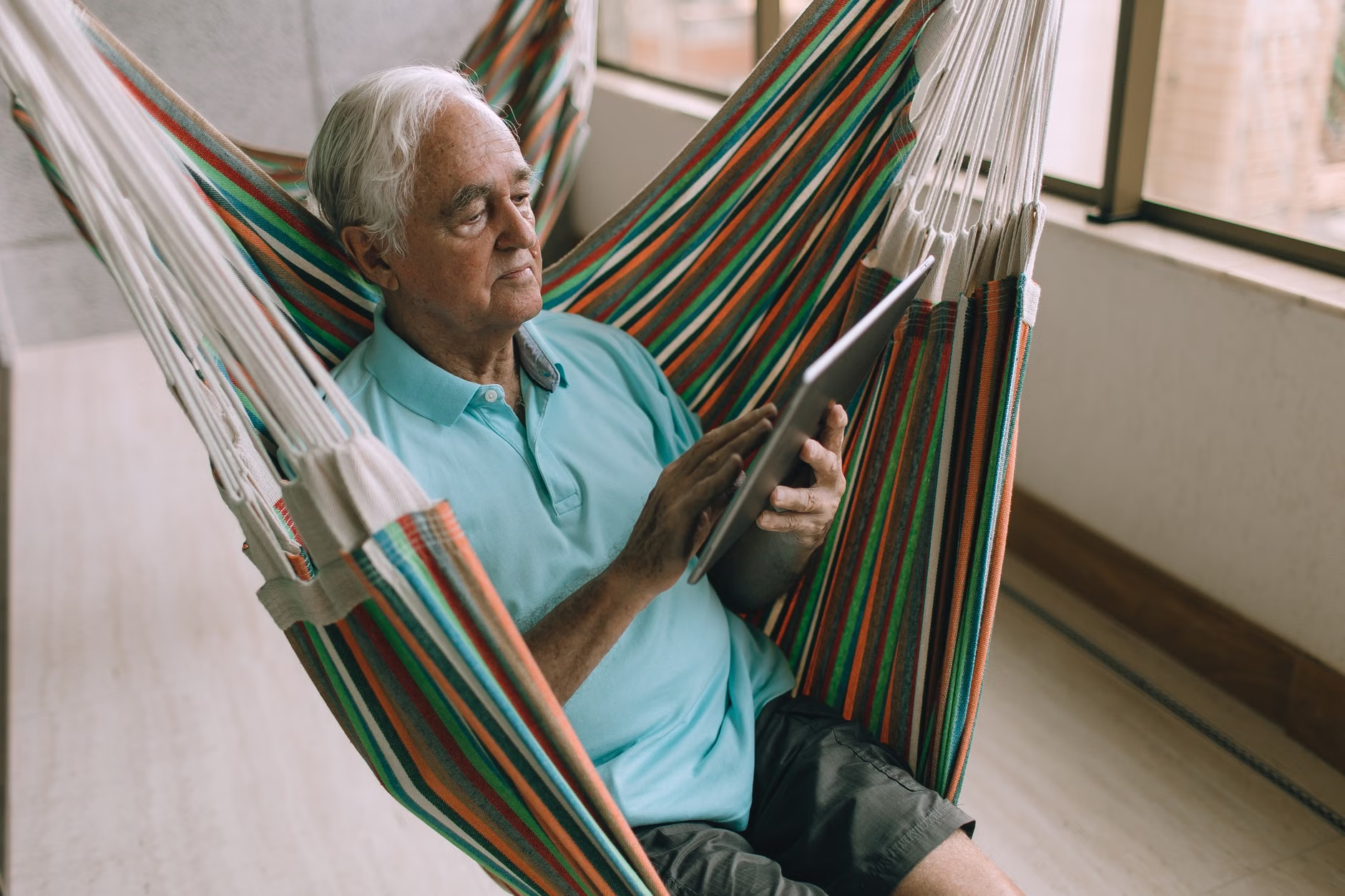
Insight: The real “hobby” in photography today often happens after the photo is taken. Learning to use software like Adobe Lightroom or even the built-in editing tools on a tablet provides a significant cognitive challenge. It requires spatial awareness, an eye for color, and the technical ability to navigate software menus.
The Digital Frontier: Genealogy and Smart Technology
Technology should not be viewed as a barrier, but as a gateway to new types of leisure. Many older adults find great satisfaction in hobbies that involve organization, research, and digital legacy.
Genealogy: Building a Family Legacy
Genealogy is a “detective” hobby. It involves searching through digital archives, interpreting historical records, and connecting with distant relatives. For many in their 70s and 80s, this is a way to preserve family history for grandchildren.
Practical Decision Rule: When choosing a genealogy platform (like Ancestry.com or MyHeritage), consider the “walled garden” effect. Some platforms make it easy to build a tree but difficult to export the data if you ever want to cancel your subscription. Always keep a master copy of your research in a dedicated software program like Family Tree Maker or Gramps (which is free and open-source).
Smart Home Management as a Hobby
While often seen as a utility, “smart home” technology can become a rewarding hobby. Setting up voice-controlled lighting, automated thermostats, and security cameras provides a sense of mastery over the environment. It also serves a practical purpose: as mobility changes, the ability to control the home via voice (using Alexa or Google Assistant) becomes a significant safety feature.
Social and Community-Based Hobbies: The Importance of “Third Places”
A “third place” is a social environment separate from the home (first place) and the workplace (second place). For retirees, finding a new third place is vital for mental health.
Volunteering and Mentorship
The most rewarding hobbies often involve giving back. However, the type of volunteering matters. “Generative” volunteering—where an older adult passes on a specific skill to a younger generation—has been shown to provide the highest level of life satisfaction.
Examples of Generative Volunteering:
- SCORE (Service Corps of Retired Executives): Mentoring small business owners.
- Reading Programs: Volunteering at local libraries to help children with literacy.
- Museum Docent: Using a lifetime of interest in history or art to lead tours.
Decision Criterion: If you find yourself feeling fatigued after social events, look for “behind-the-scenes” volunteering, such as administrative work for a non-profit or knitting blankets for hospitals. If you thrive on energy from others, prioritize public-facing roles like ushering at a theater or working in a community garden.
How to Choose: The Practical Selection Matrix
When evaluating a new hobby, use the following criteria to ensure it fits your current lifestyle and future needs. Do not feel pressured to stick with a hobby that feels like a chore; the goal is engagement, not obligation.
| Hobby Type | Primary Benefit | Physical Demand | Start-up Cost | Long-term Sustainability |
|---|---|---|---|---|
| Strategic Games | Cognitive Agility | Very Low | Low | High (Can be played indefinitely) |
| Pickleball | Cardio / Social | Moderate to High | Moderate ($100+) | Medium (Depends on joints) |
| Gardening | Stress Relief / Activity | Moderate | Variable | High (With adaptations) |
| Genealogy | Legacy / Research | Very Low | Moderate (Subscriptions) | High |
Which one is right for you?
If your primary goal is preventing cognitive decline, prioritize Bridge or learning a language. If your goal is improving physical health while making new friends, Pickleball or a walking club is the best fit. If you have limited mobility but want to stay mentally active, Genealogy and Digital Photography offer deep engagement without physical strain.
Your Next Step: The “Two-Week Trial”
The most common barrier to starting a new hobby is the fear of being a “beginner” at an older age. To overcome this, commit to a two-week trial period for any new activity. Attend two classes or two club meetings. During this time, focus not on your skill level, but on how you feel afterward. Do you feel energized? Do you have something new to talk about at dinner? If the answer is yes, you have found a worthwhile investment for your next chapter.
Your priority action: This week, identify one local organization (a library, community center, or sports club) and look at their calendar. Choose one activity that is slightly outside your comfort zone and attend just one session. The goal is not mastery; it is the act of showing up and engaging with something new.
Frequently Asked Questions
Q1: I have arthritis in my hands. Are there any creative hobbies I can still do?
Yes. Many creative hobbies can be adapted. For example, instead of traditional knitting, try “arm knitting” or using large-gauge looms. In painting, use “egg-shaped” brushes or foam grips that don’t require a tight pinch. Digital art on a tablet is also excellent, as you can use a stylus with a built-in grip or even your finger, and you can zoom in to see details more clearly.
Q2: How do I find hobby groups if I don’t live in a large city?
Start with your local public library; they are often the hub for small, informal groups like book clubs, knitting circles, or genealogy workshops. Additionally, websites like Meetup.com allow you to search for interests within a specific radius of your zip code. If no group exists, consider starting a small one—even a monthly “coffee and cards” morning at a local cafe can grow into a consistent hobby group.
Q3: Is it worth spending a lot of money on equipment when I’m just starting?
No. For almost every hobby, the “beginner’s trap” is buying professional-grade equipment too early. For Pickleball, use a borrowed or “house” paddle for your first three games. For photography, use your smartphone before buying a DSLR. The only exception is safety equipment—always buy high-quality shoes for sports or ergonomic chairs for desk-based hobbies like genealogy to protect your physical health from the start.
Sources:
– National Institute on Aging: Participating in Activities You Enjoy
– Harvard Health Publishing: Train Your Brain
– Mayo Clinic: Tai Chi for Health and Balance