- Prioritize Efficiency: 2026 rebates focus on “smart” integration—devices that communicate with the grid to lower your monthly utility bills automatically.
- Verify Eligibility Early: Most government-backed programs require pre-approval or specific installer certification; never purchase hardware before confirming your local jurisdiction’s rules.
- Focus on Accessibility: Look for rebates that bundle energy upgrades with “aging-in-place” safety features, such as smart voice-activated lighting or automated smoke detection.
2026 Global Smart-Home Energy Rebates: A Practical Guide for Seniors
As we head into 2026, governments worldwide are shifting their energy policies from broad subsidies to targeted incentives for “smart” home technology. For older adults, this transition offers a dual benefit: the opportunity to lower monthly utility costs while simultaneously increasing home safety and comfort through automated systems.
This guide provides a structured approach to identifying, applying for, and installing energy-efficient smart technology. Whether you live in North America, Europe, or parts of the Asia-Pacific region, the core principles of securing these rebates remain consistent. We will break down what these technologies are, why they matter for your daily routine, and how to navigate the bureaucratic process of claiming your financial incentives.
Understanding the 2026 Shift: From Passive Savings to Active Management
In previous years, energy rebates were often limited to “passive” upgrades—such as better insulation or high-efficiency windows. The 2026 policy cycle represents a departure from this. Modern rebates now prioritize active energy management. This means the hardware you install must be capable of interacting with your local utility provider’s grid to balance energy demand.
What is “Smart” Energy Management?
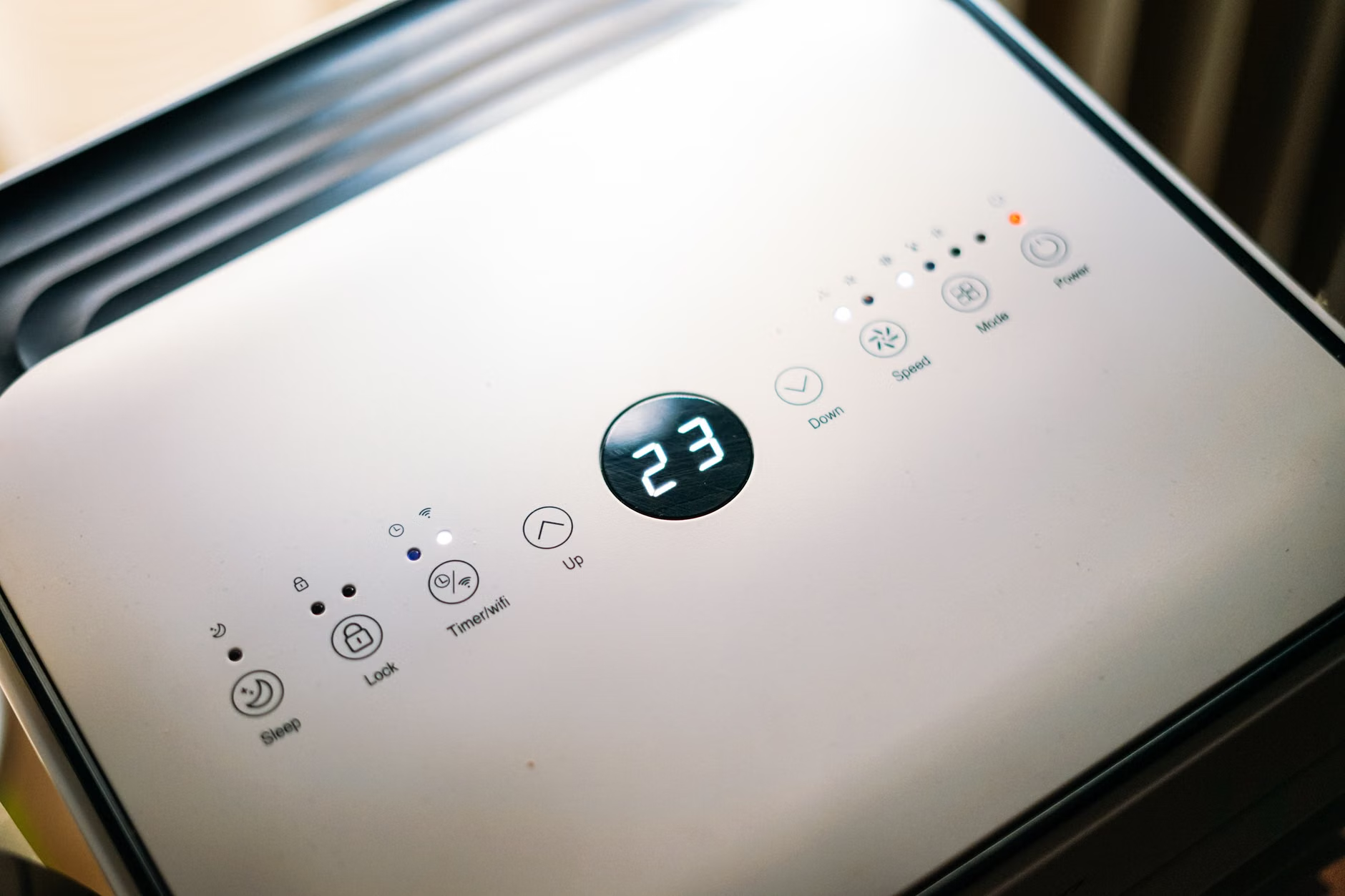
At its core, a smart home energy system consists of interconnected devices that monitor and adjust usage based on real-time data. For example, a smart thermostat doesn’t just hold a temperature; it learns your schedule, detects when you are in a room, and adjusts the heating or cooling to match your comfort preferences while minimizing waste during hours you are asleep or away.
Why This Matters for Seniors
Beyond the potential for lower monthly bills, these systems provide critical safety layers. Automated lighting can prevent falls by illuminating paths at night, while smart smoke and carbon monoxide detectors can send alerts directly to a caregiver’s smartphone, providing peace of mind without requiring constant manual checks.
Identifying Eligible Upgrades and Rebate Categories
Not every “smart” device qualifies for a rebate. Policies in 2026 are highly specific. Generally, you will find incentives categorized into three primary tiers. Understanding these tiers will help you prioritize your home improvements.
| Category | Examples | Primary Benefit |
|---|---|---|
| Climate Control | Smart thermostats, heat pump controllers | Reduced heating/cooling costs |
| Lighting & Security | Smart bulbs, motion sensors, automated locks | Fall prevention & home security |
| Grid Integration | Smart electric meters, solar battery managers | Long-term energy independence |
Important Note: The most significant rebates are often tied to “bundles.” For instance, upgrading to a heat pump system is often heavily subsidized, and adding a smart controller to that system may qualify you for an additional “connectivity bonus.”
Step-by-Step: How to Secure Your Rebate
The process of claiming a rebate can feel daunting, but it follows a predictable path. Follow this checklist to ensure you do not miss out on potential funds.
- Consult the Official Registry: Visit your national or regional energy authority website (e.g., the U.S. Department of Energy’s Energy.gov, or the European Commission’s Energy Efficiency Directive portal). Use their lookup tool to find rebates based on your postal code.
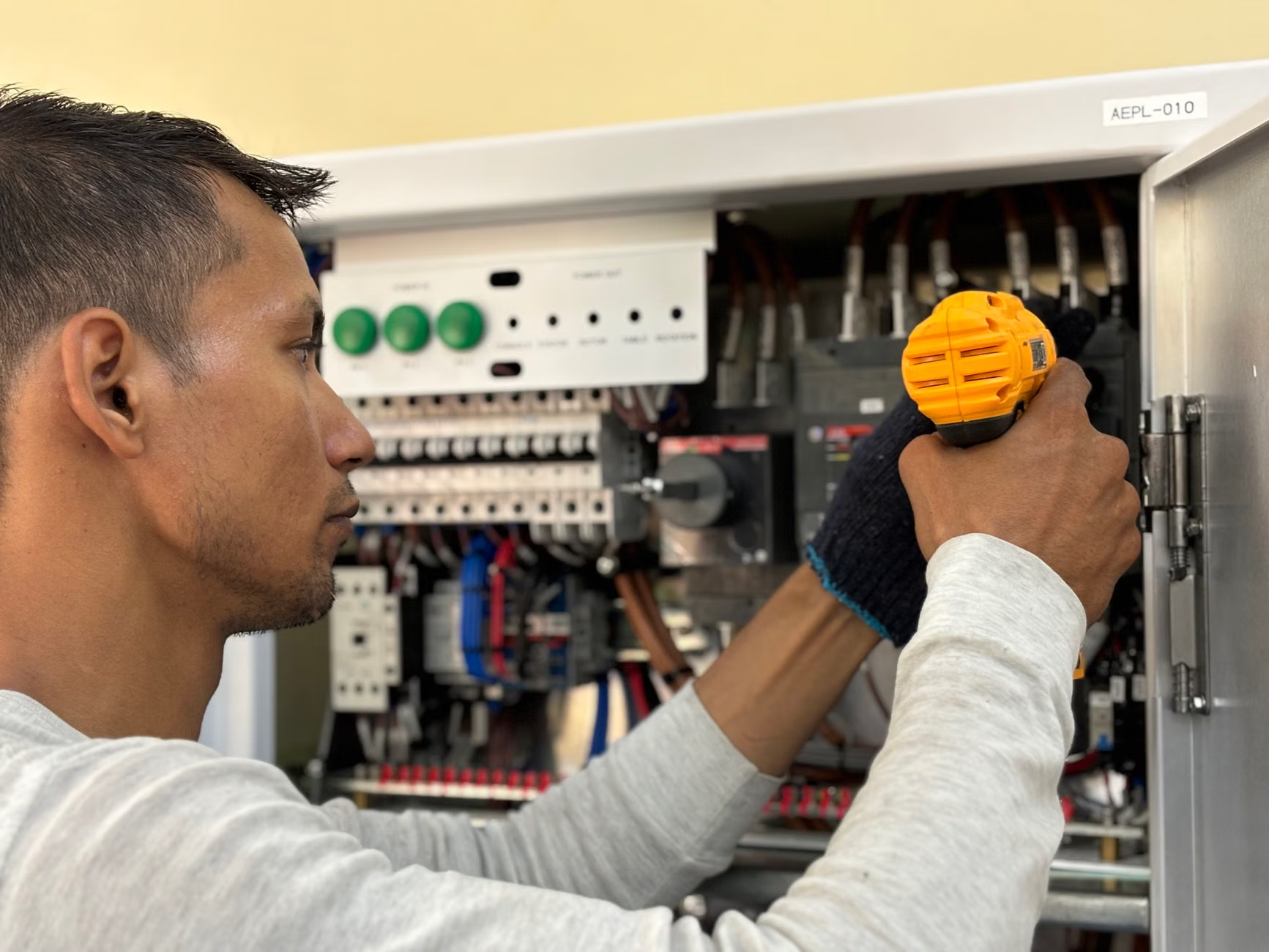
- Verify Installer Certification: Many jurisdictions require that smart technology be installed by a “certified professional.” Attempting a DIY installation may disqualify you from the rebate, even if the device itself is eligible.
- Check Pre-Approval Requirements: Some programs require you to submit an application before you purchase the hardware. If you buy first, you may lose your eligibility.
- Maintain a Documentation File: Create a folder containing your original quote, the proof of purchase, the installer’s certification number, and the post-installation energy audit report.

Common Pitfalls and How to Avoid Them
Even with the best intentions, seniors and their caregivers often stumble over a few common issues. Being aware of these will save you time and frustration.
The “Complexity Trap”
One of the most frequent mistakes is choosing a system that is too complex for your daily needs. If a smart home system requires constant technical troubleshooting, it will eventually be abandoned. Choose systems that offer “set-and-forget” functionality. Look for devices that work with your existing smartphone or tablet interface and offer voice control via established assistants (e.g., Siri, Alexa, or Google Assistant) to minimize the need for manual app navigation.
Ignoring the “Locked-In” Clause
Some utility-provided smart devices come with “demand response” clauses. This means the utility company may have the right to briefly adjust your thermostat during peak grid strain. While this often lowers your monthly bill significantly, ensure you understand how to override these settings if you have specific health needs, such as a requirement for a constant, stable indoor temperature due to respiratory or circulatory conditions.
Privacy and Data Security
Smart devices collect data on your habits. While this is necessary for efficiency, ensure you read the privacy policy. Opt for devices that offer “local processing,” meaning the data stays within your home network rather than being uploaded to a third-party cloud server whenever possible.
Evaluating Your Home’s Readiness
Before applying for any rebate, you must assess whether your home is structurally ready for smart upgrades. Older homes, in particular, may have outdated electrical wiring that cannot support modern smart switches or automated thermostats.
Assessment Checklist:
- Wi-Fi Strength: Does your router reach every corner of the house? Smart devices require a stable connection. You may need a “mesh network” extender.
- Electrical Capacity: Does your breaker panel have enough capacity for new smart controllers? Consult an electrician before committing to large-scale retrofits.
- Physical Accessibility: Are the switches and panels located at a height that is comfortable for you, or do they require unnecessary bending or reaching?
Regional Differences: A Brief Comparison
It is crucial to understand that rebate programs are not universal. Below is a summary of how different regions approach these incentives in 2026.
- North America (US/Canada): Focuses heavily on tax credits and utility-based rebates. The emphasis is on “whole-home” energy efficiency, often requiring an energy audit as a prerequisite for the largest payouts.
- European Union: Prioritizes the “Renovation Wave” initiative. Rebates are often tied to building energy performance certificates (EPC). If your home is ranked poorly, you may be eligible for higher subsidies to improve its rating through smart technology.
- Asia-Pacific (e.g., Australia/Japan): Highly focused on solar and battery storage integration. Rebates are often structured as “feed-in tariffs” or direct grants for installing home-battery management systems that communicate with the grid.
Always verify your local rules via official government portals, such as the International Energy Agency (IEA) country policy trackers, to ensure you are looking at the correct jurisdiction.
The Role of Caregivers in the Transition
If you are a caregiver or family member assisting an older adult, your role is not just to install the technology, but to facilitate the “hand-over.” Many seniors feel intimidated by new technology. The key to successful adoption is incremental implementation.
Start with one device—perhaps a smart thermostat. Once the user is comfortable with how it works and sees the benefit on their monthly bill, introduce the next device. Avoid overwhelming the home with multiple new systems at once. Furthermore, ensure that the user retains manual override control. If the internet goes down, the lights and heat should still work manually. Never install a system that renders your home unusable without a stable Wi-Fi connection.
Long-Term Maintenance and Troubleshooting
Smart technology is not maintenance-free. Software updates, battery replacements for sensors, and occasional connectivity resets are part of the reality of a modern home. Create a maintenance schedule. For instance, check the batteries of all smart sensors every six months—perhaps at the same time you change your clocks for daylight saving time.
If you experience persistent issues, do not assume it is a “senior” problem. Smart devices are notorious for connectivity glitches. If a device fails, first check if the manufacturer has released a “firmware update.” Most of these can be triggered via the app. If the device remains unresponsive, reach out to the customer support line provided during the installation process. Keep these contact details in a physical binder near your utility panel.
Conclusion: Taking the First Step
The move toward a smarter, more energy-efficient home is a significant step toward both financial sustainability and improved living quality. By focusing on devices that offer tangible benefits—like easier climate control, enhanced security, and lower utility costs—you can make your living space more responsive to your needs.
Start today by visiting your local government’s energy portal. Do not feel rushed to complete the entire project in one month. Take the time to research, verify your eligibility, and choose systems that genuinely improve your daily life. With careful planning, these 2026 rebates can turn your home into a more comfortable, safer, and cost-effective sanctuary.
Frequently Asked Questions
1. Do I need a high-speed internet connection to qualify for these rebates?
Most “smart” energy rebates require the device to be connected to the internet to report energy usage data to the utility provider. While you do not need ultra-high-speed fiber, a stable and reliable Wi-Fi connection is generally a requirement for the device to function and for you to remain eligible for the incentive.
2. Can I use these rebates if I live in a rental property or a retirement community?
Eligibility for renters is more restricted. You will typically need written permission from the property owner to install permanent fixtures like smart thermostats or energy monitors. Some utility programs do offer “portable” smart device rebates, such as smart plugs or bulbs, which do not require permanent installation. Check with your landlord and your local utility provider before making any purchases.
3. What happens if the smart technology breaks after the warranty expires?
Like any electronic appliance, smart devices have a finite lifespan. When planning your budget, assume a lifespan of 5 to 10 years for most smart hardware. Many utility programs offer a “performance guarantee” for a certain period, but after that, repairs or replacements are typically the homeowner’s responsibility. It is wise to set aside a small portion of your monthly energy savings into a dedicated “maintenance fund” to cover future hardware updates.
Disclaimer: This article is for informational purposes only and does not constitute financial, legal, or professional advice. Energy policies vary significantly by country and municipality. Always consult with your local utility provider or an authorized government agency before making financial commitments.