- Jigsaw puzzles provide a structured cognitive workout that enhances visual-spatial reasoning and short-term memory without requiring specialized equipment.
- Success in puzzle construction relies on systematic sorting and pattern recognition, which are transferable skills for managing complex daily tasks.
- The activity serves as a low-stress, meditative practice that lowers cortisol levels while providing a measurable sense of accomplishment.
Engaging in puzzle construction is more than a way to pass the time; it is a deliberate, evidence-based method for maintaining cognitive flexibility and visual-spatial acuity during the later decades of life. For adults between the ages of 60 and 80, the brain remains highly neuroplastic, meaning it is capable of forming new neural connections. Puzzles act as a targeted exercise for the brain, requiring the integration of sensory input, logic, and fine motor skills.
The Cognitive Mechanics of Puzzle Solving
When you sit down to assemble a puzzle, you are not merely matching shapes; you are engaging in a complex series of cognitive processes. The brain must perform a “visual search” to identify specific colors, textures, and edge patterns. This engages the parietal lobe, the region of the brain responsible for spatial awareness and the integration of sensory information.
According to research into cognitive aging, activities that require high levels of visual-spatial processing—such as navigating a new city or assembling a complex object—help maintain the integrity of white matter in the brain. White matter is essentially the “wiring” that allows different parts of the brain to communicate. By consistently challenging your brain with puzzles, you are essentially “strengthening the signal” between these regions.
Pattern Recognition and Executive Function
Executive function refers to the set of mental skills that include working memory, flexible thinking, and self-control. Puzzle construction is an ideal training ground for these skills. Consider the following steps involved in a standard session:
- Planning: You must decide whether to start with the borders or categorize pieces by color.
- Categorization: You sort pieces into groups, which requires mental flexibility to re-evaluate categories as you find new patterns.
- Persistence: You maintain focus on a goal despite the initial clutter of hundreds of pieces.
The Role of Fine Motor Skills and Hand-Eye Coordination
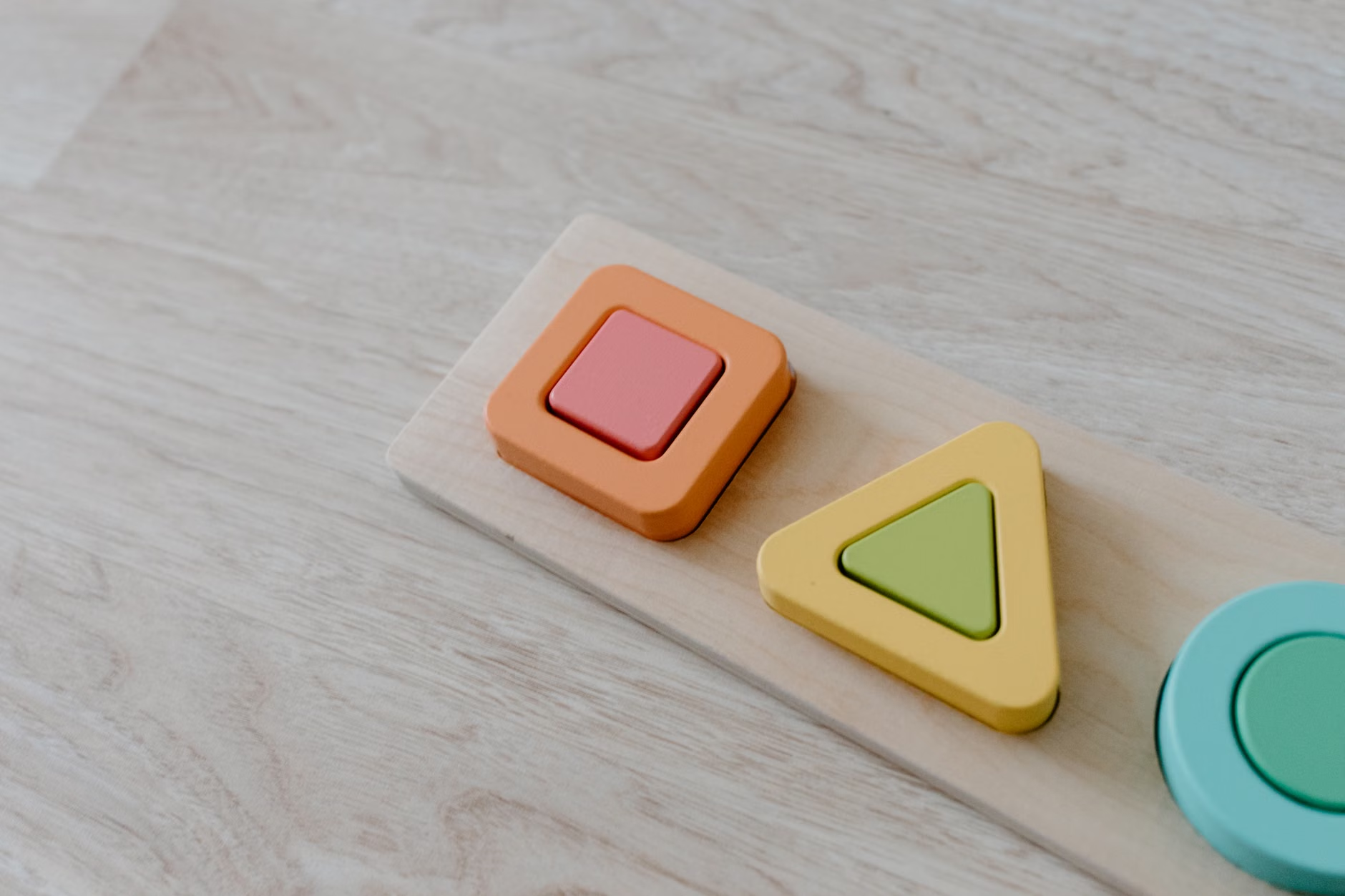
Beyond the cognitive benefits, the physical act of manipulating small, irregular pieces plays a significant role in maintaining dexterity. For older adults, the maintenance of fine motor skills is vital for preserving independence in daily activities such as buttoning shirts, writing, or handling small household objects.
The repetitive motion of picking up, rotating, and fitting pieces requires a high degree of precision. It is an exercise in proprioception—the body’s ability to sense its position in space. When you feel the “click” of a piece fitting perfectly into place, your brain receives immediate feedback, reinforcing the neural pathways associated with successful task completion.
Practical Strategies for Ergonomic Puzzle Construction
To ensure this hobby remains sustainable and comfortable, consider the following environmental setup:
| Consideration | Practical Tip |
|---|---|
| Lighting | Use a high-intensity LED desk lamp with adjustable color temperature to reduce glare on shiny puzzle surfaces. |
| Posture | Use a tilted puzzle board or a drafting table to bring the puzzle closer to eye level, preventing neck and back strain. |
| Vision | Ensure your workspace is well-lit from two sides to minimize shadows, and consider using a magnifying glass on a stand for detailed sections. |
| Organization | Use shallow, wide-mouthed trays to separate pieces, which prevents the “pile-up” effect that can lead to physical fatigue. |
The table above highlights that the “environment” is just as important as the puzzle itself. Many adults find that their interest in puzzles wanes not because of a lack of mental sharpness, but because of physical discomfort—such as eye strain or a stiff neck. By investing in an ergonomic workspace, you remove the physical barriers to cognitive engagement.
Social and Psychological Dimensions of Leisure
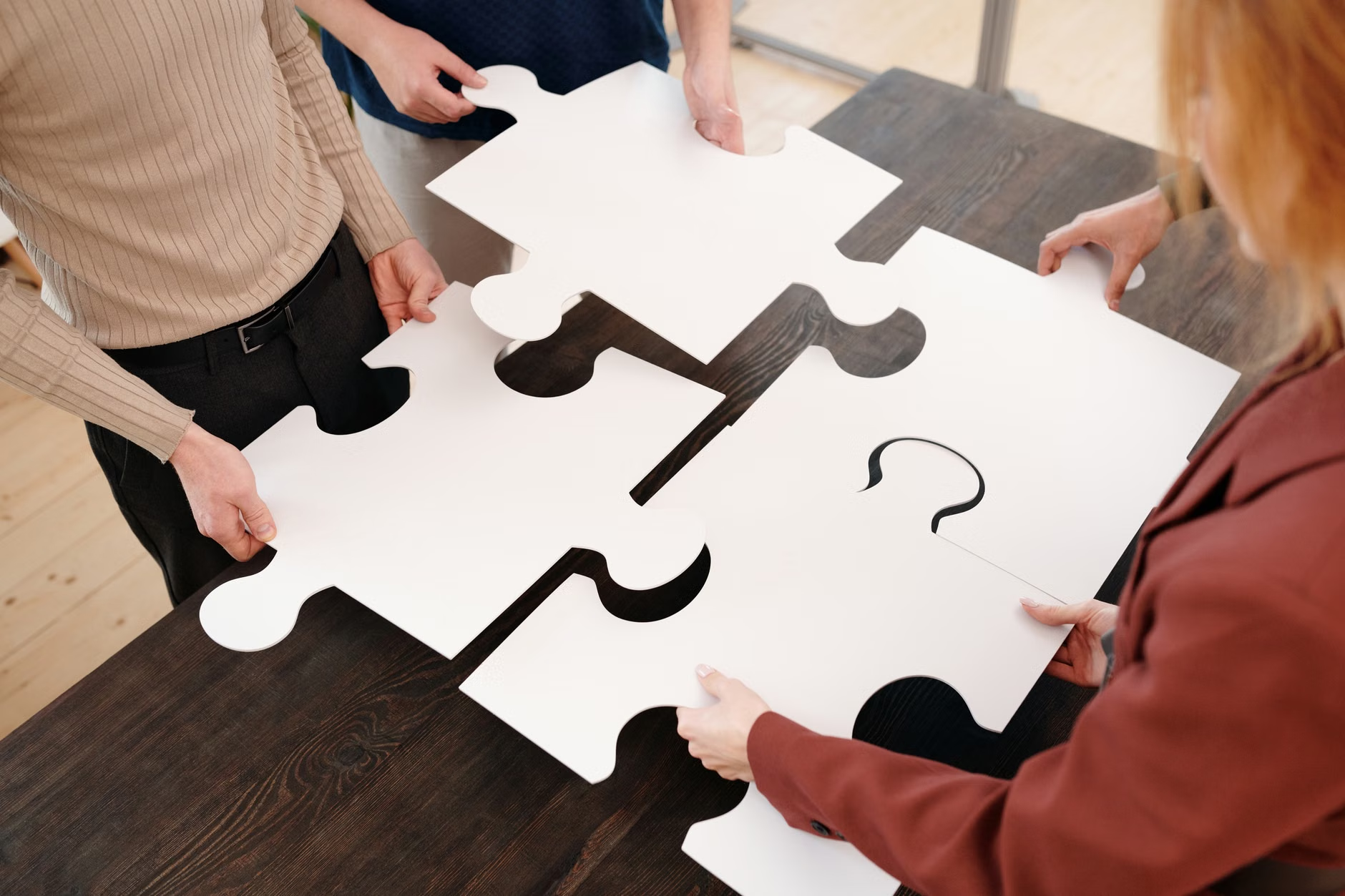
While often viewed as a solitary activity, puzzle construction can be a powerful tool for social connection. Working on a large puzzle with a spouse, friend, or caregiver transforms the activity into a collaborative problem-solving session. This type of social interaction helps combat the feelings of isolation that can sometimes accompany retirement.
Psychologically, the “flow state”—a term coined by psychologist Mihaly Csikszentmihalyi—is frequently achieved during puzzle construction. This is a state of complete immersion in an activity where the sense of time fades and the individual feels a deep sense of satisfaction. Achieving this state is a natural way to reduce anxiety and lower cortisol levels, as it forces the brain to focus on the immediate present rather than ruminating on past worries or future uncertainties.
Selecting the Right Complexity: A Decision Framework
A common mistake is selecting puzzles that are either too simple (leading to boredom) or too difficult (leading to frustration). The goal is to stay within the “zone of proximal development”—a level of difficulty that is challenging but achievable with effort.
Criteria for Selection:
- Piece Count: For beginners, 300 pieces are ideal. Advanced puzzle solvers may prefer 1,000 to 2,000 pieces.
- Subject Matter: Images with high contrast, distinct textures, and clear boundaries (e.g., landscapes with varied foliage) are generally easier to parse than images with large, monochromatic areas (e.g., blue skies or dark water).
- Piece Size: “Large-format” pieces are available for those who find standard-sized pieces difficult to handle. These do not indicate a lower cognitive level; they are simply a design choice for improved physical accessibility.
If you find yourself stuck, do not hesitate to use a “divide and conquer” strategy. Focus on one small section at a time. This reduces the cognitive load of looking at the entire image and provides frequent, small rewards as you complete specific segments, which keeps motivation high.
Addressing Common Misconceptions and Barriers
There is a prevalent myth that puzzles are a “cure” for cognitive decline. It is important to clarify that while puzzles are excellent for brain fitness, they should be part of a broader lifestyle approach. They are not a replacement for medical consultations or a holistic approach to health. If you notice a sudden, significant decline in your ability to perform tasks that were previously easy, this should be discussed with a healthcare professional to rule out underlying medical issues.
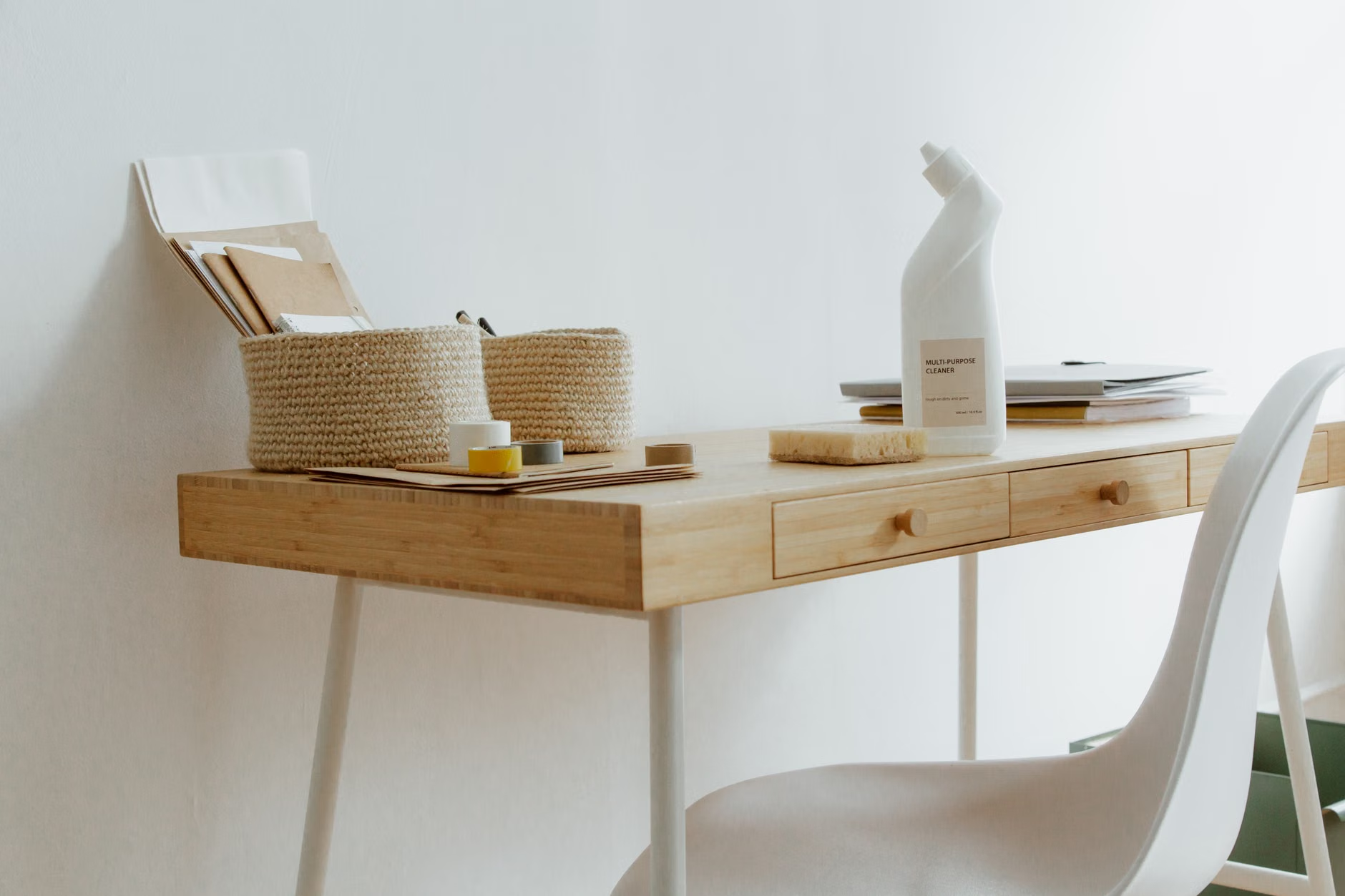
Another common concern is the “clutter” factor. Many people avoid puzzles because they take up the dining table for weeks. Practical solutions include:
- Puzzle Mats: Felt mats that allow you to roll up an unfinished puzzle and store it safely.
- Puzzle Tables: Dedicated tables with drawers for piece storage, which allow you to move the entire project out of the way when not in use.
- Digital Alternatives: Tablet-based puzzle apps are an option, but keep in mind that they lack the tactile and fine-motor benefits of physical pieces.
Integrating Puzzles into a Daily Routine
To maximize the cognitive benefit, treat your puzzle time like a scheduled appointment. Even 20 to 30 minutes of focused work per day is more effective than a single, five-hour session once a week. This consistency allows the brain to “warm up” and stay engaged with the problem-solving process.
Consider combining your puzzle time with other brain-healthy habits. For example, keeping a water bottle nearby ensures hydration, and listening to stimulating (but non-distracting) audiobooks or classical music can enhance the environment. Avoid turning on the television, as the competing visual stimuli can fragment your attention and prevent you from reaching the “flow state.”
The Importance of Long-term Consistency
The true value of puzzle construction is not found in the completion of a single image, but in the habit of returning to the board day after day. This consistency builds what is known as “cognitive reserve.” Cognitive reserve is the brain’s ability to improvise and find alternative ways of getting a job done. The more you challenge your brain with varied tasks—like puzzles, learning a new language, or playing a musical instrument—the more robust your cognitive reserve becomes.
When you encounter a particularly difficult section of a puzzle, do not feel discouraged. That feeling of difficulty is the exact moment when your brain is working hardest to build new connections. It is the mental equivalent of muscle fatigue during weightlifting; it is a sign that you are pushing your boundaries in a healthy way.
Professional Guidance and When to Seek Help
If you are exploring hobbies as part of a strategy to improve focus or manage mild cognitive concerns, it is beneficial to keep a simple journal of your progress. Note how long you spent on a puzzle and how you felt during the process. This is not about grading yourself, but about monitoring your own patterns. If you find that your concentration is consistently poor or that you are experiencing unusual levels of frustration, it may be worth speaking with your primary care physician to ensure there are no physical issues, such as vision changes or fatigue, that need to be addressed.
Always ensure your health information comes from reputable sources. For general information on brain health and aging, the National Institute on Aging (NIA) provides excellent resources on maintaining cognitive function as you age. They emphasize that while no single activity can prevent all forms of cognitive change, a lifestyle that includes mental stimulation, physical activity, and social engagement is the most effective approach.
Conclusion: A Lifelong Pursuit of Detail
Puzzle construction offers a unique intersection of mental challenge and meditative calm. By selecting the right level of complexity, creating an ergonomic workspace, and engaging with the process consistently, you turn a simple hobby into a powerful tool for cognitive longevity. Whether you are working alone or with a partner, the goal remains the same: to enjoy the process of discovery, one piece at a time.
Start with a manageable goal—perhaps a 300-piece puzzle that reflects a scene you find beautiful or interesting. As you build your confidence and your skills, you can gradually increase the complexity. Remember, the journey of assembling the pieces is where the true value lies, both for your brain health and your daily quality of life.
Frequently Asked Questions
1. Are digital puzzles on a tablet as effective as physical jigsaw puzzles?
Digital puzzles are convenient and provide good logic training; however, physical puzzles offer superior benefits for fine motor skills and tactile stimulation, which are equally important for overall health.
2. How often should I do puzzles to see cognitive benefits?
Consistency is more important than duration. Aiming for 20–30 minutes of daily or every-other-day practice is more effective for maintaining neural pathways than long, irregular sessions.
3. What if I find it frustrating when I can’t find the right piece?
Frustration is a normal part of the process. When you feel stuck, step away for a few minutes or switch to a different section of the puzzle. This “incubation period” often allows your brain to reset, and you may find the piece immediately upon returning.