- Prioritize Footwear: Your shoes are your most critical piece of equipment; invest in professional-grade walking shoes with arch support and shock absorption rather than generic sneakers.
- The 10% Rule: Keep your total daypack weight under 10% of your body weight to prevent back strain and preserve stamina during long urban explorations.
- Strategic Rest: Integrate “micro-rests” into your itinerary every 60–90 minutes to maintain physical comfort and avoid the cognitive fatigue that comes with over-exertion.
The Art of Minimalist Packing for Urban Walking Tours: A Senior Traveler’s Guide
Urban walking tours offer an intimate way to experience the world’s great cities, from the winding alleys of Rome to the modern thoroughfares of Tokyo. For travelers aged 60 to 80, the challenge lies in balancing the desire for exploration with the realities of stamina, joint health, and the logistical burden of carrying gear. Minimalist packing is not merely about traveling light; it is a strategic approach to preserving your energy, protecting your joints, and ensuring you remain mobile throughout your trip.
This guide provides a comprehensive framework for packing efficiently for urban walking, focusing on equipment that supports your physical wellbeing and simplifies your day-to-day navigation.
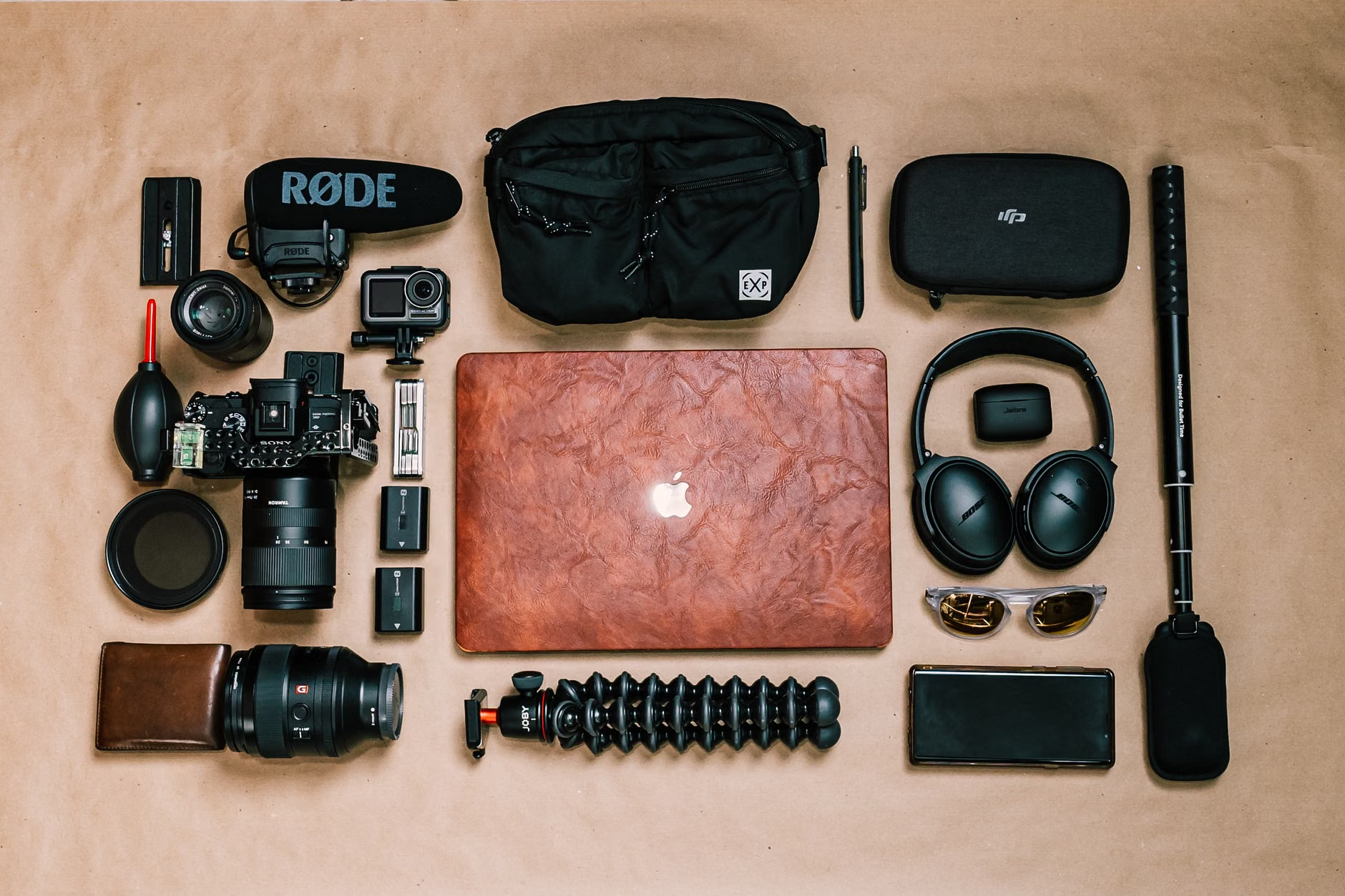
The Philosophy of Minimalist Urban Mobility
Minimalism in the context of senior-friendly travel is defined by the “utility-to-weight ratio.” Every item you choose to carry must serve a specific, frequent purpose. When you are navigating cobblestone streets or climbing stairs in a subway station, the weight on your back directly impacts your center of gravity and the pressure on your knees and lower back.
Many travelers fall into the trap of “just in case” packing. While preparation is essential, carrying a heavy bag creates a hidden tax on your stamina. By reducing your daily carry weight, you increase your range of motion and decrease the likelihood of fatigue-related falls or discomfort.
Assessing Your Physical Baseline
Before selecting your gear, conduct an honest assessment of your current mobility. If you have history of plantar fasciitis, knee instability, or lower back pain, your packing list must prioritize support over aesthetics. For instance, a heavier, orthotic-compliant shoe is a better “minimalist” choice than a lightweight fashion sneaker that offers zero arch support.
Footwear: The Foundation of Every Walk
Your shoes are the most important piece of travel equipment you own. In an urban environment, you may easily cover 10,000 to 15,000 steps in a single day. The surface materials—concrete, asphalt, and historic stone—offer very little natural shock absorption.
Criteria for Selecting Walking Shoes
- Shock Absorption: Look for midsoles made of EVA (ethylene-vinyl acetate) foam or specialized gel inserts to mitigate the impact on your joints.
- Outsole Traction: Urban environments are often slippery, especially in wet weather or on polished stone. Ensure your shoes have a rubberized, high-traction tread.
- Width and Volume: Feet tend to swell during long periods of walking or travel. Choose shoes with a wider toe box to prevent constriction and blistering.
- Closure Systems: If bending down is difficult, consider “slip-on” walking shoes with high-performance elastic lacing systems that stay secure without needing to be tied.
Pro Tip: Never wear brand-new shoes on a trip. Break them in for at least two weeks, wearing them for gradually increasing durations on different surfaces to ensure no hidden pressure points exist.
The Gear: What to Pack and What to Leave Behind
A well-organized daypack acts as your mobile base camp. The key is to keep the weight distributed evenly across your shoulders to maintain an upright, healthy posture.
| Item | Minimalist Alternative | Why it Matters |
|---|---|---|
| Water Bottle | Collapsible silicone bottle | Saves weight when empty; easy to refill at public fountains. |
| Umbrella | Compact, lightweight windproof model | Protects against sun and rain without the bulk of a full-size frame. |
| Maps/Guides | Offline smartphone apps (Google Maps, Citymapper) | Eliminates the weight of guidebooks while offering real-time navigation. |
| Power Bank | Ultra-thin 5000mAh battery pack | Provides one full charge for safety; prevents the stress of a dead phone. |
Note: If you have a medical condition, such as diabetes or heart-related issues, your “minimalist” list must prioritize health essentials first, such as a small, insulated pouch for medications, which should always stay in your daypack.
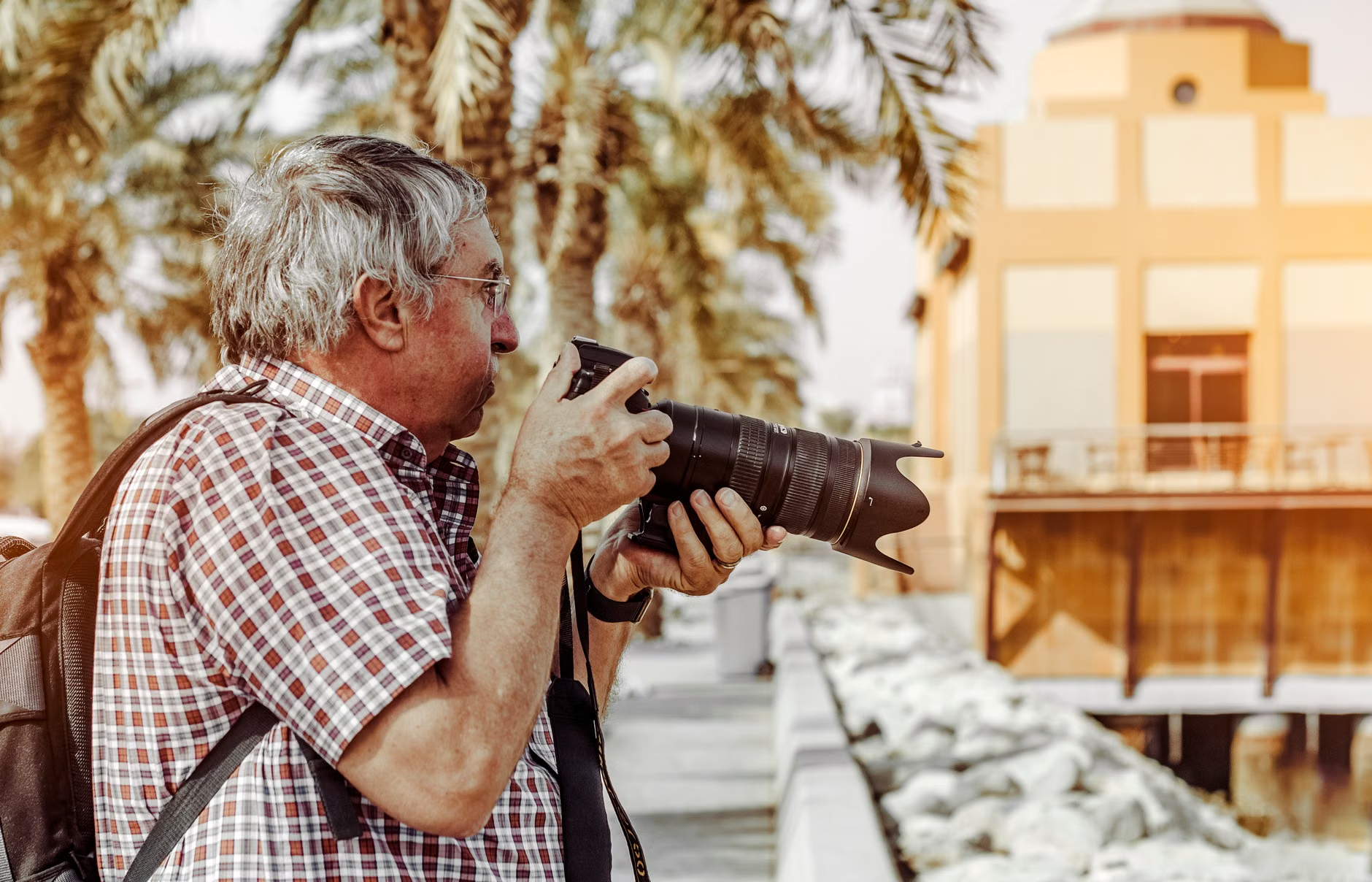
Stamina Management: The Invisible Essential
Packing for a walk is not just about physical items; it is about managing your energy expenditure. The most common mistake is creating an itinerary that treats urban walking like an endurance sport. Instead, view your day as a series of “energy blocks.”
The 90-Minute Rule
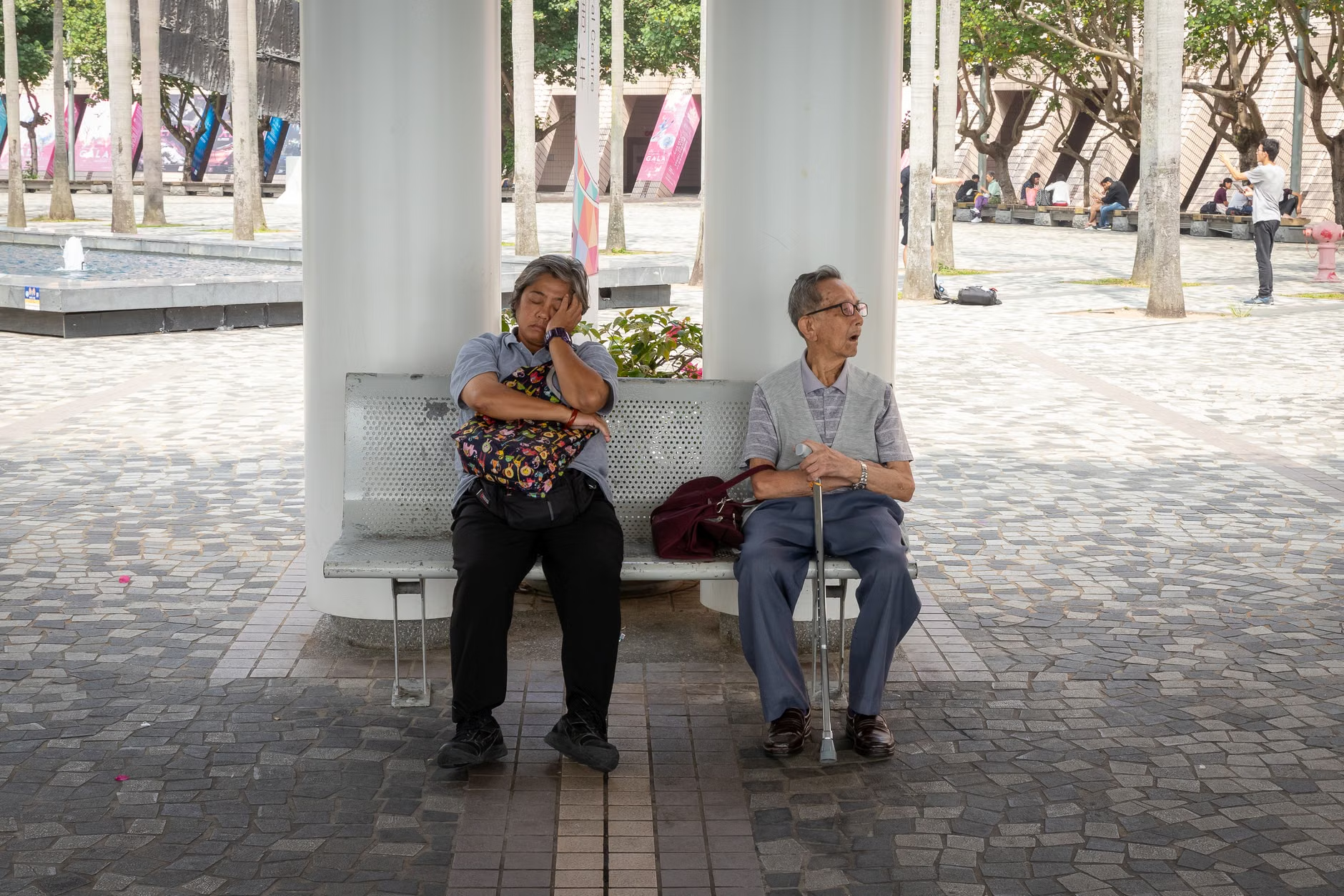
Plan for a 10-minute rest period every 90 minutes. This is not a suggestion; it is a requirement for maintaining long-term stamina. In an urban setting, this means identifying “rest nodes” in advance—cafes, public libraries, or park benches. Do not wait until you are exhausted to look for a place to sit; by then, your muscles have already entered a state of recovery-lag, making it harder to get moving again.
The Impact of Ambient Noise and Crowds
Urban travel introduces “cognitive fatigue”—the mental exhaustion caused by navigating crowds, traffic, and sensory overload. If you find yourself feeling short-tempered or suddenly sluggish, it is often a sign of cognitive overload rather than physical weakness. Moving to a quieter street or a green space for 15 minutes can restore your focus and physical energy.
Modern cities are increasingly accessible, but they are not uniform. Before you arrive, research the specific accessibility features of your destination. Look for official city government portals (e.g., the “Accessibility” section of the Paris or London transit websites) to understand which subway stations have working lifts versus only stairs.
Managing Slopes and Stairs
Many historic European and Asian cities are built on hills or uneven terrain. If your mobility is limited, look for “accessibility maps” which often highlight routes that avoid steep inclines. If you are using a cane or trekking poles, ensure they are collapsible and fit securely on the side of your daypack when not in use.
The “Exit Strategy”
Always have a secondary transport plan. If you are halfway through a walking tour and realize you have underestimated the distance or the fatigue, do not feel compelled to finish on foot. Identify the nearest bus stop or taxi rank as part of your initial planning. Knowing you have an “out” actually reduces anxiety and allows you to enjoy the walk more fully.
Advanced Packing Tactics for Long-Term Comfort
Beyond the basics, several “hidden” items can significantly improve your comfort during long urban walks. These are often overlooked but can be the difference between a successful day and one cut short by discomfort.
1. Compression Socks
These are not just for flying. Wearing light compression socks during a long day of walking helps maintain circulation and reduces the swelling that occurs in the feet and lower legs. This simple addition can drastically reduce the “heavy leg” feeling that often sets in by the late afternoon.
2. The “Emergency Comfort” Kit
Keep a small, waterproof Ziploc bag containing:
- Two or three blister bandages (hydrocolloid type).
- A small tube of anti-chafing balm.
- A few antiseptic wipes.
- Any personal medications that are time-sensitive.
Having these items at your fingertips prevents you from having to hunt for a pharmacy in an unfamiliar area.
3. Layering for Climate Variability
Urban microclimates can change rapidly. A city street in the shade can be 5 degrees cooler than a sunny plaza. Use the “base-layer” principle: a light, moisture-wicking shirt, a breathable mid-layer, and a windproof/water-resistant shell. This allows you to regulate your temperature without needing to carry a heavy coat.
Practical Decision Criteria: How to Choose Your Gear
When you are faced with a choice between two items—for example, a heavy-duty camera versus your smartphone, or a thick guidebook versus a digital app—use the following criteria to make your decision:
- Frequency of Use: Will I use this every hour? If yes, it stays.
- Weight-to-Utility Ratio: Does the weight of this item justify the benefit it provides? A heavy DSLR camera might provide great photos, but if it causes neck pain, it is a net negative for the day.
- Recovery Cost: If I carry this item all day, will it make me need an extra hour of sleep or rest tomorrow? If the answer is yes, leave it behind.
Warning: Be wary of “travel convenience” gadgets marketed to seniors. Many items, such as overly complex folding stools or heavy walking aids, often end up being more cumbersome than helpful. Always test any new gear in your home environment for a full day before taking it on a trip.
Conclusion
Minimalist packing for urban walking is an exercise in intentionality. By stripping away the non-essential, you are not depriving yourself—you are liberating your energy to focus on what truly matters: the architecture, the culture, and the experience of the city. Remember that the goal of a walking tour is to observe and enjoy, not to conquer distance. By prioritizing supportive footwear, managing your weight load, and respecting your need for strategic rest, you can sustain your love for travel well into your later years.
For further information on navigating specific city transit systems, consult the following resources:
- Transport for London (TfL) – Accessibility Information
- RATP (Paris Transport) – Accessibility Guide
- MTA (New York) – Accessibility and Service Status
Frequently Asked Questions (FAQ)
1. How do I decide if a city is too difficult for my current mobility level?
Research the city’s “topography” and “infrastructure.” Cities like Lisbon or San Francisco are notoriously hilly, which may be challenging. Check if the city has a high density of “step-free” access in its metro systems. If a city is primarily historic, expect uneven cobblestones, which can be difficult for balance. Always cross-reference your hotel location with nearby public transport to ensure you are not stranded on a hill.
2. Should I use trekking poles for urban walking?
Trekking poles can be excellent for stability on uneven surfaces like old city squares. However, they can be awkward in crowded museums or narrow shops. If you choose to bring them, ensure they are the telescopic “collapsible” kind that can be easily stowed in your backpack. If you only need them occasionally, consider a single, high-quality walking cane that doubles as a stylish accessory.
3. What is the best way to handle medication during a full day of walking?
Always carry your daily medication in a clearly labeled, spill-proof container. Keep a digital photo of your prescription list on your phone in case of an emergency. If your medication requires temperature control, use a small, insulated medical wallet with a reusable ice pack. Ensure your medication is always in your “carry-on” or daypack, never in checked luggage, so you have access to it at all times during your walk.