- Community theater offers a unique combination of cognitive stimulation, physical activity, and social belonging that is highly effective for long-term mental wellbeing.
- You do not need prior acting experience to participate; community groups rely heavily on volunteers for stagecraft, lighting, costuming, and administrative support.
- Before joining, assess the group’s time commitment and physical accessibility of their venue to ensure the hobby remains sustainable and enjoyable.
Participating in local community theater is more than just a creative outlet; it is a structured, social activity that integrates memory work, movement, and teamwork. For adults aged 60 to 80, this hobby provides a vital sense of purpose and a regular schedule of social interaction that is often missing from post-retirement life.
Understanding the Mental and Social Value of Theater
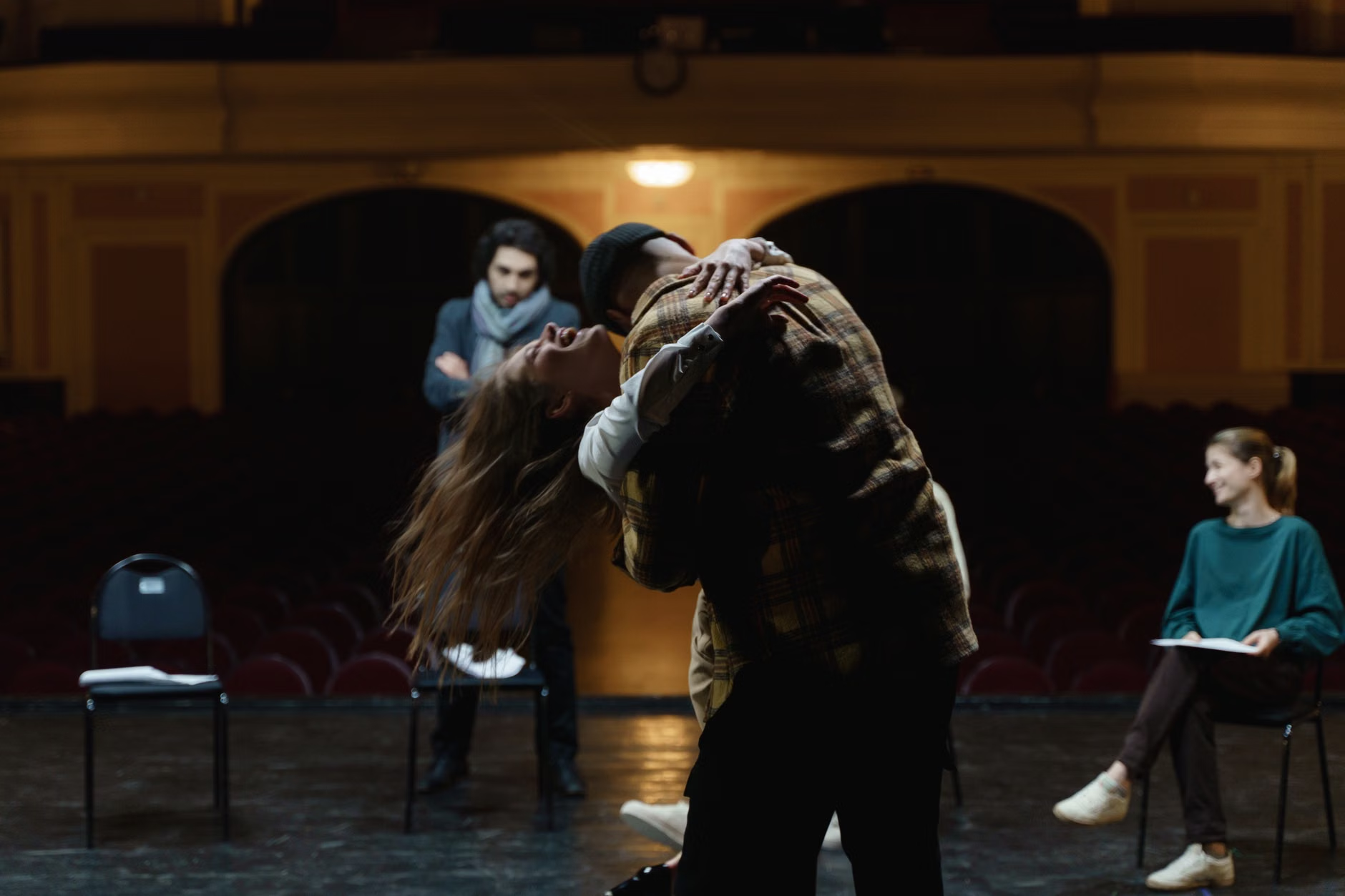
The primary benefit of theater for older adults is the synthesis of cognitive and social engagement. Unlike passive hobbies, theater requires you to be present, responsive, and collaborative. When you memorize lines, you engage in active recall, which is a powerful tool for maintaining cognitive health. When you work with a cast, you participate in a shared goal, which fosters deep social connections that go beyond casual conversation.
What it looks like in real life: Imagine a scene where you are rehearsing a dialogue with a partner. You must listen to their tone, watch their body language, and react appropriately. This is “active listening,” a skill that keeps the brain sharp and improves emotional intelligence. In a real-world scenario, this translates to improved communication skills in your personal life and a heightened ability to adapt to changing social environments.
Cognitive Benefits vs. Passive Hobbies
Many hobbies, such as reading or watching documentaries, are excellent for personal enrichment but lack the reciprocal interaction found in theater. In theater, you are accountable to the group. If you miss a rehearsal, the scene suffers. This accountability creates a “social anchor,” ensuring you stay engaged with your community even on days when you might otherwise feel inclined to stay home.
Finding Your Role: Beyond the Stage
A common misconception is that community theater is only for those who want to be “in the spotlight.” In reality, a successful production requires a vast array of skills, many of which are low-pressure and highly rewarding.
| Role | Physical Demand | Key Responsibility |
|---|---|---|
| Actor | Moderate (Stamina for rehearsal) | Memorization, movement, emotion |
| Stage Crew | Variable (Lifting/Moving) | Managing props and set changes |
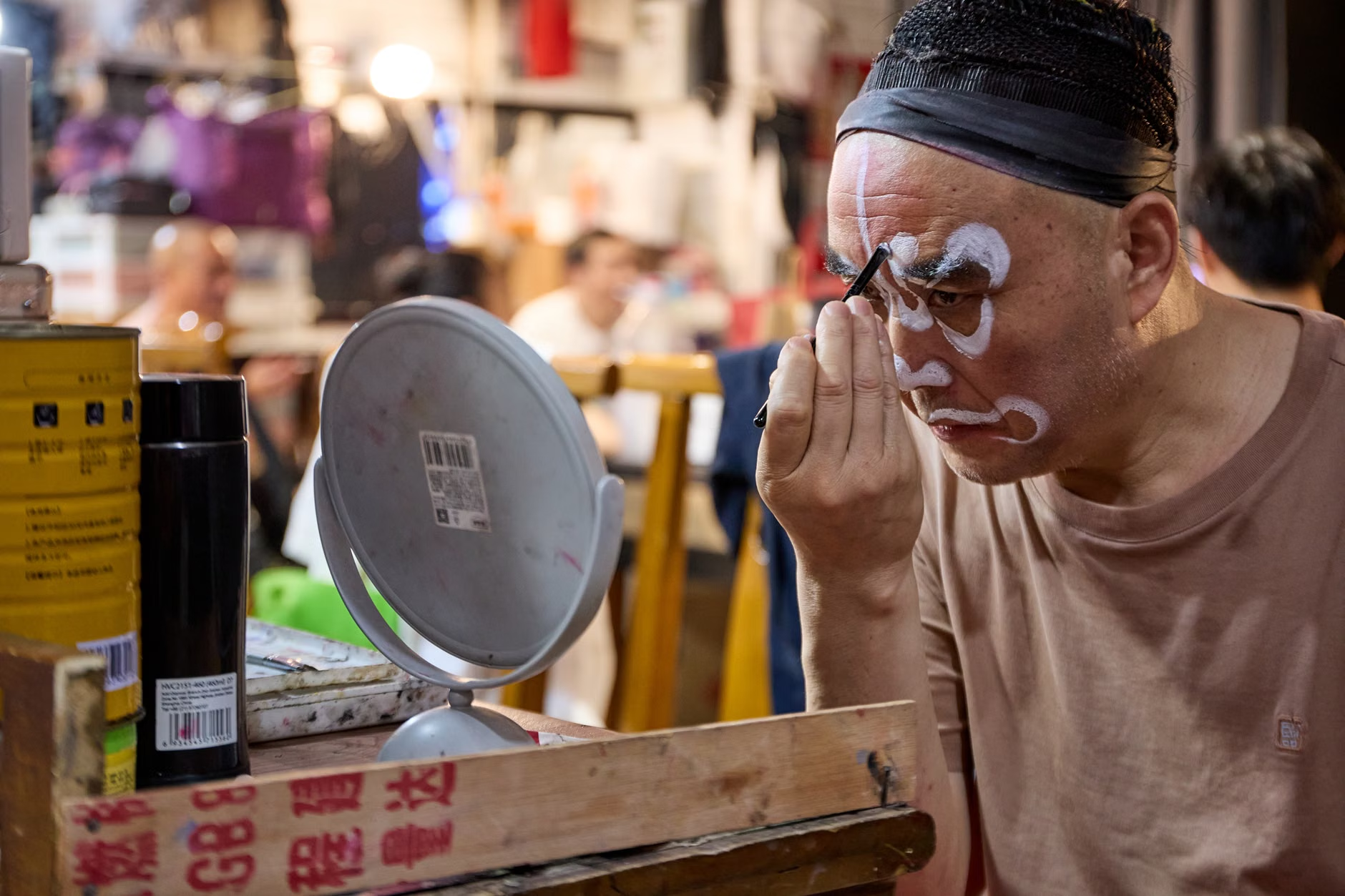
| Costume/Prop Design | Low (Seated work) | Sewing, painting, sourcing items |
| Front of House | Low (Standing/Greeting) | Ticketing, ushering, programs |
Choosing the right role: If you have mobility concerns or stamina issues, roles in costume design or front-of-house are excellent ways to remain involved without the physical fatigue of long rehearsals. If you enjoy manual tasks, prop construction offers a tactile, creative outlet that doesn’t require performance pressure.
Assessing Accessibility and Physical Safety
Before committing to a group, you must evaluate the facility. Community theaters are often housed in older buildings that may not have modern accessibility features. When you visit, do not be afraid to ask specific questions about the physical environment.
Checklist for Evaluating a Theater Group
- Accessibility: Are there ramps, elevators, or ground-floor rehearsal spaces?
- Restrooms: Are they easily accessible from the rehearsal area and the stage?
- Lighting and Flooring: Is the stage floor level? Are there tripping hazards in the wings or backstage area?
- Seating: Is there adequate seating provided for actors during breaks?
- Pacing: Does the group offer breaks every 45-60 minutes?
A note on stamina: Theater rehearsals can be long. If you are concerned about your stamina, look for groups that specialize in “play readings” or “readers theater,” where actors read from scripts rather than memorizing them. This reduces the cognitive and physical load while maintaining the joy of performance.
Joining a new social circle can be intimidating. Community theaters are often close-knit, sometimes cliquey, environments. The key to successful integration is to approach the group with a mindset of service rather than performance. When you focus on helping the production succeed—whether by sewing a hem or organizing the ticket table—you build social capital that makes you feel like an essential member of the team.
Common Mistake: Attempting to “take charge” or change the group’s culture immediately. Community theaters often have long-standing traditions. Spend your first few months observing the workflow and offering assistance where it is most needed. This builds trust and allows you to find your niche naturally.

Practical Steps to Getting Started
If you are ready to explore this hobby, follow these steps to ensure a positive experience:
- Research Local Listings: Search for “Community Theater [Your City/Region]” or check local community center bulletin boards.
- Attend a Production: Go to a show as an audience member. Observe the professionalism, the accessibility of the venue, and the general demographic of the cast and crew.
- Contact the Producer: Send a polite email expressing interest in volunteering. Be specific about your interests—e.g., “I have experience with sewing and would love to help with costumes.”
- Audit a Rehearsal: Ask if you can sit in on a rehearsal to get a feel for the group’s dynamic before committing to a role.
Remember that you are not obligated to stay if the group does not feel like a good fit. Some theaters are highly competitive and demanding, while others are purely social and relaxed. You have the right to choose an environment that matches your energy levels and your goals for your leisure time.
Integrating Theater into a Balanced Lifestyle
While theater is a fantastic hobby, it should not replace other essential health habits. Use the structure of your theater schedule to manage your other responsibilities. For example, if rehearsals are on Tuesday and Thursday evenings, ensure your medical appointments or physical therapy sessions are scheduled for the mornings on non-rehearsal days. This prevents the “stacking” of demanding activities that can lead to burnout.
The Insight: Many older adults find that theater actually improves their physical health indirectly. The need to maintain vocal strength, posture, and agility for the stage often motivates participants to pay closer attention to their diet, hydration, and regular exercise outside of the theater. Treat your participation as a “performance” that requires you to be in your best possible condition.
Conclusion: The Value of Continuing to Create
Engaging in community theater in your 60s, 70s, and 80s is a testament to the fact that creativity does not have an expiration date. Whether you are delivering lines on stage or painting sets in the back, you are participating in a tradition of storytelling that connects you to your community. By choosing a role that fits your physical capabilities and finding a group that respects your time, you can turn this hobby into a cornerstone of your social and mental wellbeing.
Frequently Asked Questions (FAQ)
1. Do I need to be a good actor to join a community theater?
Absolutely not. Most community groups are non-profit organizations that rely heavily on volunteers. There are many roles behind the scenes—such as set construction, costume design, marketing, and ushering—that are essential for a show to happen and do not require any acting experience.
2. How much time should I expect to commit?
This varies significantly by group. A professional-leaning community theater might require rehearsals 3-4 nights a week, while smaller, casual groups might meet once a week. Always ask about the “rehearsal schedule” before signing up for a specific production to ensure it fits your lifestyle.
3. Is there an age limit for participating?
There is no upper age limit for community theater. In fact, many plays specifically look for older adults to fill character roles. As long as you can participate in the rehearsals and follow the safety guidelines of the venue, you are welcome. If you have any physical limitations, discuss them with the director early on so they can make necessary accommodations.
For more information on the benefits of arts participation for older adults, you may refer to the National Endowment for the Arts (USA) or your local national arts council for resources on community-based arts programs.