- Social Integration: Craft-exchange groups combat social isolation by providing structured, low-pressure environments for consistent peer interaction.
- Cognitive Health: Engaging in complex, tactile crafts stimulates neuroplasticity and maintains fine motor skills, which are essential for long-term functional independence.
- Practical Participation: Finding or starting a group relies on evaluating the accessibility of the venue, the consistency of the schedule, and the alignment of skill levels among members.
For many adults entering their sixties, seventies, and beyond, the search for meaningful leisure often leads to a common crossroads: should the focus be on solitary mastery or social engagement? Research increasingly suggests that the most profound benefits for health and longevity come from the intersection of both—specifically through craft-exchange groups. These are not merely hobby circles; they are sophisticated social ecosystems that foster cognitive resilience, emotional support, and physical dexterity.
The Biological and Psychological Case for Craft-Exchange
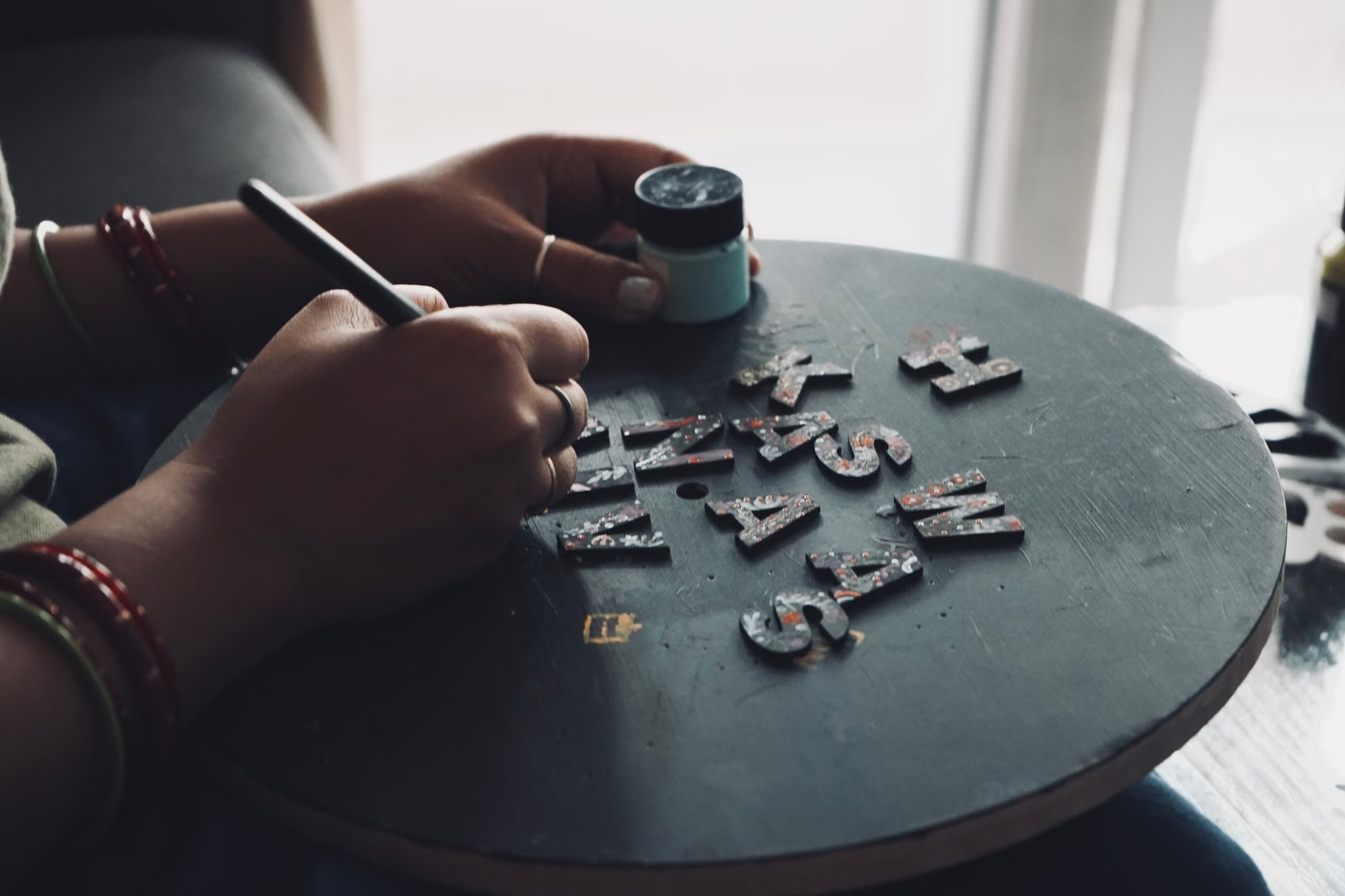
When we engage in a craft—whether it is woodworking, quilting, pottery, or digital arts—we are performing a complex series of executive functions. We are planning, measuring, solving problems, and executing fine motor movements. When this happens in a social context, the benefits are amplified.
Cognitive Stimulation: The act of learning a new technique or troubleshooting a mistake in a craft project keeps the brain active. When you explain a process to a peer in a craft-exchange group, you are engaging in “active teaching,” which is one of the most effective ways to solidify neural pathways. This helps in maintaining cognitive reserve.
The Social Buffer: Loneliness is a recognized clinical risk factor for physical health decline in older adults. Craft groups provide a “third space”—a location that is neither work nor home—where social interaction is structured around a shared task. This reduces the pressure of “making conversation” and allows for organic, low-stakes socialization that is often more sustainable for those who might otherwise feel anxious in purely social settings.
Understanding the Dynamics of a Productive Group
Not all craft groups are created equal. A successful group relies on a balance of structure and flexibility. If a group is too rigid, it becomes a class, which can feel demanding rather than relaxing. If it is too loose, it can become disorganized, leading to frustration for members who are seeking to learn or complete projects.
Common Structures of Effective Groups
To determine if a group is right for you, consider the following organizational models:
| Model | Best For | Potential Trade-off |
|---|---|---|
| Skill-Share Rotation | Those who want to learn new crafts regularly. | Requires high coordination and preparation. |
| Open-Studio Drop-in | Those who value flexibility and independence. | Less opportunity for deep mentorship. |
| Project-Based Collective | Those who enjoy group goals and collaboration. | Can be stressful if project deadlines are set. |
The “Skill-Share Rotation” model is particularly effective for those who want to keep their minds sharp by constantly adapting to new materials. However, if your mobility is currently limited, the “Open-Studio” model may be more suitable, as it allows you to bring your own materials and work at your own pace without the pressure of keeping up with a group curriculum.
Practical Steps: Finding or Starting Your Group
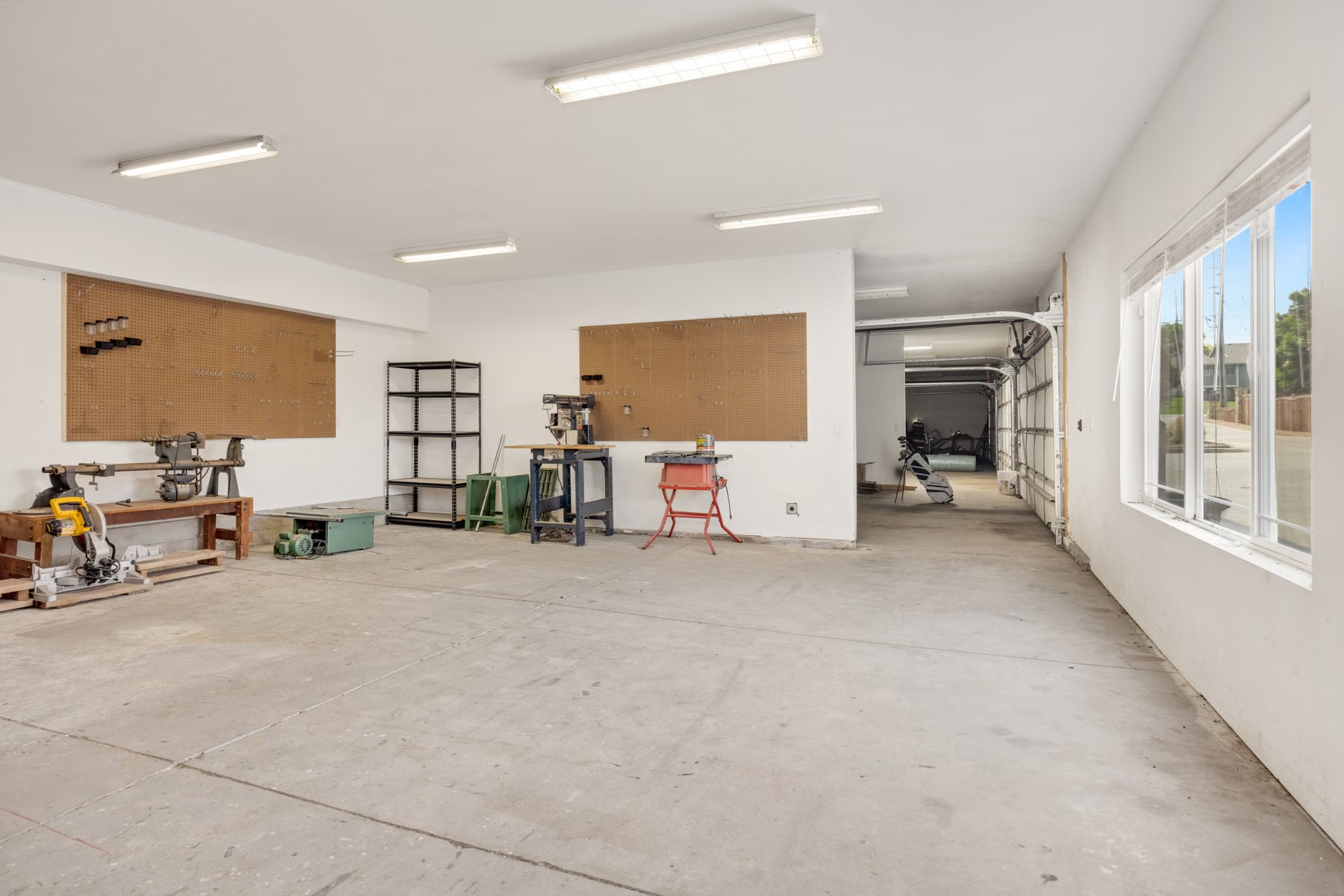
If you are looking to join or initiate a group, prioritize accessibility and safety over the specific “prestige” of the craft. A group that meets in a venue with stairs, poor lighting, or inadequate seating will eventually cause physical strain, leading to premature withdrawal from the activity.
Assessment Checklist for Venue Accessibility
- Entry and Egress: Are there ramps? If it is an older building, is there a functional elevator?
- Lighting: Is there sufficient natural or task-oriented lighting? Poor lighting is a major cause of eye strain and errors in fine-detail craft work.
- Ergonomics: Are the chairs supportive? Can the table height be adjusted to allow for comfortable arm placement?
- Proximity: Is the location accessible via public transport or does it offer safe, flat-surface parking?
While crafting is generally low-impact, it is not without physical considerations. Repetitive motion injuries, such as tendonitis or arthritis flare-ups, can occur if you do not manage your time and posture correctly. The advantage of a group setting is the ability to observe how others manage these issues.
The 45-15 Rule: For every 45 minutes of detailed craft work, take 15 minutes to stand, stretch, and focus your eyes on a distant object. This prevents the “stiffness” that often follows long periods of seated, focused activity. In a group setting, this is natural—it is the time when people stand up to refill their tea or walk around to see what others are working on.
Tool Customization: If you have limited grip strength, do not be afraid to modify your tools. Adding foam grips to knitting needles or using ergonomic, weighted handles for carving tools can make a significant difference. Sharing these modifications with your group is often a great way to bond; you might find that others have already discovered ingenious ways to adapt their tools.
The Hidden Value: Mentorship and Intergenerational Exchange
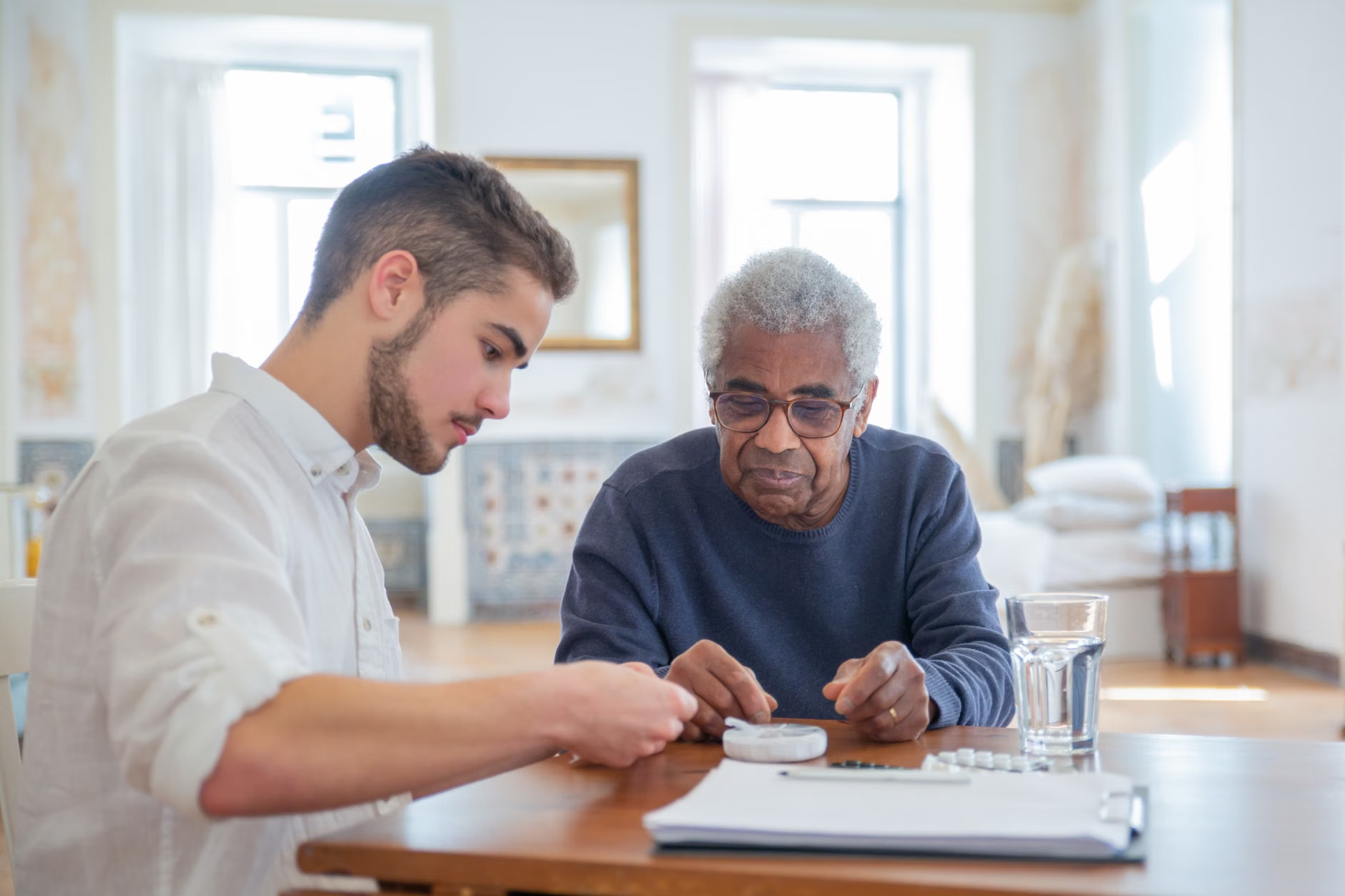
One of the most rewarding aspects of craft-exchange groups is the opportunity to act as a mentor. Many younger adults are seeking to learn traditional skills like sewing, woodworking, or canning, but lack access to a mentor. Conversely, older adults often possess a wealth of “tacit knowledge”—the kind of experience that isn’t found in a YouTube tutorial, such as how to fix a tension issue in a loom or how to select the best wood grain for a specific project.
This mentorship role provides a sense of purpose and validation. It shifts the focus from “I am here to pass the time” to “I am here to contribute.” This transition is vital for maintaining self-efficacy in later life.
Addressing Potential Barriers
It is common to feel hesitant about joining a new group. You might worry that you aren’t “skilled enough” or that you won’t fit in with the existing members. These are normal social anxieties, not reflections of your capability. Most established craft groups are hungry for new members because they thrive on the influx of new perspectives and project ideas.
Common Mistake: Waiting until you are “perfect” at a craft to join a group. The group is the place where you learn to be better. If you walk into a group and find everyone is an expert, it may not be the right fit for your current goals. Look for groups that explicitly state they are “all levels welcome” or “beginner-friendly.”
A Note on Cost: Crafting can become expensive if you constantly purchase new materials. Look for groups that engage in “material swapping” or “upcycling.” Using salvaged materials not only reduces the financial burden but also adds a creative challenge that can be very rewarding.
Deep Dive: The Science of “Flow” in Community
Psychologists often describe a state called “Flow”—the mental state in which a person performing an activity is fully immersed in a feeling of energized focus. When a group of people achieves this simultaneously, it creates a phenomenon known as “collective flow.”
In a craft group, this often happens when everyone is working on their own project but is aware of the shared effort in the room. This collective atmosphere reduces the internal chatter of stress and worry. It is a form of active meditation. For those experiencing chronic pain or anxiety, this state of flow can provide a temporary, yet significant, reduction in the perception of discomfort.
Integrating Crafting into Your Daily Routine
To make the most of your involvement, treat your craft-exchange time as a non-negotiable appointment. Just as you would schedule a doctor’s visit or a family obligation, protect your time in the group. Consistency is what builds the social bonds that make the group truly valuable over time.
If you find that attending a physical group is difficult due to health or mobility constraints, consider the rise of “hybrid” groups. These are groups that meet in person but have a digital component for those who cannot travel. While not a complete replacement for face-to-face interaction, they can serve as a bridge to maintaining connection.
Conclusion: The Path Forward
The social value of craft-exchange groups lies in their ability to remind us that we are still learners, creators, and teachers. As we navigate the complexities of aging, these groups offer a stable, predictable, and deeply human environment to practice our skills and share our stories. Whether you are picking up a paintbrush for the first time or sharing a lifetime of woodworking experience, the act of coming together to create is one of the most powerful tools for maintaining a healthy, connected, and vibrant life.
Start by identifying one local community center or library that hosts such groups. Visit once, observe the pace, and see if it aligns with your energy levels. You may find that the craft is just the beginning.
Frequently Asked Questions (FAQ)
- 1. I have limited mobility; can I still participate in craft-exchange groups?
- Yes, absolutely. Many groups meet in community centers that are fully ADA-compliant or equivalent. When looking for a group, explicitly ask about the venue’s accessibility, such as ground-level entry, elevator access, and the type of seating provided. Many groups are also very willing to adapt their meeting space to accommodate members with specific needs if they are aware in advance.
- 2. How do I find craft groups in my local area if I am not tech-savvy?
- You don’t need to rely solely on the internet. Start by visiting your local public library. Libraries are the primary hubs for community groups and often have bulletin boards or staff who know about local clubs. Senior centers and community recreational centers are also excellent sources. You can simply walk in and ask, “Are there any groups that meet here to work on crafts?”
- 3. What if I am a complete beginner and feel intimidated by experienced crafters?
- It is perfectly normal to feel intimidated, but remember that every expert was once a beginner. Look for groups that use labels like “social crafting,” “drop-in,” or “beginner-friendly.” Avoid groups that advertise themselves as “advanced” or “master-level” if you are just starting. Most hobbyists love to share their knowledge with newcomers, so don’t be afraid to voice that you are there to learn.
For further information on the benefits of social participation for older adults, please refer to the resources provided by the World Health Organization on the mental health of older adults.